Key takeaways
- Choosing between a down sleeping bag and a synthetic sleeping bag is less about finding the “better” fill and more about matching the bag to the way your household actually uses it. A down bag may be lighter, smaller, and…
Choosing between a down sleeping bag and a synthetic sleeping bag is less about finding the “better” fill and more about matching the bag to the way your household actually uses it. A down bag may be lighter, smaller, and exceptionally comfortable for careful campers or occasional emergency use. A synthetic bag is usually more forgiving around children, pets, damp storage areas, and frequent washing.
For home buyers, the decision also includes storage space, replacement cost, cleaning habits, and whether the sleeping bag will live in a guest closet, a car, a camping bin, or a child’s room. The right choice in 2026 is the one that stays useful without requiring more care than your household can provide.
Our top picks
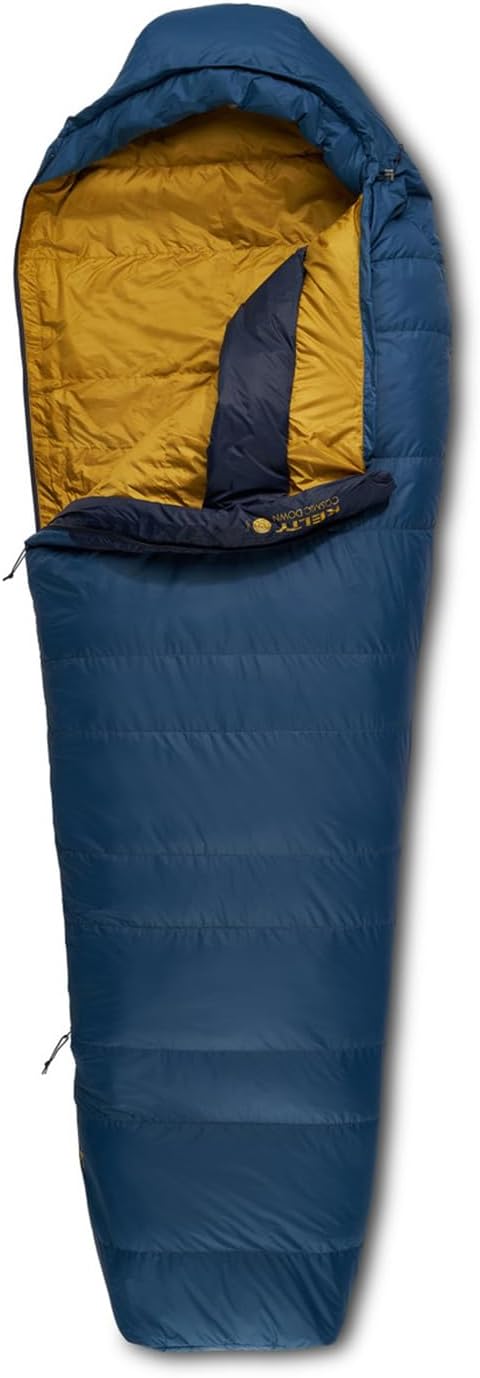 Kelty Cosmic 20 Down Mummy Sleeping Bag
- Occupancy: 1 Person
- Seasons: 3 Seasons
- Temperature Rating: 20 Degrees


As an Amazon Associate we earn from qualifying purchases at no extra cost to you. Ratings are shown as listed on Amazon.
Quick Verdict
Choose a down sleeping bag if low weight, compact storage, and maximum warmth for the size matter most. Down is particularly appealing for adults who camp regularly, travel with limited luggage, or want a premium backup bed that can fit neatly in a small closet.
Choose a synthetic sleeping bag if affordability, easy cleaning, and reliable performance in damp conditions are higher priorities. Synthetic fill is generally the safer household choice for family sleepovers, pets, messy gear rooms, and anyone who does not want to handle specialized washing and drying.
As a general shopping range, synthetic sleeping bags cost about $50 to $150, while entry-level to midrange down bags commonly cost about $80 to $250. Premium down models can cost more. The label’s temperature rating, shape, fabric, and construction can matter as much as the fill type.
Side by Side
| Factor | Down sleeping bag | Synthetic sleeping bag |
|---|---|---|
| Comfort | Very soft, lofty, and warm for its weight; often feels less bulky | Comfortable and dependable, but may feel fuller or less compressible |
| Durability | Can last for many years with careful storage and cleaning | Handles rougher household use, though repeated compression can reduce loft |
| Price range | About $80–$250 for many consumer models | About $50–$150 for many consumer models |
| Maintenance | Needs careful washing, thorough drying, and breathable storage | Usually simpler to wash and dry; always follow the care label |
| Space needed | Often compresses to roughly 6–10 liters, depending on size and fill | Often needs roughly 8–15 liters, with some compact models smaller |
| Look | Typically has a smooth, lightweight, technical appearance | Often looks more substantial, casual, or brightly colored |
| Resale | May retain more value if clean, undamaged, and from a respected brand | Usually has a lower resale price, though lightly used bags can still sell |
| Damp conditions | Loses much of its insulating ability when wet and dries slowly | Maintains more insulating ability when damp and generally dries faster |
| Best for | Backpacking, cold-weather travel, and space-conscious adults | Families, casual camping, emergencies, and frequent washing |
Where Down Sleeping Bag Wins
The biggest advantage of down is efficiency. A well-made down sleeping bag can provide substantial warmth without the weight and bulk of an equivalently warm synthetic model. That matters in a small apartment, where a sleeping bag may need to share a narrow closet with coats, linens, and luggage. It also matters when one person must carry the bag for several miles.
Down also compresses exceptionally well. A regular adult bag may weigh roughly 2 to 3 pounds and pack into a compact sack, although colder-rated bags and larger sizes can weigh more. When unpacked, the fill expands into a lofty layer that traps warm air around the body. This creates a cozy, less restricted feel for many sleepers.
Some down bags also have a longer useful life when treated properly. Store one loosely in a large mesh or cotton storage sack rather than leaving it compressed for months. Keep it dry, avoid unnecessary washing, and use a liner if the bag will see frequent indoor use. These habits help preserve loft.
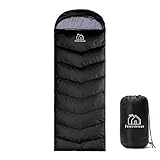
Budget-conscious shoppers should not assume every down bag is expensive. The QEZER Down Sleeping Bag for Adults is listed at under $90, while the Kelty Cosmic 20 Down Mummy Sleeping Bag is listed at under $200. Those prices illustrate how fill quality, temperature rating, fabric, and brand positioning can create a wide range.
The trade-off is care. Down should be washed with a cleaner intended for down insulation, and it must be dried completely to prevent clumping, odor, or mildew. It is also less forgiving if soaked during a rainy trip or stored in a damp basement.
Where Synthetic Sleeping Bag Wins
Synthetic fill is the practical choice when a sleeping bag needs to tolerate real household disorder. Crumbs, muddy shoes, wet towels, dog hair, and children’s sleepovers are easier to manage when the bag can be washed according to its care label without the same level of concern associated with down.
Synthetic insulation also keeps more of its insulating structure in humid or damp conditions. It will not perform perfectly when wet, but it generally loses less warmth than down and dries more readily. That makes it useful for rainy camping, unheated cabins, emergency storage, or a garage bin where humidity may fluctuate.
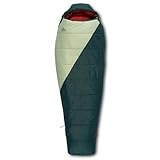
Price is another clear advantage. The Kelty Cosmic Synthetic 20F Degree Mummy Sleeping Bag is listed at under $150, while the Kelty Cosmic Synthetic Fill 40 Degree Sleeping Bag is listed at under $80. A synthetic option in the roughly $60-to-$120 range may be more sensible than a premium down bag if the primary use is occasional guests or backyard nights.
Synthetic bags do have drawbacks. They are often heavier and bulkier for comparable warmth. A typical adult synthetic bag may weigh roughly 2.5 to 4 pounds, with packed dimensions around 8 by 15 inches, though construction varies widely. Some lower-cost fills can also lose loft faster if they remain tightly compressed between uses.
For household use, however, a little extra bulk is often a reasonable exchange for lower maintenance and a smaller financial risk. If a child spills a drink or a dog steps on the bag, replacement or cleaning is usually less stressful.
Cost Over 5 Years
Initial price is only part of the calculation. Suppose a down bag costs $170 and a synthetic bag costs $100. If both last five years, the simple purchase cost is about $34 per year for down versus $20 per year for synthetic.
Cleaning can narrow or widen that gap. Down may require a specialty wash and careful drying, potentially adding about $15 to $40 per cleaning if you use a professional service. Synthetic bags are often easier to wash at home, although a large-capacity washer and dryer may still be necessary. Neither type should be treated as maintenance-free.
Replacement risk also matters. A down bag that is repeatedly stored damp can lose performance quickly, while a synthetic bag that is abused may flatten over time. If you expect frequent family use, a $75-to-$120 synthetic bag may offer the lower five-year ownership risk. If you use the bag carefully and value compact storage, the higher upfront cost of down may be justified.
Which One for Your Home
Small apartment
Down is usually the better fit when storage is scarce. Look for a bag that compresses into approximately 6 to 10 liters and has a temperature rating suited to your intended use. A mummy shape saves space and weight, but a rectangular shape may be more comfortable for indoor guests. Store the bag uncompressed when possible.
Family with kids or pets
Choose synthetic for its lower-stress maintenance and better tolerance of dampness. A rectangular or semi-rectangular design can provide more room for children, while a 40°F-rated bag may be adequate for warm-season backyard use. For colder camping, choose a lower temperature rating rather than relying on extra blankets alone.
Rental
Synthetic is generally the practical choice for a rental property or guest closet. It costs less to replace, is easier to explain to guests, and can handle occasional spills. Keep it in a labeled breathable storage bag with a washable liner nearby. For infrequent guests, prioritize a roomy shape and simple care instructions over minimum packed weight.
Long-term home
Consider down if you are building a carefully maintained outdoor kit and expect regular backpacking or travel. Choose synthetic if the bag is primarily an emergency item, a guest bed substitute, or family recreation gear. In either case, check the packed size, adult length, shoulder and hip room, zipper quality, and temperature rating before focusing on insulation alone.
FAQ
Is down warmer than synthetic?
Down usually delivers more warmth for its weight and packed size. However, warmth depends on fill amount, fill power, baffle design, draft collar, fit, and temperature rating. A well-designed synthetic bag can be warmer than a poorly designed down bag.
Can I wash a down sleeping bag in a regular washer?
Only if the care label permits it and the washer is large enough for the bag to move freely. Use down-specific cleaner, avoid aggressive agitation, and dry it completely on low heat with care. A damp interior can lead to clumps and odor.
Which sleeping bag is better for indoor guests?
Synthetic is usually the easiest household choice because it costs less and is simpler to clean after repeated use. Down works well for careful adult guests when compact storage and a soft, lofty feel are more important than easy maintenance.
Should I store a sleeping bag compressed?
No. Compression is useful for transport but can gradually reduce loft when used for long-term storage. Keep either type loosely packed in a large breathable sack, dry it fully before storage, and avoid hot attics or damp basements.