Key takeaways
- Choosing by the lowest number only: A bag labeled 20°F may list that figure as a lower limit rather than a comfortable sleeping temperature.
- Buying a bag that is too large: Excess interior air takes longer to warm and can create cold spots.
- Buying too small: Compressed insulation cannot trap heat effectively. Tight shoulders, hips, or feet are signs to size up.
- Ignoring clothing layers: Measure while wearing the base layer and socks you will actually use.
- Forgetting the pad: The ground can remove heat quickly. A warm bag on a thin, poorly insulated pad may still feel cold.
- Assuming all ratings use the same standard: Compare comfort ratings, construction, and testing information rather than relying on the product name alone.
The Short Answer
The sleeping bag temperature rating you need depends on the coldest conditions you expect, your sleeping pad, clothing, and whether you tend to sleep warm or cold. As a starting point, choose a bag with a comfort rating about 10°F lower than the overnight low you expect. If forecasts may reach 30°F, for example, look for a bag rated around 20°F for a warmer margin.
For most three-season camping, a bag rated between 20°F and 40°F works well. Choose a 0°F to 20°F bag for late fall, winter, high elevations, or consistently cold sleepers. A 40°F to 60°F bag is generally suitable for summer camping in warm climates. Ratings are not guarantees of comfort: the temperature rating assumes an insulated sleeping pad, a base layer, and reasonable shelter from wind and moisture.
Our top picks
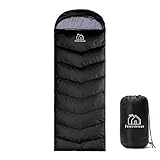
 HiZYNICE Sleeping Bags for Adults XXL Cold
- Occupancy: 1 Person
- Seasons: 3 Seasons
- Temperature Rating: 0°F
| Product | Key specs | Amazon rating | |
|---|---|---|---|
 Teton Celsius Regular Teton Celsius Regular | – | Check price | |
| HiZYNICE Sleeping Bags for Adults XXL Cold | Occupancy: 1 Person Seasons: 3 Seasons Temperature Rating: 0°F | 4.5★ | Check price |
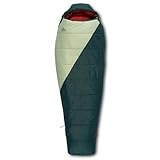
 Teton LEEF Lightweight Mummy Sleeping Bag Perfect Teton LEEF Lightweight Mummy Sleeping Bag Perfect | – | Check price | |
 MalloMe Sleeping Bags for Adults Cold Weather MalloMe Sleeping Bags for Adults Cold Weather | Occupancy: 1 Person Shape: Rectangular Seasons: 3 Seasons | 4.5★ | Check price |
As an Amazon Associate we earn from qualifying purchases at no extra cost to you. Ratings are shown as listed on Amazon.
When comparing products, prioritize the comfort rating rather than the advertised “lower limit.” ISO or EN testing gives the most useful comparison, but many budget sleeping bags use general marketing ratings instead. A roomy bag such as the Teton Celsius Regular 0 Degree, priced around $80 to $90, may feel less restrictive but can require more body heat to warm than a close-fitting mummy bag. A 20°F mummy bag such as the Teton LEEF, typically around $75 to $85, conserves heat more efficiently.
Standard Sizes
Sleeping bag sizing is based on the bag’s maximum interior length and shoulder or chest circumference, not mattress dimensions. Manufacturers may list the uncompressed exterior dimensions, so check the product chart before buying. The measurements below are common adult and youth size ranges.
| Sleeping bag size | Typical length | Typical shoulder width | Approximate fit | Typical packed weight |
|---|---|---|---|---|
| Youth or child | 60–66 in (152–168 cm) | 26–30 in (66–76 cm) | Users about 4 ft 2 in to 5 ft 4 in tall | 2–4 lb (0.9–1.8 kg) |
| Women’s short or petite | 66–72 in (168–183 cm) | 54–58 in (137–147 cm) around the shoulders | Users up to about 5 ft 6 in tall | 2–4 lb (0.9–1.8 kg) |
| Regular adult | 72–78 in (183–198 cm) | 58–62 in (147–157 cm) around the shoulders | Users about 5 ft 6 in to 6 ft tall | 2–5 lb (0.9–2.3 kg) |
| Long adult | 78–84 in (198–213 cm) | 60–64 in (152–163 cm) around the shoulders | Users about 6 ft to 6 ft 6 in tall | 2.5–5.5 lb (1.1–2.5 kg) |
| Wide or XXL | 78–84 in (198–213 cm) | 64–72 in (163–183 cm) around the shoulders | Taller users or anyone needing extra room | 3.5–7 lb (1.6–3.2 kg) |
Use your height as the first filter. A bag should be roughly 6 to 12 inches longer than your standing height, leaving enough room for your feet without creating a large, cold pocket of air. Width is equally important. A mummy bag should allow you to bend your knees and wear a light base layer without compressing the insulation. A rectangular bag is more comfortable for side sleepers and larger bodies, but it is usually heavier and less thermally efficient.
For car camping, a heavier rectangular or double bag can be a sensible choice. The HiZYNICE XXL cold-weather bag, for example, is aimed at shoppers who want extra interior room, with comparable budget options commonly priced around $60 to $80. Lightweight backpacking bags cost more because they use less fabric, more compressible insulation, or narrower cuts. Budget options such as the MalloMe line may sell for roughly $20 to $35, but confirm the stated temperature rating and dimensions carefully.
How to Measure Your Space
- Measure your height. Stand straight without shoes and record the measurement from the floor to the top of your head. Add 6 to 12 inches for a comfortable bag length.
- Measure your shoulder or chest circumference. Wrap a soft tape around the fullest part of your upper body while wearing the clothing you expect to sleep in. Add 4 to 8 inches for insulation and movement.
- Check foot space. Measure the length of your foot and allow at least 2 inches beyond your toes. Extra space is useful for socks, but too much unused volume can feel cold.
- Account for your sleeping position. Back sleepers can use a narrower mummy cut. Side sleepers usually need additional hip and knee room, often found in a semi-rectangular or wide model.
- Measure the sleeping pad. Compare the bag’s width with your pad. A regular pad is commonly 20 inches wide, while a wide pad may be 25 inches or more. A bag that is much wider than the pad can allow drafts underneath.
- Check packed dimensions and weight. For backpacking, compare the compressed sack size and total weight. A 3-pound bag may be comfortable for car camping but burdensome on a long hike.
By Room or Use Case
Backpacking
Choose the lightest bag that provides a suitable comfort rating. A close-fitting mummy bag with a hood, draft collar, and insulated zipper is usually more efficient than a wide rectangular design. For three-season trips, a 20°F to 30°F comfort rating is a versatile choice. Keep the packed weight near 2 to 3 pounds when possible, and make sure the bag fits inside or works with your backpack’s sleeping-bag compartment.
Car camping
Weight and packed size matter less when you are driving to the campsite. A rectangular bag can provide 8 to 12 inches more usable room across the body than a narrow mummy design. A 30°F to 40°F bag suits many summer and shoulder-season trips, while a 0°F bag is more appropriate for genuinely cold conditions. A sleeping bag priced from $25 to $90 can be adequate for occasional use, provided its construction and rating match the conditions.
Cold-weather camping
Start with the expected low temperature, then add a safety margin. For nights around 10°F, look for a comfort rating near 0°F rather than choosing a bag advertised as “10°F” based only on its extreme rating. Use a well-insulated sleeping pad, dry base layers, and a hat. Do not rely on extra clothing to compensate for a bag that is dramatically under-rated.
Kids and family camping
Children need a bag they can warm efficiently, but it should not be so short that their feet press against the insulation. Youth bags around 60 to 66 inches long work for many children, while an adult regular bag may be more practical for a fast-growing teenager. Check the zipper, hood, and opening size for easy use. For occasional warm-weather camping, a basic youth or adult bag in the $20 to $50 range may be sufficient.
Indoor sleepovers and emergency use
For sleepovers, guest rooms, and indoor emergency storage, comfort and washability usually matter more than low weight. A 40°F to 60°F bag is typically adequate in a heated home. A rectangular shape is easier to enter and can unzip flat as a blanket. Store it loosely rather than compressed for long periods, especially if it uses down insulation.
Common Sizing Mistakes
- Choosing by the lowest number only: A bag labeled 20°F may list that figure as a lower limit rather than a comfortable sleeping temperature.
- Buying a bag that is too large: Excess interior air takes longer to warm and can create cold spots.
- Buying too small: Compressed insulation cannot trap heat effectively. Tight shoulders, hips, or feet are signs to size up.
- Ignoring clothing layers: Measure while wearing the base layer and socks you will actually use.
- Forgetting the pad: The ground can remove heat quickly. A warm bag on a thin, poorly insulated pad may still feel cold.
- Assuming all ratings use the same standard: Compare comfort ratings, construction, and testing information rather than relying on the product name alone.
FAQ
What sleeping bag temperature rating do I need for summer?
A 40°F to 60°F comfort-rated bag is suitable for many summer trips. Choose closer to 40°F if nights may fall below 50°F, or select a bag that opens fully for ventilation in hot weather.
Is a 20°F sleeping bag warm enough for winter?
It depends on the winter conditions. A 20°F comfort-rated bag may work for mild winter camping around that temperature, but colder or windy conditions call for a 0°F or lower rating, plus an insulated sleeping pad and proper shelter.
Should I get a rectangular or mummy sleeping bag?
Choose rectangular for space, comfort, and car camping. Choose mummy for lower weight and better heat retention. Side sleepers and larger users may prefer a wide mummy or semi-rectangular design.
How much extra room should a sleeping bag have?
A bag should generally be 6 to 12 inches longer than your height and provide 4 to 8 inches of extra circumference around your shoulders and chest. It should allow movement without leaving a large, unheated cavity.