Key takeaways
- Excellent warmth for the weight. Down generally provides more insulation per ounce than synthetic fill. This can reduce pack weight by about 0.5 to 1.5 pounds compared with a similarly rated synthetic bag.
- Small packed size. A down bag can often fit into a compression sack or pack compartment that would be too tight for a bulky synthetic model. The space savings are especially helpful on weekend and multi-day trips.
- Long service life. Quality down can remain useful for a decade or longer when it is kept clean, dry, and stored uncompressed. Down does not permanently lose its loft simply because it has been used.
- Comfortable, even insulation. Lofty down feels soft and conforms around the body, reducing cold gaps. A hood, draft collar, and draft tube along the zipper can make a bigger practical difference than a small increase in fill power.
- Good value for frequent backpackers. The initial cost can be justified if you use the bag many nights each year. A $170 bag used for 50 nights costs about $3.40 per night before considering its resale or replacement value.
- More options across temperature ranges. Down bags are available for summer conditions near 40°F, three-season use around 20°F to 30°F, and cold-weather camping below 15°F.
The Short Answer
Yes, a down sleeping bag is worth it if you regularly backpack, travel light, or camp in cool, dry conditions where low weight and small packed size matter. If you mostly car camp, sleep in humid weather, or need the lowest upfront price, a synthetic bag is usually the better buy.
Down remains the most efficient insulation for its weight. A well-made bag can feel warmer, compress smaller, and last for many years with proper care. The trade-off is that down costs more and loses much of its insulating ability when it becomes wet. In 2026, the basic decision has not changed: pay more for lighter, more packable insulation, or save money with a bulkier material that handles moisture more easily.
Our top picks
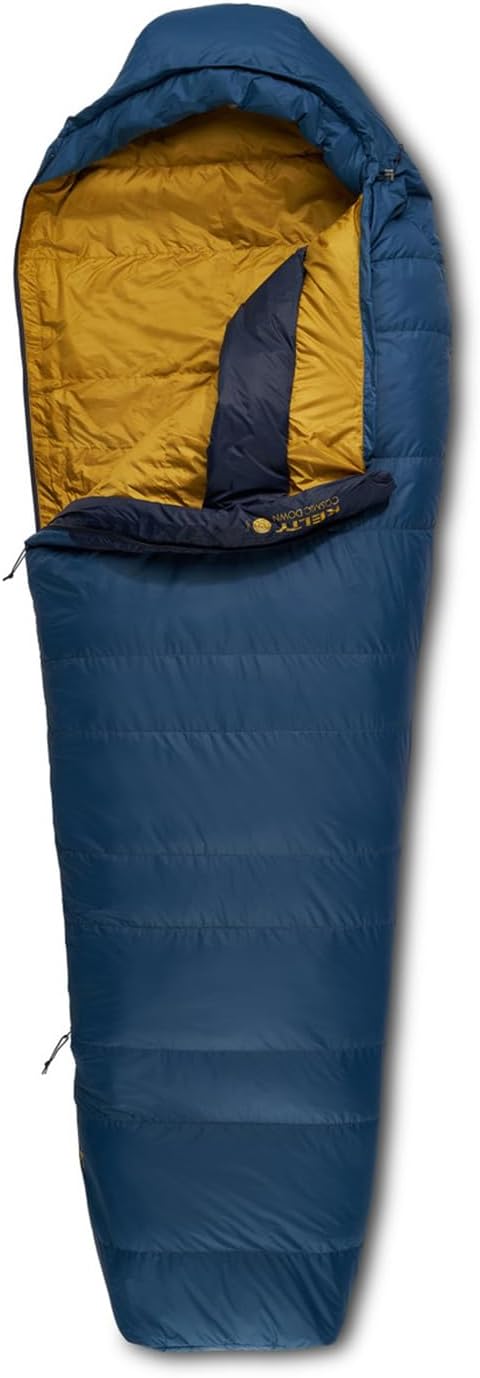 Kelty Cosmic 20 Down Mummy Sleeping Bag
- Occupancy: 1 Person
- Seasons: 3 Seasons
- Temperature Rating: 20 Degrees

As an Amazon Associate we earn from qualifying purchases at no extra cost to you. Ratings are shown as listed on Amazon.
What You Actually Get
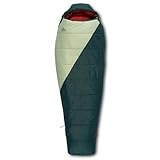
A down sleeping bag is insulated with the soft underlayer of waterfowl feathers. Unlike the stiff outer feathers, down forms thousands of tiny air pockets that slow heat loss. Fill power describes how much space a given weight of down occupies. A 550-fill bag, such as the Kelty Cosmic 20 Down Mummy Sleeping Bag, uses less lofty insulation than a premium 700- to 900-fill model, but it can still deliver a useful balance of warmth and price.
Temperature ratings require careful reading. A bag marked “20 degrees” may have a lower limit near 20°F, while its comfort rating can be several degrees warmer. Women’s, unisex, and men’s ratings may also be calculated differently. For general three-season use, choose a bag whose comfort rating is about 10°F to 15°F colder than the lowest temperature you expect. A 20°F bag is more versatile than a 40°F summer bag, but it will usually weigh more and cost more.
Typical backpacking down bags weigh about 1.5 to 3 pounds and compress to roughly 7 by 10 inches or 8 by 12 inches, depending on temperature rating, size, and fill power. A comparable synthetic bag may weigh 2.5 to 4 pounds and occupy noticeably more room in a pack. That difference matters when you are carrying food, water, a tent, and a sleeping pad for several miles.
Fit matters as much as insulation. Mummy bags narrow toward the feet to reduce empty air space, while rectangular bags offer more room to move but are less thermally efficient. Common regular lengths are approximately 72 to 78 inches, with shoulder girths around 60 to 66 inches. Check the manufacturer’s actual dimensions if you are tall, broad-shouldered, or planning to sleep in thick layers.
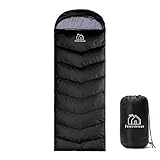
The two reference options illustrate the price spread. The Kelty Cosmic 20, with 550-fill down and recycled fabrics, sits around $170 to $175. A budget QEZER down sleeping bag costs roughly $85 to $90. The cheaper option may be attractive for occasional use, but compare its stated temperature rating, fill weight, shell construction, zipper quality, and packed dimensions rather than judging by the word “down” alone.
Pros
- Excellent warmth for the weight. Down generally provides more insulation per ounce than synthetic fill. This can reduce pack weight by about 0.5 to 1.5 pounds compared with a similarly rated synthetic bag.
- Small packed size. A down bag can often fit into a compression sack or pack compartment that would be too tight for a bulky synthetic model. The space savings are especially helpful on weekend and multi-day trips.
- Long service life. Quality down can remain useful for a decade or longer when it is kept clean, dry, and stored uncompressed. Down does not permanently lose its loft simply because it has been used.
- Comfortable, even insulation. Lofty down feels soft and conforms around the body, reducing cold gaps. A hood, draft collar, and draft tube along the zipper can make a bigger practical difference than a small increase in fill power.
- Good value for frequent backpackers. The initial cost can be justified if you use the bag many nights each year. A $170 bag used for 50 nights costs about $3.40 per night before considering its resale or replacement value.
- More options across temperature ranges. Down bags are available for summer conditions near 40°F, three-season use around 20°F to 30°F, and cold-weather camping below 15°F.
Cons
- Moisture is the main weakness. Wet down clumps, loses loft, and dries slowly. Condensation inside a tent, rain entering an open shelter, or a damp sleeping bag stored in a stuff sack can all create problems.
- Higher purchase price. A dependable down backpacking bag commonly costs $150 to $400, while basic synthetic bags are often available for $50 to $180. Premium lightweight down models can exceed $500.
- More demanding care. Down should be dried completely after trips and stored loosely, preferably in a large storage sack rather than compressed for weeks or months. Washing requires a down-specific cleaner and careful drying.
- Ratings can be optimistic for some sleepers. Cold sleepers, people who do not use a warm sleeping pad, and campers wearing minimal clothing may feel chilly at the advertised lower limit.
- Less forgiving in wet climates. Hydrophobic treatments can slow moisture absorption, but they do not make down waterproof. A waterproof stuff sack or pack liner is still essential.
- Limited room in mummy designs. The efficient shape may feel restrictive for side sleepers or anyone who changes position often. A wider bag solves that problem but adds weight and cost.
Who Should Buy It
Buy a down sleeping bag if you backpack often enough to care about every pound, have limited pack space, or travel in climates where rain can be managed. It is especially sensible for hikers who already own a reliable sleeping pad and shelter and now want to reduce their sleep system’s weight.
It is also a good choice for organized car campers who value compact storage. A down bag can occupy less closet space than a bulky synthetic bag and can be used for guest camping, road trips, and cold bedrooms. Choose a model with a realistic comfort rating, a durable shell, and a fit that allows your sleeping pad and clothing to work properly.
Who Should Skip It
Skip down if you camp mainly in persistent rain, sleep in open shelters, paddle into damp campsites, or have a history of failing to keep gear dry. Synthetic insulation is safer for those conditions because it retains more warmth when damp and generally dries faster.
A synthetic bag is also the better choice for children, infrequent campers, and busy households where gear may be stored incorrectly. If your budget is below about $100, a reputable synthetic bag may deliver more dependable warmth than a very inexpensive down bag with an unclear fill weight or temperature rating. Down is not automatically better simply because the label says “down.”
Cheaper Alternatives
| Option | Cost | Trade-off |
|---|---|---|
| Basic synthetic mummy bag | $50–$120 | Lowest price and better damp-weather performance, but typically 1–2 pounds heavier and bulkier. |
| Used quality down bag | $75–$200 | Can provide excellent value, but inspect loft, odors, stains, zipper function, and any moisture damage. |
| Budget down bag, such as the QEZER option | About $85–$90 | Smaller and lighter than many budget synthetics, but verify the true comfort rating, fill weight, dimensions, and construction before buying. |
| Down quilt | $150–$350 | Often lighter and roomier for backpacking, but requires a compatible sleeping pad and offers less built-in protection around the back. |
| Rent or borrow | $20–$60 per trip | Good for occasional use and trying a temperature rating, but availability, cleanliness, and fit may vary. |
FAQ
Is down warmer than synthetic insulation?
Not automatically. Warmth depends on fill weight, loft, bag shape, draft protection, temperature rating, and your sleeping pad. Down usually offers more warmth for the same weight, while synthetic insulation performs more consistently when damp. A well-designed synthetic bag can be warmer in real-world wet conditions than a wet down bag.
How cold of a down sleeping bag should I buy?
Start with the lowest nighttime temperature you expect, then select a comfort rating about 10°F to 15°F colder. For example, if nights may reach 35°F, a bag with a comfort rating near 20°F to 25°F provides a more comfortable margin. Pair it with an insulated sleeping pad; a sleeping bag cannot replace insulation beneath your body.
Can a down sleeping bag get wet?
It can handle minor humidity and a small amount of condensation, but it should not be allowed to soak through. Use a waterproof pack liner, keep the bag inside its dry sack while hiking, and air it out at camp. Never store it compressed after a trip. If it becomes wet, spread it out and dry it completely before storage.
Is a $170 down sleeping bag worth buying?
It can be, especially for regular backpacking. A mid-priced model around $170 to $175 may weigh more than premium bags but still offers the key benefits of down: compact storage, efficient warmth, and long-term durability. For only one or two car-camping trips a year, a $60 to $120 synthetic bag is usually the more economical choice.