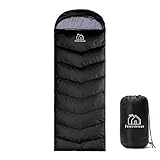
Key takeaways
- Better moisture tolerance: Synthetic fibers resist water better than down and retain more insulating ability when exposed to condensation, damp ground, or a humid tent. They also dry more readily in ordinary conditions.
- Lower purchase price: Good synthetic bags commonly cost about $60 to $180, while premium down bags with similar warmth can cost $180 to $500 or more. The lower price makes synthetic a sensible entry point for occasional campers.
- Easier care: Many synthetic bags can be washed at home according to the manufacturer’s instructions. They do not require the same level of caution as delicate down clusters, although over-washing and high heat can still damage insulation and fabric.
- Reliable for unpredictable weather: Synthetic insulation is a practical match for rainy campsites, humid climates, shoulder-season trips, and children who may not protect their gear perfectly.
- Good value for car camping: When you are carrying gear from the vehicle to a campsite instead of hiking several miles, an extra pound or two is often a reasonable trade for a lower price.
- Useful for beginners and backup gear: A synthetic bag can serve as a first camping bag, guest-bed alternative, emergency item, or spare for family trips without requiring specialized storage or handling.
- More forgiving packing: Occasional compression during transport is less concerning than it is with some premium down products. You should still store the bag loosely at home rather than leaving it compressed for months.
The Short Answer
Yes—if you expect damp conditions, variable weather, or frequent use on a budget. A synthetic sleeping bag is usually the safer choice when reliable drying, easy care, and lower upfront cost matter more than the smallest packed size and lightest trail weight. The one condition: do not treat the temperature rating as a guarantee of comfort; choose a bag rated at least 10°F colder than the conditions you expect and use an insulated sleeping pad.
What You Actually Get
A synthetic sleeping bag uses manufactured fibers, commonly polyester, to create loft around your body. That loft traps warm air. Unlike a down bag, synthetic insulation continues to provide some warmth after absorbing moisture, although a wet bag is still uncomfortable and less effective than a dry one.
Our top picks


As an Amazon Associate we earn from qualifying purchases at no extra cost to you. Ratings are shown as listed on Amazon.
For most shoppers, the practical choice is between a lightweight 40°F bag and a warmer 20°F bag. A 40°F bag is suitable for summer camping, warm-weather backpacking, festivals, and mild nights. A 20°F bag offers a much wider three-season range, especially when nighttime temperatures may fall into the 30s. A product such as the Kelty Cosmic Synthetic Fill 40 Degree bag, priced around $80, is an affordable warm-weather option. The Kelty Cosmic Synthetic 20F women’s bag, around $125, costs more but provides substantially more cold-weather flexibility.
Expect synthetic insulation to take up more space than comparable down insulation. A regular synthetic backpacking bag often weighs roughly 2.5 to 4 pounds and may compress to about 8 to 12 inches long, depending on the temperature rating, cut, and fill. A 20°F model can be larger and heavier. Down bags of similar warmth may weigh closer to 1.5 to 3 pounds and compress to roughly half the volume, but they typically cost more and require more careful moisture management.
Construction matters as much as the insulation label. Look for a hood, a draft collar or draft tube, a full-length zipper, a footbox that allows your feet to stay in a natural position, and a shell fabric that feels tightly woven. A mummy shape is warmer and more efficient than a rectangular shape, while a rectangular bag gives you more room to turn and may work better for car camping.
Temperature ratings also need context. The advertised number may describe a lower limit rather than a comfortably warm sleeping temperature. Personal metabolism, clothing, humidity, wind, tent ventilation, and the sleeping pad underneath you all affect performance. A sleeping bag cannot compensate for a poorly insulated pad that lets body heat escape into the ground.
Pros
- Better moisture tolerance: Synthetic fibers resist water better than down and retain more insulating ability when exposed to condensation, damp ground, or a humid tent. They also dry more readily in ordinary conditions.
- Lower purchase price: Good synthetic bags commonly cost about $60 to $180, while premium down bags with similar warmth can cost $180 to $500 or more. The lower price makes synthetic a sensible entry point for occasional campers.
- Easier care: Many synthetic bags can be washed at home according to the manufacturer’s instructions. They do not require the same level of caution as delicate down clusters, although over-washing and high heat can still damage insulation and fabric.
- Reliable for unpredictable weather: Synthetic insulation is a practical match for rainy campsites, humid climates, shoulder-season trips, and children who may not protect their gear perfectly.
- Good value for car camping: When you are carrying gear from the vehicle to a campsite instead of hiking several miles, an extra pound or two is often a reasonable trade for a lower price.
- Useful for beginners and backup gear: A synthetic bag can serve as a first camping bag, guest-bed alternative, emergency item, or spare for family trips without requiring specialized storage or handling.
- More forgiving packing: Occasional compression during transport is less concerning than it is with some premium down products. You should still store the bag loosely at home rather than leaving it compressed for months.
Cons
- Bulkier packed size: Synthetic fibers do not compress as efficiently as down. That can consume valuable space in a backpack, especially when paired with a tent, stove, food, and warm clothing.
- Heavier for the same warmth: A synthetic 20°F bag may weigh around 3 to 5 pounds, depending on its design and size. That difference is noticeable on long hikes and can matter to ultralight backpackers.
- Insulation can lose loft over time: Repeated compression, rough washing, and normal wear can flatten synthetic fill. Once the fibers lose loft, the bag may feel colder even if the shell and zipper still look fine.
- It is not waterproof: Water resistance is not water protection. A soaked synthetic bag can become heavy, cold, and difficult to dry at camp. Use a tent, pack liner, dry bag, or waterproof stuff sack when rain is likely.
- Less comfortable in hot weather: A heavily insulated bag may feel clammy on warm nights. A 20°F bag is versatile, but it is not automatically the best choice for summer camping in a hot climate.
- Limited resale value: Budget synthetic bags generally depreciate quickly. If you upgrade later, you may recover less of the original purchase price than you would with a well-maintained premium down bag.
- Some models feel restrictive: Mummy designs save warmth and weight but can feel tight around the shoulders, hips, or feet. Check the shoulder and hip dimensions before buying, particularly if you prefer to sleep on your side.
Who Should Buy It
Buy a synthetic sleeping bag if you camp a few times a year, want to keep spending below about $150, or regularly deal with damp weather. It is also a strong choice for car campers, scouts, family camping, festival trips, cabin stays, and anyone who values uncomplicated cleaning.
Choose a 40°F model for summer nights where temperatures stay comfortably above freezing. Choose a 20°F model if you camp in spring or fall, travel through changing elevations, or want one bag that covers more than the warmest part of the year. If you sleep cold, add another 10°F to your target and consider a liner, warm sleep clothing, and a sleeping pad with an appropriate insulation rating.
Who Should Skip It
Skip synthetic insulation if you carry your entire sleep system long distances and care deeply about every ounce or cubic inch. A quality down bag will usually be lighter and smaller, making it easier to fit into a 40- to 50-liter backpack.
You should also look elsewhere if you want one premium bag for many years of intensive use and are willing to pay more for lower weight. Down is not maintenance-free, but a well-made, properly stored down bag can offer an excellent warmth-to-weight ratio. Finally, avoid buying a warm 20°F synthetic bag solely because its rating sounds impressive if you mostly camp in hot summer weather; you may be carrying unnecessary weight and sleeping too warm.
Cheaper Alternatives
| Option | Cost | Trade-off |
|---|---|---|
| Basic rectangular synthetic bag | $35–$70 | Cheapest option, but usually heavier, bulkier, and less reliable near its stated temperature rating. |
| Used synthetic backpacking bag | $30–$80 | Can offer better materials for less money; inspect zippers, odor, stains, compression damage, and loft before buying. |
| Fleece or insulated blanket plus liner | $25–$65 | Comfortable and flexible for indoor or warm-weather use, but drafts easily and is not a dependable cold-weather system. |
| Summer-weight 50°F to 60°F bag | $40–$85 | Smaller and less expensive than a three-season bag, but unsuitable for chilly spring and fall nights. |
| Rental sleeping bag | $20–$60 per trip | Good for occasional campers; costs more over time and availability, fit, and cleanliness vary. |
FAQ
Are synthetic sleeping bags worth it?
Yes, for most casual and budget-conscious campers. They offer useful moisture resistance, simple care, and a lower price than comparable down bags. They are less compelling when minimum weight and packed size are your top priorities.
How long does a synthetic sleeping bag last?
A well-cared-for bag can remain useful for several years, but its loft may gradually decline with heavy use and repeated compression. Store it loosely, keep it dry, follow the washing instructions, and avoid storing it permanently in its small stuff sack.
Can you wash a synthetic sleeping bag?
Usually, yes, but follow the sewn-in care label. Use a large front-loading washer when recommended, a mild cleaner, and thorough low-heat drying. Never store the bag until the insulation is completely dry, because trapped moisture can create odors and mildew.
Is a synthetic bag warmer than a down bag?
Not automatically. Warmth depends on insulation quantity, loft, construction, fit, hood design, zipper protection, and the temperature rating standard used. Synthetic bags generally offer better performance than down after getting damp, while down usually provides more warmth for less weight when kept dry.