
Tent size chart reading is the skill that stops you buying a tent that is too cramped or needlessly huge. Ratings are optimistic, so this guide explains how capacity, floor area and peak height really translate, with six representative tents from solo to group.
As an Amazon Associate we earn from qualifying purchases.
Our top picks
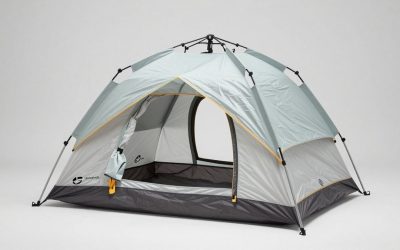
 Coleman Sundome Camping Tent with Rainfly
Included rainfly adds extra weather protection
E-Port lets you run power inside the tent
Large windows and ground vent improve airflow
Fixed four-person size for this specific listing
Weighs over 9 pounds, bulkier for backpacking


 CAMPROS CP 8 Person Camping Tent
- Occupancy: 8 Person
- Seasons: 3 Season
- Water Resistance Technology: Waterproof


As an Amazon Associate we earn from qualifying purchases at no extra cost to you.
By Jake Thompson
How to Read a Tent Size Chart
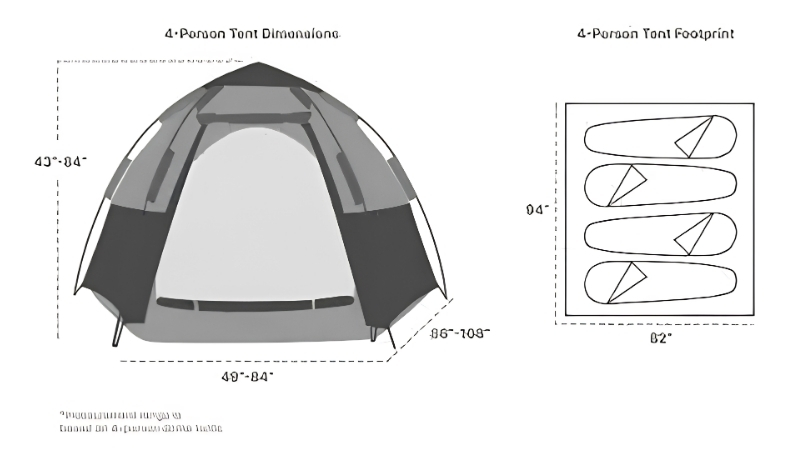
A tent size chart maps a tent’s person rating to its real, usable space. The key insight is that ratings assume sleepers packed shoulder to shoulder with no gear, so the honest capacity is often one to two people fewer. Reading floor area and peak height, not just the number, gets the size right.
Understand Optimistic Capacity Ratings
Manufacturers rate capacity by how many sleeping pads fit edge to edge, with no room for gear or movement. That makes a two-person tent snug for two adults and a six-person tent comfortable for about four. Treat the rated number as a maximum for one night, not a comfortable capacity.
For real comfort, size up one person from your headcount, especially for car camping where weight is no object. A solo hiker who wants gear space picks a two-person tent, and a family of four picks a six-person. This single adjustment is the most useful rule a size chart teaches.
Read Floor Dimensions and Area
Look past the person rating to the floor’s length, width and square footage. Length matters for tall campers, since some tents run short, and width sets how snugly sleepers fit. Square footage per person tells you how roomy a tent really is, letting you compare models with the same rating.
A two-person tent with 29 square feet feels far roomier than one with 27, and a wider floor eases sharing. Compare dimensions across tents you are considering rather than trusting the rating alone, since two same-rated tents can differ significantly in real, usable interior space.
Factor In Peak Height and Shape
Peak height and wall shape decide whether you can sit up, kneel or stand, and how usable the edges are. Cabin-style tents with near-vertical walls keep headroom to the sides, while dome and tapered tents lose height at the edges. Height matters most for car camping and taller campers.
A tall peak in the center means little if the walls slope sharply away, so check wall angle alongside peak height. For backpacking, a lower peak saves weight and is fine for sleeping, while for car camping, near-vertical walls and standing headroom make a big tent far more livable.
Match Size to How You Camp
Finally, match size to use. Backpackers keep capacity tight to save weight, accepting a snug fit, while car campers size up freely since they are not carrying the tent. Your trip style, solo, couple, family or group, and whether you carry or drive, should guide where you land on the chart.
Consider gear, pets and kids too, all of which eat floor space. A dog or a restless child effectively adds a person’s worth of room needed. Deciding how you camp, then sizing up for comfort, turns the chart from a set of numbers into the right tent for your real trips.
Representative Tents From This Tent Size Chart
These six show how each size translates to a real, well-regarded tent, from solo to group. This tent size chart highlights them below, then breaks down who each suits and its honest drawbacks.
| Rated Size | Sleeps Comfortably | Representative Tent | Use |
|---|---|---|---|
| 1-person | 1 snug | Big Agnes Fly Creek HV UL1 | Solo backpacking |
| 2-person | 2 snug / 1 roomy | Big Agnes Copper Spur HV UL2 | Couple or solo-plus-gear |
| 3-person | 2 comfortably | NEMO Dagger OSMO 3 | Pair plus gear or dog |
| 4-person | 3 comfortably | REI Co-op Half Dome SL 4+ | Small family or group |
| 6-person | ~4 adults | The North Face Wawona 6 | Family car camping |
| 8-person | ~6 adults | The North Face Wawona 8 | Large group |
Big Agnes Fly Creek HV UL1 — 1-Person
The Fly Creek HV UL1 shows what a one-person rating means: room for one sleeper and little else. At around two pounds it is a light, weatherproof solo shelter with a tapered floor that fits a pad and minimal gear. For solo backpackers who want the lowest weight, it is a benchmark one-person tent.
Its single door and snug, tapered interior feel tight, with gear living in the small vestibule. That is simply what a true one-person tent is. For solo hikers who accept minimal space to save weight, though, it is exactly right, and it shows why gear-heavy solo campers often size up to a two-person.
Big Agnes Copper Spur HV UL2 — 2-Person
The Copper Spur HV UL2 is the classic two-person size: snug for two adults, roomy for one with gear. At about three pounds it offers two doors, two vestibules and generous headroom, making it the do-everything backpacking tent. For couples, or soloists who want space, it is the sweet-spot size.
With two adults and gear it fills up, and its thin floor needs care, as its rating implies. For most backpackers, though, this two-person size hits the balance of weight and livability better than any other, which is why it is the most popular rating on any size chart.
NEMO Dagger OSMO 3 — 3-Person
The Dagger OSMO 3 shows the value of the three-person size: genuine comfort for two, or a snug three. Its roomy interior, two doors and taut-when-wet fabric give a pair space for gear or a dog, bridging the gap between a tight two-person and a bulky four. For comfort-seeking pairs, it shines.
It is heavier and pricier than a two-person tent, weight two backpackers must split. For couples who want to spread out, bring a dog, or ride out storms in comfort, though, the three-person size is an underrated choice, offering real livability without jumping to a full four-person tent.
REI Co-op Half Dome SL 4+ — 4-Person
The Half Dome SL 4+ represents the four-person size: comfortable for three, snug for four. Roomy and versatile with a hubbed pole system and plenty of pockets, it crosses between car camping and shorter backpacking trips. For a small family or group wanting real space, it is an excellent, fair-priced pick.
Its peak is low enough that you sit rather than stand, and it is heavier and bulkier than backpacking tents, as a four-person tent tends to be. For groups who want a livable, splittable four-person shelter that is versatile and affordable, though, it is a standout on this part of the chart.
The North Face Wawona 6 — 6-Person
The Wawona 6 shows the reality of the six-person size: comfortable for about four adults or a family of four to five with gear. Its 85-plus-square-foot interior, huge vestibule and near-vertical walls make it a livable family car-camping tent. For families sizing up for comfort, it is the do-everything pick.
Its tall profile catches wind and it pitches best with two people, and weight is high, though irrelevant for car camping. For families who understand a six-person rating really means room for four in comfort and want a durable, spacious tent, though, it is the standout at this size.
The North Face Wawona 8 — 8-Person
The Wawona 8 represents the eight-person size: real space for about six adults or a larger family with gear. Scaling up the Wawona’s livable design with even more floor and a big vestibule, it suits groups who genuinely need room. For large families sizing up, it delivers comfortable capacity.
It is big, heavy and premium-priced, and pitches best with two people, strictly a car-camping tent. For groups who want honest space for six in comfort and value durability and livability, though, it shows how the size chart’s largest ratings, read realistically, translate to a genuinely roomy shelter.
What Tent Sizes Cost in 2026
Tents span budget to premium at every size, so timing helps. A couple of current market forces affect what tents cost and when to buy, without changing how you read the size chart.
Bigger Tents, Higher Prices
Price generally climbs with size, and all tents use imported fabrics and aluminum poles under tariffs that remain in place. Brands have described future pricing as a moving target, so committing to the right size for your trips, rather than waiting indefinitely, is a reasonable call this year.
The effect is uneven. Premium and four-season tents hold pricing, while mainstream three-season and car-camping tents across sizes see more discounting. Value-focused buyers should watch mainstream tents in their target size for closeouts rather than assuming a bigger tent always costs proportionally more.
Buy the Size Ahead of Season
Whatever size you need, buying ahead of camping season secures the model and lets you practice pitching it. Fall sale events like Prime Big Deal Days in early October and Black Friday in late November bring the deepest discounts across sizes, especially on family and car-camping tents.
Popular sizes and the most common two- and six-person tents can thin out in peak season, so buying early avoids settling for the wrong size. Decide your size from the chart, then track prices into fall, so you land the right capacity at a good price before your trips.
Size Up, Buy Once
The best value is buying the right size once, rather than a too-small tent you replace. Since ratings are optimistic, sizing up one person for comfort usually costs little more and prevents a cramped, regret-filled purchase. Match the size to how you camp, then buy a tent that lasts many seasons.
If a specific size or model is prone to selling out, buy early rather than gambling on peak-season stock. Missing the right size before a trip means settling, so use the chart to decide, then lock in the capacity that fits your group, gear and camping style with room to be comfortable.
Frequently Asked Questions
These are the questions campers ask most about tent sizing.
How accurate is a tent size chart’s capacity rating?
Optimistic. A tent size chart rates capacity by sleeping pads packed edge to edge with no gear, so the comfortable number is usually one to two people fewer. Read floor area and peak height alongside the rating, and size up one person from your headcount for real, livable comfort.
Should I size up my tent?
For comfort, almost always. Since ratings assume no gear and shoulder-to-shoulder sleeping, sizing up one person gives room for gear, movement and pets. Backpackers may keep it tight to save weight, but car campers, who carry no weight penalty, should size up freely for a far more livable tent.
What floor dimensions should I look for?
Enough length for the tallest camper and enough width per person to sleep without crowding. Compare square footage across same-rated tents, since two-person tents can vary by several square feet. For tall campers, check floor length specifically, as some otherwise-roomy tents run short.
Does peak height matter?
For car camping and taller campers, yes. Peak height and wall shape decide whether you can sit up, kneel or stand. Cabin-style tents keep headroom to the edges, while dome tents lose it at the sides. For backpacking, a lower peak saves weight and is fine for sleeping.
See More:
- Best hiking backpack
- Best backpacking backpack
- Ultralight hiking backpack
- Best hydration backpack
- Best hiking backpack for women
Final Thoughts
A tent size chart is only useful once you read it honestly: ratings are optimistic, so size up one person and check floor area and peak height. The Copper Spur HV UL2 defines the two-person sweet spot, while the Wawona 6 shows a six-person rating really means room for four. Match the size to how you camp, size up for comfort, and you will buy the right tent the first time.


Write Your Review
No reviews yet. Be the first to share your experience!