
Key takeaways
Best hydration backpack shopping means balancing how much water you carry against how much gear you need, since a running vest and a full-day hiking pack solve very different problems. This guide compares five reservoir-equipped packs by water capacity, pack volume, fit and ventilation for trail days on foot or bike.
As an Amazon Associate we earn from qualifying purchases.
Our top picks
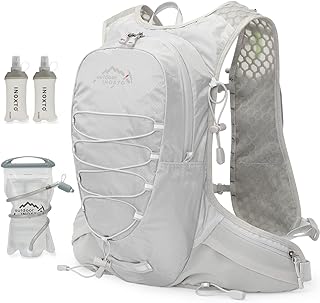
 Lightweight Hydration Backpack
- Warranty Description: 365 days
- Item Dimensions W x H: 11.8"W x 16.5"H
- Capacity: 12 liters
 MIYCOO Hydration Backpack
- Warranty Description: 1 Year
- Capacity: 10 liters
- Tank Volume: 2 Liters


As an Amazon Associate we earn from qualifying purchases at no extra cost to you. Ratings are shown as listed on Amazon.
By Jake Thompson
How to Choose the Right Hydration Backpack
The best hydration backpack is defined by coming with a reservoir included, so the choice is about reservoir size, pack capacity, fit, tube features and the activity you do most. Get these matched and you will drink more often and carry exactly the gear you need, no more and no less.
Match Reservoir Size to Your Outings
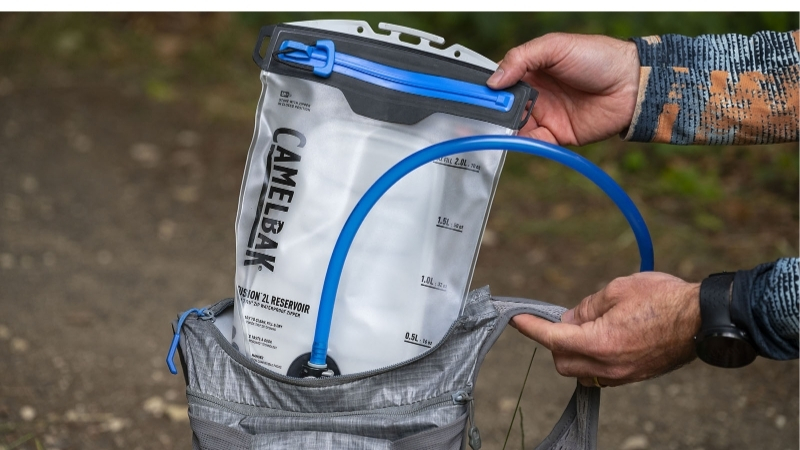
Reservoirs typically run 1.5 to 3 liters. Short or cool outings are fine with 1.5-2L, while long or hot days and hard efforts want 3L. Carrying more water than you will drink just adds weight, so size the bladder to your realistic consumption rather than the worst case you can imagine.
Remember you can usually run a smaller reservoir in a larger pack, or top off at sources. If you frequently hike where water is scarce, lean toward 3L; if you refill often, a 1.5-2L bladder keeps the load light. Most packs accept a range of bladder sizes for flexibility.
Size the Pack Capacity to Your Gear
Beyond water, you need room for layers, food and essentials. Minimalist rides and runs are happy with 10-15L, general day hikes suit 18-24L, and full days with extra layers or camera gear want closer to 30-34L. The best hydration backpack carries your water and your kit without bouncing.
Do not oversize. A large pack half full rides loosely and defeats the purpose of a trim hydration setup. Think about the bulkiest day you realistically pack for, choose a volume that covers it, and rely on compression straps to snug down lighter loads on shorter outings.
Prioritize Fit and Ventilation
Because hydration packs are worn for active, sweaty efforts, fit and airflow matter more than storage tricks. A ventilated backpanel and a secure chest and hip strap keep the pack from bouncing while letting heat escape, which is the difference between a pack you notice and one you forget.
Try loading a candidate with water and a few items, then move around. The pack should hug your back without swaying, and the straps should not chafe. Running-oriented vests sit high and tight; hiking packs ride lower with more hip support, so match the fit style to your activity.
Check the Tube and Bite Valve Features
Small reservoir details matter daily. Look for a magnetic or clip tube keeper so the hose stays within reach, a bite valve with an on/off lever to prevent leaks, and a wide-mouth opening that lets you get a hand inside for cleaning and drying, which prevents mold.
Quality reservoirs from Osprey Hydraulics and CamelBak Crux are easier to live with than cheap included bladders, which can be hard to clean. If a pack ships with a basic bladder, budget for a better reservoir upgrade later, since a reliable bite valve and easy cleaning make you drink more.
Choose for Your Main Activity
Hydration packs are tuned for use. Mountain-bike packs sit tight and stable with tool organization, hiking packs add hip support and gear room, and running vests shed weight and hug the torso. Buying a bike pack for long hikes, or a vest for a gear-heavy day, leads to compromise.
Be honest about where you will use it most. If you cross activities, a versatile hiking-oriented pack like the Osprey Skarab covers the widest range. Specialists like the CamelBak M.U.L.E. shine at one thing, so pick the pack tuned to your primary trail time.
Top Picks: The Best Hydration Backpack for Every Activity
These five span a compact biking pack, versatile hiking packs and a larger full-day carrier, each shipping with a reservoir. The table gives the specs, then each pick covers who it suits and its honest weak points.
| Model | Pack Volume | Reservoir | Best For | Price Tier |
|---|---|---|---|---|
| Osprey Skarab 18 | 18L | 2.5L | All-round hiking | Mid |
| CamelBak M.U.L.E. | 12L | 3L | Mountain biking | Mid |
| Osprey Syncro 20 | 20L | 3L | Ventilated day use | Mid |
| CamelBak Rim Runner X22 | 22L | 1.5L | Value day hiking | Budget |
| Osprey Manta 34 | 34L | 2.5L | Long full days | Premium |
Osprey Skarab 18 — Best All-Round Hiking Pick
The Skarab 18 is the versatile default for hikers. It pairs 18L of storage with an included 2.5L Osprey Hydraulics LT reservoir, an AirScape ventilated backpanel and a bucket-style main opening that makes packing easy. It handles hiking, biking, skiing and sightseeing, which is why it lands on so many best lists.
Its limits are capacity and suspension: 18L is tight for long full days with lots of layers, and the backpanel, while ventilated, is basic compared with a full framesheet. For most day outings, though, it hits an excellent balance of water, gear and comfort. The women’s version is the Skimmer.
CamelBak M.U.L.E. — Best for Mountain Biking
The M.U.L.E. is a mountain-bike icon. It carries a generous 3L (100oz) Crux reservoir plus about 12L of storage with dedicated tool organization, and its 200D nylon ripstop body and tight, stable fit keep it planted on rough descents. For riders who want plenty of water and trail tools, it is the reference.
That bike-tuned fit is less ideal for long hikes, where more hip support and gear room help, and 12L of storage is modest for a full hiking day. As a dedicated riding pack, though, it is durable, stable and thoughtfully organized, backed by CamelBak’s strong reservoir and lifetime guarantee.
Osprey Syncro 20 — Best Ventilated Day Pack
The Syncro 20 leans into airflow with a suspended AirSpeed backpanel that holds the pack off your back, plus a 3L reservoir and 20L of storage. For hot-weather day hikes and rides where a sweaty back is the main complaint, its ventilation is a standout feature at a reasonable price.
The suspended panel adds a little weight and can let the reservoir shift for some users, and 20L is a general day size rather than a big-load hauler. For hikers and riders who prioritize staying cool over maximum capacity, though, the Syncro is one of the airiest options available.
CamelBak Rim Runner X22 — Best Value
The Rim Runner X22 delivers real capability at a budget price. A 1.5L Crux reservoir pairs with a roomy 22L pack, generous external dump pockets and a detachable hipbelt for short outings. For hikers who want organization and space without premium spend, it is a functional, flexible all-day pick.
The smaller 1.5L reservoir means more frequent refills on hot days, and the materials and suspension are a step below pricier Osprey packs. But the bucket-style opening and pocket layout are genuinely useful, and the value-to-capacity ratio is among the best here for casual day hikers.
Osprey Manta 34 — Best for Long Full Days
When a day trip needs real gear capacity, the Manta 34 steps up. It combines 34L of well-organized storage with a 2.5L reservoir and Osprey’s ventilated suspension, comfortably carrying layers, food, first aid and camera gear for long or variable days in the mountains. It is the do-it-all big day-hiking hydration pack.
The tradeoffs are weight and price: it is heavier and pricier than compact packs, and its size is overkill for quick outings. For hikers who regularly log big, gear-heavy days and want water plus room to spare, it is worth it. The women’s version is the Mira.
What Hydration Pack Prices Look Like in 2026
The best hydration backpack is a smaller purchase than a big backpacking rig, but timing still helps. A couple of current market factors affect what a hydration backpack costs and when to buy, without changing which pack fits your activity.
Materials and Reservoirs See Cost Pressure
These packs use imported nylon and technical components, and steel and aluminum tariffs touch some hardware. Brands have described future pricing as uncertain, so if you already know the pack you want, buying now is a reasonable hedge rather than waiting for prices that may not settle soon.
The impact is uneven across tiers. Premium brands have largely held pricing, while mainstream models see more discounting as retailers clear pre-tariff inventory. Budget-focused buyers should watch mainstream packs like the Rim Runner for closeouts, where the best value tends to appear on sale.
Warm-Season Timing Matters
Hydration packs sell hardest in spring and summer, so late-season stock can thin on popular sizes and colors. Buying ahead of a big hike or ride, rather than the day before, ensures you get the fit you want and can test the reservoir and tube routing before it matters on trail.
The fall sale calendar still applies, with Prime Big Deal Days in early October and Black Friday and Cyber Monday in late November offering the deepest discounts. If you can plan ahead, building a wishlist and watching prices into those windows is the smart way to buy.
Spend on the Reservoir, Not Just the Pack
A reliable reservoir is what makes you actually drink, so it is worth spending there. Quality bladders from Osprey Hydraulics and CamelBak Crux are easier to clean and less leak-prone than cheap included bladders, and a good bite valve pays off on every outing.
If a pack ships with a basic reservoir, factor an upgrade into your budget rather than fighting a hard-to-clean bladder. Buying the right pack and pairing it with a dependable reservoir usually beats chasing the absolute lowest sticker price on an all-in-one set.
Frequently Asked Questions
These are the questions hikers and riders ask most when picking a hydration pack.
What reservoir size should the best hydration backpack have?
For most day outings, a 2-2.5L reservoir balances water and weight, while long or hot days justify 3L. The best hydration backpack lets you match bladder size to your needs, so if you refill often at sources, a smaller 1.5L reservoir keeps the pack lighter and more comfortable.
Are hydration packs different from daypacks?
The main difference is that a hydration pack includes a reservoir and is tuned for active, sweaty use with a ventilated fit. Many daypacks are reservoir-compatible but sold without a bladder, so a dedicated hydration pack is often a cheaper, sleeker all-in-one setup for hiking and riding.
How do I keep the reservoir clean?
Rinse and dry it fully after every use to prevent mold, propping the wide-mouth opening open with a spatula or hanger. For deeper cleaning, use reservoir cleaning tablets every few weeks. A wide-mouth bladder that lets a hand inside makes this far easier than narrow-neck designs.
Can I use a hydration pack for both hiking and biking?
Yes, but fit is tuned by activity. A versatile hiking pack like the Osprey Skarab crosses over reasonably well, while dedicated bike packs like the M.U.L.E. sit tighter with tool storage. If you split time evenly, a general hiking-oriented pack usually offers the most flexibility across both.
See More:
- Best hiking backpack
- Best backpacking backpack
- Ultralight hiking backpack
- Best hiking backpack for women
Final Thoughts
The best hydration backpack is the one matched to your activity, water needs and gear volume, not just the biggest reservoir. The Skarab 18 is the versatile all-rounder, the M.U.L.E. owns the bike trail, and the Manta 34 handles big gear-heavy days. Size the reservoir to how much you actually drink, prioritize fit and ventilation, and you will stay hydrated without carrying dead weight.



Write Your Review
No reviews yet. Be the first to share your experience!