
Best backpack for plane travel means one that clears the sizer at the gate without an argument, which rules out most hiking packs before you start. This guide covers carry-on dimensions, clamshell access, and harness design, then compares five packs built for travelling out of a single bag on a long trip.
Our top picks
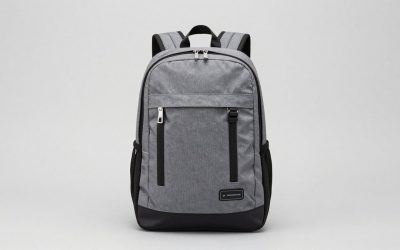
 Taygeer Travel Backpack for Women
Separate shoe bag keeps footwear away from clothes
180 degree zipper speeds through security checks
Converts between backpack and handbag carry styles
At 16.8 x 11 x 7 inches, fits only small loads
Nine small pockets can make packing feel fragmented


As an Amazon Associate we earn from qualifying purchases at no extra cost to you.
As an Amazon Associate we earn from qualifying purchases.
By Jake Thompson, gear writer at Roger Bacon Outdoors.
🛒 Best Price Today on Amazon
Prime members get fast, free shipping on everything above, plus member-only deals. New members get a 30-day free trial — cancel anytime.
How to Choose the Best Backpack for Plane Travel
Travel packs and hiking packs look similar and behave nothing alike. A pack designed for the trail loads from the top, flares above the shoulders, and gets flagged at the gate. Three specifications separate the best backpack for plane travel from a rucksack that happens to fit in a bin.
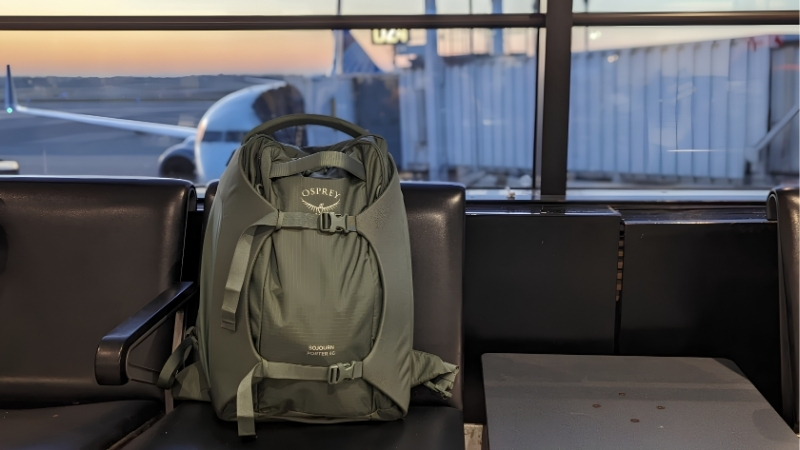
Carry-On Dimensions and Airline Limits
The common domestic carry-on allowance sits around 22 x 14 x 9 inches, and most travel packs are cut to land just inside it. European and budget carriers are often stricter, with some allowing closer to 55 x 40 x 20 centimetres, so check your specific airline rather than assuming.
Measure the pack fully loaded, not empty. Soft-sided bags swell once packed, and external stretch pockets add an inch that a gate sizer counts. Packs in the 35 to 45 litre range generally comply; anything past 45 litres is realistically a checked bag on most carriers.
Clamshell Versus Top-Loading Access
A clamshell opening, where the pack unzips flat like a suitcase, is the single feature that makes one-bag travel workable. You can see and reach everything without unpacking, repack in a hotel room in two minutes, and use packing cubes properly rather than digging through a vertical tube.
Top-loading hiking packs force you to remove three items to reach the fourth, which becomes tiresome by day three of a trip. Some travel packs offer a hybrid panel opening that unzips most of the way, which is a reasonable middle ground if you also hike with the same bag.
Harness, Weight, and Laptop Protection
Look for a harness that stows away behind a zipped panel. Loose straps catch on baggage belts and gate-check handling, and a tucked harness lets the pack be handled like luggage when it needs to be. A grab handle on the top and side is worth just as much.
Empty weight matters because airline allowances are total weight. A pack that starts at four pounds eats into a fifteen-pound limit before you put anything in it. Check that the laptop sleeve is suspended off the base, since travel packs get set down hard far more often than day packs do.
Top Picks: Best Backpack for Plane Travel
The best backpack for plane travel on a two-week trip is not the same one for a weekend, so these five run from 35 to 45 litres. Dimensions come from manufacturer listings and change between model years, so measure against your airline’s published limits before ordering.
| Model | Capacity | Opening | Harness | Best For |
|---|---|---|---|---|
| Osprey Farpoint 40 | 40 L | Full clamshell | Stowable | All-around one-bag travel |
| Cotopaxi Allpa 35L | 35 L | Full clamshell | Stowable | Organised packing |
| Peak Design Travel Backpack 45L | 30-45 L expandable | Multi-panel | Stowable | Camera and tech kit |
| Tortuga Travel Backpack 40L | 40 L | Full clamshell | Adjustable | Maximum legal volume |
| Amazon Basics Carry-On Travel Backpack | ~40 L | Panel | Basic | Budget first pack |
1. Osprey Farpoint 40 – Best All-Around One-Bag Pack
This is the pack most one-bag travellers end up recommending. Forty litres sits inside carry-on limits on most carriers, the clamshell opens completely flat, and the harness zips away behind a back panel when you need to hand it over. Osprey’s warranty is among the better ones in the category.
The laptop sleeve sits in a separate front compartment that eats into main-bag volume, and the hipbelt is thinner than a hiking pack’s. There is no women’s-specific fit in the standard model, though the Fairview is the equivalent cut. For most trips, it does more things right than wrong.
2. Cotopaxi Allpa 35L – Best Internal Organisation
The Allpa splits the main compartment into two zipped mesh halves, which enforces organisation without needing packing cubes at all. Clothes on one side, shoes and toiletries on the other, and everything stays visible. The TPU-coated shell handles rain and scuffs better than plain nylon does.
At 35 litres it packs less than the 40-litre options, and the structured shell means it does not compress into a smaller footprint when half empty. The harness is comfortable for airport walks rather than long hikes. For trips where staying organised matters, the fixed dividers are the point.
3. Peak Design Travel Backpack 45L – Best for Tech and Camera Kit
This one expands from 30 to 45 litres via external zips, so it flies as a compliant carry-on and grows for the trip home. Multiple access points mean you reach a laptop or a camera without opening the whole bag, and the optional cube inserts turn it into a proper camera system.
It is heavier empty than most rivals and costs considerably more once you add inserts. The rigid structure also limits how much you can overstuff it. For travellers carrying cameras, drones, or several devices, the access design earns back the weight penalty quickly.
4. Tortuga Travel Backpack 40L – Maximum Usable Volume
Tortuga builds to the edge of carry-on limits rather than under them, so the interior is a straight rectangle with almost no wasted shape. The clamshell opens fully, the harness adjusts across a real torso range, and the sailcloth-style fabric resists water without a coating that peels.
Being cut to the maximum means it will not squeeze under a seat and can attract attention on strict budget carriers. It is also expensive. For travellers who want every legal litre and a harness that handles a fully loaded bag, it is the most efficient option here.
5. Amazon Basics Carry-On Travel Backpack – Budget Starting Point
Before spending premium money on a travel pack, it is reasonable to find out whether one-bag travel suits you. This covers the basics: carry-on dimensions, a panel opening, a padded laptop sleeve, and a trolley sleeve, at a price that makes an experiment low risk.
Hardware is where the savings show. Zips are unbranded, the shoulder straps use thinner foam, and there is no stowable harness. It will not last a decade of weekly flying. As a first travel pack for two or three trips a year, it does the job without regret.
Tariffs, Holiday Travel, and Buying Timing
Travel bag pricing has shifted this year and demand peaks in a narrow window, which affects both what you pay and what sizes remain in stock. Both are worth a moment before you commit to the best backpack for plane travel on your shortlist.
Fabric Costs Have Already Risen
An Outdoor Industry Association survey found 84 percent of member businesses expect new tariffs to affect operations, with costs up roughly 7.7 percent overall. High-tenacity nylon, the fabric in nearly every travel pack here, has climbed 10 to 15 percent on top of that baseline increase.
For bags in the $150 to $350 range, industry reporting points to movement of $20 to $50 per item. Brands have been unusually direct that quoted forward pricing is an estimate rather than a commitment, which argues against sitting on a decision for months once you have chosen a model.
Holiday Travel Thins Out Stock
Bag demand climbs from late October and peaks through Thanksgiving and the December holidays, which is when the most popular colourways and sizes go out of stock. Restocks on specific variants often run longer than a listing suggests, particularly for models made in limited colour runs.
Buying before that window also gives you time to do a trial pack at home and walk around with it loaded. Discovering that a harness sits wrong is much easier to fix in October than at a check-in desk two days before a flight.
Where the Deepest Discounts Land
If the trip is not imminent, the calendar is predictable. Prime Big Deal Days in mid-October and the Black Friday through Cyber Monday stretch in late November carry the steepest cuts on luggage and bags, with early deals usually appearing in the days ahead of each event.
Travel packs are also a common gift, so the best-reviewed models thin out before those windows close. Build a wishlist now and track the price history rather than shopping on the day, then buy early in the sale if a specific colour and size matter to you.
Frequently Asked Questions
These are the questions that come up most often from people switching from a roller case to the best backpack for plane travel. Short, practical answers below.
Will a 40-litre backpack count as carry-on?
Usually yes on major carriers, provided the external dimensions stay within roughly 22 x 14 x 9 inches when packed. Litres are not what airlines measure. Budget and regional carriers apply tighter limits and enforce them more consistently, so check the published figures for the specific airline you are flying.
Do I still need a personal item?
Most travellers carry a small packable daypack or a slim sleeve alongside the main bag. It goes under the seat with a laptop, documents, and anything needed in flight, which saves standing up to open the overhead bin. Several travel packs include a detachable daypack for exactly this.
Can I take a travel backpack as hand luggage internationally?
Yes, but international allowances vary far more than domestic ones, and weight limits are enforced more often. Several European and Asian carriers cap hand luggage between 7 and 10 kilograms including the bag. Weigh the loaded pack at home rather than estimating it at the airport.
Should I get a hip belt on a travel pack?
If the loaded weight goes past about 20 pounds or you walk long distances between transport, yes. For short airport transfers a padded belt is often more bulk than benefit. Many travel packs use a removable belt, which is the sensible compromise between the two situations.
See More:
- Best trekking sleeping bag
- Best sleeping bag for backpacking
- Best women backpack for work
- Best backpack for backpackers
Final Thoughts
The best backpack for plane travel is the one that measures inside your airline’s limit when fully packed, opens flat so you can live out of it, and hides its straps when handed over at a gate. Start with published dimensions rather than litres, decide whether full clamshell access matters more than compressing into a smaller footprint, and weigh the empty pack against your carrier’s total allowance. Buying ahead of the holiday rush gets you the size and colour you actually wanted.


Write Your Review
No reviews yet. Be the first to share your experience!