
Key takeaways
Best sleeping bag for backpacking comes down to a weight budget you set before you shop, not a brand you pick after. This guide walks through comfort ratings, fill power, and pad pairing, then compares five bags that earn their place in a pack on multi-day trips, along with the specifications worth verifying before you place an order.
Our top picks


 MalloMe Sleeping Bags for Adults Cold Weather
- Occupancy: 1 Person
- Shape: Rectangular
- Seasons: 3 Seasons
Temperature rated for 50 to 77 degrees across seasons
Weighs only around 3 pounds for easy packing
Compression sack with straps shrinks it for storage
Rated for three seasons, not winter cold
Fits up to 6 feet tall, limiting taller sleepers
 Teton 20F and 5F Degree Sleeping Bag;
- Occupancy: 1 Person
- Seasons: All Seasons
- Temperature Rating: +20F
Stuff sack makes packing down quick, no rolling needed
Microfiber insulation adds loft without much extra weight
Zipper draft tube helps seal in warmth
Fits users up to 72 inches tall only
Mummy shape limits room to move around at night


As an Amazon Associate we earn from qualifying purchases at no extra cost to you.
As an Amazon Associate we earn from qualifying purchases.
By Jake Thompson, gear writer at Roger Bacon Outdoors.
🛒 Best Price Today on Amazon
Prime members get fast, free shipping on everything above, plus member-only deals. New members get a 30-day free trial — cancel anytime.
How to Choose the Best Sleeping Bag for Backpacking
Backpacking changes the calculation compared to camping out of a vehicle. Every ounce and every liter of packed volume is carried on your back for hours at a time. These three criteria decide whether a bag belongs in a pack or belongs in the garage with the car camping gear.
Set a Weight Budget Before You Shop
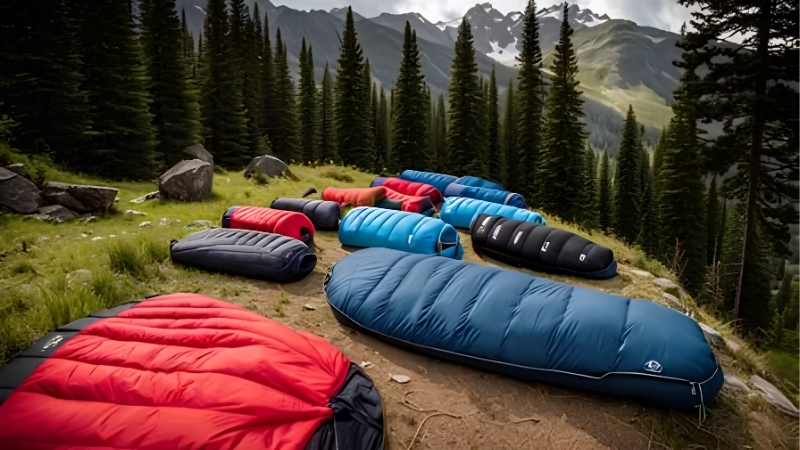
Work backward from your total pack weight. A common target is a base weight of 20 pounds or less, with the sleep system taking roughly a quarter of that. In practice, this means a bag between two and three pounds for three-season use, and closer to two if you are moving fast.
Volume matters as much as mass. A bag that compresses to five liters leaves room for food on a five-day resupply stretch; one that stops at nine liters does not. Manufacturers publish compressed dimensions, and those numbers tell you more about pack fit than the weight figure alone ever will.
Read the Comfort Rating, Not the Limit
EN and ISO testing produce two numbers. Comfort describes an average cold sleeper resting comfortably; limit describes an average warm sleeper curled up and just holding on. Marketing headlines almost always use the limit figure, which is why a bag labeled 20°F often has a comfort rating nearer 30°F.
Pick your rating from the coldest night you actually plan to be out in, then add a margin of about ten degrees. For most backpacking seasons in the lower 48, a comfort rating in the mid-20s to low 30s is the honest answer, and anything colder is weight you are carrying for nothing.
Fill Type, Fit, and Pad Compatibility
Down delivers more warmth per ounce and packs smaller, which is why the best sleeping bag for backpacking is usually a down bag in dry or moderate climates. Hydrophobic treatments help in humidity, but a genuinely wet multi-day trip still favors synthetic fill that keeps loft and dries overnight.
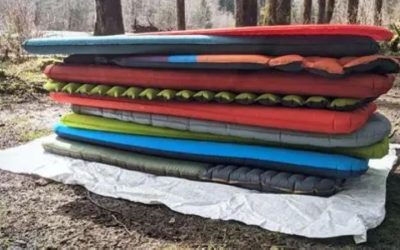
Fit is the part people skip. A mummy cut that is too narrow costs you sleep; one that is too roomy costs you warmth because you heat dead air all night. Check shoulder and hip girth against your own measurements, and match bag width to pad width so you are not sliding off at 2 a.m.
Top Picks: Best Sleeping Bag for Backpacking
The best sleeping bag for backpacking depends on your climate, and these five span the realistic range, from a premium ultralight bag to a budget synthetic that still fits a pack. Specifications below reflect manufacturer figures for regular-length models and vary slightly by size and revision, so confirm the exact length and zipper side before you place an order.
| Model | Insulation | Approx. Rating | Packed Weight | Best For |
|---|---|---|---|---|
| Western Mountaineering UltraLite 20 | 850+ fill goose down | 20°F | ~1 lb 13 oz | Premium ultralight |
| Marmot Sawtooth 15 | 650-fill down | 15°F limit | ~2 lb 12 oz | All-around three season |
| Big Agnes Sidewinder SL 20 | 650-fill DownTek | 20°F | ~2 lb 7 oz | Side sleepers |
| Kelty Cosmic 20 Down | 550-fill DriDown | 20°F limit | ~2 lb 11 oz | Budget down |
| NEMO Forte 20 | Recycled synthetic | 20°F | ~2 lb 12 oz | Damp conditions |
1. Western Mountaineering UltraLite 20 – Premium Ultralight
Long-distance hikers who count grams and keep gear for a decade are the audience. The UltraLite uses 850-plus fill power down with continuous baffles, letting you shift insulation toward the top on cold nights. At roughly a pound and thirteen ounces, it undercuts almost everything at the same rating.
The price sits at the top of the market, and the narrow cut is genuinely narrow across the shoulders. The lightweight shell also demands care around abrasive ground. If you hike enough miles to justify it and take care of your kit, this is a bag you buy once.
2. Marmot Sawtooth 15 – Best All-Around Three-Season Bag
This is the middle of the road in the best possible sense. The Sawtooth pairs 650-fill down with a stretch construction that follows your legs instead of fighting them, and it hits 15°F while staying under three pounds. It handles spring through fall across most of the country.
At 650 fill power it packs larger than premium down bags, and the stretch panels add a small weight penalty. Neither is a dealbreaker for weekend and week-long trips. For hikers who want one bag rather than a quiver, this is the most sensible single purchase here.
3. Big Agnes Sidewinder SL 20 – Best for Side Sleepers
Big Agnes built this one around the way people actually sleep, with an asymmetrical shape and an insulated hood that rotates with you. It uses 650-fill DownTek, a water-repellent treatment, and it comes in around two pounds seven ounces for the regular length.
The design assumes a pad in the integrated sleeve, so it is less versatile if you like sleeping outside the bag setup entirely. Bag width also needs a 20 to 25 inch pad to work as intended. Within that system, side sleepers get a noticeably better night.
4. Kelty Cosmic 20 Down – Budget Down That Works
As a first best sleeping bag for backpacking purchase, the Cosmic delivers down performance at a price most people can justify. The 550-fill DriDown holds loft in humid conditions, the draft collar and full-length draft tube are proper features, and the regular sits near two pounds eleven ounces.
Lower fill power means more volume in the pack, and the shell fabric is heavier than premium options. It is the compromise you make to get down warmth at this price. For weekend trips and shoulder-season overnights, it does everything most hikers need it to do.
5. NEMO Forte 20 – Best Synthetic for Damp Trips
Synthetic earns its keep when the forecast is bad and staying dry is not realistic. The Forte uses recycled synthetic fill in a spoon shape with Thermo Gills for venting, weighs roughly two pounds twelve ounces, and keeps working when a down bag would be flat and useless.
Compressed volume is the cost, and it is a real one on a smaller pack. Synthetic loft also degrades faster than down over years of stuffing and unstuffing. For coastal routes, spring snowmelt, or anyone who has ruined a down bag once, that trade is easy to accept.
Cost Pressure and Buying Timing on Sleep Gear
Prices on the best sleeping bag for backpacking have shifted more than usual over the past year, and the reasons are not marketing spin. Understanding what is driving costs and when discounts actually land will save you more money than picking a slightly cheaper model would.
Tariffs Are Showing Up in Technical Fabrics
Industry survey data indicates 84 percent of Outdoor Industry Association members expect tariff impacts, with overall costs up around 7.7 percent. High-tenacity nylon and specialty foams, the exact materials in bag shells and sleeping pads, have seen increases in the 10 to 15 percent range.
For gear priced between $100 and $300, that translates to movement of roughly $20 to $50 per item. Most brands are explicitly describing forward pricing as an estimate rather than a fixed figure, which is unusual candor and a reasonable signal not to wait indefinitely on a bag you need.
Buy Early for Size and Zipper Availability
September through November is peak season for cold-weather sleep gear, and stock is deepest right before it starts. Regular and long lengths in the most popular ratings sell through first, and left-hand zippers are always the thinnest inventory line in any brand’s catalog.
Ordering ahead of the rush also gives you a chance to unbox, loft the bag overnight, and confirm the fit works with your pad before you are three miles from the trailhead. That is worth more than the small discount you might catch by waiting.
When Discounts Are Actually Deepest
If your next trip is months out, the calendar favors patience. Prime Big Deal Days in mid-October and the Black Friday to Cyber Monday stretch in late November carry the largest outdoor markdowns of the year, with early deals often appearing in the days beforehand.
Build a shortlist now and set price alerts rather than shopping blind on sale day. For anything you must have before winter, buy at the front of the sale window; popular sizes are frequently gone before the discount reaches its lowest point of the event.
Frequently Asked Questions
These are the questions that come up most often from hikers shopping for the best sleeping bag for backpacking after moving up from car camping. Short answers below, with the reasoning that matters for a pack you carry all day.
How light should a backpacking bag be?
Two to three pounds is the realistic target for three-season use, and under two pounds is achievable if the budget allows. Anything past three pounds is worth reconsidering unless you need a genuine cold-weather rating. Packed volume deserves equal weight in the decision alongside the scale figure.
Can I use a quilt instead of a bag?
Yes, and many long-distance hikers do. A quilt drops the hood and the crushed insulation underneath you, saving several ounces. The trade is draft management, which takes practice with straps and pad attachment. Beginners generally sleep warmer and complain less in a traditional mummy bag.
What R-value pad should I pair with it?
For three-season backpacking, an R-value of 3 or higher is the working minimum. Push toward 4 or 5 for late-season trips and frozen ground. Bag insulation compresses to nothing under your body, so the pad is doing more of the warmth work than most people assume.
How do I wash a down backpacking bag?
Use a front-loading machine on a gentle cycle with a down-specific detergent, never regular soap. Dry on low heat with a few clean tennis balls to break up clumps, and expect the process to take several hours. Wash only when it is genuinely dirty, perhaps once a season.
See More:
- Best trekking sleeping bag
- Best LED headlamp bulbs
- Best women backpack for work
- Best backpack for backpackers
Final Thoughts
The best sleeping bag for backpacking is the one that fits your weight budget, your climate, and the pad you already own, in that order. Set the target weight first, choose the comfort rating your season honestly requires, then decide between down and synthetic based on how wet your trips get. Buy ahead of the fall rush and you will get the size, length, and zipper orientation you actually want.
Write Your Review
No reviews yet. Be the first to share your experience!