Key takeaways
- Buying by height alone. Height is not a torso measurement. Two people of the same height can differ by 3 inches or more in torso length.
- Choosing a pack that is too long. If the frame extends too far above your shoulders, the hip belt may sit too low. The pack can feel unstable and place excess pressure on your lower back.
- Choosing a pack that is too short. A short frame may make the shoulder straps pull down hard on your shoulders, and the load lifters may run flat or downward instead of lifting the load inward.
- Ignoring hip-belt size. Torso length and hip-belt circumference are separate measurements. The padded sections of the belt should wrap around the front of your hip bones with a 1- to 3-inch gap between buckle ends after tightening.
- Testing an empty backpack. A pack can feel fine in a store but perform poorly under a realistic load. Use 15 to 20 pounds for a day pack test and 25 to 35 pounds for a backpacking pack test.
- Overtightening shoulder straps. Tight shoulder straps cannot fix an incorrect torso length. They often cause neck pressure, tingling hands, and sore trapezius muscles.
The Short Answer
To choose the right backpack torso length, measure from the bony bump at the base of your neck (the C7 vertebra) to the top of your hip bones (the iliac crest). Your torso measurement—not your height—is the number that determines whether a backpack frame, shoulder harness, and hip belt will fit correctly.
Most adult backpacking packs fit torso lengths from about 15 to 22 inches (38 to 56 cm), but the exact range varies by brand and model. A person who is 6 feet tall may need a small pack if they have a short torso, while someone who is 5 feet 4 inches may need a large pack with a long frame. Start with your measured torso length, then adjust the pack under load.
Our top picks



As an Amazon Associate we earn from qualifying purchases at no extra cost to you. Ratings are shown as listed on Amazon.
A properly fitted pack transfers roughly 70% to 80% of its weight to your hips. The shoulder straps should stabilize the load rather than carry it. For day hikes, a close fit is still important; for overnight and multi-day trips, it can make the difference between a comfortable carry and sore shoulders, numb arms, or hip-belt chafing.
Standard Sizes
Backpack labels are not standardized across every manufacturer, so use these ranges as a starting point and always compare them with the brand’s own size chart. Adjustable-torso packs cover a wider range, while lightweight or technical packs may come in fixed small, medium, and large frame sizes.
| Typical Pack Size | Torso Length in Inches | Torso Length in Centimeters | Common Fit Notes |
|---|---|---|---|
| Extra Small | 14–16 in. | 36–41 cm | Often found in youth, petite, and women’s-specific packs |
| Small | 16–18 in. | 41–46 cm | A common fit for shorter adult torsos |
| Medium / Regular | 18–20 in. | 46–51 cm | The most common adult backpack size range |
| Large / Tall | 20–22 in. | 51–56 cm | Best for longer torsos and taller frame lengths |
| Extra Large | 22–24 in. | 56–61 cm | Available from select brands and specialty lines |
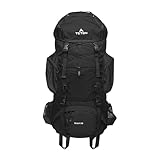
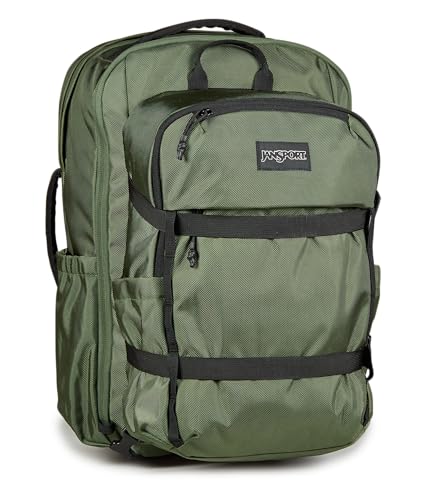
Many adjustable backpacks span 4 to 6 inches of torso adjustment. For example, an adjustable 18-to-22-inch frame may work for many medium and large users, provided the hip belt also fits. The Kelty Coyote 65L has an adjustable torso system, making it a practical option for households where more than one person may use the pack. The JanSport Venture Pack System also uses an adjustable torso design and a perimeter wireframe suspension.
Fixed-size packs can offer a simpler, lighter setup. The Granite Gear Blaze 60L Regular is intended for a regular torso range, while the Osprey Kestrel LT 35L is a smaller-capacity hiking pack that should be selected by its specific frame-size chart rather than the “one size” wording sometimes used in retailer listings.
How to Measure Your Space
For backpack fitting, “space” means the length of your back between your neck and hips. You only need a flexible measuring tape, a mirror, and ideally a friend to help. Measure over a thin shirt rather than a bulky sweater or jacket.
- Find the C7 vertebra. Tilt your head forward slightly. Feel for the most prominent bony bump where your neck meets your upper back. This is usually your C7 vertebra and is the top point of the measurement.
- Locate your iliac crest. Place your hands on the top edges of your hip bones, with your thumbs pointing toward your back. Draw an imaginary line between your thumbs across your lower back. This is the lower point of the measurement.
- Stand naturally. Keep your feet about shoulder-width apart and do not hunch, stretch upward, or pull your shoulders back unnaturally. Your normal standing posture produces the most useful result.
- Measure along the curve of your spine. Have a helper run a flexible tape from the C7 bump down your spine to the line between your thumbs. Record the result in both inches and centimeters.
- Measure twice. Repeat the process once or twice. If the results vary by more than 1/2 inch, reposition your hands on the iliac crest and try again.
- Compare the number with the pack chart. If you are at the boundary between sizes, try both when possible. A pack’s adjustment range, hip-belt fit, and intended load weight can determine which option feels better.
Do not measure from the top of your shoulder to your waistline or from the base of your neck to your pants belt. Pants sit at different heights, while a backpack hip belt should wrap around the iliac crest so it can bear weight efficiently.
By Room or Use Case
Day Hiking and Commuting
For a 15L to 35L day pack, torso fit matters most when you carry water, a laptop, camera equipment, or cold-weather layers. A 35L model such as the Osprey Kestrel LT can work well for long day hikes and lighter overnights, but only if the hip belt lands on your hip bones and the shoulder harness follows your upper back without gaps. For loads under about 12 pounds, a simple non-adjustable pack can be comfortable. Above 15 pounds, prioritize a supportive hip belt and adjustable sternum strap.
Weekend Backpacking
For one- to three-night trips, most people use 40L to 60L packs and carry approximately 20 to 35 pounds after food and water. This is where an accurate torso fit becomes essential. A 60L pack such as the Granite Gear Blaze 60L gives enough capacity for a tent, sleep system, layers, and cooking gear without requiring an expedition-size frame. Test the fit with 20 pounds inside, not an empty pack. The load lifter straps should angle upward from the shoulder straps at roughly 30 to 45 degrees.
Extended Trips and Travel
For longer backpacking trips, winter gear, or travel that requires more clothing, a 60L to 75L pack is common. The Kelty Coyote 65L is designed for this higher-capacity category and is useful for buyers who need torso adjustability. Larger packs can easily tempt you to overpack, so fitting is especially important: a 40-pound load on the wrong torso length will pull backward and concentrate pressure on your shoulders. Keep heavy items close to the center of your back and near shoulder-blade level.
Shared Household or Growing Teen Use
An adjustable-torso pack is the sensible choice when a pack will be shared, loaned out, or used by a growing teenager. Look for a clearly marked adjustment system with at least 3 to 4 inches of range. Before each user sets out, adjust the torso panel first, then the hip belt, shoulder straps, load lifters, and sternum strap in that order. An adjustable frame does not eliminate the need for a properly sized hip belt.
Common Sizing Mistakes
- Buying by height alone. Height is not a torso measurement. Two people of the same height can differ by 3 inches or more in torso length.
- Choosing a pack that is too long. If the frame extends too far above your shoulders, the hip belt may sit too low. The pack can feel unstable and place excess pressure on your lower back.
- Choosing a pack that is too short. A short frame may make the shoulder straps pull down hard on your shoulders, and the load lifters may run flat or downward instead of lifting the load inward.
- Ignoring hip-belt size. Torso length and hip-belt circumference are separate measurements. The padded sections of the belt should wrap around the front of your hip bones with a 1- to 3-inch gap between buckle ends after tightening.
- Testing an empty backpack. A pack can feel fine in a store but perform poorly under a realistic load. Use 15 to 20 pounds for a day pack test and 25 to 35 pounds for a backpacking pack test.
- Overtightening shoulder straps. Tight shoulder straps cannot fix an incorrect torso length. They often cause neck pressure, tingling hands, and sore trapezius muscles.
FAQ
What torso length backpack do I need if I am between sizes?
Try both sizes with weight inside. In many cases, choose the size that lets the hip belt center over your iliac crest and gives the load lifters a 30- to 45-degree upward angle. If the pack has an adjustable torso, begin in the middle setting and make small changes of about 1 inch at a time.
Can a women’s backpack fit a man, or vice versa?
Yes, if the torso length and hip belt fit correctly. Women’s-specific packs often have shorter torso ranges, more contoured shoulder straps, and hip belts shaped for different body contours. Those features can be comfortable for any wearer, regardless of gender. Fit and comfort matter more than the label.
How should a backpack sit on my body?
The center of the padded hip belt should sit directly over the top of your hip bones. After tightening the hip belt, snug the shoulder straps until they lie smoothly against your back without carrying most of the weight. Fasten the sternum strap about 1 inch below your collarbones, then lightly tighten the load lifters.
How much should I spend on a properly fitting backpack in 2026?
Expect to spend about $100 to $180 for a capable day-hiking or entry-level overnight pack, and roughly $150 to $300 for a well-supported 50L to 70L backpacking pack. The example models fall near the lower-to-mid end of that range: the Osprey Kestrel LT 35L is about $180, the Kelty Coyote 65L is about $150, the JanSport Venture Pack System is about $175, and the Granite Gear Blaze 60L is about $150. A lower-priced pack that fits your torso correctly is usually a better buy than a premium pack in the wrong size.