Key takeaways
- Choosing the largest bag automatically. Extra capacity encourages extra packing and can create a heavy, uncomfortable load. Select the smallest size that accommodates your actual list.
- Confusing expandable capacity with everyday capacity. An expandable 30-liter bag may become 35 or 40 liters, but it may also exceed airline limits when expanded.
- Ignoring empty weight. A heavily padded or wheeled backpack can weigh several pounds before you add anything. That reduces the amount you can comfortably carry.
- Measuring only the main compartment. Exterior pockets, laptop sleeves, and water-bottle holders may make the bag wider or deeper than expected.
- Assuming liters predict comfort. Fit depends on shoulder-strap placement, back length, padding, load distribution, and whether the bag has a hip belt.
- Relying on “personal item” wording. Airline rules differ, and a spacious 40-liter backpack is unlikely to meet the strictest under-seat limits when fully packed.
The Short Answer
For most weekend trips, choose a backpack with 30 to 40 liters of capacity. A 30-liter bag is usually enough for two nights if you pack light and have access to laundry or toiletries at your destination. A 35- to 40-liter backpack gives you more room for shoes, a jacket, electronics, and less-compressible clothing.
Choose 20 to 30 liters for a minimalist overnight trip, warm-weather travel, or a hotel stay with most toiletries provided. Choose 40 to 45 liters for a long weekend, cold-weather layers, bulky footwear, or travel with a camera, laptop, and work accessories.
Our top picks


As an Amazon Associate we earn from qualifying purchases at no extra cost to you. Ratings are shown as listed on Amazon.
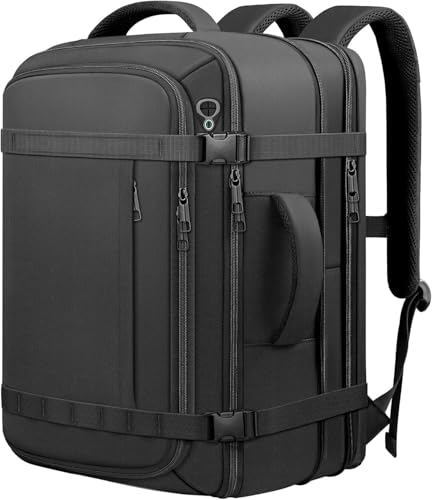
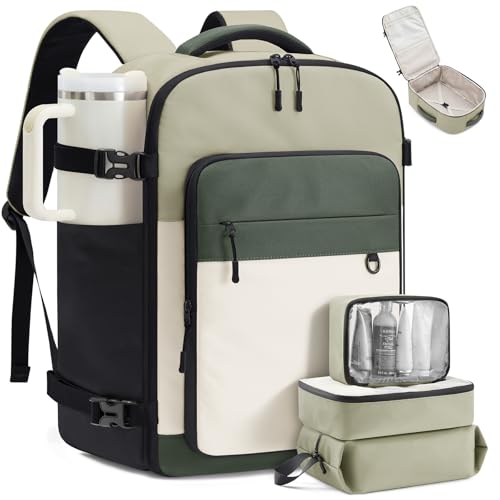
Capacity is only one part of the decision. A bag’s outside dimensions, empty weight, opening style, and organization can matter just as much. Many travel backpacks marketed as 40-liter carry-ons measure approximately 20 to 22 inches tall, 13 to 14 inches wide, and 8 to 10 inches deep. Always compare those measurements with your airline’s current limits before flying. This guide reflects practical buying considerations for 2026.
Standard Sizes
The following ranges describe typical backpack sizes, not guaranteed interior measurements. Exterior dimensions include fabric, zippers, pockets, and padding, so usable capacity will be slightly lower than the advertised liter rating.
| Capacity | Typical exterior size | Approximate size in centimeters | Best for | Typical empty weight |
|---|---|---|---|---|
| 15–20L | 17 × 11 × 7 in | 43 × 28 × 18 cm | Day trips or minimalist overnights | 1.0–2.0 lb |
| 20–30L | 19 × 12 × 8 in | 48 × 30 × 20 cm | One to two nights in warm weather | 1.5–2.5 lb |
| 30–40L | 21 × 13 × 9 in | 53 × 33 × 23 cm | Most weekend trips | 2.0–3.5 lb |
| 40–45L | 22 × 14 × 10 in | 56 × 36 × 25 cm | Long weekends or bulky clothing | 2.5–4.0 lb |
| 50L and larger | 24 × 15 × 11 in or more | 61 × 38 × 28 cm or more | Extended travel, camping, or checked luggage | 3.0–5.0 lb or more |
For a standard weekend, a clamshell backpack in the 35- to 40-liter range is often the most flexible choice. It opens like a suitcase, making it easier to use the full depth of the bag. A top-loading hiking pack may have the same advertised capacity but can be harder to organize in a hotel room.
Many affordable travel backpacks fall between roughly $28 and $40. For example, 40-liter models such as the LOVEVOOK travel backpacks in this category are commonly listed around $32 to $40, while expandable carry-on and convertible laptop backpacks may be priced around $28 to $40. Price can change with color, promotions, warranty coverage, and included packing cubes, so compare the current listing rather than relying only on the capacity label.
How to Measure Your Space
- Measure your packing list first. Lay out everything you expect to bring, including shoes, toiletries, chargers, and a jacket. A weekend list usually includes two or three tops, two bottoms, underwear, sleepwear, one extra layer, and one pair of shoes.
- Measure the bag’s exterior. Record height from the bottom panel to the highest fixed point, width from side to side, and depth from the front panel to the back panel. Measure with expansion zippers closed and then open if the bag is expandable.
- Check the laptop compartment separately. A backpack advertised for a 17-inch laptop may not fit every 17-inch computer. Compare the compartment’s actual height and width with your device, including its protective case.
- Account for pockets and padding. A thick laptop sleeve, shoe compartment, frame, or front organizer takes up space that is not available for clothing. Two 40-liter backpacks can have noticeably different usable interiors.
- Test the weight, not just the volume. Fill the bag with books, towels, or packaged goods until it weighs what you expect to carry. A fully packed 40-liter bag can reach 20 to 30 pounds quickly, even when the bag itself weighs only 2 to 3 pounds.
- Compare travel restrictions. Do not assume that “airline approved” or “carry-on” means the bag meets every airline’s rules. Measure the packed bag, including bulging front pockets and compression straps, against the carrier’s stated maximum dimensions.
By Room or Use Case
Hotels and city weekends
For a two-night hotel stay, 30 to 35 liters is usually the sweet spot. It provides room for folded or rolled clothing, compact toiletries, a laptop, and a light jacket without becoming unwieldy on public transportation. Look for a wide opening, a padded back panel, and a luggage pass-through if you will combine it with a rolling suitcase.
Cold-weather weekend trips
Use 40 to 45 liters when sweaters, insulated layers, boots, or rain gear are part of the packing list. Bulky clothing consumes space rapidly, and compression cubes cannot eliminate the volume of thick fabric. A separate shoe compartment can be useful, but remember that it reduces the room available in the main compartment.
Business travel
A 25- to 35-liter backpack often works well for a short work trip. Prioritize a suspended laptop sleeve, document storage, a water-bottle pocket, and a structured base. If you need dress shoes, a blazer, and presentation materials, move closer to 35 or 40 liters. A convertible backpack with shoulder straps and a side handle may be convenient for airports and offices, but its extra hardware can add weight.
Minimalist overnight trips
A 20- to 25-liter bag is sufficient for warm weather if you bring one change of clothes, lightweight sleepwear, basic toiletries, and a tablet or small laptop. This size is easier to carry and may fit under more airline seats, although personal-item dimensions vary. Avoid overpacking by wearing your bulkiest shoes and jacket during transit.
Road trips and car travel
Capacity is less restrictive in a car, so a 35- to 45-liter backpack can provide convenient access to clothing and electronics without needing a suitcase. Choose durable fabric, strong zippers, and exterior grab handles. If the bag will stay in a vehicle, a simple interior is often more useful than numerous small pockets.
Weekend camping or outdoor travel
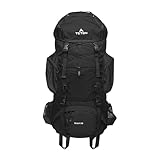
For a true overnight outdoors, capacity depends on whether the backpack carries a sleeping bag, tent, cooking equipment, and food. A standard travel backpack is usually not an appropriate substitute. Many overnight hiking setups require approximately 40 to 55 liters, while ultralight gear may fit in less. Look for a supportive hip belt, adjustable torso length, ventilation, and water resistance rather than focusing only on laptop compartments.
Common Sizing Mistakes
- Choosing the largest bag automatically. Extra capacity encourages extra packing and can create a heavy, uncomfortable load. Select the smallest size that accommodates your actual list.
- Confusing expandable capacity with everyday capacity. An expandable 30-liter bag may become 35 or 40 liters, but it may also exceed airline limits when expanded.
- Ignoring empty weight. A heavily padded or wheeled backpack can weigh several pounds before you add anything. That reduces the amount you can comfortably carry.
- Measuring only the main compartment. Exterior pockets, laptop sleeves, and water-bottle holders may make the bag wider or deeper than expected.
- Assuming liters predict comfort. Fit depends on shoulder-strap placement, back length, padding, load distribution, and whether the bag has a hip belt.
- Relying on “personal item” wording. Airline rules differ, and a spacious 40-liter backpack is unlikely to meet the strictest under-seat limits when fully packed.
FAQ
Is 40 liters enough for a weekend trip?
Yes. A 40-liter backpack is enough for most two- to three-night trips, especially when traveling in mild weather. It can hold clothing, toiletries, electronics, and one pair of shoes. Use packing cubes and avoid filling every exterior pocket if you need to meet carry-on limits.
Is 30 liters too small for a weekend?
No. Thirty liters works well for minimalist travelers, warm climates, and hotel stays. It may feel tight if you need boots, thick sweaters, camera equipment, or a full-size toiletry kit. In those cases, a 35- to 40-liter design provides a more comfortable margin.
How many clothes fit in a 40-liter backpack?
A typical 40-liter bag can hold about two or three tops, two pairs of pants or shorts, underwear, socks, sleepwear, a light jacket, and toiletries, depending on fabric thickness and how efficiently you pack. Shoes and bulky coats can reduce that amount substantially.
What backpack size is best for a two-night trip?
Choose 30 to 40 liters for most two-night trips. Select 30 liters for light packing and warm weather; choose 35 to 40 liters for work gear, cold-weather layers, or extra footwear. Before buying, confirm the packed dimensions, empty weight, laptop fit, and the airline rules you expect to use.