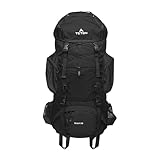
Key takeaways
- Stated capacity: 35 liters, the highest in this comparison
- Form: soft-sided underseat backpack with a clamshell or half-clamshell main opening, so you pack it like a suitcase
- Laptop storage: padded sleeve in the 15.6-inch class mounted against the back panel, which is standard for this segment
- Shell: water-resistant synthetic fabric with a reinforced base panel, typical of the class
- Carry system: padded shoulder straps, sternum strap, top grab handle and a rear luggage pass-through strap
- Fit guidance: pack to roughly 26-28 liters for a confident underseat fit; verify your carrier’s published personal-item dimensions before you fly
- Best trip length: three to five days if you pack flat and use compression
The best underseat carry-on bag for most travelers is the Taygeer Underseat 35L Carry-On Backpack, because it puts the largest practical amount of clothing space inside a personal-item footprint and compresses into a sizer bin when it has to. It suits women who want one bag for a three-to-five-day trip and prefer backpack carry to dragging a handle. If you would rather roll, the TPRC 15-Inch Underseat Wheeled Carry-On is the pick, with a built-in USB charging port and a compact body sized for the space under the seat ahead of you. If your trips are work trips and you carry a laptop plus a change of clothes, the Travelpro Maxlite 5 Softside Underseat Tote is the premium choice. On a tight budget, the Taygeer TSA-Approved Travel Backpack delivers the same category of bag for less. Soft duffles, the BAGSMART Travel Duffle and the SYCNB Extra Large Travel Duffle, round out the list for gym-to-weekend crossover use. The one thing every one of the best underseat carry on bags has in common is that it fits an envelope of roughly 18 by 14 by 8 inches when it matters.
Top 3 Picks
Best overall: Taygeer Underseat 35L Carry-On Backpack
The largest stated capacity in this roundup at 35 liters, with the clamshell organization of a travel pack rather than the single cavity of a duffle. It is the right answer if you want to carry three to five days of clothing as a personal item and you are willing to pack it to about three-quarters full so the soft shell can squash into the space under the seat. The women’s-specific fit and luggage pass-through make it a practical one-bag solution for air travel.
Best budget: Taygeer TSA-Approved Travel Backpack
A checkpoint-friendly backpack in the 25-to-30-liter class that costs a fraction of the premium options and still gives you a padded laptop compartment, water-resistant fabric and a rear strap that slides over a rolling bag’s handle. It is the sensible first underseat bag for students, short trips and anyone who flies a few times a year rather than weekly.
Best premium: Travelpro Maxlite 5 Softside Underseat Tote
A softside tote in the 18-inch class from a brand known for lightweight softside luggage and long warranty terms. It suits business travelers and anyone who wants a bag that looks tidy in a meeting, carries a laptop plus a change of clothes, and still slides under the seat on a mainline jet. You pay for the name, the fabric and the warranty rather than for volume.
Quick Comparison
| Product | Best for | Key specs | Price tier |
|---|---|---|---|
| Taygeer Underseat 35L Carry-On Backpack | Maximum packing volume in a backpack | 35 L stated capacity; 15.6-inch-class laptop sleeve; clamshell opening; luggage pass-through; soft-sided | Mid-range |
| Taygeer TSA-Approved Travel Backpack | Budget carry-on backpacking | 25-30 L class; TSA lay-flat opening; padded laptop compartment; water-resistant fabric | Budget |
| Travelpro Maxlite 5 Softside Underseat Tote | Business travel with a laptop | 18-inch class; softside tote; roughly 18 x 11 x 8 in and about 1.5-2.5 lb in this size class; trolley sleeve | Premium |
| TPRC 15-Inch Underseat Wheeled Carry-On | Rolling with a USB port | 15-inch-class body; four-wheel or two-wheel undercarriage adds roughly 1.5-2.5 in to overall height; USB pass-through port; purple colorway | Premium |
| BAGSMART Travel Duffle | Weekend, gym and carry-on crossover | Soft-sided duffle in the 35-45 L class; detachable shoulder strap; shoe or wet pocket typical; trolley sleeve typical | Mid-range |
| SYCNB Extra Large Travel Duffle | Budget weekenders and overpackers | Large or extra-large soft duffle, commonly 45-65 L in this segment; unstructured; folds flat when empty | Budget |
How We Chose
This list is built from published specifications, manufacturer dimension and capacity figures, and the standard personal-item envelopes that airlines publish in their own baggage policies, cross-checked against how each form factor behaves in that space. We filtered first on category fit: a bag only qualified if its exterior dimensions could plausibly land inside an 18 by 14 by 8 inch envelope, or if the listing itself identifies the bag as underseat or personal-item sized. We then sorted by use case rather than by ranking everything against one winner, because a wheeled case and an unstructured duffle are not competing for the same trip. Laptop storage was checked as a real constraint, not a bonus feature: a padded sleeve in the 15.6-inch class consumes roughly one to two liters of usable volume and adds structure that resists compression, which changes how the bag fits under a seat. Wheel clearance was handled by comparing body height against overall height, since undercarriage hardware is often excluded from the headline dimension. Handle quality, fabric class and the presence of a trolley sleeve were treated as ownership factors, and the upgrade path from the budget tier to the mid-range and premium tiers is explained in each section. We did not test, benchmark or own these products; the guidance here is spec- and category-based, and the sizing math in the buying guide below is arithmetic you can repeat with a tape measure.
1. Taygeer Underseat 35L Carry-On Backpack – Best for High-Volume Backpack Packing
This is the bag for the traveler who wants the most clothing volume possible while still boarding with a personal item. Taygeer markets it as a 35-liter underseat travel backpack for women, which makes it the largest stated capacity in this roundup. That number is also the thing to understand before you buy: 35 liters is a claimed internal capacity, and a personal-item envelope of 18 by 14 by 8 inches holds only about 33 liters of exterior volume, roughly 26 liters of which is realistically usable after structure, padding and pockets take their share. The bag fits under a seat reliably when you pack it to about three-quarters of its stated capacity and let the soft shell compress. Pack it to the brim and you are carrying an overhead-bin bag that happens to have a personal-item label.
Key specs
- Stated capacity: 35 liters, the highest in this comparison
- Form: soft-sided underseat backpack with a clamshell or half-clamshell main opening, so you pack it like a suitcase
- Laptop storage: padded sleeve in the 15.6-inch class mounted against the back panel, which is standard for this segment
- Shell: water-resistant synthetic fabric with a reinforced base panel, typical of the class
- Carry system: padded shoulder straps, sternum strap, top grab handle and a rear luggage pass-through strap
- Fit guidance: pack to roughly 26-28 liters for a confident underseat fit; verify your carrier’s published personal-item dimensions before you fly
- Best trip length: three to five days if you pack flat and use compression
Where it earns its place
The organization is the real advantage over a duffle. A clamshell opening means the main compartment lies flat, so you can stack clothing in packing cubes the way you would in a suitcase, and the laptop sleeve sits against your back where the padding doubles as a frame. The rear pass-through strap lets you slide the whole thing over the handle of a rolling carry-on, which is how most people actually travel on a longer trip: backpack as the personal item, roller as the overhead bag. The women’s-specific marketing in this segment generally means a shorter back panel and narrower shoulder straps, which reduces the bag-pulling-away-from-your-back problem that makes unisex travel packs uncomfortable on smaller frames.
The trade-off for all that capacity is that an unstructured bag slumps when it is half empty, and the laptop sleeve is the part that resists squashing. If you are carrying a large laptop, the back panel of the bag is effectively rigid, and that rigid edge is what has to slide into an eight-inch-deep space. A slim 13- or 14-inch laptop leaves noticeably more give. The front-to-back depth also grows as you fill the outer pockets, so treat those as overflow rather than as everyday storage on a personal-item-only flight.
Pros
- Largest stated capacity here at 35 liters, enough for a multi-day trip as a single bag
- Clamshell packing and internal organization beat a single-cavity duffle for clothing
- Padded 15.6-inch-class laptop sleeve with back-panel placement for protection
- Luggage pass-through strap pairs it with a rolling carry-on
- Soft shell compresses into a sizer bin in a way a hard case cannot
- Women’s-specific fit in a segment that is mostly unisex
Cons
- 35 liters only fits under a seat if you underpack it; a full load is an overhead-bin bag
- Unstructured body slumps and loses shape when it is half full
- A large laptop in the sleeve stiffens the back panel and reduces compression
- Backpack straps are not ideal if you also want to carry a shoulder bag on the same trip
- Outer pockets add depth, which is the dimension that gets measured at the gate
How it compares with the nearest alternative
Against the Taygeer TSA-Approved Travel Backpack, this model wins on capacity and organization and loses on price. The TSA backpack is a smaller, simpler bag in the 25-to-30-liter class at a budget tier; this 35-liter model is the mid-range step up for travelers who found the smaller pack ran out of room on day three. Against the Travelpro Maxlite 5 tote, the choice is carry style rather than quality: the tote is lighter and more flexible in a tight seat, but it holds less clothing and puts the weight on one shoulder.
2. Taygeer TSA-Approved Travel Backpack – Best for Budget Carry-On Backpackers
This is the value pick, and for a lot of travelers it is the correct first underseat bag. Taygeer lists it as a TSA carry-on backpack that is flight approved, aimed at women who want a laptop-friendly travel pack without paying for premium fabric and hardware. It sits in the budget tier, and the design decisions reflect that: simpler materials, fewer compression features, and a capacity class that is easier to fit under a seat than the 35-liter model above. If your trips are two to three days, or if you fly a handful of times a year and want something that will survive a few seasons of overhead-bin life, this is where the value sits.
Key specs
- Form: soft-sided carry-on backpack with a lay-flat, checkpoint-friendly opening
- Capacity: typically 25-30 liters in this segment, which packs to a personal-item footprint more easily than a 35-liter bag
- Laptop storage: padded compartment sized for a laptop in the 15.6-inch class
- Fabric: water-resistant synthetic, generally a lighter denier than mid-range packs
- Carry: padded shoulder straps, top handle, rear luggage strap
- Opening: lay-flat design so the laptop compartment sits flat for screening
- Best trip length: two to three days as a single bag
Where it earns its place
The lay-flat opening is the headline feature and the reason to pick this over a generic backpack. In a checkpoint-friendly bag the laptop lives in its own compartment that folds flat against the main body, so the electronics never sit under a pile of clothing. Note that in many airports laptops can now stay inside bags during standard screening, so the practical benefit today is organization and protection rather than a guaranteed shortcut through the line. The compartment still does the important job: it keeps a laptop off the floor of a seat pocket and away from the pressure of a fully packed main compartment.
Capacity is the more consequential spec. A bag in the 25-to-30-liter class has a genuine chance of fitting under a seat even when it is fairly full, because the exterior envelope is closer to the 18 by 14 by 8 inch target. That means fewer judgment calls at the gate and less risk of being told to gate-check the bag you planned to keep with you. For a traveler who hates that moment, this budget pack can be the more comfortable choice than a larger bag that only fits when it is three-quarters empty.
Pros
- Budget-tier price for a genuinely functional personal-item backpack
- Lay-flat laptop compartment sized for a 15.6-inch-class machine
- Capacity class that fits under a seat more reliably than a 35-liter pack
- Water-resistant fabric and a rear strap for pairing with a rolling bag
- Simple enough to be a gym or commuter bag on non-travel days
- Lower packed weight than larger travel packs, which matters on regional jets
Cons
- Less clothing capacity; three days is the realistic ceiling for one-bag travel
- Lighter fabric and hardware wear faster at the corners and zipper sliders
- Fewer compression straps, so a partial load shifts around
- Organization is basic compared with mid-range travel packs
- No wheels and no structured base, so it will not stand up on its own
How it compares with the nearest alternative
Against the Taygeer 35-liter backpack, this is the smaller, cheaper, easier-to-fit sibling. Choose the 35-liter if you routinely take trips of four days or more and are willing to manage the fit; choose this one if you want a bag that fits under a seat without negotiation and costs less. Against the BAGSMART duffle, the difference is carry style and laptop protection: the backpack protects a laptop properly and distributes weight across both shoulders, while the duffle is easier to open, easier to stow flat, and better as a second bag.
3. Travelpro Maxlite 5 Softside Underseat Tote – Best for Business Travelers Who Want a Tote
The Maxlite 5 Underseat Tote is the premium option for travelers whose trips are work trips. Travelpro’s Maxlite family is the brand’s lightweight softside line, and this is the 18-inch-class tote in black, sized for the personal-item space under a mainline seat. It suits someone who carries a laptop, a folder, a charger pouch and one change of clothes, and who wants a bag that reads as luggage rather than as a backpack. The premium tier buys you fabric quality, hardware and the brand’s warranty program rather than more volume.
Key specs
- Class: 18-inch softside underseat tote, typically around 18 by 11 by 8 inches in this size class
- Weight: softside totes at this size commonly land between about 1.5 and 2.5 pounds empty
- Form: carry tote built around top handles and a shoulder strap, with a rear sleeve that slides over a rolling bag’s handle
- Laptop storage: interior padded sleeve in the tablet-to-13-inch class is typical; measure your machine before assuming a 15.6-inch laptop fits a tote sleeve
- Organization: exterior pockets for a boarding pass and phone, interior compartments for cables and documents
- Shell: lightweight softside fabric with a reinforced base
- Best trip length: one to two days, or as the personal item alongside an overhead roller
Where it earns its place
The tote form factor is the whole point. It has no undercarriage hardware and no frame, so its exterior dimensions are the dimensions you measure, and it can be squeezed into an eight-inch-deep space by flexing the sides. That flexibility is what makes an 18-inch tote such a reliable personal item: nothing on the bag is rigid except what you put inside it. The rear sleeve also makes it the natural companion to a rolling carry-on, which is how frequent business travelers fly when they need more than one bag.
What you give up is capacity and comfort over distance. A tote in this class holds roughly the volume of a small backpack, and once a laptop is inside, the sleeve eats a meaningful slice of the main compartment. Carrying it by the shoulder strap through a long concourse is less comfortable than a backpack, and if you overload it the strap digs in. For an airport-to-taxi-to-hotel trip, that is a fair trade. For a trip that involves a mile of walking, a backpack usually wins.
Ownership realities are worth noting because this is a bag people keep for years. The first things to show wear on a softside tote are the zipper sliders, then the base corners where the bag touches the ground, then the shoulder strap stitching where the load concentrates. Because the fabric is light, abrasion shows sooner than on a heavy 900-denier pack, but the bag is also easy to wipe clean and does not hold odors the way a foam-padded backpack can. Store it stuffed rather than folded flat, and the shape holds better over time.
Pros
- Softside construction flexes into tight underseat spaces without a rigid frame
- Professional look for business travel, in a plain black colorway
- Rear sleeve pairs cleanly with a rolling carry-on
- Lightweight for the class, which matters on weight-limited regional flights
- Premium brand with a reputation for lightweight softside luggage and warranty support
- Easy to clean and easy to pack flat when you are not using it
Cons
- Premium price for a bag that holds less than the 35-liter backpack
- Laptop sleeve is likely too small for a large 15.6-inch machine
- Shoulder carry gets tiring on long walks through a terminal
- Light fabric abrades faster than heavy-denier packs at the corners
- No wheels, so all the weight is on you
How it compares with the nearest alternative
Against the TPRC 15-inch wheeled underseat case, the trade is weight and flexibility against rolling convenience. The tote is much lighter, has no wheel hardware to measure against a sizer, and never needs a lift over a carpet transition; the TPRC rolls, which is a real advantage if your laptop bag doubles as your work bag and you are carrying it all day. Against the Taygeer 35-liter backpack, the tote loses on volume and wins on appearance and airport-to-meeting transitions.
4. TPRC 15-Inch Underseat Wheeled Carry-On – Best for Rolling With a USB Port
This is the pick for travelers who do not want to carry anything. TPRC lists it as a 15-inch underseat carry-on that is airline approved as a personal item, with a USB charging port, in purple. It is a compact wheeled case in the 15-inch class, which puts its body at the small end of the personal-item range, and it is the only rolling option on this list. If you fly with a laptop, a change of clothes and a charger, and you would rather push a handle than carry a strap, this is the format that makes a two-day trip feel effortless.
Key specs
- Class: wheeled underseat case with a 15-inch-class body, marketed as an airline-approved personal item
- Charging: built-in USB charging port, which is a pass-through port that uses your own power bank rather than a battery built into the bag
- Undercarriage: wheels and a telescoping handle, which add roughly 1.5 to 2.5 inches to the overall height of the case
- Colorway: purple, which makes it easy to spot on a carousel or in a pile of black bags
- Shell: hard-sided construction is typical of TPRC’s compact wheeled models
- Best trip length: one to two days, or as the personal item next to a larger roller
The wheel clearance math that decides the fit
Wheeled underseat cases fail the sizer test for one reason: the published dimension usually describes the body, not the bag. A 15-inch body sitting on a caster assembly commonly measures 17 to 18 inches overall, and that overall number is what a gate agent’s tape measure or a sizer bin cares about. The table below shows how the numbers stack up.
| Measurement | Typical figure for this class | Why it matters |
|---|---|---|
| Body height | 15 in | The number in the product name; excludes wheels and handle housing |
| Wheel and caster height | 1.5-2.5 in | Adds directly to the dimension that meets the sizer bin |
| Overall height, wheels included | 16.5-17.5 in | Compare this to the carrier’s published personal-item height, not the body figure |
| Overall depth, front to back | 7-9 in in this class | Depth is the binding constraint under most seats |
| Overall width | 13-15 in in this class | Must clear the seat legs and the aisle-side frame |
The practical takeaway is to measure the case with a tape from the floor to the top of the extended handle housing, and from the front of the shell to the back of the rear wheels. If your carrier publishes 18 by 14 by 8 inches, a compact wheeled case in this class usually clears it, but the margin is thin and the wheels are the reason.
Where it earns its place
Rolling changes the physics of a trip. A wheeled case takes the load off your shoulder entirely, which matters on a connection through a large airport, and it keeps a laptop and a change of clothes off the floor of a seat pocket because the bag stays closed and upright. The USB port is genuinely convenient at a gate with no free outlet, but understand what it is: a pass-through port wired to an internal pocket where you supply your own power bank. It does not store energy by itself, and the cable inside adds a component that can fail. Also remember that lithium power banks must travel in the cabin rather than in checked baggage, which is convenient here because the bag never leaves your side.
Wear points on a wheeled underseat case are predictable. The wheels and their housings take the abuse first, especially the front casters that catch on carpet edges and grates. The telescoping handle is next, and the tell is wobble: a handle that has play in the tubes will feel loose long before it breaks. The zipper and the shell are usually fine, since a hard shell resists abrasion better than fabric. The USB wiring is the least durable part of the whole bag, so treat the port as a bonus rather than as a reason to buy.
Pros
- Rolls, so no shoulder strain on long connections
- Compact 15-inch-class body is one of the easiest personal-item fits
- USB charging port for topping up a phone at the gate
- Hard shell protects a laptop and resists abrasion better than fabric
- Distinctive purple colorway is easy to identify
- Keeps contents closed and upright under the seat
Cons
- Wheel and handle hardware adds inches that the headline dimension hides
- USB port requires your own power bank and adds a failure point
- Small body volume limits a two-day pack to the essentials
- Hard shells do not compress, so a tight seat means a hard fit
- Premium tier price for a bag with less capacity than a budget backpack
How it compares with the nearest alternative
Against the Travelpro Maxlite 5 tote, this is the rolling-versus-carrying decision in its purest form. The tote is lighter, more flexible in a tight space, and better if you need to squeeze into an eight-inch gap; the TPRC is easier on your body over distance and protects a laptop in a rigid shell. Against the BAGSMART duffle, the wheeled case wins on protection and loses badly on packable volume, because an unstructured duffle can absorb a bulky jacket and a wheeled case cannot.
5. BAGSMART Travel Duffle – Best for Weekends, Gym and Carry-On Crossover
The BAGSMART Travel Duffle is the versatile middle of this list. BAGSMART lists it as a duffle for travel, the gym and weekends, sized as a carry-on for women. That combination is the appeal: it works as a gym bag on Tuesday and a two-night trip bag on Friday, and it folds down to almost nothing in a closet between trips. It suits travelers who want one soft bag that does several jobs, and who are willing to accept less structure and less laptop protection than a purpose-built travel backpack.
Key specs
- Form: soft-sided duffle or weekender, typically in the 35-to-45-liter class for this segment
- Carry: dual top handles plus a detachable shoulder strap with a pad, typical of the class
- Organization: separate shoe or wet compartment is common in this segment, along with an interior zip pocket
- Travel feature: rear trolley sleeve on many models in this class, so it stacks on a rolling carry-on
- Fabric: water-resistant synthetic, generally mid-weight rather than heavy denier
- Laptop storage: usually a sleeve or a slip pocket rather than a padded compartment, so a laptop needs its own case
- Best trip length: two to three days when underpacked for underseat use, longer if you use the overhead bin
Where it earns its place
Unstructured soft bags are the best underseat bags when the space is genuinely tight, because they deform. A duffle will squish into a gap that a wheeled case and a framed backpack both refuse, and it will do it without the bag being damaged. That flexibility is why a weekender duffle in the 35-to-45-liter class can serve as a personal item on one flight and an overhead bag on the next: you decide by how much you put in it. Packed to about two-thirds, this class of bag sits comfortably under a mainline seat. Packed full, it is an overhead-bin bag with a strap.
The multi-use angle is real rather than marketing. A duffle with a shoe compartment and a wet pocket handles gym clothes, and the same bag with packing cubes handles a weekend. It carries flat when empty, which no wheeled case and almost no framed backpack does. The costs are predictable: no wheels, so you carry the weight on one shoulder or by hand; no rigid structure, so a heavy load sags and the bag can tip over in a seat space; and no serious laptop protection unless you add a sleeve. If you regularly carry a laptop, a backpack is the better primary bag and the duffle becomes the second bag.
Durability on this class of bag is mostly about the strap and the zipper. The shoulder strap stitching is the first thing to fail under a heavy load, followed by the main zipper slider, and then the base panel where the bag is set down. Because the fabric is mid-weight rather than heavy denier, avoid dragging it across concrete and avoid overloading past the point where the seams pull. A duffle in this class cleaned with a damp cloth and stored loosely will last years of weekend use.
Pros
- Works as a gym bag, a weekender and a carry-on, which reduces how much gear you own
- Soft body squashes into tight underseat spaces that rigid bags cannot
- Folds flat when empty, so it stores in almost no space
- Shoe or wet compartment keeps dirty items away from clothing
- Detachable shoulder strap gives two carry options
- Mid-range price for a bag with three jobs
Cons
- No wheels and no structure, so a full load is carried on one shoulder
- Laptop protection is minimal without a separate sleeve
- Unstructured bags slump and lose shape when partly full
- Mid-weight fabric abrades faster than heavy-denier travel packs
- Only fits under a seat when packed to roughly two-thirds capacity
How it compares with the nearest alternative
Against the SYCNB Extra Large Travel Duffle, this is the more controlled bag. The SYCNB is larger and cheaper, which makes it better for road trips and worse for a personal-item flight, where its size becomes a liability rather than a feature. Against the Taygeer 35-liter backpack, the duffle is easier to open, easier to stow flat and better for gym use, while the backpack protects a laptop and carries more comfortably over distance. Many travelers end up owning one of each and using the duffle as the second bag.
6. SYCNB Extra Large Travel Duffle – Best for Budget Weekenders and Overpackers
The SYCNB Extra Large Travel Duffle is the budget pick for people who pack a lot and travel by car, train or on airlines where they are paying for an overhead bag anyway. SYCNB lists it as an extra-large carry-on weekender for women, and the name contains the honest tension in the product: extra-large and carry-on describe two different trips. A du