
Best backpack for air travel stops being about features once you fly more than a dozen times a year, and starts being about which components fail first. This guide covers airline size and weight limits, fabric denier, zipper quality, and expandability, then compares five packs built to survive years of it.
Our top picks
 Taygeer Travel Backpack for Women
Separate shoe bag keeps footwear away from clothes
180 degree zipper speeds through security checks
Converts between backpack and handbag carry styles
At 16.8 x 11 x 7 inches, fits only small loads
Nine small pockets can make packing feel fragmented


As an Amazon Associate we earn from qualifying purchases at no extra cost to you.
As an Amazon Associate we earn from qualifying purchases.
By Jake Thompson, gear writer at Roger Bacon Outdoors.
🛒 Best Price Today on Amazon
Prime members get fast, free shipping on everything above, plus member-only deals. New members get a 30-day free trial — cancel anytime.
How to Choose the Best Backpack for Air Travel
Choosing the best backpack for air travel is a durability test disguised as a convenience problem. Bags get thrown into bins, dragged across terminal floors, gate-checked without warning, and packed past their intended volume. The best backpack for air travel is the one whose weakest component is still strong enough.
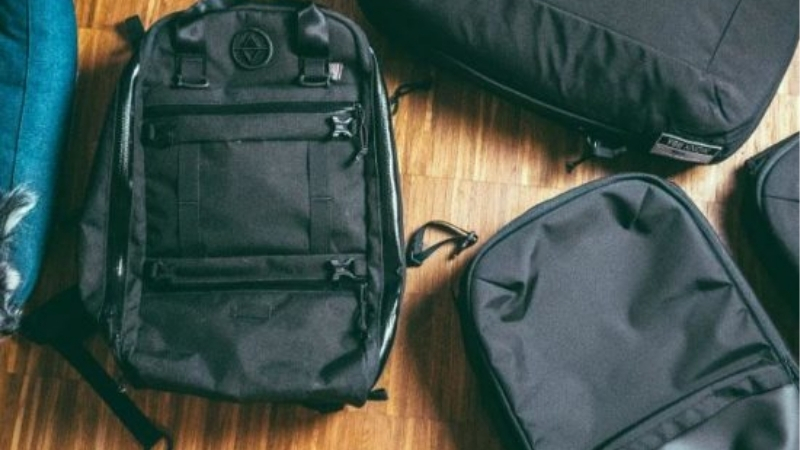
Airline Size and Weight Limits by Carrier
Domestic carry-on allowances cluster around 22 x 14 x 9 inches, but weight is where policies diverge sharply. Several international and budget carriers cap hand luggage between 7 and 10 kilograms including the bag itself, which a four-pound pack eats into before you put anything inside.
Check the specific fare class rather than the airline’s general policy, because basic economy tickets on many carriers exclude cabin baggage entirely. Weighing a loaded pack at home is the only reliable approach, and a cheap luggage scale pays for itself the first time you avoid a gate fee.
Fabric Denier and Zipper Durability
Denier measures yarn thickness and predicts abrasion resistance reasonably well. Travel packs generally sit between 200D and 900D, and anything at 400D or above handles baggage handling and terminal floors without abrading. Ballistic and Cordura weaves outperform plain nylon at the same denier figure.
Zippers fail before fabric does on almost every bag. Look for branded hardware and, on the main compartment, a double-pull design that spreads wear across two sliders. Water-resistant coated zips look sharp but stiffen with grit, so a storm flap over a standard zip often lasts longer.
Expandability and Checked-Bag Compatibility
An expansion zip that adds five to ten litres lets one pack cover a weekend and a two-week trip. It flies out as compliant carry-on and comes home expanded and checked, which is the pattern most frequent travellers settle into rather than owning two separate bags.
If a pack will be checked occasionally, lockable zip pulls and a stowable harness matter. Loose straps catch in baggage systems and get torn off, which is the single most common way travel packs are damaged. A pack that converts to a smooth-sided duffel profile survives that treatment far better.
Top Picks: Best Backpack for Air Travel
The best backpack for air travel for someone flying monthly needs to outlast one flown twice a year, so these five prioritise construction over feature count. Capacities and fabrics come from manufacturer listings and change between model years, so confirm against the current version.
| Model | Capacity | Shell Fabric | Carry Options | Best For |
|---|---|---|---|---|
| Osprey Porter 46 | 46 L | Recycled high-tenacity nylon | Backpack, duffel handles | Check-or-carry flexibility |
| Eagle Creek Global Companion 40L | 40 L | Ripstop nylon | Backpack, stowable harness | Comfort over distance |
| eBags Mother Lode Travel Backpack | ~49 L | Ballistic nylon | Backpack, grab handles | Maximum organisation |
| Kelty Redwing 44 | 44 L | Polyester ripstop | Backpack, hybrid opening | Travel plus trail |
| Gregory Border 35 | 35 L | Recycled nylon | Backpack, side handles | Strict carry-on limits |
1. Osprey Porter 46 – Best Check-or-Carry Flexibility
The Porter is built to be handled like luggage. The harness zips away completely behind a back panel, leaving a smooth-sided bag with duffel handles on two edges, which is exactly what you want when a gate agent takes it. The clamshell opens flat for packing cubes.
At 46 litres it exceeds strict carry-on limits on some carriers once packed, so measure before assuming. The suspension is built for terminal walks rather than long hikes, with a simple hipbelt. For travellers who alternate between carrying and checking, the design solves the right problem.
2. Eagle Creek Global Companion 40L – Best Comfort Over Distance
Eagle Creek has been building travel-specific packs for decades, and the harness here is noticeably better than most travel bags at carrying weight over a long walk. Forty litres keeps it inside carry-on limits on most airlines, and the fabric handles years of use without visible wear.
It is heavier empty than minimalist rivals, which matters on carriers weighing hand luggage. Internal organisation is also simpler than the compartment-heavy options. For travellers who walk real distances between transport rather than moving gate to taxi, the harness difference is the reason to choose it.
3. eBags Mother Lode Travel Backpack – Most Organisation
This is the pack for people who want a place for everything. Multiple zipped compartments, a dedicated shoe pocket, a lay-flat laptop section, and ballistic nylon throughout make it a workhorse that survives frequent handling without the fabric pilling or the seams stressing.
All that structure adds empty weight and makes the packed bag close to the upper limit of carry-on compliance. The many compartments also take a few trips to learn. For travellers who resent digging through one large cavity, the organisation is genuinely worth the weight penalty.
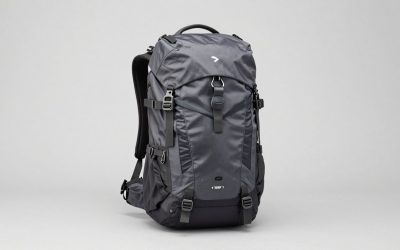
4. Kelty Redwing 44 – Best Travel and Trail Crossover
If a trip includes both flights and hiking, a dedicated travel pack becomes a compromise. The Redwing uses a hybrid opening that unzips most of the way like a clamshell while retaining a proper hiking suspension with a load-bearing hipbelt, which few travel packs offer.
The harness does not fully stow, so straps are exposed if the bag is checked, and it looks more outdoorsy than a business-appropriate pack. At 44 litres it is close to carry-on limits. For travel that ends at a trailhead rather than a hotel, it is the sensible single bag.
5. Gregory Border 35 – Best for Strict Carry-On Limits
Thirty-five litres is the size that clears budget carriers and regional aircraft where 45-litre bags get flagged. Gregory keeps the shape rectangular so the volume is usable rather than tapering, and the laptop compartment sits against the back panel where the weight belongs.
The trade-off is capacity: two weeks out of 35 litres requires discipline and compression cubes. The hipbelt is minimal compared with hiking-derived packs. For anyone flying European or Asian budget carriers regularly, staying comfortably inside the limit is worth more than extra litres.
Tariffs, Flying Season, and the Buying Calendar
Costs and demand both move on a predictable schedule, and knowing that schedule is worth a few dollars. Here is what is affecting prices and stock levels for the best backpack for air travel right now.
Nylon and Hardware Costs Have Climbed
An Outdoor Industry Association survey found 84 percent of member businesses expect new tariffs to affect operations, with costs rising roughly 7.7 percent across the category. High-tenacity nylon, which is the shell fabric on every pack above, has climbed 10 to 15 percent on top of that.
For durable travel packs priced between $150 and $400, that is meaningful. Brands have been unusually candid that any forward pricing is an estimate rather than a fixed figure while supply chains settle, which weakens the case for waiting indefinitely on a model you have already chosen.
Holiday Flying Squeezes Availability
Demand climbs from late October through the December holidays as travel volume peaks, and that is when the most popular capacities and neutral colours run out. Restocks on specific variants take longer than listings suggest during that stretch, particularly for models produced in limited colour runs.
Buying ahead also gives you a shakedown trip before the busy season, which is the only way to learn whether a pack’s loaded dimensions actually clear your usual carrier’s sizer. Discovering that at a gate during peak travel is an expensive way to find out.
When the Discounts Actually Land
For a planned replacement rather than an urgent one, the calendar is clear. Prime Big Deal Days in mid-October and the Black Friday through Cyber Monday stretch in late November carry the deepest cuts on travel bags, with early deals often appearing in the preceding days.
Travel packs are also a common gift, so the best-reviewed models sell through before those windows close. Build a shortlist now and track prices rather than shopping blind, and buy at the front of the sale if a particular capacity and colour matter for a booked trip.
Frequently Asked Questions
These are the questions frequent flyers ask about the best backpack for air travel once a cheap bag has failed on them. Short answers with the reasoning that matters over many trips.
How many litres is a carry-on backpack?
Most carry-on compliant travel packs sit between 35 and 45 litres, though airlines measure dimensions rather than volume. A well-shaped 40-litre pack often fits where a badly shaped 38-litre one does not. Always compare external measurements when packed against your carrier’s published limit.
What denier fabric should I look for?
400D or above handles frequent flying without visible abrasion, and ballistic or Cordura weaves outperform plain nylon at the same figure. Lighter 200D to 300D fabrics save weight and wear faster on terminal floors. For a pack flown monthly, durability is worth the extra few ounces.
Is it worth paying for a lifetime warranty?
If you fly often, yes. Zips and buckles are the components that fail, and brands with genuine repair programmes will replace a slider rather than the whole bag. Read what the warranty actually covers, since several exclude airline handling damage, which is the most likely cause.
Should I lock my backpack when flying?
Lockable zip pulls deter opportunistic access and are worth using on a checked bag. They will not stop a determined attempt, since most soft-sided bags can be opened through the fabric. Keep passports, medication, and electronics with you rather than relying on a lock.
See More:
- Best trekking sleeping bag
- Best sleeping bag for backpacking
- Best women backpack for work
- Best backpack for backpackers
Final Thoughts
The best backpack for air travel is the one whose zips, fabric, and harness are still working after fifty flights, not the one with the longest feature list. Match the capacity to the strictest airline you fly regularly rather than the most generous, check the denier and zipper hardware before the pocket count, and weigh it empty against carriers that cap hand luggage by kilogram. Buy ahead of the holiday surge and you will get the size you wanted rather than what is left.


Write Your Review
No reviews yet. Be the first to share your experience!