Key takeaways
- Unclear measurements: A listing that gives only “one size fits most” does not provide enough information for a load-bearing purchase.
- Decorative rather than structural MOLLE: Webbing may look compatible without being firmly attached to the belt core.
- No stated attachment method: Do not assume a universal fit.
- Thin, stretchy webbing: Elastic can improve comfort on a small running belt but is a poor primary support for a heavy ruck.
- Oversized claims: Statements such as “supports any load” are not a replacement for a published weight recommendation.
- Pressure-prone hardware: A large buckle positioned directly over the hip bone can become painful under a loaded pack.
- Permanent creasing or loose stitching: These are reasons to return the belt before using it outdoors.
A backpack hip belt can make a comfortable load feel stable—or turn a normal walk into a fight with pressure points. The most common mistake is buying the thickest belt available and assuming more padding automatically means better support. Another is choosing by buckle style alone, then discovering that the belt is too short, sits above the hip bones, or cannot connect securely to the backpack.
When deciding what to look for in backpack hip belt products, start with your load, torso and intended activity. A belt for a 6-pound daypack does not need the same structure as one supporting a 30-pound ruck. The right choice should transfer some weight to your pelvis without restricting your stride, pinching your stomach or shifting every time you move.
Our top picks



As an Amazon Associate we earn from qualifying purchases at no extra cost to you. Ratings are shown as listed on Amazon.
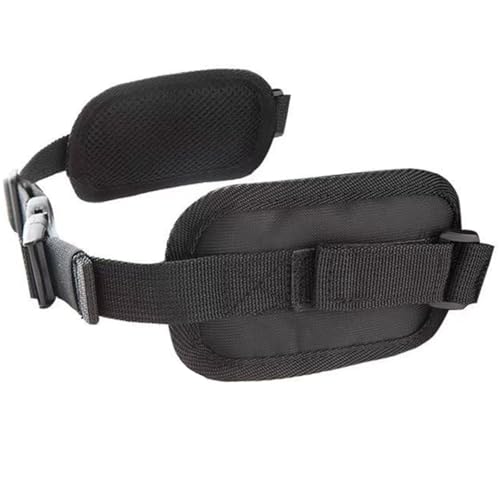
This guide focuses on the measurements and construction details that matter most in 2026, including add-on belts such as the $35 GORUCK Padded Hip Belt, the roughly $10 DraCra waist belt, and the under-$30 RUCKERCISE Rucking Hip Belt. Prices can change, so use them as reference points rather than guarantees.
Decide These 3 Things First
- How much weight will the belt help carry? For loads up to about 10 pounds, a simple padded belt may improve stability. Between 10 and 25 pounds, look for wider padding, a substantial buckle and reliable attachment points. Loads above 25 pounds deserve a structured backpack designed to transfer weight, not merely an inexpensive add-on belt.
- Where will you wear it? A belt used over a T-shirt needs a soft, low-abrasion surface. A hiking belt worn over layers needs more adjustment range. Running, cycling and travel favor a slimmer profile, while rucking benefits from wider padding and stronger webbing.
- Does it fit your pack and your body? Check both the waist measurement and the connection method. MOLLE-compatible webbing, sewn loops, side-release clips and proprietary attachment points are not interchangeable. Measure around your hip bones while wearing the clothing you normally use.
Size and Fit
A hip belt should sit across the top of your pelvic bones, not around your natural waist. For most adults, that means positioning the center of the padded section approximately 1 to 2 inches above the hip crest. If the belt sits too high, it can compress your stomach; too low, and it may slide down while walking.
Look for an adjustment range that covers your measurement with room to spare. As a practical target, the smallest usable setting should be at least 2 inches smaller than your waist or hip measurement, while the largest setting should provide 4 to 6 inches of extra range. A belt listed as fitting 28 to 50 inches may work for many users, but the actual padded length and buckle position matter just as much.
For heavier loads, aim for padding approximately 4 to 6 inches tall at the center and at least 3 inches wide on each side. Slim 2-inch belts are more appropriate for light daypacks and active movement. Measure the distance between the backpack’s attachment points as well; a belt that is physically long enough may still attach too far forward or backward to sit correctly.
Material and Moisture Control
Most backpack belts combine nylon or polyester webbing with foam padding and a synthetic outer fabric. Nylon webbing is generally a strong choice for load-bearing adjustment straps, while polyester resists stretching and ultraviolet exposure well. Neither label alone proves quality, so inspect the webbing width and edge finishing.
For everyday loads, 1-inch webbing is a reasonable minimum. A belt intended for heavier rucking should use approximately 1.5-inch webbing where space and compatibility allow. Smooth-edged webbing is less likely to irritate skin or catch on clothing.
Closed-cell foam is preferable for a belt that will encounter sweat or rain because it absorbs less water than open-cell foam. A breathable mesh face can improve comfort, but mesh is not automatically durable. Look for tightly woven fabric, reinforced seams and padding that does not feel lumpy when compressed by hand.
Water-resistant fabric can handle light rain and splashes, but it does not make the belt waterproof. If you carry electronics or medication, use a separate dry bag rather than relying on the belt material.
Construction and Attachment
Construction often separates a dependable belt from a cheap strap. Examine the areas where webbing meets the padded section and where the buckle is sewn in. Box-X stitching—a rectangular stitch pattern with a diagonal cross—is a useful sign of reinforcement, although stitch quality still matters more than the label.
For a belt supporting a 20-pound pack, prefer multiple rows of clean stitching and webbing that does not twist as it enters the buckle. Loose threads, uneven seams and fabric puckering suggest weak or rushed assembly. The buckle should close with a clear click and release without excessive force.
Attachment compatibility deserves special attention. Some add-on belts thread through MOLLE rows; others connect to dedicated loops or side-release hardware. A detachable external pocket may attach to a waist belt, but it is an accessory—not a substitute for a load-bearing hip belt. Avoid improvising with carabiners or thin accessory loops when carrying substantial weight.
Check whether the pack itself has a stable anchor point. If the belt attaches only at the sides and has no useful connection to the pack body, it may rotate independently instead of transferring weight. For light bags this may be acceptable; for a ruck, it can create pressure and sway.
Comfort and Performance
Padding should distribute pressure rather than simply feel plush in the store. Excessively soft foam can compress flat under a heavy pack, while extremely firm foam may create hot spots. A moderately firm, 3/8- to 3/4-inch padded section is a practical range for many daypacks and rucking add-ons.
Consider how the belt moves when you walk. A little flexibility helps the belt follow your hips, but too much stretch allows the pack to bounce. The belt should tighten firmly without needing to be cinched so hard that you cannot take a full breath. Leave enough room for normal movement, especially for running or climbing.
For heavier loads, a lightly curved or contoured belt usually stays in place better than a completely flat strip. However, a highly shaped belt can fit fewer body types. If several people will share the pack, choose broad adjustability over aggressive contouring.
Test the belt with the actual backpack loaded to its intended weight. Walk for 10 to 15 minutes, climb stairs and bend forward. Look for numbness, rubbing near the hip bones, buckle pressure and downward slipping. Comfort after two minutes in a store is not a meaningful load test.
Price Tiers and Value
Budget: $8 to $18. Products in this range, such as a basic under $10 padded waist belt, can be useful for light daypacks, costume or utility packs, and occasional travel. Expect simpler foam, less refined adjustment and fewer reinforcement details. Confirm the attachment method before buying.
Midrange: $19 to $35. This is often the best value for regular hiking or moderate rucking. A under-$30 rucking belt may offer stronger padding, more useful webbing and better compatibility with a specific pack system. The $35 GORUCK belt sits at the upper end of this tier, where you are paying for brand fit, construction and intended use rather than fabric alone.
Premium: $36 to $75 or more. Premium pricing makes sense when the belt is part of a complete load-transfer system, uses shaped padding, includes robust hardware or offers a strong warranty. An expensive add-on belt will not transform an unsuitable backpack into a true expedition pack. Compare the cost with buying a backpack that includes an integrated, correctly sized belt.
Warranty, Delivery and Assembly
For a simple accessory, a 30-day return period is a useful minimum. A one-year warranty is better if the belt is intended for frequent rucking or heavy use. Check what the warranty covers: buckle failure and torn stitching are more meaningful than coverage limited to manufacturing defects discovered immediately.
Before ordering, verify the stated shipping time and whether the product arrives ready to install. A belt that threads through MOLLE webbing may take 5 to 15 minutes to fit, while a belt requiring hardware removal can take longer. If tools are needed, confirm whether a screwdriver, replacement clips or included instructions are supplied.
Delivery packaging should protect the buckle and keep the belt from arriving sharply folded. Once received, inspect all seams and test the adjustment range before removing tags. Keep the packaging until you have confirmed that the belt attaches securely and fits with your loaded pack.
Spec Checklist
| Spec | Budget | Mid | Premium |
|---|---|---|---|
| Typical price | $8–$18 | $19–$35 | $36–$75+ |
| Best load range | Up to 10 lb | 10–25 lb | 20–35 lb when pack-compatible |
| Padding height | 2–4 in. | 3–6 in. | 4–7 in., often contoured |
| Webbing width | About 1 in. | 1–1.5 in. | 1.5 in. or system-specific |
| Adjustment range | At least 8 in. | At least 12 in. | At least 16 in. or broad custom range |
| Useful features | Basic buckle, light padding | Reinforced stitching, breathable face | Contouring, load stabilizers, system-specific fit |
| Warranty target | 30-day returns | 30-day returns to 1 year | 1 year or longer |
Red Flags
- Unclear measurements: A listing that gives only “one size fits most” does not provide enough information for a load-bearing purchase.
- Decorative rather than structural MOLLE: Webbing may look compatible without being firmly attached to the belt core.
- No stated attachment method: Do not assume a universal fit.
- Thin, stretchy webbing: Elastic can improve comfort on a small running belt but is a poor primary support for a heavy ruck.
- Oversized claims: Statements such as “supports any load” are not a replacement for a published weight recommendation.
- Pressure-prone hardware: A large buckle positioned directly over the hip bone can become painful under a loaded pack.
- Permanent creasing or loose stitching: These are reasons to return the belt before using it outdoors.
FAQ
Does every backpack need a hip belt?
No. A hip belt is most useful when the pack weighs about 10 pounds or more, moves during activity, or needs to stay stable while your hands are occupied. For a very light commuter bag, a sternum strap may provide enough control and can be less restrictive.
How tight should a backpack hip belt be?
Tighten it until the belt stays in place and feels supportive, then check that you can breathe normally and bend at the waist. It should not cause numbness, sharp pressure or stomach compression. Recheck the fit after loading the backpack because the pack’s weight can pull the belt downward.
Can I add a hip belt to any backpack?
Not reliably. The backpack needs strong attachment points positioned near the hips. MOLLE-compatible belts may work with packs offering suitably reinforced rows, while proprietary clips may fit only one product family. If the pack has no structural anchor, an add-on belt may provide comfort but little true weight transfer.
Is a padded waist belt the same as a hiking hip belt?
Not always. “Waist belt” can describe a simple stabilizing strap, while a hiking hip belt is usually shaped and reinforced to transfer load to the pelvis. For loads above roughly 15 to 20 pounds, prioritize attachment strength, padding width and pack compatibility over the word used in the product name.