
Key takeaways
What's inside
Best backpack for everyday carry is less about capacity than about whether every item has a fixed home you can reach without looking. This guide covers admin panel layout, the right size to stop overpacking, and construction that survives daily use, then compares five packs built around EDC principles.
As an Amazon Associate we earn from qualifying purchases at no extra cost to you. Product prices and availability are accurate as of the date shown and are subject to change.




As an Amazon Associate we earn from qualifying purchases at no extra cost to you. Product prices and availability are accurate as of the date shown and are subject to change.
By Jake Thompson, gear writer at Roger Bacon Outdoors.
🛒 Best Price Today on Amazon
Prime members get fast, free shipping on everything above, plus member-only deals. New members get a 30-day free trial — cancel anytime.
How to Choose the Best Backpack for Everyday Carry
Choosing the best backpack for everyday carry starts as a discipline rather than a shopping list. The idea is that a small set of items lives in fixed positions so you stop searching and stop forgetting things. Three design decisions determine whether a pack supports that or quietly undermines it.
Admin Panel Layout and Fixed Positions
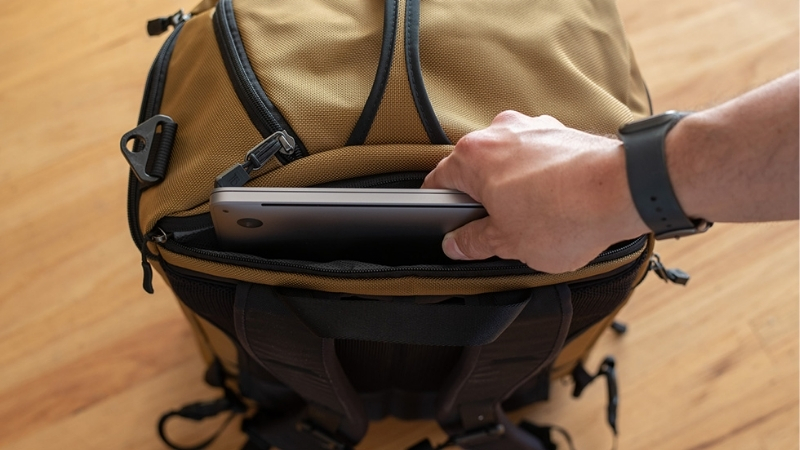
An admin panel is an organiser section with elastic loops, slip pockets, and a key clip, sized for pens, a torch, a multitool, a cable, and a notebook. The point is muscle memory: if the torch is always in the same loop, you find it in the dark without thinking.
Too many loops is as bad as too few, because a half-empty panel lets items shift and defeats the purpose. Look for a layout that roughly matches what you already carry rather than the most elaborate one available, and check the panel opens flat so you can see everything at once.
Sizing Down to Stop Overpacking
The best backpack for everyday carry is usually smaller than people expect. Twenty to twenty-five litres covers a laptop, a water bottle, a jacket, and an organised kit with room spare. Past 30 litres, the space gets filled with things carried daily and used monthly.
A useful test is emptying your current bag and putting back only what you used in the last two weeks. Most people find that is 15 to 20 litres of contents. Buying to that figure rather than to a hypothetical worst case keeps the daily load honest.
Construction That Survives Daily Use
EDC packs get opened constantly, so zips are the component that ends them. Branded hardware on the main compartment is the reliable indicator, and heavier gauge zips with paracord or metal pulls last considerably longer than moulded plastic ones on a bag used every day.
Fabric denier between 500D and 1000D handles daily abrasion without visible wear, and a reinforced base matters because that is where bags fail from being set down. Bar-tack stitching at the strap junctions carries the whole load every lift and is worth inspecting before you buy.
Top Picks: Best Backpack for Everyday Carry
Every best backpack for everyday carry below comes from the EDC and tactical side rather than the fashion side, which is where organisation and durability are taken seriously. Capacities come from manufacturer listings and vary between production runs, so check dimensions against your own kit before ordering.
| Model | Capacity | Fabric | Admin Panel | Best For |
|---|---|---|---|---|
| GORUCK GR1 | 21 or 26 L | 1000D Cordura | Internal slant pocket | Buy-it-once durability |
| Mystery Ranch 2 Day Assault | ~27 L | 500D Cordura | Multiple internal | Fast access |
| 5.11 Tactical Rush24 2.0 | 37 L | 1050D nylon | Full front panel | Maximum organisation |
| Vertx Gamut 2.0 | ~25 L | Nylon | Discreet internal | Low-profile styling |
| Maxpedition Falcon-III | 35 L | 1050D nylon | Multi-compartment | Modular expansion |
1. GORUCK GR1 – Best Buy-It-Once Durability
The GR1 is built to a standard that makes most bags look temporary: 1000D Cordura throughout, reinforced stitching at every stress point, and a lifetime guarantee the company has a genuine reputation for honouring. The clamshell opens completely flat, so nothing is ever buried.
It is expensive, heavy empty, and deliberately spartan inside, with a single slant pocket rather than an elaborate organiser. Some people find it too plain. If you want one bag for the next fifteen years and are willing to add your own pouches, nothing else here compares.
2. Mystery Ranch 2 Day Assault – Best Fast Access
The three-zip design is the signature feature and it works. A Y-shaped opening lets you get into the top, the middle, or the whole bag depending on what you need, which is faster than a clamshell and far faster than a top-loader for everyday retrieval.
The three-zip layout takes a week to become instinctive, and the internal shape is less rectangular than a clamshell so packing cubes fit awkwardly. It is also pricey. For a bag opened many times a day, the access speed is the reason people keep recommending it.
3. 5.11 Tactical Rush24 2.0 – Most Organisation
If you carry a lot of small items, the Rush24 has somewhere for all of them. A full front admin panel with dozens of loops and pockets, MOLLE webbing across the exterior, and 37 litres of capacity make it the most comprehensively organised bag on this list.
The tactical styling is unmistakable, which limits where it looks appropriate, and 37 litres invites overpacking against everything EDC discipline suggests. It is heavy empty. For someone who genuinely carries a lot of kit and does not mind the aesthetic, the layout is unmatched.
4. Vertx Gamut 2.0 – Best Low-Profile Styling
Vertx solves the problem that most well-organised packs look tactical. The Gamut hides its organisation behind a plain exterior with no visible webbing, so it works in an office or a coffee shop while retaining the internal structure and rapid-access compartment behind the back panel.
The hidden organisation means slightly slower access than a front admin panel, and the price sits above mainstream commuter bags. Capacity is moderate. For anyone who wants EDC-grade internals without announcing it, this is the most successful attempt at that balance here.
5. Maxpedition Falcon-III – Best Modular Expansion
Maxpedition builds around modularity, and the Falcon-III uses external attachment webbing so the pack grows with pouches as your kit changes. Three main compartments separate contents properly, and the 1050D nylon and heavy zips are built for years of daily handling rather than seasons.
Adding pouches quickly makes it bulky and heavy, and the styling is firmly tactical. Thirty-five litres is more than most everyday routines need. For someone whose carry varies week to week and who wants to reconfigure rather than replace, the modular approach earns its place.
Tariffs, Gifting Season, and Buying Timing
Two factors shape what you pay: fabric and hardware costs that have already moved, and a demand curve that climbs into the holidays. Both are worth a moment before choosing the best backpack for everyday carry you will keep for years.
Heavy Fabrics Have Seen the Largest Increases
An Outdoor Industry Association survey found 84 percent of member businesses expect tariff impacts, with costs up roughly 7.7 percent overall. High-tenacity nylon has climbed 10 to 15 percent, and heavier weaves like 1000D Cordura sit at the more exposed end of that range.
On packs between $100 and $400, that is a meaningful figure. Brands have been unusually candid that quoted forward pricing is an estimate while supply chains settle, which argues against deferring indefinitely on a bag you intend to keep for a decade anyway.
Durable Packs Sell Hardest Late in the Year
EDC and tactical packs are heavily gifted, so demand climbs from early November. The most popular colours, usually black, grey, and coyote, sell through first, and restocks on specific colourways can run long because these are made in smaller batches than mainstream bags.
Buying ahead of that window also gives you a return period that still works. These packs reward setting up properly with pouches and organisers, and doing that over a few unhurried weeks tells you far more than a single day of testing ever will.
Where the Discounts Actually Land
For a purchase you can defer, the calendar is predictable. Prime Big Deal Days in mid-October and the Black Friday through Cyber Monday window in late November carry the deepest cuts, though premium EDC brands discount less aggressively than mainstream bag makers do.
Because production runs are smaller, availability matters more than the saving in this category. Track prices with a wishlist, but prioritise getting the size and colour you want over holding out for another ten percent that may never appear on that specific configuration.
Frequently Asked Questions
These come up constantly from people moving to the best backpack for everyday carry from a generic daypack. Short answers with the reasoning behind each.
What size is right for everyday carry?
Twenty to twenty-five litres suits most routines, covering a laptop, a bottle, a jacket, and an organised kit. Going larger invites carrying things used monthly rather than daily. Empty your current bag and repack only what you used in two weeks to find your real figure.
Do I need MOLLE webbing?
Only if you plan to add external pouches. Otherwise it adds weight, catches on things, and makes a bag look tactical in settings where that is unhelpful. Internal organisation matters far more for everyday use than the ability to strap things to the outside.
What should actually live in an admin panel?
A pen, a small torch, a multitool, a charging cable, and a notebook covers most people. Keep it to items you use weekly rather than emergency gear you never touch. A panel that is half full lets things shift, which defeats the fixed-position principle entirely.
Is 1000D fabric worth the extra weight?
For a bag carried daily for a decade, yes. Heavier Cordura resists abrasion at the base and corners where bags wear through, and it holds shape better when partly empty. For lighter use, 500D saves noticeable weight without a meaningful durability penalty.
See More:
- Best trekking sleeping bag
- Best sleeping bag for backpacking
- Best women backpack for work
- Best backpack for backpackers
Final Thoughts
The best backpack for everyday carry is the one whose organisation matches what you genuinely carry, in a size small enough to stop you carrying more. Start by auditing your current bag, buy to that volume rather than a hypothetical maximum, and prioritise zip quality and base reinforcement over pocket count. A pack in this category should be a decade-long purchase, so choosing the layout carefully matters more than saving twenty percent in a sale.






Write Your Review
No reviews yet. Be the first to share your experience!