Key takeaways
- Best Camping Backpacks for 2026 — top picks compared, key buying factors, and answers to common questions.
Getting best camping backpacks right comes down to matching the product to how you actually use it, not chasing the flashiest listing. This guide weighs the factors that matter over years of use — performance, build quality, comfort and value — then recommends models that deliver. Below are the buying essentials followed by picks for different needs and budgets.
What to Look for Before You Buy
Capacity in Litres
Capacity should follow trip length and how compact your gear already is. Roughly 30–50L covers overnight and weekend trips, 50–65L is the sweet spot for most multi-day camping, and 65–75L is for long trips, winter gear or carrying part of a family’s kit. Buying bigger than you need is a trap — a large pack invites you to fill it, and every litre of space eventually becomes weight on your hips.
Fit and Torso Length
Pack sizing is based on torso length, not height, and getting it wrong is the single most common reason a pack hurts. Measure from the bony bump at the base of your neck down to the top of your hip bones, and match that to the manufacturer’s range. The hip belt should sit on the crest of your hips, not your waist. A correctly fitted cheap pack carries better than an expensive one in the wrong size.
Suspension and Load Transfer
A good pack puts roughly 80% of the weight on your hips and only the remainder on your shoulders, and that transfer is what an internal frame and a stiff hip belt are for. This is where the money goes: premium suspensions carry heavy loads noticeably better over long days and ventilate your back rather than soaking it. For light loads and short trips, a simple frame sheet is genuinely enough.
Weather Protection and Organisation
Almost no pack fabric is truly waterproof once seams and zips are involved, so an included rain cover is worth having — and a dry bag or liner inside is worth having regardless. On organisation, think about what you need while walking: hip belt pockets and side pockets you can reach without stopping get used constantly, while extra internal dividers mostly add weight and complication.
Quick Comparison
| Model | Best For | Typical Price |
|---|---|---|
| Osprey Atmos AG LT 65L Men’s Backpacking Backpack | Best overall backpacking pack | under $350 |
| Osprey Renn 65L Women’s Backpacking Backpack | Best women’s backpack | under $250 |
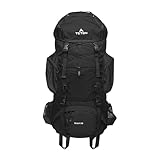
| Teton 75L Explorer Internal Frame Backpack | Best for long trips | under $150 |
| Teton 55L Scout Internal Frame Backpack | Best value backpacking pack | under $100 |
| Loowoko 50L Hiking Backpack | Best budget pick | under $50 |
Prices are approximate market ranges and change frequently; always confirm the current price on the live listing.
Top Picks Reviewed
Osprey Atmos AG LT 65L Men’s Backpacking Backpack — Best overall backpacking pack
The Atmos AG is the pack that set the benchmark for carrying comfort, and its 4.8-star average is the highest of anything in this guide. The Anti-Gravity suspension is the reason: a tensioned mesh back panel that wraps the load onto your hips and keeps the pack off your spine, so heavy multi-day loads stay tolerable on day four and your back stays far drier than it does against a foam panel. At $320 it is easily the most expensive pick here, and that is only justified if you carry real weight for multiple days at a time.
Check price and availability on Amazon →
Osprey Renn 65L Women’s Backpacking Backpack — Best women’s backpack
Women’s-specific packs are not a marketing exercise: the harness is shaped for a different shoulder and chest geometry and the hip belt is angled for a different pelvis, which is exactly where unisex packs cause bruising and rubbing on long days. The Renn gives 65L with a ventilated back panel and Osprey’s fit for under $250 — well under the Atmos while sharing the brand’s reputation for carrying comfort. It is the pack to try first if you have been sore in the hips or shoulders wearing something borrowed.
Check price and availability on Amazon →
Teton 75L Explorer Internal Frame Backpack — Best for long trips
75 litres is more space than most weekend campers need, which is precisely the point: this is the pack for week-long trips, winter kit, or carrying a share of a family’s gear alongside your own. It has an internal frame, an adjustable torso fit and an included rain cover, and it holds a 4.7-star average for under $150 — roughly a third of the Atmos. The suspension will not carry a heavy load as comfortably as the Osprey over consecutive long days, but for occasional big trips that gap is hard to justify paying triple for.
Check price and availability on Amazon →
Teton 55L Scout Internal Frame Backpack — Best value backpacking pack
For under $100 with a 4.7-star average, the 55L Scout is the pack to buy if you are getting into multi-day camping and are not ready to spend Osprey money to find out whether you like it. 55 litres covers two to four nights comfortably, the torso is adjustable so you can dial the fit yourself, and the rain cover is included rather than an extra purchase. It is heavier than a premium pack of the same volume — that is the trade — but it carries properly and it does not punish a first mistake in sizing.
Check price and availability on Amazon →
Loowoko 50L Hiking Backpack — Best budget pick
For under $50 this is the entry point, and 50 litres (45+5 with the extension) is genuinely enough for an overnight or a light weekend. You get a rain cover included and a lightweight build, and its 4.5-star average suggests most buyers are satisfied with what they paid for. Be clear about the limits: the frame and hip belt will not transfer a heavy load onto your hips the way the Teton or Osprey packs do, so keep the load modest and treat this as a pack for short trips rather than for a week in the hills.
Check price and availability on Amazon →
How to Choose the Right Option
Start with your real needs and space, then buy the quality your budget allows for the features you will use most rather than a long list you won’t. Favour reputable construction for anything you use daily or that bears weight, read reviews for long-term reliability over first impressions, and always confirm return terms so a poor fit is easy to remedy.
The Bottom Line
There is no single best camping backpack for every hiker — the right pick depends on how many nights you carry gear for, the length of your torso rather than your height, and how much you are willing to spend on a suspension that moves weight onto your hips. The models above were selected because they balance real-world performance, build quality and value rather than winning on spec sheets alone. If you are unsure, start with the option we highlight as the best overall or best value; both are safe choices that suit the majority of buyers, and you can step up to a premium pick if a specific feature matters to you. Whatever you choose, buy from a listing with clear return terms so you can confirm the fit works for your needs, and always check the current price before ordering, since deals and stock change frequently.
Before you commit, it is worth reading recent buyer reviews for the specific model you are considering, since real-world reliability and customer service vary between brands and can matter as much as the headline specifications. Check the seller’s return window and warranty terms, confirm the current price rather than relying on a quoted figure, and make sure the size, capacity or compatibility genuinely matches your needs and space. A little verification at this stage saves the frustration and cost of returning the wrong product later, and it helps you buy with confidence the first time.
Frequently Asked Questions
How big a backpack do I need for camping?
Match capacity to trip length. 30–50L handles overnight and weekend trips, 50–65L is right for most multi-day camping and is where the Teton Scout and both Osprey packs sit, and 65–75L suits week-long trips, winter gear or carrying part of someone else’s kit. Resist buying bigger than you need — extra space gets filled, and that weight ends up on your hips.
How do I measure my torso length for a backpack?
Pack sizing follows torso length, not height. Have someone measure from the bony bump at the base of your neck down your spine to an imaginary line between the tops of your hip bones, then match that figure to the manufacturer’s size range. The hip belt should sit on the crest of your hips, taking most of the weight. A correctly sized budget pack will carry better than an expensive pack in the wrong size.
How much should a loaded backpack weigh?
A common guideline is no more than about 20% of your body weight for multi-day trips, and closer to 10% for day hikes. The biggest savings come from the three heaviest items — pack, shelter and sleep system — not from cutting small things. If you are consistently over that figure, the fix is usually leaving gear behind rather than buying a bigger pack to carry it more comfortably.
Is a more expensive pack actually worth it?
It depends entirely on load and days. Suspension quality is what you pay for, and it shows up as the difference between tolerable and painful when you carry 30lb-plus for several consecutive days — which is what justifies the Osprey Atmos at $320. For occasional weekends with a moderate load, a well-fitted Teton at around $100 carries perfectly well, and the money is better spent on a lighter sleeping bag or pad.
Related Guides
- Best Camping Stoves in 2026
- Best Sleeping Pads in 2026
- Best Coolers for Camping in 2026
- Best Hiking Boots in 2026
- Best Headlamps for Camping in 2026
- Best Camping Chairs in 2026
As an Amazon Associate we earn from qualifying purchases. This guide is informational; verify specifications and pricing on the product listing before buying.