
Key takeaways
What's inside
Best backpack for work and travel in a single bag means accepting that it will be slightly wrong for both, and choosing where that compromise sits. This guide covers expandable volume, trolley sleeves, and laptop access, then compares five convertible packs that handle a Monday desk and a Friday flight equally.
As an Amazon Associate we earn from qualifying purchases at no extra cost to you. Product prices and availability are accurate as of the date shown and are subject to change.


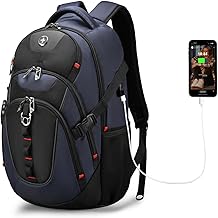


As an Amazon Associate we earn from qualifying purchases at no extra cost to you. Product prices and availability are accurate as of the date shown and are subject to change.
By Jake Thompson, gear writer at Roger Bacon Outdoors.
🛒 Best Price Today on Amazon
Prime members get fast, free shipping on everything above, plus member-only deals. New members get a 30-day free trial — cancel anytime.
How to Choose the Best Backpack for Work and Travel
The best backpack for work and travel has to reconcile two opposites: a work bag wants to be slim and professional. A travel bag wants volume and a clamshell opening. One bag doing both means picking which compromise you can live with, and three design decisions determine whether the result works or annoys you in both roles.
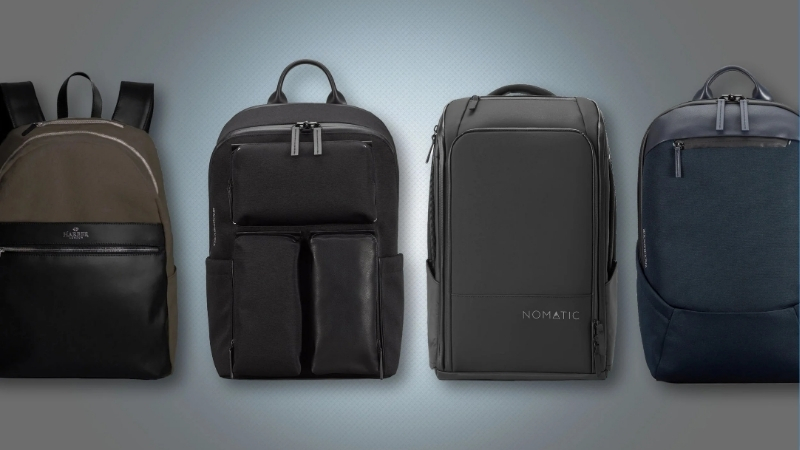
Expandable Volume Versus Fixed Capacity
An expansion zip adding five to fifteen litres is the cleanest solution to the dual-role problem. Zipped shut it stays office-appropriate at around 20 litres; opened it becomes a genuine overnight or two-night bag without buying a second pack or looking overstuffed on a Monday.
The trade is that expandable bags carry the extra fabric and hardware permanently, so they weigh more empty than fixed-capacity rivals. Check that the pack still looks intentional when compressed, since some designs sag visibly. A bag that only looks right when full has failed half its job.
Trolley Sleeve and Clamshell Access
For travel, a full-width trolley sleeve on the back panel lets the pack ride on a roller handle through a terminal instead of on your shoulders. Check it runs the full width with a closure at the bottom, since narrow open-ended sleeves let the bag twist off on uneven flooring.
A clamshell or near-clamshell opening makes packing cubes usable and turns a hotel room into a functioning wardrobe. Top-loading packs force you to unload three things to reach the fourth, which is fine for a commute and tiresome by day three of a trip.
Professional Appearance in Both Roles
The best backpack for work and travel has to walk into an office without looking like camping gear. That means minimal external webbing, no bungee cord panels, and neutral colours in a fabric that reads as considered rather than technical. Ballistic nylon and coated weaves both work well.
At the same time it needs grab handles on the top and side for handling as luggage, and ideally a way to tuck or cover the shoulder straps if it is ever gate-checked. Loose straps catch in baggage systems, which is the most common way travel packs get damaged.
Top Picks: Best Backpack for Work and Travel
Each of these five aims to be the best backpack for work and travel and lands in a different place on the compromise. Capacities and dimensions come from manufacturer listings and change between model years, so confirm expanded and compressed measurements against your airline’s limits before you order one.
| Model | Capacity | Expandable | Laptop Fit | Best For |
|---|---|---|---|---|
| Aer Travel Pack 3 | ~35 L | Fixed | Up to 16 in | Serious one-bag travel |
| Timbuk2 Never Check Expandable | ~35-45 L | Yes | Up to 17 in | Volume flexibility |
| Samsonite Xenon 4.0 Slim | ~20 L | Fixed | Up to 15.6 in | Office-first carry |
| Solo New York Grand Travel TSA | ~28 L | Yes | Up to 17.3 in | Budget dual-duty |
| BANGE Travel Business Backpack | ~25-40 L | Yes | Up to 15.6 in | Cheapest expansion |
1. Aer Travel Pack 3 – Best for Serious One-Bag Travel
Aer designs for people who fly with a laptop and want the bag to look right in a meeting afterwards. The 1680D ballistic nylon shell is genuinely tough, the clamshell opens flat, and a separate shoe compartment keeps trainers away from shirts on a Friday flight.
At around 35 litres it is a large bag to carry into an office daily, and the empty weight is significant. It is also priced at the premium end. For someone travelling monthly with work, the durability and the professional finish justify the outlay across a few years.
2. Timbuk2 Never Check Expandable – Best Volume Flexibility
The expansion here is the most usable on the list, taking the pack from a manageable office size to a genuine carry-on when needed. A 17-inch laptop compartment is unusually generous, and the Timbuk2 build quality has a long track record with daily bicycle commuters.
Expanded it approaches the upper limit of carry-on compliance on stricter carriers, so measure before assuming. The bag is also bulky compressed compared with a purpose-built work pack. For travel that varies between overnight and a full week, the flexibility is the whole point.
3. Samsonite Xenon 4.0 Slim – Best Office-First Compromise
If the balance tips toward work with occasional overnight trips, starting from a slim professional bag makes more sense than starting from a travel pack. The Xenon keeps a clean business profile, holds a 15.6-inch machine, and has a proper trolley sleeve for airport days.
Twenty litres will not hold more than one night of clothing, so this is a bag for trips where you also check a case. There is no expansion. For people whose travel is occasional rather than routine, it is the right end of the compromise to start from.
4. Solo New York Grand Travel TSA – Best Budget Dual-Duty
This covers the practical requirements at a much lower price than the premium options. A TSA checkpoint-friendly laptop compartment that folds flat, an expansion zip for extra volume, a trolley sleeve, and enough structure that it does not slump when half packed.
Materials are noticeably lighter than Aer or Timbuk2 and the zips are the component that will wear first under weekly use. The finish reads business-casual rather than premium. For someone travelling for work a handful of times a year, it is sensible value.
5. BANGE Travel Business Backpack – Cheapest Expansion
Among the budget options that offer real expandable volume, this is one of the more capable. It grows from around 25 to 40 litres, includes a USB charging pass-through and a lockable main zip, and the water-resistant shell handles a walk from a car park in rain.
Build quality reflects the price, with unbranded hardware and thinner shoulder padding that shows on long terminal walks with a full load. It will not survive weekly flying for years. As an entry point to see whether one-bag travel suits your routine, it is low risk.
Tariffs, Travel Season, and Buying Windows
Costs and demand both move on a schedule worth knowing. Here is what is affecting availability and price for the best backpack for work and travel right now, and where the meaningful discounts actually appear.
Nylon and Hardware Costs Have Moved
An Outdoor Industry Association survey found 84 percent of member businesses expect tariff impacts, with costs rising roughly 7.7 percent. High-tenacity and ballistic nylon, the shell fabrics on most bags here, have climbed 10 to 15 percent, and aluminium duties feed into buckles and frame components.
For bags between $100 and $350, that means movement of $20 to $50. Brands have been unusually candid that any forward pricing is provisional while supply chains settle, which is worth weighing against the value of waiting several months for a discount that may not materialise.
Business Travel Peaks Twice
Corporate travel climbs in spring and again from September through early December, and bag demand follows it. Neutral colours and the most popular capacities clear first during those stretches, and expandable models tend to sell through faster because they suit the widest range of trips.
Buying between those peaks means fuller stock and a return window that is still useful. It also lets you run a real trip with the bag before the busy season, which is the only way to learn whether the expanded dimensions clear your usual carrier’s sizer.
Where the Discounts Land
The calendar is predictable for anything you can defer. Prime Big Deal Days in mid-October and the Black Friday through Cyber Monday window in late November bring the deepest cuts on business and travel bags, with early deals appearing in the days beforehand.
These bags are also a frequent gift, so the well-reviewed models thin out before the window closes. Set a wishlist now and track price history rather than deciding on the day, and buy at the front of the sale if a specific capacity matters for a booked trip.
Frequently Asked Questions
These come up constantly from people tired of owning two bags and wanting the best backpack for work and travel to be a single purchase. Short answers below.
Can one bag really do both jobs?
Yes, with compromises. An expandable pack in the 20 to 35 litre range covers a commute and a two-night trip well. What it cannot do is look as slim as a dedicated business bag or hold as much as a dedicated travel pack, and no design solves both fully.
What size stays carry-on compliant when expanded?
Most carriers publish around 22 x 14 x 9 inches, which typically means staying under about 45 litres expanded. Measure the pack fully loaded rather than empty, since soft-sided bags swell. Budget and regional carriers apply tighter limits and enforce them more consistently at the gate.
Is a shoe compartment worth having?
For a bag that travels, yes. A separate ventilated section keeps footwear away from shirts and stops the whole bag smelling after a gym session or a wet walk. It costs a few litres of usable volume, which is a fair trade if you travel with more than one pair.
Leather or nylon for a dual-duty bag?
Nylon almost always, for a bag doing both roles. Leather looks sharper in an office but adds significant weight, absorbs water, and marks under airline handling. Ballistic or coated nylon in a neutral colour reads professional enough for most workplaces while surviving the travel side properly.
See More:
- Best trekking sleeping bag
- Best sleeping bag for backpacking
- Best women backpack for work
- Best backpack for backpackers
Final Thoughts
The best backpack for work and travel is the one whose compromise sits where your week actually does. If most days are office days, start from a slim professional bag with a trolley sleeve and accept limited overnight capacity. If you fly monthly, start from a travel pack in a neutral fabric and accept the bulk on commuting days. Expandable designs split the difference well, provided the compressed shape still looks intentional rather than half empty.






Write Your Review
No reviews yet. Be the first to share your experience!