
Key takeaways
What's inside
Best cooler pack choices come down to harness comfort, insulation thickness and how well the closure seals once the load is on your back. This guide explains why a backpack cooler behaves nothing like a tote, then covers five models built for hiking in, paddling out and long walks down a beach path.
As an Amazon Associate we earn from qualifying purchases at no extra cost to you. Product prices and availability are accurate as of the date shown and are subject to change.



As an Amazon Associate we earn from qualifying purchases at no extra cost to you. Product prices and availability are accurate as of the date shown and are subject to change.
🛒 Best Price Today on Amazon
Prime members get fast, free shipping on everything above, plus member-only deals. New members get a 30-day free trial — cancel anytime.
How to Choose the Right Best Cooler Pack
Putting a cooler on your back solves the problem that makes tote coolers miserable beyond a few hundred yards. It also introduces new ones: sealing against your spine, staying upright when set down, and staying comfortable loaded. The best cooler pack gets all three right rather than just quoting a can count.
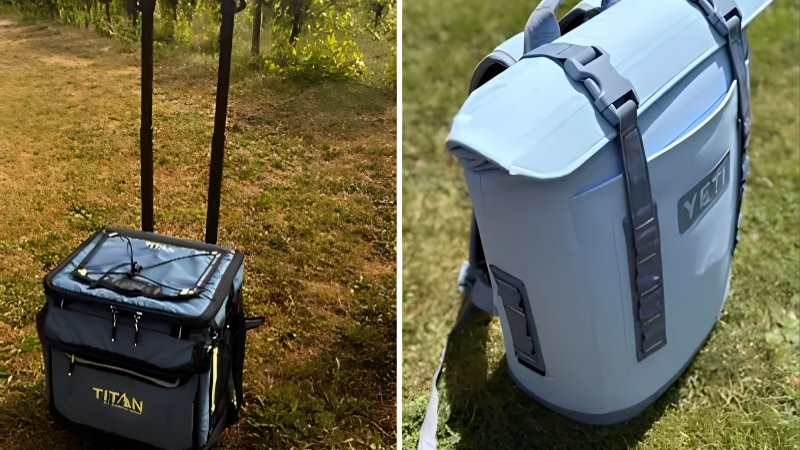
Harness and Load Carry Matter More Than Litres
Water weighs roughly two pounds per litre, so a twenty litre pack filled with drinks and ice can approach thirty pounds before the bag itself is counted. At that weight, thin unpadded straps dig in within minutes. Look for genuinely padded shoulder straps and, ideally, a sternum strap to stop them spreading.
Back panel design matters just as much on a warm day. A flat, uninsulated panel pressed against your spine transfers cold through your shirt and traps sweat behind it. Packs with a shaped or padded back panel keep the cold cargo slightly off your body and make the walk in far more pleasant.
Closure Type Decides Whether It Seals or Sweats
A waterproof zipper of the type used on premium models creates a genuine airtight seal, which is what allows a pack to be laid flat in a canoe without leaking. The cost is stiffness, and every zipper of this kind needs occasional lubricant or it becomes genuinely difficult to open one-handed.
Roll-top closures seal well, cost less to build and shrug off grit that would jam a zipper on a sandy beach. They are slower to open and close repeatedly through an afternoon, and the roll eats some usable height. For paddling and dusty trails the roll-top is usually the more practical choice.
Insulation Thickness Sets Realistic Ice Life
Closed-cell foam thickness is the single biggest factor in how long ice survives, and backpack coolers are always a compromise here. Adding foam adds bulk against your back and weight on your shoulders, so nothing in this category matches a rotomolded hard cooler for multi-day retention.
Set expectations accordingly. A well-built pack with thick foam and a sealing closure will hold ice through a full day and often overnight in shade. A thin budget pack manages an afternoon. Pre-chilling the pack and packing it full, with no air gaps, adds more hours than any brand name will.
Top Picks for the Best Cooler Pack
The best cooler pack options below cover premium sealed builds, roll-top paddling designs and a budget entry that still does the job for beach afternoons. The table summarises the differences, then each entry explains who it genuinely suits and the compromise that comes with the format.
| Model | Closure | Approx capacity | Empty weight | Best for |
|---|---|---|---|---|
| YETI Hopper BackFlip 24 | Waterproof zipper | Around 20 L | About 5.4 lb | Durability, sealing |
| IceMule Boss | Roll top | 30 L | Light for size | Paddling, fishing |
| RTIC Backpack Cooler | Waterproof zipper | Around 30 cans | Moderate | Value per litre |
| Hydro Flask Day Escape Pack | Zip closure | 20 L | Moderate | Beach and picnics |
| TOURIT Backpack Cooler | Zip closure | Around 25 cans | Light | Budget day trips |
YETI Hopper BackFlip 24
The BackFlip takes the sealed construction from YETI’s tote coolers and puts it on a proper harness. ColdCell closed-cell insulation, a HydroLok zipper and the puncture-resistant DryHide shell mean it seals completely and survives years of being dropped into truck beds and dragged across rock.
At around 5.4 pounds empty it is heavy before anything goes in, and the zipper needs periodic lubricant that most owners forget until it stiffens. It is also expensive for roughly twenty litres. What you get is a pack that can be laid on its side fully loaded without a drop escaping.
IceMule Boss
The Boss is built around a roll-top and a genuinely supportive harness, which changes what a soft cooler can do. It floats when sealed, sheds water entirely, and adds a front storage pocket for the dry items every other cylindrical cooler forces you to carry separately in another bag.
The cylinder shape remains poor for organisation, and anything loaded at the bottom stays there until you unpack above it. It also collapses when empty, which is convenient for storage but means it will not stand up on its own at a picnic table. For water and rough ground, it goes where rigid coolers cannot.
RTIC Backpack Cooler
RTIC aims directly at the premium sealed packs and undercuts them substantially. Thick closed-cell foam and a waterproof zipper deliver retention in broadly the same territory, and the padded straps carry a full load acceptably over the sort of distance most people actually walk with a cooler.
The details sit a step behind, particularly the zipper action, which takes real effort to run cleanly and needs lubricant more often. It is heavy once loaded and the back panel presses cold cargo firmly against your spine. As pure capacity and retention per pound spent, it is the strongest value here.
Hydro Flask Day Escape Pack
The Day Escape Pack applies welded seam construction to a backpack format, keeping condensation and melt inside where it belongs. The twenty litre size handles food and drinks for a family beach afternoon, and the opening is wider than most packs in this class, which makes loading a full picnic straightforward.
It sits at the premium end of pricing, and insulation performance is solid rather than class-leading through a long day in direct sun. The pack shape is also less structured than a zippered box-style cooler, so contents shift while you walk. For loading convenience it is genuinely pleasant to use.
TOURIT Backpack Cooler
The TOURIT is the honest budget entry and it does more than the price suggests. It is light empty, carries around twenty-five cans with ice, and includes side pockets and a bottle opener that make it an easy default for park trips, tailgates and beach afternoons where nothing has to last overnight.
The insulation is thin by comparison, so realistic ice life is measured in hours rather than a full day, and the standard zipper does not seal against leaks. It is the wrong tool for a hot weekend of camping. For casual outings where the cooler goes home the same evening, it is well judged.
What Tariffs and Season Timing Mean
A backpack cooler is technical fabric, engineered foam and a specialist zipper, which places the best cooler pack category squarely in the path of recent cost increases. The points below cover the pricing picture and where the calendar works for or against you over the coming months.
Fabric, Foam and Zipper Costs Have All Moved
Reported figures put the broad tariff-driven cost increase across outdoor products at around 7.7 percent, with high-tenacity nylon and specialist foams rising ten to fifteen percent. A backpack cooler is essentially those two materials wrapped around a waterproof zipper, so the impact lands directly.
Brands have been unusually open that quoted pricing is provisional while trade conditions shift. Combined with inflation near 4.2 percent and tighter household spending, the realistic expectation is stable-to-rising prices rather than any return to earlier levels once current stock cycles through.
There Is Still a Full Season of Use Left
Weeks of beach days, paddling trips and campsite weekends remain before the weather turns, which is the practical argument for buying now instead of waiting. A pack bought this month gets tested on real outings, and complaints about strap comfort or a stiff zipper surface while returns are still simple.
Availability is better at this point in the season too. Popular sizes in the twenty to thirty litre range thin out as summer progresses, and the specific configuration you want is far easier to find now than during the late-season clearance when stock is being run down rather than replenished.
Set a Target Price Before the Autumn Events
If the purchase can wait, shortlist a model now and track its price rather than shopping blind in November. Amazon runs early promotions ahead of its October event, and the late November window remains the deepest discount period of the year for coolers and soft-sided outdoor storage.
Follow one specific model rather than browsing the category, because outdoor discounts are uneven and the loudest reductions often land on unpopular colours or last season’s design. Knowing the normal price of the pack you actually want is the only reliable way to recognise a genuine saving.
Frequently Asked Questions
Recurring questions about the best cooler pack concern ice life, whether it can genuinely be hiked with, and how to stop it smelling. The answers below assume a pre-chilled pack kept in shade where possible and packed full, since air gaps cost more retention than most people expect.
How long does ice last in a backpack cooler?
A premium pack with thick foam and a sealing closure typically holds ice around twenty-four hours in shade, sometimes longer if pre-chilled and packed to capacity. Thinner budget models manage six to twelve hours. Direct sun, a hot vehicle and frequent opening will roughly halve either figure.
Can I carry one on a real hike?
For a mile or two to a lake or a swimming spot, comfortably yes with a padded harness and a sternum strap. Beyond that the weight of ice becomes the limiting factor rather than the pack. Serious distance is better served by freezing your food solid and skipping ice entirely to save several pounds.
Do backpack coolers leak when laid down?
Models with welded seams and a waterproof zipper or a properly rolled top are effectively leakproof in any orientation, which is why they suit canoes and vehicle interiors. Cheaper packs with a standard zipper will weep meltwater once the ice turns to water. Closure type is the specification to check.
How do I stop it smelling?
Empty it as soon as you get home, rinse the interior, and leave it fully open to dry in moving air rather than storing it damp. Trapped moisture in foam is what creates the sour smell. A dilute solution of water and baking soda handles anything already established without damaging the liner.
Related Guides
Final Thoughts
The best cooler pack is the one matched to how far you carry it and what the closure has to survive. A sealed zipper for canoes and truck beds, a roll-top for sand and grit, a light budget pack for park afternoons. Get the harness and closure right and the retention numbers follow on their own.






Write Your Review
No reviews yet. Be the first to share your experience!