
Key takeaways
Best backpack for traveling europe decisions are settled by airline sizing and how the bag opens, not by litres alone. This guide covers carry-on limits that vary wildly between European carriers, clamshell versus top-loading access, and five packs that work across trains, hostels and cobbled streets.
Our top picks


As an Amazon Associate we earn from qualifying purchases at no extra cost to you.
As an Amazon Associate we earn from qualifying purchases.
🛒 Best Price Today on Amazon
Prime members get fast, free shipping on everything above, plus member-only deals. New members get a 30-day free trial — cancel anytime.
How to Choose the Best Backpack for Traveling Europe
European travel punishes the wrong bag in specific ways: budget airline sizers, stairs in old buildings, cobbles that destroy wheels and hostel rooms with no floor space. The best backpack for traveling europe answers those conditions through three things, namely size, opening style and security.
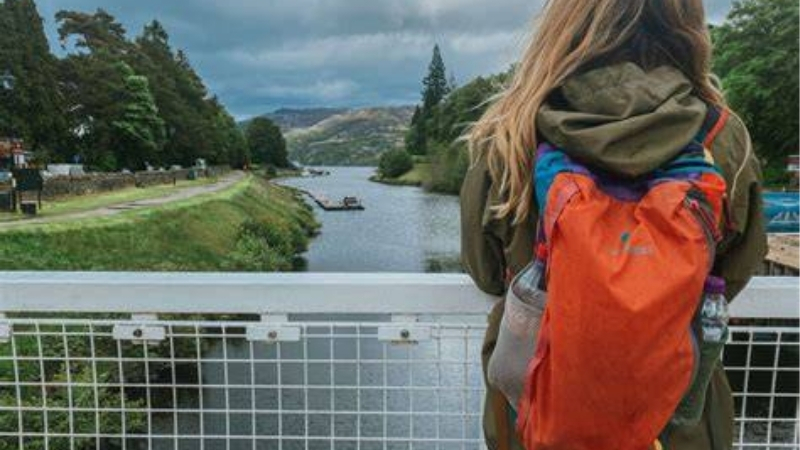
Carry-On Limits Vary More Than You Expect
Full-service carriers generally permit a cabin bag around fifty-five by forty by twenty centimetres, which a forty litre travel pack fits when not overstuffed. Budget airlines are the problem, since several restrict free cabin baggage to a much smaller underseat bag and charge separately for anything larger.
The practical answer is to check the specific airlines on your itinerary before choosing a size rather than assuming forty litres is universally safe. Many travellers settle on a pack near that figure and simply budget for priority boarding on the two or three budget legs of a multi-country trip.
Clamshell Opening Changes Daily Life
A top-loading hiking pack forces you to unpack everything to reach an item at the bottom, which becomes exhausting when you change accommodation every few days. Travel packs open flat like a suitcase instead, so the whole interior is visible and you retrieve one item without disturbing the rest.
Look for separate compartments rather than a single cavern. Internal mesh pockets or packing cube compatibility keep clean and worn clothing apart, which matters on a trip where laundry happens irregularly. A dedicated laptop sleeve accessible from outside also saves unpacking at every security check.
Security Features That Actually Matter
Lockable zipper pulls are the single most useful feature, allowing a small padlock through both sliders on the main compartment. That will not stop a determined thief with a blade, but it prevents opportunistic opening in a crowded station or a shared hostel dormitory, which is the realistic risk.
A stowaway harness matters more than people expect. Zipping the straps away before checking a bag or putting it on a luggage rack stops them catching and tearing. Avoid bags covered in external pockets, since anything reachable without your knowledge in a packed metro carriage is a liability.
Top Picks: Best Backpack for Traveling Europe
The best backpack for traveling europe picks below all open flat and sit near carry-on dimensions, but they solve the problem differently in weight, organisation and price. The table compares them at a glance, then each entry explains who it suits and where the compromise genuinely lands.
| Pack | Capacity | Opening | Approx weight | Best for |
|---|---|---|---|---|
| Osprey Farpoint 40 | 40 L | Full clamshell | Around 3.2 lb | All-round value |
| Cotopaxi Allpa 35L | 35 L | Full clamshell | Around 3.5 lb | Organisation |
| Tortuga Travel Backpack 40L | 40 L | Full clamshell | Around 4 lb | Carry-on maximisers |
| Peak Design Travel 45L | 35 to 45 L | Multi-access | Around 4.5 lb | Photographers |
| Osprey Porter 46 | 46 L | Full clamshell | Around 3.5 lb | Longer trips |
Osprey Farpoint 40
The Farpoint 40 has been the default recommendation for a decade because it gets the balance right. Forty litres fits most full-service carry-on sizers, the full clamshell opens like a suitcase, and a proper hip belt with a stowaway harness means it carries like a hiking pack when you need it to.
Internal organisation is minimal, so packing cubes are effectively mandatory rather than optional. The forty litre size will still incur fees on strict budget carriers. There is also a women’s specific version, the Fairview, with a shorter torso and shaped straps that fits many people considerably better.
Cotopaxi Allpa 35L
The Allpa solves the organisation problem that the Farpoint leaves to you. The interior splits into mesh-covered compartments so you can see everything at once, and the TPU-coated shell handles rain and rough handling far better than plain nylon on trains and station floors.
At thirty-five litres it holds less than the forty litre options, which is a genuine constraint on trips longer than a fortnight without laundry. The harness is simpler than Osprey’s and less comfortable over long distances. For city-to-city travel where you are rarely walking far, it is excellent.
Tortuga Travel Backpack 40L
Tortuga designs specifically around maximising carry-on volume, building the bag as a rectangular box rather than a tapered pack so nothing is wasted. The sailcloth is genuinely tough, the harness is more supportive than most travel packs, and the laptop compartment opens without disturbing anything else.
It is heavier empty than the alternatives and costs considerably more. The boxy shape also looks unmistakably like luggage rather than a daypack, which some travellers prefer to avoid. For anyone determined to travel carry-on only for several weeks, the usable volume justifies both.
Peak Design Travel Backpack 45L
The Travel Backpack expands from thirty-five to forty-five litres, letting you fly carry-on and then open it up once you have space. Access from the back, sides and top means you reach anything without laying the bag flat, which is useful in a crowded compartment or a small hostel room.
It is the heaviest and most expensive option here, and much of the clever design serves camera equipment through separate cube inserts sold at extra cost. For general travel without a camera system, you pay for capability you may never use. For photographers it is close to unmatched.
Osprey Porter 46
The Porter 46 is the answer when forty litres genuinely is not enough. It keeps the clamshell opening and stowaway harness of the Farpoint while adding usable volume, and the more structured shape holds its form better when partly empty rather than sagging into an awkward lump.
Forty-six litres exceeds several carry-on sizers, so this is a bag you should expect to check on some flights. The harness is less supportive than the Farpoint’s despite the larger size. For trips involving varied climates or gear that will not compress, the extra space is worth the trade-off.
Costs and Timing for European Trips
Travel packs are made from technical fabric with metal frame components, so the best backpack for traveling europe category has absorbed real cost increases. Timing also matters, since autumn is one of the best periods to visit Europe and the shopping window is right now.
Technical Fabric Costs Have Risen Sharply
Industry reporting places the average tariff-driven cost increase across outdoor products at roughly 7.7 percent, with high-tenacity nylon rising ten to fifteen percent. Travel packs are built almost entirely from that fabric, with aluminium frame stays adding a second affected input on larger models.
Brands have described forward pricing as provisional while trade conditions settle, and inflation near 4.2 percent is tightening discretionary spending. A pack already on your shortlist is unlikely to become cheaper across the next few restocks, particularly in the more popular sizes and colours.
Autumn Is Prime Season for European Travel
September and October bring smaller crowds, lower accommodation prices and comfortable walking weather across most of Europe, which makes this the window many independent travellers actually book. Buying a pack now means it arrives with time to test-pack before you are committed to it.
That test-pack matters more than people realise. Loading the bag fully, wearing it for an hour and checking it against a carry-on sizer at home is the only way to find out whether it truly fits and carries. Discovering a torso length problem at the airport is an expensive way to learn.
Shortlist Now for the Autumn Discount Window
If your trip is next spring rather than this autumn, the disciplined approach is to choose a model now and track its price into the late November sale window, which remains the deepest of the year for luggage and packs. Amazon also runs early promotions ahead of its October event.
Follow one specific pack and size rather than the category, because travel luggage discounts land heavily on discontinued colours. Knowing what your chosen model normally costs is the only reliable way to tell a genuine reduction from last season’s stock at a rearranged headline price.
Frequently Asked Questions
Questions about the best backpack for traveling europe centre on sizing, whether wheels are better and how much capacity is genuinely needed. The answers below assume independent travel between cities by train and budget flights rather than a single-destination package holiday.
Will a 40L pack fit as carry-on?
On most full-service carriers, yes, provided it is not overstuffed and the compression straps are pulled in. Several European budget airlines restrict free cabin baggage to a much smaller underseat bag, so check each carrier on your itinerary and budget for priority boarding where needed.
Backpack or wheeled luggage for Europe?
Backpacks win on cobbled streets, station stairs and older buildings without lifts, which describes much of historic Europe. Wheels win in modern airports and on long flat concourses. Hybrid bags exist but carry a weight penalty and rarely perform either job as well as a dedicated design.
How many litres do I actually need?
For most trips of one to three weeks with occasional laundry, thirty-five to forty litres is plenty and forces useful discipline. Larger bags simply get filled. If you are travelling across genuinely different climates or carrying specialist equipment, forty-six litres is the sensible upper limit.
Are anti-theft features worth paying for?
Lockable zippers are genuinely useful and cost almost nothing. Slash-proof panels and hidden compartments address risks that are far rarer than opportunistic zip-opening in crowded places. Spend on lockable sliders and keep valuables in a small bag on your front instead of buying heavier fabric.
Related Guides
- budget packs for rail and hostels
- suspension for long hostel trips
- sizing a pack from your packing list
- packs built for constant transitions
Final Thoughts
The best backpack for traveling europe is one that clears the airline sizers on your actual itinerary, opens flat so you are not unpacking daily, and carries comfortably on stairs and cobbles. Around forty litres with lockable zippers covers almost every independent trip without ever needing to check a bag.




Write Your Review
No reviews yet. Be the first to share your experience!