
Best hammock camping setup planning is about the whole system, not just the hammock: suspension, bug net, tarp and underquilt together make or break your night. This guide walks the pieces and names six complete kits so you sleep comfortably.
As an Amazon Associate we earn from qualifying purchases.
Our top picks



As an Amazon Associate we earn from qualifying purchases at no extra cost to you.
By Jake Thompson
How to Build the Best Hammock Camping Setup
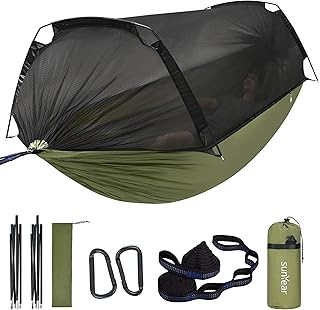
The best hammock camping setup is a system of five parts: the hammock, a suspension, a bug net, a tarp and an underquilt. A bare hammock is fine for a summer afternoon, but overnight camping needs all five to stay warm, dry and bug-free. Getting the system right matters more than any single piece.
Start With the Hammock and Suspension
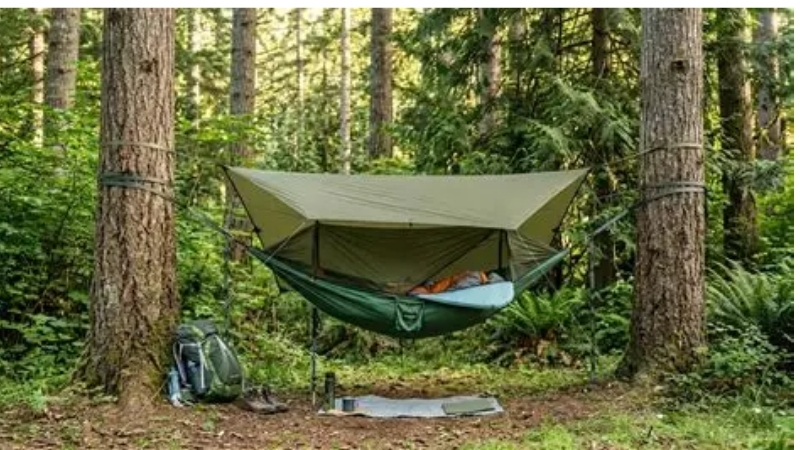
Begin with a comfortable hammock and a suspension that protects trees. Gathered-end hammocks are lightest and most popular, and wide webbing straps at least an inch wide anchor them without damaging bark, following Leave No Trace. Together these are the foundation the rest of the system builds on.
Sleeping comfort comes from lying diagonally, at about a 25-to-30-degree angle across the hammock, for a flatter lay, and from a proper hang angle set by the straps. Nail the hammock and suspension first, since a comfortable, tree-friendly hang is what makes everything else in the setup worthwhile.
Add a Bug Net and Tarp
For overnight use, add a bug net and a tarp. A bug net, built-in on premium models or added separately, is non-negotiable in insect season. A tarp blocks rain and wind, with an eight-by-six diamond as a three-season minimum and a larger square for storms. These two make the hammock weatherproof.
Match the tarp size to your conditions, since bigger tarps cover more but weigh and cost more. A built-in or ridgeline-hung net keeps bugs out without adding fuss. With a hammock, suspension, bug net and tarp, you have a shelter, but one critical piece still separates a good night from a cold one.
Do Not Skip the Underquilt
The underquilt is the piece beginners most often skip and regret. In a hammock, your body compresses any sleeping bag beneath you, so it loses loft and lets cold air steal heat, the dreaded cold-butt syndrome. An underquilt hangs outside and beneath the hammock, insulating you where a bag cannot.
Choose an underquilt rated for your coldest expected lows, since most cover down to freezing or just below, and layer for colder trips. Down packs lighter but fails when wet, while synthetic is cheaper and warmer when damp. The underquilt is as critical to comfort as your top insulation, so plan for it.
Decide: All-in-One Kit or Modular
Finally, decide whether to buy a complete kit or build modularly. All-in-one systems bundle the hammock, bug net, tarp and suspension for simplicity and value, ideal for beginners. Modular setups let you pick each best-in-class piece and swap components by season, at more cost and research.
Match the approach to your goals. Beginners and those who want one purchase are happier with an integrated kit, while dedicated hammockers who want the lightest or most tailored system build modularly from cottage brands. Either way, remember most kits still need an underquilt bought separately.
Top Picks for the Best Hammock Camping Setup
These six span complete all-in-one systems to modular bases and the essential underquilt. The best hammock camping setup depends on your approach, so scan the table, then read each pick for who it suits and its honest drawbacks.
| Setup | Type | Best For | Price Tier |
|---|---|---|---|
| Hennessy Expedition Asym Zip | All-in-one system | Complete shelter | Mid |
| Kammok Mantis UL | All-in-one kit | Ultralight kit | Premium |
| Warbonnet Blackbird | Modular base | Premium modular | Premium |
| ENO JungleLink System | All-in-one system | Easy comfort | Mid |
| Onewind Tempest | Value system | Budget complete | Budget |
| Hammock Gear Economy Burrow | Underquilt | Warmth add-on | Mid |
Hennessy Expedition Asym Zip — Best Complete Shelter
The Hennessy Expedition Asym Zip is a complete hammock shelter that replaces a tent. It bundles the hammock with an integrated bug net, rainfly and suspension, so you get everything for a bug-free, weatherproof night in one purchase. For campers who want an all-weather system out of the box, it leads.
Its asymmetric, bottom-entry design takes getting used to, and like all setups it still needs an underquilt for cold nights. For hammock campers who want a proven, integrated shelter system without piecing components together, though, it is a top all-in-one choice and a genuine tent replacement.
Kammok Mantis UL — Best Ultralight Kit
The Mantis UL is the standout all-in-one ultralight kit. At around two and a half pounds it integrates the hammock, bug net, rainfly and suspension into one impressively light, comfortable package, wowing testers at every turn. For weight-conscious campers who want a complete kit, it is the class leader.
It is premium-priced and, as an integrated kit, less customizable than modular systems, and it still benefits from a separate underquilt. For hammockers who want the best weight-to-performance ratio in a complete, ready-to-hang kit, though, it is exceptional and removes the guesswork of assembling a system.
Warbonnet Blackbird — Best Premium Modular Base
The Warbonnet Blackbird is the modular builder’s foundation. This customizable, superbly comfortable gathered-end hammock includes an integrated bug net and a clever gear shelf, and it pairs with a Warbonnet tarp and underquilt for a tailored, top-tier setup. For those building the best system piece by piece, it is the ideal base.
Building a full setup around it costs more and takes research, since the tarp and underquilt are separate. For dedicated hammockers who want a best-in-class, comfortable base to build a modular, season-adaptable system on, though, it is the most respected hammock in the backcountry for good reason.
ENO JungleLink System — Best Easy Comfort
The ENO JungleLink system is the comfortable, approachable all-in-one. It links a comfy ENO hammock with an integrated bug net and shelter components for an easy, no-guesswork setup, making hammock camping simple for newcomers. For campers who want ENO comfort in a ready system, it delivers.
It is heavier than ultralight kits and, like all setups, needs an underquilt for cold nights. For beginners and comfort-seekers who want a straightforward, integrated ENO system rather than piecing parts together, though, it is an easy, enjoyable way into hammock camping with familiar, dependable gear.
Onewind Tempest — Best Budget Complete
The Onewind Tempest is the value complete setup. It brings a useful feature set, an adjustable ridgeline and a bug net, at a friendlier price than premium systems, making a full hammock setup affordable. For budget-minded campers who want performance without the top-tier price, it is a smart pick.
Its materials and refinement trail premium cottage systems, and an underquilt is still a separate buy. For newcomers and value shoppers who want a capable, feature-rich hammock setup without moving into the highest price tier, though, it delivers genuine performance for the money and eases the entry cost.
Hammock Gear Economy Burrow — Best Warmth Add-On
The Economy Burrow is the underquilt that completes any setup. This affordable down underquilt hangs beneath the hammock to insulate you where a compressed sleeping bag cannot, curing cold-butt syndrome, with shock cords and attachment points to stay snug all night. For warmth, it is the missing piece.
As down, it needs care to stay dry, and even an economy underquilt adds cost most beginners underestimate. For any hammock camper heading out in temperatures near or below freezing, though, it is the single most important add-on, turning a cold, sleepless night into a genuinely warm and comfortable one.
What Hammock Setups Cost in 2026
Hammock setups span budget to premium, so timing helps. A couple of current market forces affect what these systems cost and when to buy, without changing which pieces you need.
Tariffs Pressure Materials
Hammocks, tarps and underquilts use imported nylon, down and hardware under tariffs that remain in place. Brands have described future pricing as a moving target, so committing to a system you want, rather than waiting indefinitely, is a reasonable call this year.
The effect is uneven. Premium cottage systems have largely held pricing, while mainstream hammocks and kits see more discounting. Value-focused buyers should watch mainstream all-in-one kits and separate components for closeouts, and treat cottage gear as a fixed investment.
Build the System Over Time
You need not buy everything at once. Start with a hammock, suspension and tarp, then add the bug net and, crucially, the underquilt as budget allows. Fall sale events like Prime Big Deal Days in early October and Black Friday in late November discount many of these pieces.
Cottage underquilts and hammocks can have lead times and rarely discount deeply, so order those early. Building the setup over a season lets you spread the cost, but do not head into cold nights before the underquilt is in hand, since it is the piece that makes overnight comfort possible.
Budget for the Underquilt
The most common budgeting mistake is forgetting the underquilt, then having a cold, miserable night. Factor it in from the start, since a hammock, tarp and net without insulation beneath you is only a fair-weather setup. Prioritize a quality underquilt over upgrading other pieces if funds are tight.
If a specific hammock, tarp or underquilt is prone to selling out or has a lead time, order it early rather than gambling on stock. Missing the underquilt before a cold trip is the difference between a great night and a sleepless one, so complete the system before you rely on it.
Frequently Asked Questions
These are the questions campers ask most about hammock setups.
What does the best hammock camping setup include?
Five pieces: a hammock, a tree-friendly suspension, a bug net, a tarp and an underquilt. The best hammock camping setup combines all five so you stay comfortable, dry, bug-free and warm overnight. A bare hammock suits summer lounging, but real camping needs the complete system, especially the underquilt.
Do I really need an underquilt?
For any cool night, yes. Your body compresses a sleeping bag beneath you in a hammock, so it loses loft and cold air steals heat. An underquilt hangs outside and beneath to insulate you properly. Skipping it causes cold-butt syndrome and a miserable night, even in mild temperatures.
All-in-one kit or build my own?
Beginners are usually happier with an all-in-one kit like the Kammok Mantis or Hennessy Expedition, which bundle the pieces for simplicity and value. Dedicated hammockers who want the lightest or most tailored setup build modularly from cottage brands. Either way, plan to add an underquilt.
How do I protect trees when hanging?
Use wide webbing straps, at least one to one and a half inches, which spread the load and avoid cutting into bark, following Leave No Trace. Never use thin rope directly on trees. Most modern suspensions use tree-friendly straps, and tree huggers protect bark when using thin cord systems.
See More:
- Best hiking backpack
- Best backpacking backpack
- Ultralight hiking backpack
- Best hydration backpack
- Best hiking backpack for women
Final Thoughts
The best hammock camping setup is a complete system: hammock, suspension, bug net, tarp and underquilt. All-in-one kits like the Kammok Mantis UL and Hennessy Expedition simplify the buy, while a Warbonnet Blackbird base builds modular. Whatever you choose, budget for the underquilt, hang tree-friendly, and lie diagonally, and you will sleep warm and dry between two trees.


Write Your Review
No reviews yet. Be the first to share your experience!