
Key takeaways
What's inside
Best backpack for guys usually means one bag covering a gym session, a campus day, and a weekend away without looking wrong in any of them. This guide covers ventilated compartments, capacity for mixed use, and the construction details that decide longevity, then compares five versatile packs that cover a mixed week.
As an Amazon Associate we earn from qualifying purchases at no extra cost to you. Product prices and availability are accurate as of the date shown and are subject to change.


As an Amazon Associate we earn from qualifying purchases at no extra cost to you. Product prices and availability are accurate as of the date shown and are subject to change.
By Jake Thompson, gear writer at Roger Bacon Outdoors.
🛒 Best Price Today on Amazon
Prime members get fast, free shipping on everything above, plus member-only deals. New members get a 30-day free trial — cancel anytime.
How to Choose the Best Backpack for Guys
The best backpack for guys serving several roles has to compromise, and the sensible approach is deciding which role it fails at rather than pretending it does all three perfectly. Ventilation, capacity, and construction do most of the work. Three checks tell you whether a pack will cover a mixed week.
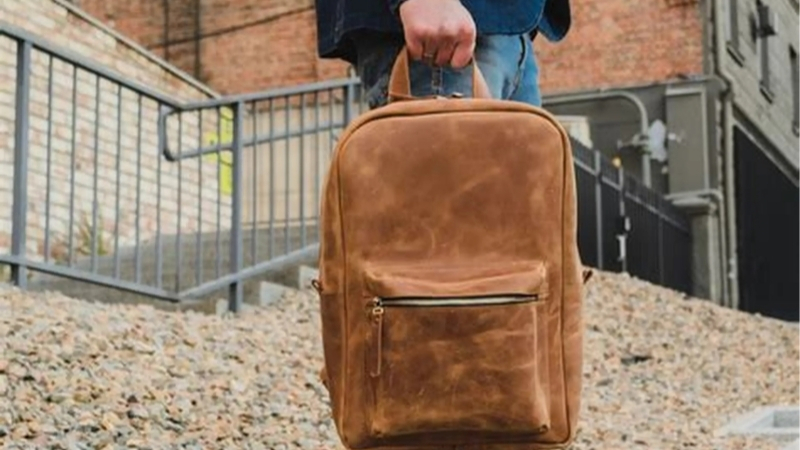
Separate Compartments for Damp Kit
The single feature that makes a bag work across gym and everything else is a ventilated compartment for shoes or wet kit. Without it, training gear sits against a laptop and a jacket, and by Wednesday the whole bag smells regardless of how often you empty it.
Look for mesh panels or grommets rather than a sealed pocket, since airflow is what dries things out. A separate section also protects the main compartment when the bag gets set down on wet grass or a changing room floor, which happens more often than most people plan for.
Capacity for Mixed Use
Between 25 and 30 litres covers the widest range of situations. That holds a laptop, a change of clothes, trainers, and a bottle without being oversized for a normal day. Below 20 litres the gym kit will not fit; above 35 litres it becomes bulky for daily use.
Shape matters as much as volume. A squarer bag takes a shoebox, a helmet, or a folded jacket where a tall narrow one will not, even at the same litre rating. Check the internal dimensions and think about the bulkiest single item you carry regularly.
Construction Details That Decide Longevity
Zips fail long before fabric on almost every best backpack for guys contender, so branded hardware on the main compartment is the best single indicator of build quality. On a bag that will be opened several times a day for years, a double-pull design spreads that wear across two sliders.
Check the base and the strap junctions. A reinforced or double-layered base handles being set down on concrete and gravel, and bar-tack stitching where the straps meet the body carries the whole load every lift. Those two points are where cheap bags visibly give up first.
Top Picks: Best Backpack for Guys
The best backpack for guys splitting time between a gym and a lecture theatre differs from one heading out on weekends, so these five span that range. Capacities come from manufacturer listings and vary between model years, so confirm dimensions against the current version.
| Model | Approx. Capacity | Shoe Compartment | Laptop Fit | Best For |
|---|---|---|---|---|
| Nike Brasilia 9.5 | ~24-30 L | Ventilated | Up to 15 in | Gym-first carry |
| adidas Defender 4 | ~30 L | Ventilated | Up to 15 in | Sports kit volume |
| Patagonia Refugio 26L | 26 L | No | Up to 15 in | Campus and weekends |
| Chrome Industries Citizen | 26 L | No | Up to 15 in | Bike commuting |
| Vans Old Skool Check | ~22 L | No | Up to 15 in | Budget everyday |
1. Nike Brasilia 9.5 – Best Gym-First Bag
The Brasilia is built around training and priced so that replacing it eventually is painless. A ventilated shoe compartment keeps trainers away from clean clothes, the polyester shell wipes down easily, and the padded laptop sleeve means it still works for a class or a shift afterwards.
The sporty branding limits it in an office, and the fabric is light enough that it shows wear within a couple of years of heavy use. The suspension is basic. For a bag that mostly goes between home, the gym, and a lecture, it does the job cheaply.
2. adidas Defender 4 – Best for Sports Kit Volume
Where the Brasilia is compact, the Defender is built for people carrying actual sports kit rather than a change of shorts. Around 30 litres with a large ventilated bottom compartment takes boots, a ball, or a full training set without compressing everything else in the bag.
The size makes it bulky for a normal weekday, and the shape is squarer than it looks in photos. The laptop sleeve is padded but thin. For team sports or anyone whose kit does not fit a standard gym bag, the extra volume is the reason to choose it.
3. Patagonia Refugio 26L – Best for Campus and Weekends
This is the one that looks right in the widest range of settings. Twenty-six litres in a clean shape with recycled fabrics, a proper padded laptop sleeve, and enough structure to hold form when half empty, which is where cheaper packs start to look scruffy.
There is no shoe compartment, so gym kit shares space with everything else. It is also more expensive than the sports-brand options. For someone whose week is more campus and day hikes than training sessions, the versatility and Patagonia’s repair programme make it the sensible buy.
4. Chrome Industries Citizen – Best for Bike Commuting
Chrome builds for messengers, and it shows in the waterproof liner and the seatbelt-buckle sternum strap that you can operate one-handed. The roll-top main compartment genuinely keeps rain out rather than resisting it, which matters if you ride in weather rather than around it.
It is heavy for the capacity and the industrial styling is not for everyone. Access is slower than a zip opening. For anyone cycling daily with a laptop and no interest in a rain cover, the weatherproofing and the near-indestructible build are what you are paying for.
5. Vans Old Skool Check – Best Budget Everyday
Not every bag needs to be technical. This covers a laptop, books, and a jacket at a price that makes it a low-stakes purchase, and the styling suits a casual setting without trying to be anything else. Around 22 litres is enough for a normal day.
The fabric is light, the padding is minimal, and heavy loads sit poorly on flat straps. It will not last the way a Patagonia or Chrome bag will. As a first bag, a spare, or something for occasional use, the value is straightforward and honest.
Tariffs, Term Starts, and Buying Timing
Two things shape what you pay: fabric costs that have already moved and a demand curve driven by term starts and gifting. Both matter when deciding whether to buy the best backpack for guys on your list now or wait.
Fabric Costs Have Already Moved
An Outdoor Industry Association survey found 84 percent of member businesses expect new tariffs to affect operations, with costs up roughly 7.7 percent overall. High-tenacity nylon and technical polyester have climbed 10 to 15 percent, which covers the shell fabrics on essentially every pack listed above.
At the $40 to $150 price point that is a few dollars rather than a dramatic jump, but it compounds with each restock. Brands have been unusually direct that forward pricing is provisional while supply chains settle, so a model you have already chosen is worth buying rather than deferring.
Term Starts Clear the Popular Colours
Late August through September is the busiest window of the year, as students buy for a new term in the same fortnight. Neutral colours and mid-size variants sell through first, and restocks on specific colourways frequently take longer than a product listing suggests during that period.
Buying at the front of that window means choosing from full stock. It also leaves time to load the bag with a realistic week’s kit and wear it around before removing tags, which is the only reliable way to find out whether the straps suit your shoulders.
Where the Discounts Land
For anything you can defer, the calendar is predictable. Prime Big Deal Days in mid-October and the Black Friday through Cyber Monday stretch in late November carry the deepest cuts on bags, with early deals routinely appearing in the days ahead of each event opening.
Backpacks are among the most gifted items in that window, so the popular models and colours sell through before it closes. Build a wishlist now and track prices rather than shopping on the day, and buy early in the sale if a specific colourway matters to you.
Frequently Asked Questions
These come up most often from people hunting the best backpack for guys who want to avoid owning three separate bags. Short, practical answers below.
Can one bag really cover gym and everything else?
Yes, provided it has a ventilated compartment for trainers and damp kit. Without that separation, the bag becomes unpleasant within a week and the laptop shares space with wet clothing. Everything else about mixed use is capacity, and 25 to 30 litres covers most weekly routines.
What size works for both campus and weekends?
Twenty-five to thirty litres handles a laptop, books, and a change of clothes, and stretches to an overnight bag at a push. Below 20 litres gets tight once a jacket is involved. Going past 35 litres makes the bag bulky for the days when you carry very little.
How do I stop a backpack smelling?
Empty it completely after gym use rather than leaving kit in overnight, and keep damp items in a ventilated compartment. Most polyester packs can be hand washed with mild detergent and air dried, though check the label first. Leaving it open to dry between uses helps considerably.
Is it worth paying more than $100?
If you use the bag daily for years, yes, mostly for better zips and a repair programme rather than better fabric. For occasional use, a $50 bag does the same job. The cost difference usually shows up in year three, when a cheap pack’s strap seams start to give.
See More:
- Best trekking sleeping bag
- Best sleeping bag for backpacking
- Best women backpack for work
- Best backpack for backpackers
Final Thoughts
The best backpack for guys covering several roles is the one with somewhere separate to put damp kit and a shape that takes the bulkiest thing you carry. Aim for 25 to 30 litres, check the zip hardware and the base construction before the feature list, and be honest about which role matters most, since a gym-first bag and a campus-first bag look and behave differently. Buying ahead of the term-start rush gets you the colour you wanted rather than what is left.






Write Your Review
No reviews yet. Be the first to share your experience!