
Key takeaways
What's inside
Best backpack for EDC is usually smaller than the one people talk themselves into buying, because capacity gets filled whether or not the contents are used. This guide covers auditing what you carry, sizing under 20 litres, and wearing a pack all day, then compares five compact options that stay light enough to forget you are wearing them.
As an Amazon Associate we earn from qualifying purchases at no extra cost to you. Product prices and availability are accurate as of the date shown and are subject to change.


As an Amazon Associate we earn from qualifying purchases at no extra cost to you. Product prices and availability are accurate as of the date shown and are subject to change.
By Jake Thompson, gear writer at Roger Bacon Outdoors.
🛒 Best Price Today on Amazon
Prime members get fast, free shipping on everything above, plus member-only deals. New members get a 30-day free trial — cancel anytime.
How to Choose the Best Backpack for EDC
Most EDC advice adds things. The more useful exercise is subtraction, because a bag you carry every day for years is a load you pay for in small increments. Three decisions determine whether the best backpack for EDC ends up light and used or heavy and resented.
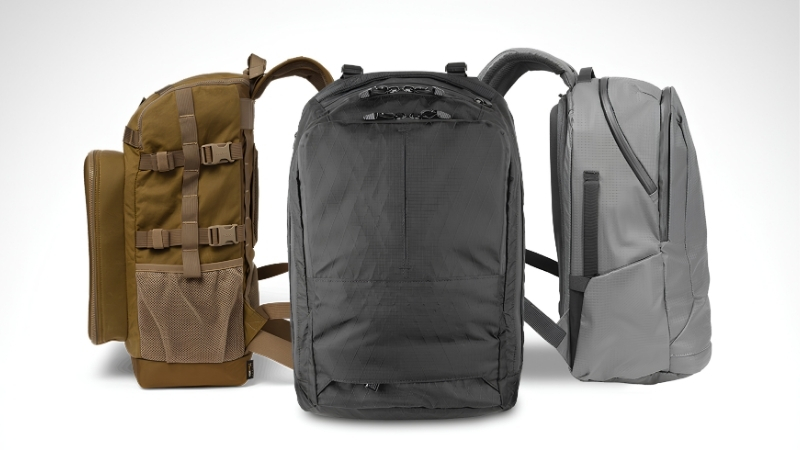
Auditing What Actually Earns Its Place
Empty your current bag and set everything aside. Over the next fortnight, put items back only at the moment you reach for them. Most people find the honest list is a laptop or tablet, a bottle, a notebook, a charging cable, keys, and a light layer. That is it.
The things that do not come back are usually the ones bought for a scenario rather than a routine: a second charger, a large first aid kit, tools duplicated by a phone. Carrying those daily costs you a pound or two on every journey for a use case that arrives twice a year.
Sizing Under 20 Litres
Once the audit is done, most everyday loads fit into 14 to 18 litres comfortably. Buying at that size is not a compromise; it is what stops the bag refilling itself. A 25-litre pack carrying 15 litres of contents also sags and looks unstructured, which is its own small annoyance.
Check whether the pack still takes a laptop at that volume, since compact bags vary enormously here. Some 16-litre designs hold a 14-inch machine in a proper sleeve while others have no padded section at all. If you carry a laptop daily, that requirement drives the shortlist.
Weight, Silhouette, and All-Day Comfort
Empty weight matters disproportionately at this size. A pack starting at two and a half pounds is carrying a sixth of a typical EDC load before you add anything, so anything under about two pounds empty is worth prioritising in a bag this small.
Silhouette decides where the bag is welcome. A compact pack with a clean panel and no external webbing works in an office, a restaurant, and a train without comment, which is the point of a bag worn every day. Bright colours and technical hardware narrow that range considerably.
Top Picks: Best Backpack for EDC
Every best backpack for EDC below sits under 20 litres, which is the point rather than a limitation. Capacities and laptop sizing come from manufacturer listings and vary between model years, so check the internal dimensions against your own machine before ordering one.
| Model | Capacity | Laptop Fit | Approx. Empty Weight | Best For |
|---|---|---|---|---|
| Peak Design Everyday Backpack Zip 15L | 15 L | Up to 16 in | ~2.3 lb | Organisation in a small pack |
| Fjallraven Kanken 16L | 16 L | Up to 13 in with sleeve | ~0.8 lb | Lightest minimal option |
| Topo Designs Rover Pack Mini | ~14 L | Small tablet only | ~1.3 lb | Durable everyday use |
| Pacsafe Vibe 20 | 20 L | Up to 13 in | ~1.7 lb | Urban and travel security |
| Matador On-Grid Packable 16L | 16 L | No padded sleeve | ~0.7 lb | Secondary and packable carry |
1. Peak Design Everyday Backpack Zip 15L – Best Organisation in a Small Pack
Fifteen litres with genuine internal structure is unusual, and the FlexFold dividers let you reconfigure the space rather than living with fixed pockets. Dual side access means reaching a laptop or a camera without taking the bag off, and the magnetic top latch opens one-handed.
It is heavy for the capacity at roughly two and a half pounds, and the price sits well above most compact packs. The structure also means it does not compress when carrying very little. For anyone whose EDC includes a camera or several devices, the organisation justifies both.
2. Fjallraven Kanken 16L – Lightest Minimal Option
Under a pound empty, this is the least you can carry while still having a bag. The Vinylon F fabric shrugs off light rain, the shape stays flat against your back, and the design has been unchanged long enough that it reads as neutral rather than fashionable.
There is no padded laptop sleeve as standard, only a seat pad that doubles as thin protection, and the flat unpadded straps are uncomfortable past about twelve pounds. Organisation is minimal. If your carry is genuinely light and you value low weight above all, nothing here is lighter.
3. Topo Designs Rover Pack Mini – Best Durable Everyday Use
Topo builds this from heavier nylon than most bags this size, with a leather-reinforced base and a drawcord closure that has no zip to fail. Around fourteen litres suits a genuinely minimal carry, and the whole thing is small enough that it never looks oversized on a walk.
There is no laptop compartment, which rules it out if you carry a machine daily, and the drawcord top is slower to access than a zip. Internal organisation is one pocket. For a light EDC of notebook, bottle, and layer, it will outlast bags costing twice as much.
4. Pacsafe Vibe 20 – Best Urban and Travel Security
Pacsafe builds anti-theft features into a normal-looking bag, which is the sensible approach. Slash-resistant mesh in the panels, lockable zip pulls, and RFID-blocking pockets address the practical risks of carrying a laptop through a city without making the bag look like a security product.
The security materials add weight and stiffness compared with a plain compact pack, and twenty litres is the upper end of what counts as minimal. The styling is functional rather than sharp. For anyone commuting through crowded areas or travelling regularly, the features are genuinely useful.
5. Matador On-Grid Packable 16L – Best Secondary Carry
This folds into its own pocket and weighs well under a pound, which makes it the bag you own alongside your main one rather than instead of it. Sixteen litres unfolded handles a day out, a grocery run, or the flight home when the main bag is full.
Packable fabric offers no meaningful protection for electronics and there is no padded sleeve at all, so a laptop needs its own case. The thin straps are uncomfortable under real weight. As a second bag that costs almost nothing in space, it is a smart thing to keep.
Tariffs, Gifting Season, and Buying Timing
Two things shape what you pay: fabric costs that have already moved and demand that climbs late in the year. Both are worth a moment before choosing the best backpack for EDC you intend to carry daily.
Fabric Costs Have Already Moved
An Outdoor Industry Association survey found 84 percent of member businesses expect new tariffs to affect operations, with costs up roughly 7.7 percent overall. High-tenacity nylon has climbed 10 to 15 percent, which covers the shell fabric on essentially every compact pack listed above.
For bags between $50 and $250, that means movement of a few dollars up to perhaps thirty. Brands have been unusually direct that quoted forward pricing is an estimate while supply chains settle, which weakens the case for waiting many months on a model you have already chosen.
Compact Packs Sell Hardest Late in the Year
Small everyday bags are among the most gifted items in the category, so demand climbs from early November. Neutral colours clear first, and several of these are made in smaller production runs than mainstream backpacks, which makes restocks slower than a listing tends to suggest.
Buying ahead of that window leaves you a return period that still works. A compact pack is one where the audit matters, and a fortnight of carrying it with your real daily load tells you far more about whether the volume is right than any product page will.
Where the Discounts Land
For a purchase you can defer, the calendar is predictable. Prime Big Deal Days in mid-October and the Black Friday through Cyber Monday stretch in late November carry the deepest cuts on bags, with early deals routinely appearing in the days ahead of each event.
Because several of these come in limited colour runs, availability often matters more than the saving. Track prices with a wishlist, but prioritise getting the size and colour you actually want over holding out for another ten percent that may never appear on that configuration.
Frequently Asked Questions
These come up constantly from people hunting the best backpack for EDC after finding their current pack is bigger than their life requires. Short answers below.
Is 20 litres enough for daily carry?
For most people, comfortably. A laptop, a bottle, a notebook, cables, and a light layer occupies roughly 12 to 16 litres. Going larger tends to mean carrying items used monthly rather than daily. Audit your current bag for two weeks before deciding you need more space.
Do I need a dedicated laptop compartment?
If you carry a machine daily, yes, and a suspended sleeve that stops short of the base is better still. If you carry one occasionally, a separate padded sleeve inside a simpler bag is lighter and lets you leave the protection at home on days you do not need it.
Backpack or sling for a minimal EDC?
Slings are faster to access and fine up to about six or seven pounds, after which the single strap becomes uncomfortable. Backpacks distribute weight properly and take a laptop. If your carry is a phone, wallet, and a few small items, a sling genuinely does the job.
How do I stop a small bag getting overfilled?
Keep a fixed set of contents and add nothing without removing something. The physical limit does most of the work, which is the main argument for buying small in the first place. Reviewing the contents every couple of months catches the items that quietly crept back in.
See More:
- Best trekking sleeping bag
- Best sleeping bag for backpacking
- Best women backpack for work
- Best backpack for backpackers
Final Thoughts
The best backpack for EDC is the smallest one that holds what you genuinely use, and the audit matters more than the shopping. Empty your current bag, repack only what you reach for over a fortnight, then buy to that volume rather than to a hypothetical worst case. Prioritise empty weight and a clean silhouette at this size, and check the laptop sleeve dimensions carefully, since compact packs vary enormously in whether they take a machine at all.






Write Your Review
No reviews yet. Be the first to share your experience!