
Key takeaways
What's inside
Best backpack for personal item allowances is a measuring problem before it is a shopping problem, because budget carriers enforce dimensions at the gate with a sizer. This guide covers the numbers each airline publishes and structured versus soft-sided designs, then compares five packs cut to fit underneath a seat.
As an Amazon Associate we earn from qualifying purchases at no extra cost to you. Product prices and availability are accurate as of the date shown and are subject to change.
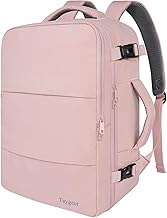

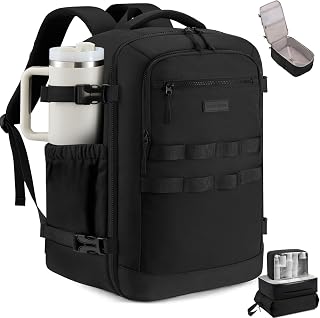

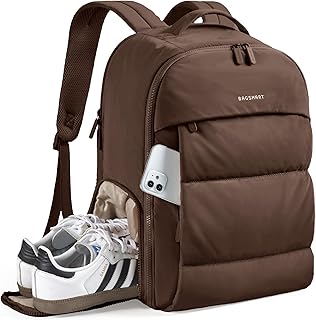

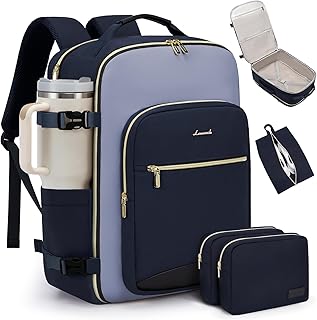

As an Amazon Associate we earn from qualifying purchases at no extra cost to you. Product prices and availability are accurate as of the date shown and are subject to change.
By Jake Thompson, gear writer at Roger Bacon Outdoors.
🛒 Best Price Today on Amazon
Prime members get fast, free shipping on everything above, plus member-only deals. New members get a 30-day free trial — cancel anytime.
How to Choose the Best Backpack for Personal Item Fares
Choosing the best backpack for personal item allowances starts with why they exist: budget carriers sell cabin baggage separately, and the sizer at the gate is how they enforce it. Getting this right saves a fee that often exceeds the price of the bag. Three things determine whether a pack passes.
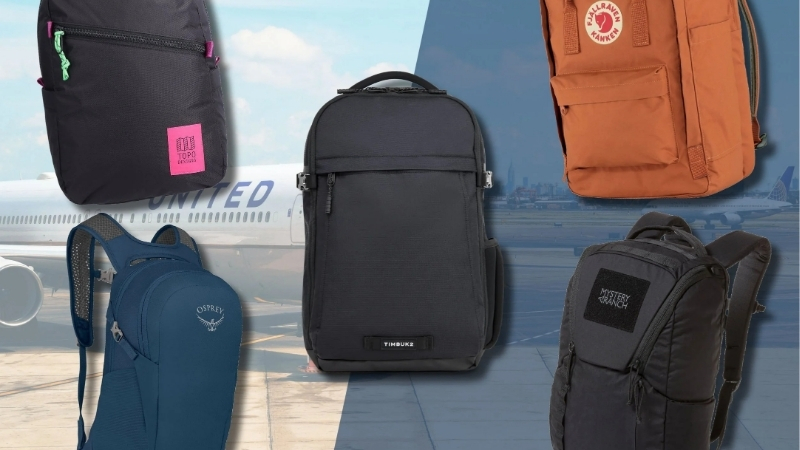
Know Your Airline’s Exact Dimensions
The figures differ enough to matter. Spirit and American commonly publish 18 x 14 x 8 inches, Frontier lists 14 x 18 x 8, Southwest allows roughly 18.5 x 8.5 x 13.5, and United is tighter at around 17 x 10 x 9. Ryanair works in centimetres at about 40 x 20 x 25.
Those numbers change, so check the airline’s current page rather than a blog before you fly. The safe approach is buying to the strictest carrier you use rather than the most generous, since a bag sized for Spirit will clear almost everything and one sized for Southwest will not.
Structured Versus Soft-Sided Bags
Structured bags hold their published dimensions no matter how you pack them, which makes them predictable at a sizer but wastes space when half full. They also cannot be squashed into an awkward under-seat gap around a seat leg, which is where soft bags earn their keep.
Soft-sided packs compress into odd spaces and forgive slight overpacking at the gate, but they swell when full and a bag measured empty can exceed the limit loaded. If you fly the strictest carriers regularly, structure removes the uncertainty; if you fly a mix, soft-sided is more flexible.
Packing Capacity Inside a Small Footprint
Most contenders for the best backpack for personal item use sit between 18 and 25 litres, and the difference between them is layout rather than volume. A clamshell opening lets you use compression cubes properly, which is the only reliable way to get three or four days of clothing into a bag this size.
Look for a separate laptop sleeve and a shoe or laundry pocket, since keeping those apart from clothes matters far more in a small bag than a large one. External water bottle pockets add width at the sizer, so pockets that sit flat when empty are worth seeking out.
Top Picks: Best Backpack for Personal Item Travel
The best backpack for personal item fares is whichever one clears your airline’s sizer packed, so these five are cut close to common limits. Listed dimensions come from manufacturer specifications and vary by production run, so measure on arrival and check against your carrier’s published figures.
| Model | Approx. Dimensions | Capacity | Opening | Best For |
|---|---|---|---|---|
| NARWEY Travel Backpack | ~17 x 11 x 8 in | ~20 L | Clamshell | Strictest limits |
| Hynes Eagle Travel Backpack | ~18 x 14 x 8 in | ~25 L | Full clamshell | Maximum legal volume |
| BAGSMART Travel Backpack | ~17 x 12 x 8 in | ~22 L | Clamshell | Organisation |
| Gonex Packable Travel Backpack | ~18 x 13 x 8 in | ~20 L | Panel | Folds away when unused |
| VEKEN Travel Backpack | ~17 x 12 x 8 in | ~20 L | Clamshell | Budget option |
1. NARWEY Travel Backpack – Best for the Strictest Limits
Cut deliberately under the common 18 x 14 x 8 allowance, this is the pack that clears sizers on the carriers most likely to check. The clamshell opens flat for packing cubes, a rear trolley sleeve pairs it with a case, and the soft sides squash under a seat.
Being cut small means capacity is genuinely limited, so this is a two or three night bag rather than a week’s worth. Fabric and zips are budget-grade and will show wear under frequent use. As insurance against a gate fee on a budget carrier, it does exactly one job well.
2. Hynes Eagle Travel Backpack – Maximum Legal Volume
Built to the edge of the common 18 x 14 x 8 limit rather than under it, this squeezes roughly 25 litres out of personal item dimensions. The full clamshell opens like a suitcase, and internal compression straps hold clothing down so the sides do not bulge past the sizer.
Cut to the maximum means an overpacked bag will fail on carriers with tighter limits like United. It also lacks the padding of a dedicated laptop bag. For travellers flying carriers that publish the standard figure, it converts every legal inch into usable space.
3. BAGSMART Travel Backpack – Best Organisation
Where most personal item bags are one cavity with a laptop sleeve, this splits the interior properly. A separate shoe compartment, a lined pocket for toiletries, and a padded laptop section keep things apart, which matters far more in a small bag than a large one.
The dividers cost some flexibility, since you cannot collapse a compartment you are not using. Build quality is mid-range rather than premium. For a short trip where you want to arrive with clothes uncreased and shoes separate, the internal structure earns its place.
4. Gonex Packable Travel Backpack – Best When Not in Use
This folds into its own pocket, which makes it the sensible second bag rather than the main one. Take it inside a checked case, unfold it for day trips or the flight home, and it disappears again. Around 20 litres is enough for a laptop and a change of clothes.
Packable fabric is thin, so it offers little protection for electronics and will not survive years of weekly use. The straps are unpadded webbing rather than contoured foam. As a backup personal item that costs almost nothing in luggage space, it is a smart thing to own.
5. VEKEN Travel Backpack – Best Budget Option
For a single trip on a budget carrier where the alternative is paying a cabin bag fee, this covers the requirement at a price that makes the maths obvious. Clamshell opening, a padded laptop sleeve, a trolley sleeve, and dimensions cut close to the common allowance.
Zips and fabric are the compromise, and the shoulder straps are thin enough to notice on a long terminal walk with a full load. It is not built for years of use. As a purpose-bought bag for occasional budget flying, it pays for itself on the first flight.
Tariffs, Budget Fares, and Buying Timing
Two things shape what you pay: material costs that have already moved, and travel demand that peaks late in the year. Both matter when you are buying the best backpack for personal item compliance rather than a general-purpose bag.
Fabric Costs Have Already Moved
An Outdoor Industry Association survey found 84 percent of member businesses expect tariff impacts, with costs rising roughly 7.7 percent overall. High-tenacity nylon has climbed 10 to 15 percent, and even budget bags use enough of it that the increase shows up at this price point.
On bags between $30 and $80 that is a few dollars rather than a dramatic jump, but it compounds against a fee-avoidance purchase where the whole point is the maths. Brands have been openly describing forward pricing as provisional, so a chosen model is worth buying rather than deferring.
Holiday Flying Clears the Popular Sizes
Personal item bags sell hardest from late October through the December holidays, when budget-fare travel volume peaks and people discover the cabin bag fee at checkout. The sizes cut closest to common limits are the first to sell out, since those are the ones people search for.
Buying before that window means you can measure the bag on arrival, do a trial pack, and return it if it exceeds your airline’s figure. That return window is the whole safety net here, and it disappears if the bag arrives two days before a flight.
Where the Discounts Land
The calendar is predictable for anything you can defer. Prime Big Deal Days in mid-October and the Black Friday through Cyber Monday window in late November carry the deepest cuts on bags, with early deals routinely appearing in the days ahead of each event.
At this price point the discount is smaller in absolute terms than on premium packs, so the availability of the right dimensions matters more than the saving. Track prices with a wishlist, but prioritise getting a bag that measures correctly over waiting for another few dollars off.
Frequently Asked Questions
These come up constantly from people hunting for the best backpack for personal item rules after paying a gate fee once. Short answers with the practical detail that matters.
What counts as a personal item?
Anything that fits fully under the seat in front of you within the airline’s published dimensions. Handbags, laptop bags, and small backpacks all qualify if they measure correctly. What matters at the gate is the sizer, not what the bag is called or how it is marketed.
Will a 20-litre backpack always fit?
Not necessarily, because airlines measure dimensions rather than volume. A 20-litre bag cut tall and narrow can fail a limit that a 25-litre rectangular bag clears. Compare the external measurements when packed, and remember soft-sided bags swell once loaded beyond their empty dimensions.
Can I attach extra items to the outside?
Anything clipped or strapped externally counts toward the measured size and will be flagged at a sizer. Water bottles in side pockets add width, and a jacket bungeed to the front adds depth. Pack everything inside, and carry a coat rather than attaching it to the bag.
Do these rules apply on international flights?
Allowances vary considerably and weight is enforced more often abroad. Several European and Asian carriers cap hand luggage between 7 and 10 kilograms including the bag itself. Ryanair and similar carriers publish personal item dimensions in centimetres and check them consistently at the gate.
See More:
- Best trekking sleeping bag
- Best sleeping bag for backpacking
- Best women backpack for work
- Best backpack for backpackers
Final Thoughts
The best backpack for personal item travel is whichever one measures inside your airline’s published limit when fully packed, and that figure is the only specification that really matters. Buy to the strictest carrier you fly rather than the most generous, measure the bag yourself on arrival instead of trusting the listing, and pack it once at home before the trip. Getting this right costs an evening and saves a gate fee that often exceeds what the bag cost.







Write Your Review
No reviews yet. Be the first to share your experience!