
Key takeaways
What's inside
Best men’s backpack for work depends less on features than on whether it reads correctly in the room you walk into. This guide covers the formality spectrum from leather to technical nylon, hardware quality, and how each material ages, then compares five packs spread right across that range, from full leather to nylon.
As an Amazon Associate we earn from qualifying purchases at no extra cost to you. Product prices and availability are accurate as of the date shown and are subject to change.


As an Amazon Associate we earn from qualifying purchases at no extra cost to you. Product prices and availability are accurate as of the date shown and are subject to change.
By Jake Thompson, gear writer at Roger Bacon Outdoors.
🛒 Best Price Today on Amazon
Prime members get fast, free shipping on everything above, plus member-only deals. New members get a 30-day free trial — cancel anytime.
How to Choose the Best Men’s Backpack for Work
The best men’s backpack for work in a design studio can look careless in a law firm, and the reverse is equally true. Material, hardware, and silhouette do most of that signalling. Three considerations tell you where a pack sits on the formality scale before you commit to it.
Where Your Office Sits on the Formality Scale
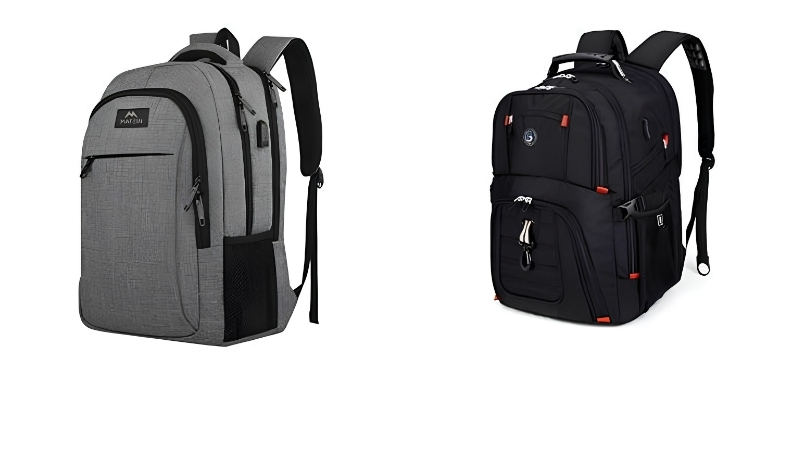
At the formal end, full-grain leather in brown or black with minimal external hardware reads closest to a briefcase. In the middle, coated canvas and ballistic nylon in neutral colours work almost everywhere. At the casual end, technical fabrics with visible webbing and bungee panels are fine and nowhere else.
The reliable test is whether the bag has visible outdoor cues. Daisy chains, compression straps, ice axe loops, and bright accent colours all pull toward casual regardless of price. A plain panel, a clean zip line, and a neutral colour will not look out of place in most workplaces.
Hardware Quality and What Fails First
Zips are the component that ends a bag’s life, and this is where price differences are most visible. Branded hardware on the main compartment is a reasonable proxy for overall build quality, and a double-pull design on the largest opening spreads wear across two sliders instead of one.
Check the stitching where the shoulder straps meet the body. Bar-tack reinforcement at that junction is what carries the entire load every time the bag is lifted, and it is the second most common failure point. Leather bags should show even, tight stitching rather than glue at stress points.
How Materials Age Over the Years
Full-grain leather develops patina and looks better at year five than year one, provided it is conditioned occasionally and kept out of prolonged rain. It is heavy, absorbs water, and marks, but a good leather bag outlives several nylon ones and can be repaired rather than replaced.
Ballistic nylon resists abrasion without visible wear but never improves; it simply stays acceptable until a zip fails. Coated canvas sits between the two, softening with use. Match the material to how long you intend to keep the bag rather than to how it looks on the shelf.
Top Picks: Best Men’s Backpack for Work
The best men’s backpack for work in a boardroom is not the one that suits an open-plan tech office, so these five run from full leather to structured synthetic. Specifications come from manufacturer listings and vary between production runs, so confirm laptop sizing before ordering.
| Model | Material | Laptop Fit | Formality | Best For |
|---|---|---|---|---|
| Kenneth Cole Reaction Colombian Leather | Full-grain leather | Up to 16 in | Formal | Traditional offices |
| Timberland Tuckerman Leather | Leather | Up to 15.6 in | Smart casual | Rugged formality |
| Fossil Buckner | Leather | Up to 15 in | Smart casual | Slim professional look |
| KATTEE Genuine Leather Laptop | Leather and canvas | Up to 15.6 in | Business casual | Budget leather |
| Samsonite Classic Leather Slim | Leather | Up to 15.6 in | Formal | Structured commuting |
1. Kenneth Cole Reaction Colombian Leather – Best for Traditional Offices
This sits at the formal end without the price of a heritage leather brand. Full-grain Colombian leather, a clean silhouette with no external webbing, and a padded compartment that takes a 16-inch machine make it appropriate in environments where a technical bag would look out of place.
Leather is heavy, and a full day’s carry is noticeably more tiring than an equivalent nylon pack. It also marks in sustained rain unless treated. For anyone whose dress code sits at the formal end, few options at this price look as considered walking into a meeting.
2. Timberland Tuckerman Leather – Best Rugged Formality
Timberland’s leather work is a step tougher than fashion-brand equivalents, using a thicker hide that scuffs into character rather than looking damaged. The design keeps a smart profile while tolerating the kind of daily handling that would mark a softer leather within months.
It is heavier than most bags here and the interior organisation is simple, with a padded sleeve and little else. The colour range is limited. If you want leather that will still look intentional after three years of commuting rather than needing careful treatment, this is the pick.
3. Fossil Buckner – Best Slim Professional Look
Fossil keeps this deliberately trim, which is the point: a leather backpack that does not look bulky worn over a suit jacket. The proportions are closer to a briefcase than a rucksack, and the interior is organised for a laptop, documents, and not much else.
That slimness limits capacity considerably, so a lunch and a gym kit are out of the question. The lighter leather also marks more easily than Timberland’s. For a commute that is laptop and paperwork only, and an office where appearance matters, it is very well judged.
4. KATTEE Genuine Leather Laptop Backpack – Best Budget Leather
Leather at an accessible price usually means corrected grain or bonded material, and this is one of the more honest options in that bracket. A leather and canvas combination keeps the cost down while retaining the visual weight, and it takes a 15.6-inch machine comfortably.
The leather is thinner than premium options and will not develop the same patina, and the hardware is unbranded. Expect a shorter life than a full-grain bag. As a way to test whether a leather backpack suits your workplace before spending seriously, it is a reasonable route.
5. Samsonite Classic Leather Slim – Best Structured Commuting
Samsonite brings luggage engineering to a leather bag, which shows in the structure. It stands up on its own rather than slumping, the trolley sleeve is properly sized for travel days, and the internal organisation is closer to a business case than a fashion backpack.
The structure adds empty weight and the boxy shape is less forgiving on a crowded train. It also costs more than fashion-brand leather. For someone commuting daily with a laptop and occasionally pairing the bag with a roller case, the engineering is what you are paying for.
Tariffs, Gifting Season, and Buying Timing
Leather and structured bags sit in a category affected by both material costs and a strong late-year demand curve. Both are worth understanding before you commit to the best men’s backpack for work from your shortlist.
Material Costs Have Shifted
Broader industry reporting places outdoor and accessory category cost increases near 7.7 percent, with an Outdoor Industry Association survey finding 84 percent of member businesses expect tariff impacts. Technical textiles including high-tenacity nylon have moved 10 to 15 percent, and metal duties feed into buckles, zips, and frame hardware.
On bags priced between $100 and $400, that is a meaningful figure rather than a rounding error. Brands across categories have been unusually explicit that quoted forward pricing is provisional while supply chains settle, which is worth factoring into any plan to wait several months.
Leather Bags Peak as Gifts
Leather backpacks are one of the most common gifts in the late-year window, which means demand climbs sharply from early November. Popular colours in brown and black clear first, and restocks on specific finishes frequently take longer than a listing implies during that stretch.
Buying ahead of that also gives you a return window that still works. Leather is a material where the photographs and the reality can differ noticeably in colour and finish, so having a few weeks to see it in daylight before committing is worth more than a small discount.
Where the Discounts Actually Land
For a purchase you can defer, the calendar is predictable. Prime Big Deal Days in mid-October and the Black Friday through Cyber Monday window in late November carry the deepest cuts on bags and accessories, and early deals routinely appear in the days beforehand.
Because these bags are heavily gifted, the well-reviewed models sell through before those windows close. Build a shortlist now and track prices rather than shopping on the day, and buy early in the sale if a specific colour and size matter to you.
Frequently Asked Questions
These come up most often from people moving to the best men’s backpack for work from a briefcase or messenger to the best men’s backpack for work and unsure how it will read. Short answers below.
Are backpacks acceptable with a suit?
Increasingly yes, provided the bag is leather or a clean-finish synthetic in a neutral colour with no visible outdoor hardware. The silhouette matters more than the format. A slim structured pack worn on both shoulders reads as current; a bulging technical bag does not, whatever it costs.
How do I care for a leather backpack?
Condition it two or three times a year with a leather cream, wipe off rain rather than letting it dry in, and keep it out of prolonged direct sun. Store it stuffed loosely rather than flat so the shape holds. Scuffs on full-grain leather usually buff out with conditioner.
Is leather worth the extra weight?
If appearance matters in your workplace and you keep bags for years, yes. Leather adds roughly a pound or two over an equivalent nylon pack and improves with age rather than degrading. For a long walking commute or frequent flying, nylon is the more practical material.
What laptop size should I plan around?
Buy for the machine you will have in three years, not just the current one. Sleeve dimensions matter more than the advertised screen size, since a 16-inch laptop in a case can exceed a 16-inch rating. Measure width and depth and add half an inch each way.
See More:
- Best trekking sleeping bag
- Best sleeping bag for backpacking
- Best women backpack for work
- Best backpack for backpackers
Final Thoughts
The best men’s backpack for work is the one that matches your dress code first and your carrying needs second, because a bag that looks wrong in the room will not get used regardless of how well it is built. Decide where your office sits on the formality scale, then choose the material that suits how long you intend to keep it. Check the zip hardware and strap stitching before the pocket count, and buy ahead of the November gifting rush for the widest choice of colours.






Write Your Review
No reviews yet. Be the first to share your experience!