
Key takeaways
What's inside
Best backpack for men usually comes down to whether it fits a broader frame properly, and that is where most packs quietly fail. This guide covers torso length, strap spacing, and construction quality, then compares five versatile packs that handle years of everyday carry without falling apart at the seams.
As an Amazon Associate we earn from qualifying purchases at no extra cost to you. Product prices and availability are accurate as of the date shown and are subject to change.


As an Amazon Associate we earn from qualifying purchases at no extra cost to you. Product prices and availability are accurate as of the date shown and are subject to change.
By Jake Thompson, gear writer at Roger Bacon Outdoors.
🛒 Best Price Today on Amazon
Prime members get fast, free shipping on everything above, plus member-only deals. New members get a 30-day free trial — cancel anytime.
How to Choose the Best Backpack for Men
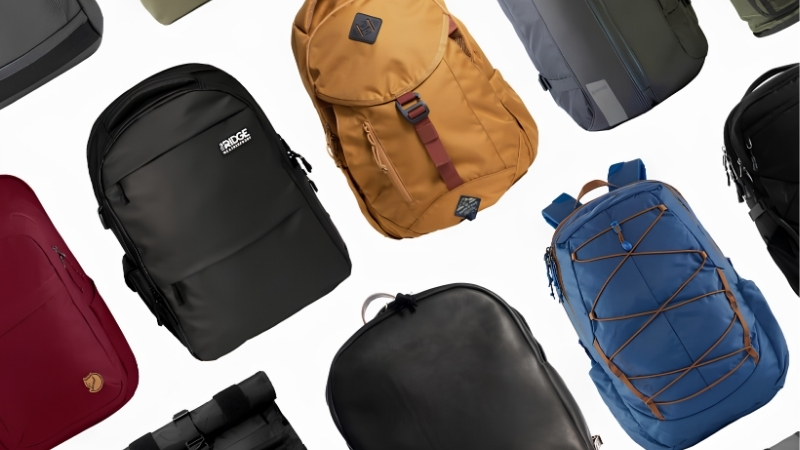
Most contenders for the best backpack for men are built to a single unisex pattern, which means they fit some frames well and others poorly. Discomfort people blame on weight is usually geometry instead. Three fit and build checks tell you whether a pack will still be comfortable at the end of a long day.
Torso Length and Strap Spacing
Measure from the bony bump at the base of your neck down to the top of your hip bones. That figure, not your height, determines whether a pack sits correctly. If the base of the bag drops below your belt line when the straps are snug, the body is too long for you.
Strap spacing matters just as much on a broader frame. Straps that anchor too close together at the top ride into your neck; straps set too wide slide off the outside of the shoulder. Look for contoured or S-curved straps and a sternum strap that slides up and down a rail.
Capacity for One-Bag Daily Use
Between 20 and 30 litres covers almost every daily routine: a laptop, a lunch, a jacket, and a water bottle with room spare. Going past 30 litres invites you to fill the space, and a heavier bag every day does more long-term damage than a single overloaded trip ever will.
Think about the widest thing you carry rather than the total volume. A pack that swallows 25 litres in a tall narrow shape may not take a shoebox or a bike helmet, while a squarer 22-litre bag will. Internal dimensions predict usefulness better than the litre figure alone.
Materials and Construction That Survive Years
On any best backpack for men judged by longevity, fabric denier predicts abrasion resistance reasonably well, and anything at 400D or above handles daily use without visible wear. Canvas and waxed cotton age differently, developing character rather than pilling, at the cost of extra weight and a slower drying time after rain.
Zips fail before fabric does on nearly every bag. Branded hardware on the main compartment is a reliable indicator of overall build quality, and bar-tack stitching where the straps meet the body is worth checking, since that seam carries the entire load every time you pick the bag up.
Top Picks: Best Backpack for Men
The best backpack for men on a commute is not always the one that suits a campus or a weekend, so these five span both. Capacities and dimensions come from manufacturer listings and shift between model years, so confirm against the current version before ordering.
| Model | Approx. Capacity | Material | Laptop Fit | Best For |
|---|---|---|---|---|
| The North Face Borealis | 28 L | Recycled nylon | Up to 15 in | Comfort under load |
| Herschel Little America | 25 L | Polyester | Up to 15 in | Casual styling |
| Carhartt Legacy 23L | 23 L | Water-repellent duck | Up to 17 in | Hard wear |
| JanSport Right Pack | 31 L | Cordura with leather base | Up to 15 in | Longevity |
| Under Armour Hustle 5.0 | 29 L | Water-repellent polyester | Up to 15 in | Value all-rounder |
1. The North Face Borealis – Best Comfort Under Load
The Borealis borrows its suspension from hiking packs, with a FlexVent panel and a real sternum strap that transfers weight rather than just holding straps in place. Twenty-eight litres is generous for daily use, and the bungee front panel takes a jacket without opening the bag.
The technical styling suits a campus or a casual office better than a formal one, and the many external features add bulk. It is also heavier empty than minimalist rivals. For anyone carrying real weight over a long walking commute, the harness difference is the reason to pick it.
2. Herschel Little America – Best Casual Styling
Herschel built this around a mountaineering silhouette with a magnetic strap closure that looks like buckles but opens instantly. The clean lines and neutral colours read well almost anywhere, and the padded laptop sleeve handles a 15-inch machine without adding visible bulk to the profile.
The drawstring top means digging down to reach anything at the bottom, and the shoulder straps are lightly padded compared with technical packs. Water resistance is limited. For a bag judged on how it looks as much as how it carries, few alternatives balance both as well.
3. Carhartt Legacy 23L – Best for Hard Wear
Carhartt builds to a different standard, and the water-repellent duck fabric with reinforced base panels handles treatment that would wear through a fashion bag in a season. A 17-inch laptop compartment is unusually generous for the size, and the whole thing shrugs off rain without a cover.
It is heavier than comparable packs and the boxy shape is functional rather than sleek. Internal organisation is basic. If your bag lives in a truck bed, a workshop, or gets thrown around daily, the durability makes it cheaper per year than lighter alternatives.
4. JanSport Right Pack – Best Longevity
This design has barely changed in decades because it does not need to. Cordura fabric with a suede leather base resists abrasion at the point where bags wear through first, and JanSport’s warranty has a reputation for actually being honoured rather than being a marketing line.
The suspension is simple, with flat straps and no real frame, so heavy loads sit less comfortably than on a technical pack. The laptop sleeve is padded but not suspended. As a bag you buy once and use for a decade, the value proposition is difficult to beat.
5. Under Armour Hustle 5.0 – Best Value All-Rounder
The Hustle covers a lot of ground cheaply: 29 litres, a water-repellent finish, a padded laptop sleeve, and a soft-lined pocket for a phone or sunglasses. Ventilated shoulder straps handle a gym-and-office routine better than most bags at the price point.
The athletic styling limits it in a formal setting, and the fabric shows scuffs more than heavier duck or Cordura. Zip hardware is mid-grade. For someone who wants one bag covering commute, gym, and weekends without spending much, it hits the practical middle.
Tariffs, Autumn Demand, and When to Buy
Two things affect pricing right now: material costs that have already moved and a demand curve that climbs into the holidays. Both matter when deciding whether the best backpack for men on your list is worth buying now or after a sale.
Fabric Costs Have Climbed
An Outdoor Industry Association survey found 84 percent of member businesses expect tariff impacts, with costs rising roughly 7.7 percent overall. High-tenacity nylon has climbed 10 to 15 percent, and that increase applies to Cordura and technical polyester shells just as much as to hiking fabrics.
On bags between $60 and $200, that translates into a noticeable rather than dramatic shift. Brands have been openly describing forward pricing as an estimate while supply chains settle, which weakens the case for waiting many months once you have identified a model that fits.
Autumn Is When Stock Is Deepest
The back-to-school surge clears inventory through September, and restocks arrive in October ahead of the gifting season. That October window tends to have the widest colour and size selection of the year, before holiday demand takes the popular variants out again in November.
Buying then also gives you time to load the pack with a realistic day’s weight and wear it around the house before removing tags. Twenty minutes doing that tells you more about torso fit than any product description, and returns are still straightforward at that point.
Where the Deepest Cuts Land
For an upgrade you can defer, the calendar is predictable. Prime Big Deal Days in mid-October and the Black Friday through Cyber Monday stretch in late November bring the year’s largest discounts on bags, with early deals often appearing in the days ahead of each event.
Backpacks are among the most common gifts in that window, so well-reviewed models sell through before it closes. Build a wishlist now and track prices rather than shopping on the day, and buy early in the sale if a particular colour matters to you.
Frequently Asked Questions
These come up most often from people whose last attempt at the best backpack for men never felt right and want to avoid repeating it. Short answers below.
How do I measure my torso for a backpack?
Tilt your head forward and find the bony bump at the base of your neck, then measure straight down your spine to the level of the top of your hip bones. That figure maps to the small, medium, and large sizing most brands publish, and it matters far more than your height.
What capacity suits daily commuting?
Twenty to thirty litres handles a laptop, lunch, a jacket, and a bottle comfortably. Below 20 litres gets tight once a coat is involved, and above 30 encourages carrying more than you need. Consider the widest single item you carry rather than only the total volume figure.
Is a hip belt worth having on a daily pack?
Only if the loaded weight regularly passes about 20 pounds or you walk long distances. For a typical commute, a padded belt is more bulk than benefit and gets tucked away unused. A sternum strap does most of the stabilising work at a fraction of the weight.
How long should a good backpack last?
A well-built pack used daily should manage five to ten years, with zips failing before fabric does. Brands offering genuine repair rather than replacement extend that considerably. Cheap bags typically show strap seam failure inside two years of daily use, which is where the cost difference shows.
See More:
- Best trekking sleeping bag
- Best sleeping bag for backpacking
- Best women backpack for work
- Best backpack for backpackers
Final Thoughts
The best backpack for men comes down to torso fit first, then capacity, then materials, in that order. Measure your torso before you shop, check strap spacing against your own shoulders rather than assuming a unisex cut will work, and look at zip hardware and bar-tack stitching as the honest indicators of build quality. Buying in the October restock window gives you the widest choice before holiday demand clears the shelves again.






Write Your Review
No reviews yet. Be the first to share your experience!