
Key takeaways
What's inside
Best family camp tent shopping goes wrong when people compare capacity ratings instead of wall geometry, because the shape of a tent decides how much of the floor you can actually use. This guide covers cabin versus dome design, fabric ratings, and ventilation, then compares five shelters for weekend basecamps.
As an Amazon Associate we earn from qualifying purchases at no extra cost to you. Product prices and availability are accurate as of the date shown and are subject to change.


As an Amazon Associate we earn from qualifying purchases at no extra cost to you. Product prices and availability are accurate as of the date shown and are subject to change.
By Jake Thompson, gear writer at Roger Bacon Outdoors.
🛒 Best Price Today on Amazon
Prime members get fast, free shipping on everything above, plus member-only deals. New members get a 30-day free trial — cancel anytime.
How to Choose the Best Family Camp Tent
Weekend basecamping asks different things of a tent than backpacking does. Weight barely matters, but livable volume, durability across many seasons, and how the shelter behaves in an afternoon downpour matter enormously. Three factors decide whether a tent becomes a favourite or a chore.
Sleeping Capacity and Gear Storage
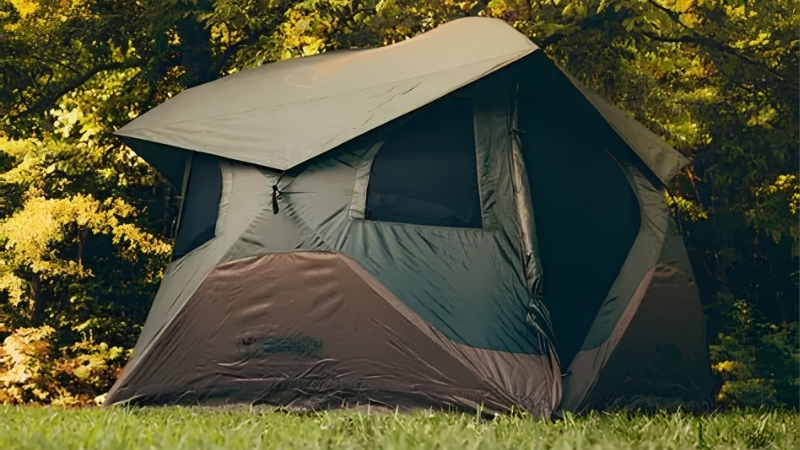
On any best family camp tent listing, rated capacity assumes bodies on the floor and nothing else, so a six-person tent realistically sleeps four with duffels, boots, and space to move around. Work from floor area instead: roughly 30 square feet per person makes for a comfortable weekend rather than a tolerable one.
Vestibules change the equation. A tent with two covered entries gives you somewhere to leave muddy boots and wet jackets outside the sleeping area, which keeps the interior dry and considerably more pleasant. Without them, everything wet ends up inside and stays damp for the whole trip.
Cabin Versus Dome Wall Geometry
Cabin tents use near-vertical walls to keep floor space usable right to the edges, and typically reach six to seven feet at the peak. That makes standing, changing, and sitting out rain genuinely comfortable, and it is why the best family camp tent for a fair-weather site is usually a cabin.
Dome tents taper, losing usable width near the walls, but that shape sheds wind and rain far better and stays stable in gusts that make a cabin tent flex alarmingly. If your sites are exposed, coastal, or at elevation, the lost headroom buys you a much better night.
Fabric, Waterproof Rating, and Ventilation
Hydrostatic head figures around 1,200 to 2,000 mm are typical for polyester family tents and are adequate for normal rain. Canvas behaves differently, breathing rather than sealing, which cuts condensation dramatically at the cost of considerable weight and a longer drying time after a wet trip.
Ventilation is the specification nobody checks and everybody notices. Look for ground-level vents plus a roof vent or mesh ceiling, so air moves through rather than sitting still. Four people breathing overnight in a sealed tent produce enough moisture to soak the inner wall by morning.
Top Picks: Best Family Camp Tent Options
The best family camp tent for a sheltered state park is not the shelter you want on an exposed ridge, so these five span budget polyester to heavyweight canvas. Dimensions come from manufacturer specifications and change between model years, so confirm the current listing before ordering.
| Model | Rated Capacity | Style | Peak Height | Best For |
|---|---|---|---|---|
| Coleman Sundome 6 | 6 person | Dome | ~6 ft | Budget weekends |
| CORE 6 Straight Wall Cabin | 6 person | Cabin | ~6 ft 2 in | Usable floor space |
| Coleman Cabin with Instant Setup | 6 person | Cabin | ~5 ft 8 in | Fast pitching |
| Big Agnes Big House 6 | 6 person | Modified dome | ~6 ft 2 in | Quality and packability |
| Kodiak Canvas Flex-Bow Deluxe 6 | 6 person | Canvas cabin | ~6 ft 6 in | All-season basecamps |
1. Coleman Sundome 6 – Best Budget Weekend Tent
The Sundome has been the entry point to family camping for decades and the reasons hold up. The dome shape handles wind better than cabin tents at the price, setup runs around ten minutes with two people, and the welded floor with inverted seams keeps ground water out reliably.
The partial rainfly leaves the mesh roof exposed in driving rain, and the tapering walls cut usable space near the edges. Fabrics are light and will show wear across many seasons. For occasional trips at established campgrounds, very little else offers this much shelter for the money.
2. CORE 6 Person Straight Wall Cabin – Most Usable Floor
Straight walls are the whole argument here. Where a dome tent loses a foot of usable width on each side, this keeps the floor rectangular and the ceiling high across almost all of it, which changes how a family of four moves around inside on a wet afternoon.
Vertical walls catch wind, so this is a fair-weather and sheltered-site tent rather than an exposed one. The included gear loft and pockets are useful but the fly coverage is partial. Where conditions are reasonable, the extra livable volume is the most noticeable upgrade at this price.
3. Coleman Cabin with Instant Setup – Fastest Pitch
Pre-attached poles that telescope out mean this goes up in roughly a minute, which is the difference between a calm arrival and a fraught one when you reach the site after dark. The cabin shape keeps the walls near vertical, and the darkened room fabric blocks morning light.
Because the poles never detach, the packed bundle is long and heavy, so this only works where you drive to the pitch. Hinged pole joints also wear over time and are awkward to repair. For families arriving late with children in tow, the speed justifies both.
4. Big Agnes Big House 6 – Best Quality Build
This sits well above the supermarket tents in materials and detailing. Steep walls give near-cabin volume in a shape that still sheds wind, the fly is full coverage rather than partial, and the pack size is small enough that it does not dominate a car boot on a family trip.
The price is a clear step up, and the six-person rating realistically suits four adults or a family with two children plus gear. Setup takes longer than an instant tent. For families camping regularly enough that a cheap tent would be replaced twice over, it works out well.
5. Kodiak Canvas Flex-Bow Deluxe 6 – Best All-Season Basecamp
Canvas changes what a tent can do. The Hydra-Shield cotton duck breathes, so condensation largely disappears, and the flex-bow frame with steel rods holds shape in wind that flattens polyester cabins. With a stove jack setup nearby it becomes a genuine cold-weather basecamp rather than a summer shelter.
The weight is the honest cost: this is a heavy bundle that two people carry, and wet canvas must be dried thoroughly before storage or it will mildew. The price is also several times the budget options. For hunting camps and long stays, nothing here comes close on durability.
Tariffs, Season Timing, and When to Buy
Two things affect what you pay for the best family camp tent right now: material costs that have already moved, and a retail calendar where the biggest discounts and the best selection happen at different times of year entirely.
Pole and Fabric Costs Have Moved
Aluminium and steel duties feed straight into tent poles, stakes, and the flex-bow frames on canvas models, while high-tenacity nylon used in flysheets has climbed 10 to 15 percent. Broader industry reporting puts overall outdoor category cost increases near 7.7 percent across member businesses surveyed.
For tents between $200 and $700, that is real money rather than a rounding error, and canvas models with steel frames sit at the more exposed end. Manufacturers have been openly describing forward pricing as provisional, which is worth factoring into any decision to wait for a better deal.
Shoulder Season Is the Quiet Window
Peak tent buying runs from spring through midsummer, then falls away sharply. Early autumn is the quiet stretch when last season’s stock is discounted but selection has not yet been picked over, which is a better combination than either the spring rush or the late clearance leftovers.
Autumn camping also happens to be the best time to use one. Cooler nights, fewer insects, and emptier campgrounds make it worth buying now rather than storing a tent until spring, and it gives you a real trip to find any problems while returns are still possible.
Where the Discounts Actually Land
For a purchase you can defer, the calendar is predictable. Prime Big Deal Days in mid-October and the Black Friday through Cyber Monday stretch in late November carry the deepest outdoor markdowns, with early deals routinely appearing in the days before each event begins.
Tents are also a frequent family gift, so well-reviewed models sell through before those windows close. Set up a wishlist now, track the price history, and buy at the front of the sale if a particular size and configuration matters rather than waiting for a deeper cut.
Frequently Asked Questions
These come up repeatedly from families choosing the best family camp tent for regular weekend trips. Short answers with the reasoning that matters at a campsite.
Cabin or dome for family camping?
Cabin tents win on livable space and standing room, which matters most at sheltered campgrounds in reasonable weather. Dome tents win on wind and rain stability, which matters at exposed, coastal, or higher-elevation sites. Choose based on where you actually camp rather than which looks roomier online.
Is canvas worth the weight and price?
For long stays, cold weather, or hunting basecamps, yes. Canvas breathes so condensation drops sharply, and a well-cared-for canvas tent lasts decades rather than seasons. For occasional summer weekends where you pitch and strike in a day, polyester is lighter, cheaper, and far quicker to dry.
How do I make a tent last longer?
Use a footprint or groundsheet cut slightly smaller than the floor, never pack it away damp, and store it loosely rather than compressed. UV exposure degrades fabric faster than rain does, so avoid leaving a tent pitched in full sun for weeks between uses where you can.
What else do I need beyond the tent?
A footprint, better stakes than the ones included, and a mallet cover most gaps. Factory stakes are usually the weakest part of any family tent and bend in hard ground. A tarp rigged over the entrance also transforms a wet weekend by creating dry space outside the tent.
See More:
- Best trekking sleeping bag
- Best sleeping bag for backpacking
- Best women backpack for work
- Best backpack for backpackers
Final Thoughts
The best family camp tent for your trips depends on where you pitch more than how many people you sleep. Cabin shapes give you room to live in bad weather at sheltered sites; dome and canvas designs hold up when the wind arrives. Size two above your headcount, check that the fly reaches low enough for real rain, and pitch it once in the garden before you rely on it in the dark.




Write Your Review
No reviews yet. Be the first to share your experience!