
Key takeaways
Best backpacking tent shopping comes down to three numbers: trail weight, floor area and packed size. Get those right and the rest follows. This guide breaks down the leading options by real specs, then shows how to match the right shelter to your trips, your pack size and your budget for the season ahead.
Our top picks


As an Amazon Associate we earn from qualifying purchases at no extra cost to you.
As an Amazon Associate we earn from qualifying purchases.
🛒 Best Price Today on Amazon
Prime members get fast, free shipping on everything above, plus member-only deals. New members get a 30-day free trial — cancel anytime.
Start 30-Day Prime Free Trial →See Today’s Amazon DealsHow to Choose the Right Backpacking Tent
The best backpacking tent for you balances weight against livability, then adds enough durability to survive real trail nights. Before comparing models, get clear on these four criteria so you can read spec sheets without getting lost in marketing language.
Weight: Trail vs Packaged
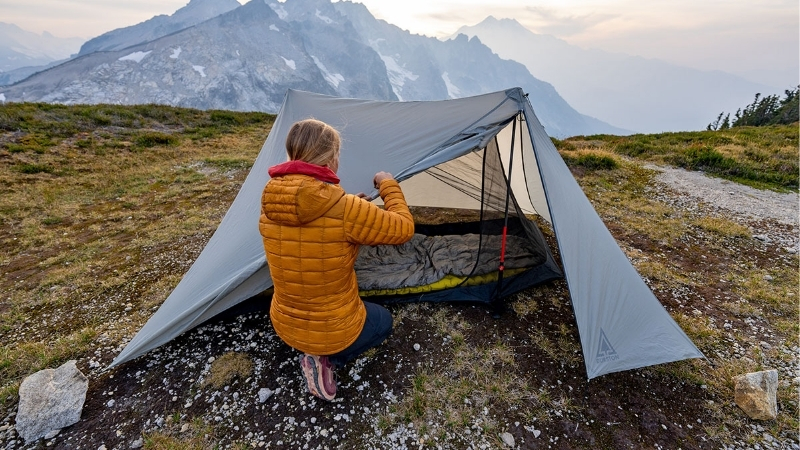
Two numbers matter. Trail weight covers only the tent body, fly and poles; packaged weight adds stakes, guylines and stuff sacks. Reviewers at OutdoorGearLab note the gap is usually about half a pound, so a “2-pound” tent often lands closer to 2.5 pounds in your pack.
As a rough map: a lightweight two-person tent runs 2 to 3 pounds, an average one sits at 4 to 6 pounds, and lightweight three-person models land in the 3 to 4 pound range. If you split the load with a partner, even a heavier shelter feels reasonable on trail.
Floor Area and Peak Height
Floor dimensions decide whether two pads fit side by side. Many “two-person” tents get cozy with two adults plus gear, which is why couples often size up to a plus or three-person version for a few extra ounces of comfort.
Peak height controls whether you can sit up to change layers. Lower profiles shed wind better but cost you headroom, so match the number to how you actually use a tent at camp rather than to the lowest weight on the shelf.
Freestanding vs Trekking-Pole Pitch
Freestanding tents use dedicated poles and stand anywhere, which suits rocky or hard ground where stakes won’t bite. They pitch fast and forgive sloppy site selection, the reason most beginners start here.
Trekking-pole shelters drop serious weight by borrowing poles you already carry, but they need staked-out tension and a larger, flatter footprint. They reward practice and punish tight, uneven sites, so weigh the trade before committing.
Fabric Denier and Weatherproofing
Denier (D) measures fabric thickness. Ultralight floors around 15D save weight but demand a groundsheet and careful site prep; 20D to 30D floors take more abuse. The floor is the most puncture-prone panel, so it is the denier worth checking first.
For weather, look for factory-taped seams and a bathtub floor that rides a few inches up the walls to block splash-back. A well-sealed fly and floor junction keeps you dry in the sideways rain that ultralight fabric alone can’t stop.
Top Picks for the Best Backpacking Tent
These six shelters cover the spread from bombproof all-rounders to gram-counting trekking-pole tents, all currently sold on Amazon. The table gives a quick spec snapshot before the detailed picks below.
| Tent | Approx. Weight | Floor / Space | Pitch | Best For |
|---|---|---|---|---|
| Big Agnes Copper Spur HV UL2 | ~3 lb packaged | ~29 sq ft (88 x 52/42 in) | Freestanding | All-around |
| MSR Hubba Hubba LT 2 | ~3 lb trail | 48 in head width | Freestanding | Livability |
| Sea to Summit Alto TR2 | ~2.5 lb | 27 sq ft, 42.5 in peak | Semi-freestanding | Ventilation |
| Durston X-Mid 2 | ~2 lb 4 oz trail | 30.6 sq ft | Trekking-pole | Value ultralight |
| Big Agnes Tiger Wall UL2 | Sub-2.5 lb | 15D floor | Semi-freestanding | Weight savers |
| Zpacks Duplex | ~1 lb+ | 28 sq ft, 48 in high | Trekking-pole (DCF) | Premium thru-hikers |
Big Agnes Copper Spur HV UL2
The Copper Spur HV UL2 is the default answer for hikers who want one tent to do everything. At around 3 pounds packaged with roughly 29 square feet of floor and two doors plus two vestibules, it hits a best-in-class blend of low weight and real usable space for a couple.
The catch is the hubbed-pole architecture, which can flex in strong, sustained wind, and the ultralight fabrics reward gentle handling. For three-season trips where you value all-around performance over the absolute lowest number, it remains hard to beat.
MSR Hubba Hubba LT 2
If you actually hike as a pair and want a good night’s sleep, the Hubba Hubba LT is the most livable freestanding option here. A 48-inch head width fits two wide pads without overlap, and near-vertical sidewalls give real sitting room.
At roughly 3 pounds trail weight it is heavier than the gram-cutters, so committed ultralighters will look elsewhere. For everyone who prioritizes comfort and easy setup, that penalty buys a noticeably nicer camp.
Sea to Summit Alto TR2
The semi-freestanding Alto TR2 punches above its 27 square feet thanks to a bridge pole with arms that swing upward for headroom, plus a generous 42.5-inch peak height. It weighs barely more than two-and-a-half pounds yet ventilates unusually well.
High-low venting and two-way zippers on both doors keep condensation down in humid conditions. Pitching it takes a little practice and time, a minor trade for this balance of low weight, comfort and airflow.
Durston X-Mid 2
The X-Mid 2 is the value play for ultralight-curious hikers. Around 2 pounds 4 ounces trail weight with 30.6 square feet, its X-shaped layout orients the floor diagonally to the fly, delivering two doors and two roomy vestibules from a single-wall design.
Double-sewn seams and a minimized seam count boost waterproofing and durability. The knocks are a fussy first setup and a large footprint that needs a flat site, so campsite selection matters more than with a freestanding tent.
Big Agnes Tiger Wall UL2
For weight-focused couples who still want a familiar pole structure, the semi-freestanding Tiger Wall UL2 slips under 2.5 pounds. It keeps two doors and two vestibules while trimming material everywhere it can, a smart middle ground between full freestanding and trekking-pole shelters.
The trade-off is durability: the 15D floor is thin and benefits from a footprint and careful site prep. Treat it gently and it rewards you with a light, packable shelter that still pitches quickly.
Zpacks Duplex
The Duplex is the premium thru-hiker’s dream. Just over a pound of Dyneema Composite Fabric gives an exceptional space-to-weight ratio, with 28 square feet, a 48-inch peak and dual side entrances that swallow packs and shoes in two 15-square-foot vestibules.
It pitches on two trekking poles with a short learning curve, and the DCF price is steep while the fabric won’t last forever under heavy abuse. For gram-conscious long-trail hikers, few tents match its palatial feel per ounce.
What Tariffs and Fall Timing Mean for Tent Shoppers
Gear pricing in 2026 is unusually fluid, and a tent is exactly the kind of technical, material-heavy product where those swings show up. A little market awareness can save you real money on the best backpacking tent for your next season.
Tariffs Are Pushing Material Costs Up
An Outdoor Industry Association survey found 84% of member businesses expect to be hit by new tariffs, with overall costs up roughly 7.7%. Technical materials matter most here: high-tenacity nylon and specialty foams have climbed 10 to 15%, and tents lean heavily on exactly those inputs.
Aluminum and steel duties also raise the price of tent poles and stakes. Brands themselves now describe future prices as estimates because supply chains and tariffs keep shifting, which makes locking in a current price more valuable than usual.
Buy Ahead of the Fall Rush
Inventory is deepest early in the season. As fall camping and hunting demand builds from September onward, popular sizes and colorways thin out and restocks lag. Buying before the crowd means you actually get the best backpacking tent you want in the configuration you want.
Early-season buying also lets you pitch the tent at home, seam-check it and learn the setup before a trip depends on it. That dry run is worth more on a trekking-pole shelter than any spec on the page.
Watch the Deal Calendar
If your pick isn’t a must-have-now item, the biggest discounts cluster around Prime Big Deal Days in mid-October and Black Friday and Cyber Monday in late November. Build a shortlist now and track prices so you can move the moment a sale opens.
For anything you truly need before then, buy early rather than gambling on stock. Sale-season sellouts on popular tents are common, and a discount you can’t actually order helps no one.
Frequently Asked Questions
A few questions come up again and again when hikers shop for a lightweight shelter. Here are quick, practical answers.
How much should a two-person backpacking tent weigh?
A lightweight two-person tent runs 2 to 3 pounds trail weight, while average models sit at 4 to 6 pounds. Splitting components with a partner effectively halves the load, so a slightly heavier, more durable tent can still carry comfortably.
Are trekking-pole tents worth it for beginners?
They save real weight but need staked tension and a flat footprint, so they punish tight or uneven sites. Beginners usually do better starting with a freestanding tent, then moving to a trekking-pole shelter once pitching is second nature.
Do I need a footprint?
On ultralight floors around 15D, a footprint or thin groundsheet is worth carrying to prevent punctures. On sturdier 20D to 30D floors, careful site prep is often enough, and skipping the footprint saves several ounces.
What is the most livable pick here?
The best backpacking tent for livability is the MSR Hubba Hubba LT 2, thanks to its 48-inch head width and vertical walls. The Sea to Summit Alto TR2 is close behind and ventilates better, making it the pick for humid, condensation-prone trips.
See More:
- Best rolling cooler
- Best roller cooler
- Best wheeled cooler
- Best water bottle insulated
- Best trekking tent
Final Thoughts
The best backpacking tent is the one whose trail weight, floor area and pitch style match how you actually hike. Pick the best backpacking tent by starting with the Copper Spur HV UL2 for a do-everything shelter, step up to the Duplex if grams rule your kit, and buy earlier this season than you normally would, because tariff-driven prices and fall demand both point the same direction. Nail those numbers and any tent on this list will earn its place in your pack.


Write Your Review
No reviews yet. Be the first to share your experience!