
Tent waterproofing guide know-how saves a soggy night and a pricey replacement: a tired fly, leaky seams or flaking floor can nearly always be revived. This guide walks the fixes and names six products so your tent keeps the rain out.
As an Amazon Associate we earn from qualifying purchases.
Our top picks


As an Amazon Associate we earn from qualifying purchases at no extra cost to you.
By Jake Thompson
How to Use This Tent Waterproofing Guide
The core of any tent waterproofing guide is diagnosing where water gets in, then matching the right fix: reproof the fly’s outer coating, reseal leaky stitched seams, or restore a flaking inner floor coating. Targeted solutions beat a single spray, so identify the leak before you treat it.
Find Where Water Gets In
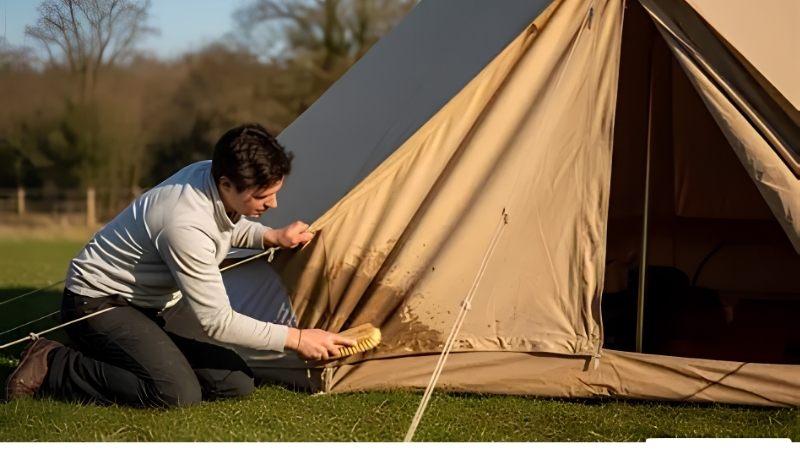
Diagnose first by setting the tent up and spraying it with a hose while someone watches from inside, focusing on seams, corners and around zippers. For slow leaks, spray section by section and wait several minutes. Knowing whether water comes through fabric, seams or the floor decides the fix.
Fabric that wets out and soaks through needs a DWR reproof, weeping stitched seams need a seam sealer, and a floor whose inner coating flakes or feels sticky needs recoating. New tents rarely need any of this, since seams come factory-taped, so treat only what your leak test reveals.
Clean, Then Reproof the Fly
Always clean the tent before treating it, using a technical cleaner rather than household detergents, which strip coatings. Once clean and set up, apply a spray-on DWR to the fly’s outer surface if water no longer beads, working in sections and wiping excess so droplets bead and roll off again.
A DWR reproof restores water repellency to the outer fabric and, with UV-protective formulas, extends the tent’s life against sun damage. It only fixes fabric wet-out, not seams, so pair it with sealing if seams leak. Let the fly dry fully before packing, so the treatment cures properly.
Reseal the Seams
Weeping stitched seams need a seam sealer matched to the fabric: a urethane sealer for most nylon and polyester tents, or a silicone-specific sealer for silnylon shelters. Clean the seam, apply a thin bead along the stitching from the inside, and let it cure fully before packing the tent away.
Factory seam tape can peel after years, at which point resealing every seam may be needed, not just spot repairs. Use the correct sealer for your fabric, since the wrong type will not bond, and give it the full cure time. Sealed seams stop the leaks a fly reproof cannot address.
Restore the Floor Coating
A floor or fly whose inner polyurethane coating flakes, peels or smells of chemicals needs restoring. Remove the deteriorated coating with rubbing alcohol and a mildly abrasive sponge, then brush on a tent-fabric coating restorer and let it cure. This revives a floor that has started letting water through.
This is the most involved fix, so have enough product to cover the whole surface and follow cure times carefully. It is worth it, since a flaking coating otherwise dooms an intact tent. Once restored and fully cured, the floor sheds water again and the tent is ready for many more trips.
Top Products From This Tent Waterproofing Guide
These six cover reproofing, cleaning, seam sealing and coating restoration. This tent waterproofing guide highlights each in the table, then breaks down what it does and its honest drawbacks.
| Product | Job | Best For | Approx. Price |
|---|---|---|---|
| Nikwax Tent & Gear SolarProof | DWR + UV | Reproofing the fly | Mid |
| Nikwax Tent & Gear SolarWash | Cleaning | Prep before treating | Mid |
| Gear Aid Seam Grip +WP | Seam sealing | Leaky stitched seams | Budget |
| Gear Aid Seam Grip TF | Coating restore | Flaking PU floor | Budget |
| Gear Aid Seam Grip +SIL | Silicone seams | Silnylon tents | Budget |
| Kiwi Camp Dry | Budget DWR | Bulk coverage | Budget |
Nikwax Tent & Gear SolarProof — Best for Reproofing the Fly
SolarProof is the go-to DWR restorer. This spray-on treatment adds durable water repellency and UV protection to synthetic flies, packs and awnings, making water bead again while shielding fabric from sun that weakens it. PFAS-free and water-based, it can double a tent’s effective life. For reviving a tired fly, it leads.
It only fixes fabric wet-out, not seams, and heavy downpours may need a second coat to fully hold. For campers whose fly no longer beads water and who want DWR plus real UV protection in one step, though, it is the reliable, environmentally friendlier choice, best applied after cleaning.
Nikwax Tent & Gear SolarWash — Best Prep Before Treating
SolarWash is the cleaner that makes reproofing work. Applied before SolarProof, it lifts dirt and old residue so the new DWR bonds evenly, without the coating-stripping harm of household detergents. Since any waterproofing treatment fails on a dirty fly, this prep step is essential, not optional.
It adds a step and a little cost to the process, and you must not combine it with the proofer at once. For anyone reproofing a tent properly, though, cleaning first with a dedicated technical wash is what lets the DWR take hold, making this the correct partner to SolarProof.
Gear Aid Seam Grip +WP — Best for Leaky Stitched Seams
Seam Grip +WP is the seam-sealing standard. This urethane sealant cures to a flexible, waterproof rubber that bonds strongly and lasts, sealing weeping stitched seams and even gluing on repair patches. For most nylon and polyester tents with leaky seams, it is the dependable, long-lasting fix.
It cures slowly, often overnight, and is messy to apply, and moisture speeds curing so timing matters. For campers sealing leaky seams that a fly reproof cannot address, though, its durable, flexible bond is exactly what stops the drips, making it a repair-kit staple worth keeping on hand.
Gear Aid Seam Grip TF — Best for a Flaking PU Floor
Seam Grip TF is the coating restorer. A brush-on tent-fabric sealant for nylon and polyurethane-treated tents, it recoats a floor or fly whose inner coating has begun flaking, once the old coating is removed. For reviving a tent that has started letting water through its floor, it is the targeted fix.
It requires stripping the deteriorated coating first with alcohol and an abrasive sponge, and covering a whole floor takes patience and enough product. For campers whose otherwise-good tent has a failing floor coating, though, it restores waterproofness and saves a shelter that would otherwise be retired.
Gear Aid Seam Grip +SIL — Best for Silnylon Tents
Seam Grip +SIL seals the tents others cannot. Silicone-coated silnylon shelters, common in ultralight tents, need a silicone-specific sealer, and this one bonds where urethane sealers will not. For ultralight and cottage silnylon tents with leaky seams, it is the correct, purpose-made choice.
It is specific to silicone-treated fabrics, so it is the wrong product for standard PU-coated tents, and it too needs full cure time. For owners of silnylon ultralight shelters who must seal seams the factory left bare, though, it is the sealer that actually works on that fabric, unlike general urethane types.
Kiwi Camp Dry — Best Budget Bulk Coverage
Kiwi Camp Dry is the budget bulk option. This inexpensive water-repellent spray covers large areas like big car-camping flies and tarps at a low price, restoring basic water beading when a premium proofer would cost more. For big tents on a budget, it delivers workable coverage cheaply.
It lacks the UV protection and PFAS-free formulation of premium proofers and is less refined, so it suits value coverage over technical fabrics you want to baby. For campers reproofing large, basic tents or tarps on a budget, though, its low cost and wide coverage make it a practical choice.
What Waterproofing Products Cost in 2026
Waterproofing products are inexpensive, so timing matters little, but a couple of current market forces are worth noting. None change the fixes in this guide.
Tariffs Add Modest Cost
Treatments and sealers use imported chemicals and packaging under tariffs that remain in place, adding modest cost. Brands have described future pricing as a moving target, but these are low-priced consumables, so buying what your leak test calls for now rather than waiting is sensible.
The effect is small on cheap consumables. Value-focused buyers can look for cleaner-and-proofer duo packs, which bundle the two steps at a saving, but there is little reason to delay a few dollars of treatment that keeps an expensive tent dry and extends its life for seasons.
Reproof Before Your Season
Treat a tent ahead of camping season so coatings cure fully before a trip, not the night before rain. Reproofing and resealing need dry conditions and cure time, so doing it at home in advance beats a rushed field fix. Buy the products together so you can complete all the steps at once.
Fall sale events like Prime Big Deal Days in early October and Black Friday in late November occasionally discount care products, but their low price means timing matters less than doing the job right. Prioritize a proper wash, treat and seal over chasing a small markdown on consumables.
Match the Product to the Leak
The best value is buying only what your leak needs: a proofer for fabric wet-out, a sealer for seams, a coating restorer for a flaking floor. A single product rarely does everything, so matching the fix to the problem avoids wasting money and gets the tent dry with the least effort.
If a specific sealer for your fabric, silicone or urethane, is prone to selling out, buy it early rather than gambling on stock. Missing the right product before a trip means a wet night, so keep the treatments your tent needs on hand and reproof before the coating fully fails.
Frequently Asked Questions
These are the questions campers ask most about waterproofing a tent.
How often does a tent waterproofing guide say to reproof?
When it stops working, not on a fixed schedule. A good tent waterproofing guide has you reproof the fly once water no longer beads, reseal seams when they weep, and recoat the floor when it flakes. Most tents need attention every few seasons, sooner with heavy sun and use.
Do I need to seal the seams on a new tent?
Usually not. Most quality tents ship with factory-taped seams and need no sealing when new. Only after seasons of use, when tape peels or seams begin to weep, do you seal them. Always run a leak test first, and treat only what actually leaks rather than the whole tent by default.
Why is my tent floor sticky or flaking?
The inner polyurethane coating is breaking down, often from age, heat or damp storage. Remove the deteriorated coating with rubbing alcohol and an abrasive sponge, then brush on a tent-fabric coating restorer. Storing the tent clean, dry and loose slows this breakdown and extends the coating’s life.
Can I use one product to waterproof the whole tent?
Rarely well. Fabric wet-out needs a DWR proofer, seams need a seam sealer, and a flaking floor needs a coating restorer, and each is a different product. Matching the treatment to the specific leak is far more effective than hoping a single spray fixes every kind of water intrusion.
See More:
- Best hiking backpack
- Best backpacking backpack
- Ultralight hiking backpack
- Best hydration backpack
- Best hiking backpack for women
Final Thoughts
This tent waterproofing guide comes down to diagnosing the leak, then matching the fix: reproof the fly with Nikwax SolarProof, seal seams with Gear Aid Seam Grip, and restore a flaking floor with a coating renewer. Clean first, treat only what leaks, and give every product its cure time. Do that, and a tired tent keeps the rain out for many more seasons.


Write Your Review
No reviews yet. Be the first to share your experience!