
Key takeaways
What's inside
50L hiking backpack sizing hits a sweet spot: big enough for weekends and light multi-day trips, small enough to stay agile. This guide compares six top packs by weight, suspension, load capacity and comfort so you can pick the right 50-liter pack for your trails.
As an Amazon Associate we earn from qualifying purchases.
By Jake Thompson
How to Choose a 50L Hiking Backpack
A 50L hiking backpack suits one-to-three-night trips for most hikers, so the choice comes down to weight, suspension, load capacity and comfort. Match those to your base weight and trip length, and a 50-liter pack becomes a versatile do-most-things option in your kit.
Confirm 50L Fits Your Trips
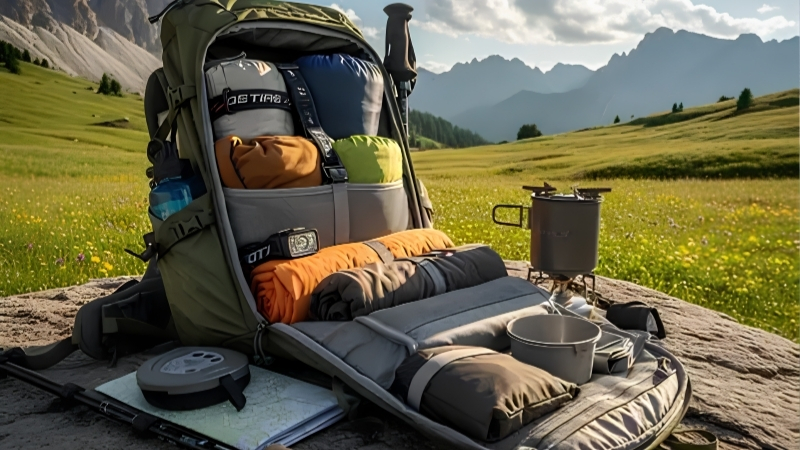
Fifty liters handles weekends and light multi-day trips comfortably if your base weight is moderate. It is tight for winter or gear-heavy trips that need 60-75 liters, and larger than needed for day hikes. Match the volume to your typical two-to-three-night loadout to avoid over- or under-packing.
Base weight matters here. A hiker with a light kit can stretch a 50L pack to longer trips, while someone with bulky gear may fill it in two nights. Weigh your loaded kit honestly, since that decides whether fifty liters is roomy or cramped for your style.
Match Suspension to Your Load
Fifty-liter packs span ventilated suspended-mesh backpanels, on the Atmos and Focal, for airflow, and lighter wire or minimal frames on ultralight models. Each lists a comfortable max load, usually 30-40 pounds, and matching it to your heaviest carry is the key to comfort.
Hot-weather hikers benefit from a suspended-mesh backpanel that keeps air moving, while weight-conscious hikers accept a lighter, closer frame to save ounces. Decide whether ventilation or low weight matters more, since that shapes the carry of a 50-liter pack more than any feature.
Weigh Weight Against Comfort
These packs range from under two pounds for ultralight models to over four and a half for plush ones like the Atmos. Lighter packs shed padding and features to save weight, while heavier ones add a comfortable suspension that carries a full weekend load with ease.
Decide your priority. If your base weight is low, a sub-two-pound pack carries a weekend kit fine; if you carry more, a heavier pack with a real frame feels lighter on your back. Match the pack’s weight class to your loads rather than chasing the lowest number.
Check Fit and Features
Fit trumps features, so measure your torso and match it to each pack’s range, favoring adjustable models if you are between sizes. Then weigh features like hipbelt pockets, side access and an included rain cover against weight, since every extra adds ounces and cost.
Most of these packs offer women’s-specific versions for a better fit, and several include a rain cover. Prioritize a comfortable, well-fitted suspension over pocket count, since a 50-liter pack that fits well and carries your load comfortably beats a feature-rich one that does not.
Top Picks: The Best 50L Hiking Backpack for Weekends
These six span plush ventilated haulers to sub-two-pound ultralight packs, all in the versatile 48-50 liter range. The right 50L hiking backpack depends on your loads and priorities, so scan the table, then read each pick for who it suits and its honest drawbacks.
| Model | Capacity | Weight | Max Load | Price Tier |
|---|---|---|---|---|
| Osprey Atmos AG 50 | 50L | ~4 lb 10 oz | ~40 lb | Premium |
| Osprey Exos 48 | 48L | ~2 lb 11 oz | ~35 lb | Mid |
| Osprey Kestrel 48 | 48L | ~3 lb 2 oz | ~35 lb | Mid |
| Gregory Focal 48 | 48L | ~2 lb 8 oz | ~35 lb | Mid |
| Deuter Aircontact Ultra 50+5 | 50L | ~2 lb 12 oz | ~35 lb | Mid |
| REI Co-op Flash Air 50 | 50L | ~1 lb 14 oz | ~30 lb | Mid |
Osprey Atmos AG 50 — Best Overall
The Atmos AG 50 brings Osprey’s flagship comfort to a weekend-friendly size. Its AntiGravity suspended-mesh backpanel is class-leading for airflow, the adjustable harness fits a wide range of torsos, and a durable 210D-over-500D build lasts for years. For weekends and light multi-day trips, it is the safest pick.
At around four and a half pounds it is heavy for the volume and premium-priced, with a roughly 40-pound ceiling. For hikers who want maximum comfort and ventilation in a 50-liter pack and do not mind the weight, though, it is the most well-rounded choice. The women’s version is the Aura AG 50.
Osprey Exos 48 — Best Lightweight Comfort
The Exos 48 is the lighter-weight comfort pick. At about two pounds eleven ounces it keeps a ventilated AirSpeed trampoline backpanel, four inches of torso adjustment and a padded hipbelt, carrying a weekend load in cool comfort. It is a superb bridge into lighter backpacking at this volume.
Its hipbelt pockets are notably small, barely fitting a phone, and its thin fabric tops out near 35 pounds. For weight-conscious hikers who still want padding and adjustability in a 50-liter pack, though, it is one of the best. The women’s version is the Eja 48.
Osprey Kestrel 48 — Best Featured Value
The Kestrel 48 packs more features than the Exos at a similar volume. Its AirSpeed tensioned-mesh backpanel ventilates and supports loads up to about 35 pounds, and it adds an included rain cover, a sleeping bag compartment and generous pockets. For hikers who want features and value, it delivers.
At around three pounds two ounces it is heavier than the ultralight-leaning Exos, and its extra features add bulk some weekenders will not use. For hikers who want a well-featured, comfortable 50-liter pack backed by Osprey’s lifetime guarantee, though, its value is strong. The women’s version is the Kyte 48.
Gregory Focal 48 — Best Ventilated Lightweight
The Focal 48 is Gregory’s ventilated lightweight pick and a strong Exos rival. At around two and a half pounds it pairs a FreeFloat suspended-mesh backpanel with a pre-curved hipbelt, large hipbelt pockets and a wire internal frame, carrying a weekend kit in cool comfort with a simple, easy-to-pack design.
Its wire frame maxes out around 30-35 pounds, its thin nylon is less durable than burly packs, and it lacks torso adjustability, so fit matters when buying. For weight-conscious hikers who want ventilation and roomy hipbelt pockets, though, it is excellent. The women’s version is the Facet 45.
Deuter Aircontact Ultra 50+5 — Best Supportive Light
The Aircontact Ultra 50+5 brings Deuter comfort to a light package. At under three pounds it keeps a supportive, ventilated back system and an expandable collar for a bit more room, carrying up to about 35 pounds. It suits weight-conscious hikers who still want Deuter’s stable, comfortable fit for weekends.
It has less plush padding and fewer pockets than Deuter’s heavier Aircontact Core, and its 35-pound ceiling limits heavy hauls. For hikers who want a supportive, expandable 50-liter pack at a light weight with a lifetime warranty, though, it is a well-balanced pick for weekend trips.
REI Co-op Flash Air 50 — Best Ultralight Value
The Flash Air 50 is the lightest pick here and a genuine ultralight value. At under two pounds it carries a weekend kit for hikers who want to go light without cottage-brand spend or wait times, delivering a lot of weight savings for the money in a mainstream, easy-to-buy package.
To hit that weight it uses minimal padding and support and lighter-duty fabric, so it tops out near 30 pounds and is less durable than premium ultralight packs. As an affordable entry into ultralight weekends in a 50-liter pack, though, its value is excellent for light kits.
What 50L Pack Prices Look Like in 2026
Fifty-liter packs span budget to premium, so timing helps. A couple of current market forces affect what these packs cost and when to buy, without changing which model fits your trips.
Tariffs Still Pressure Materials
These packs use imported nylon and aluminum frame elements, and metal tariffs remain in place. Brands have described future pricing as a moving target, so committing to a model you already like, rather than waiting indefinitely, is a reasonable call this year.
The effect is uneven. Premium models like the Atmos have largely held pricing, while mid-tier packs see more discounting as retailers clear pre-tariff inventory. Value-focused buyers should watch the Flash Air, Focal and Kestrel for closeouts.
Seasonal Timing Works in Your Favor
Stock is deepest in late summer and early fall, before popular sizes and colors thin out. Buying early lets you break in a pack before a trip and get fitted properly, which matters more than a small discount when a comfortable fit is the whole point of a weekend pack.
The fall calendar rewards patience: Prime Big Deal Days land in early October, and Black Friday and Cyber Monday run in late November with the deepest discounts. Confirm your model and fit first, then track prices so you can buy at the right time.
Match Spend to Your Loads
Spend where it counts for your trips. Weight-conscious weekenders get real value from the light Focal or Flash Air, while those who carry more and want comfort are better served by the plush Atmos. Match the pack’s price to how you actually hike rather than overbuying.
If a specific size or model is prone to selling out, buy early rather than gambling on peak-season stock. Missing the right torso length costs more than a small discount, especially in less common sizes that vanish first each fall.
Frequently Asked Questions
These are the questions hikers ask most about 50-liter packs.
Is a 50L hiking backpack big enough for multi-day trips?
For most hikers, yes, up to about three nights. A 50L hiking backpack handles weekends and light multi-day trips well if your base weight is moderate. Longer, winter or gear-heavy trips usually want 60-75 liters, while day hikes are better served by a smaller daypack.
How much weight can a 50-liter pack carry?
Typically 30-40 pounds comfortably, depending on the frame. Plush suspensions like the Atmos handle the upper end, while ultralight packs like the Flash Air are happiest under 30 pounds. Check each pack’s rated max load and match it to your heaviest realistic carry.
Is 50 liters good for beginners?
It can be a great all-rounder, since it covers weekends and light multi-day trips as you learn. Beginners with bulkier starter gear may prefer 55-60 liters for breathing room, but as your kit dials in, a 50-liter pack becomes a versatile long-term size.
Do 50L packs come in women’s fits?
Yes. Most have women’s-specific versions with shorter torsos and re-shaped straps and hipbelts, such as the Aura AG 50, Eja 48 and Facet 45. Fit is individual, so let a loaded try-on decide, but the women’s line fits many hikers better than the unisex or men’s versions.
See More:
- Best hiking backpack
- Best backpacking backpack
- Ultralight hiking backpack
- Best hydration backpack
- Best hiking backpack for women
Final Thoughts
The best 50L hiking backpack is the one matched to your loads and trips, since fifty liters is a versatile weekend-to-light-multi-day size. The Atmos AG 50 leads on comfort, the Exos 48 and Focal 48 balance light weight with ventilation, and the Flash Air 50 wins on ultralight value. Match capacity and suspension to your kit, then time a fall sale, and you will have a pack that does most trips well.


Write Your Review
No reviews yet. Be the first to share your experience!