
Key takeaways
Hiking backpack checklist discipline is what keeps a day hike safe and fun: pack the essentials, and a wrong turn or sudden storm is an inconvenience, not a crisis. This guide walks the Ten Essentials and names six top gear picks to load into your pack.
As an Amazon Associate we earn from qualifying purchases.
Our top picks

 BECOJADDE 15L Small Hiking Backpack for Men
- Recommended Uses For Product: Gym, Leisure, Sport, Travel
- Strap Type: Adjustable, Backstraps, Chest Strap
- Pocket Description: Phone Pocket, Side Water Bottle Pocket


 G4Free 20L Lightweight Packable Hiking Backpack for
- Other Special Features of the Product: Lightweight
- Recommended Uses For Product: Travel
- Strap Type: Shoulder Strap


As an Amazon Associate we earn from qualifying purchases at no extra cost to you. Ratings are shown as listed on Amazon.
By Jake Thompson
How to Use This Hiking Backpack Checklist
The core of any hiking backpack checklist is the Ten Essentials, the categories of gear that keep you safe if a day hike goes sideways. Covering navigation, sun protection, insulation, light, first aid, fire, repair, food, water and shelter turns your pack into a safety system, not just a bag.
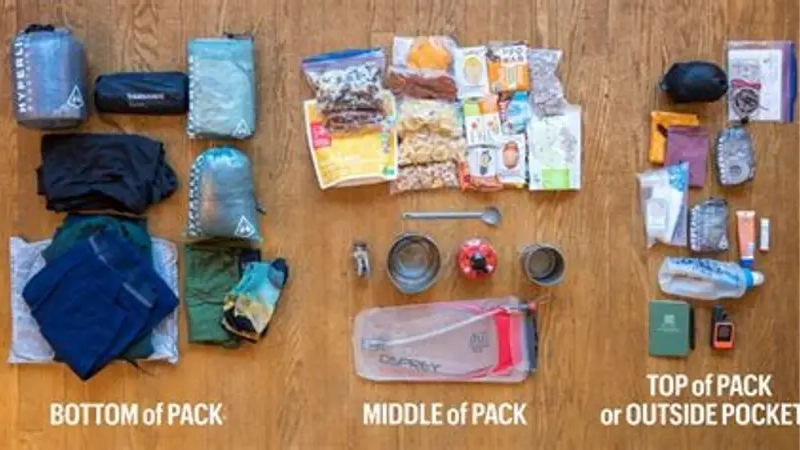
Cover the Ten Essentials
The Ten Essentials are categories, not a rigid list: navigation, sun protection, extra insulation, illumination, first aid, fire, a repair kit, extra food, extra water, and emergency shelter. Packing something for each means you are prepared for delays, injuries and weather changes on any day hike.
Scale the essentials to the hike. A short, popular trail needs less than a remote, all-day route, but skipping a whole category is where trouble starts. Build a small kit you keep packed, so the essentials travel with you automatically rather than being forgotten in a rush to the trailhead.
Match Gear to the Hike
Right-size each essential to your trip. A two-hour local loop needs less water and insulation than an exposed all-day ridge, but every hike needs navigation, light and first aid. Consider the season, weather, remoteness and your group when deciding how much of each essential to carry.
Do not over-pack a short hike into a heavy slog, but never skip the safety categories. A light, well-chosen kit that covers all ten is better than a heavy bag missing a headlamp. Match the quantity to the hike while keeping every essential category represented in your pack.
Keep a Core Kit Packed
The easiest way to stay prepared is to keep a small essentials kit permanently in your daypack: a headlamp, first-aid kit, fire source, repair items and emergency shelter live there always. Then you only add water, food and layers for each specific hike, so nothing critical gets forgotten.
Check the kit periodically to replace used items, dead batteries and expired supplies. A packed core kit removes the biggest risk on a day hike, forgetting a safety item in a hurry, and makes getting out the door faster, which means you actually hike more often.
Do Not Forget Water and Navigation
Two essentials cause the most trouble when skimped: water and navigation. Carry more water than you think you need, plus a way to treat more from a source, and bring reliable navigation, a map and compass, a GPS app, or a satellite device on remote routes. These prevent the most common emergencies.
Dehydration and getting lost are the day-hike problems most likely to turn serious, so never shortchange these two. A hydration reservoir plus a filter covers water, and a phone app backed by a physical map or satellite communicator covers navigation even where cell service fails.
Top Gear Picks for Your Hiking Backpack Checklist
These six cover the most important essentials, from the daypack itself to navigation, light and water. This hiking backpack checklist highlights a top pick for each in the table, then breaks down who each suits and its honest drawbacks.
| Item | Top Pick | Covers | Approx. Price |
|---|---|---|---|
| Daypack | Osprey Talon 22 | Carrying everything | Mid |
| Navigation | Garmin inReach Mini 2 | GPS + SOS | Premium |
| Illumination | Petzl Actik Core | Light | Mid |
| Water treatment | Sawyer Squeeze | Extra water | Budget |
| Hydration | Osprey Hydraulics 3L | Carrying water | Budget |
| First aid | Adventure Medical Kits UL/WP | First aid | Budget |
Osprey Talon 22 — Best Daypack
The Talon 22 is the pack to carry it all. At roughly two pounds it holds a day’s essentials on a real framesheet with a pocketed hipbelt, side bottle pockets and a stretch front pocket for a shed layer, so everything on your checklist has a place. For day hikes, it is the versatile carrier.
It is heavy for a daypack and its 100D body is not the most durable. For day hikers who want real weight transfer and organized pockets to keep their essentials sorted, though, it is hard to top. The women’s version is the Tempest 20.
Garmin inReach Mini 2 — Best Navigation and Safety
The inReach Mini 2 covers navigation and emergencies where phones fail. It provides GPS navigation and two-way satellite messaging plus an SOS button that reaches emergency services from anywhere, making it the single most valuable safety item for remote day hikes beyond cell coverage.
It is expensive and requires a subscription to use its satellite features, which is overkill for short, popular trails with cell service. For hikers who venture into remote terrain, though, the peace of mind and genuine emergency capability are hard to put a price on. Pair it with a paper map as backup.
Petzl Actik Core — Best Headlamp
The Actik Core covers the illumination essential. It delivers great output and long battery life, running on its rechargeable core or standard AAAs, in a feathery, easy-to-use build. A headlamp is non-negotiable, since even a day hike can run long, and this one is a reliable, versatile pick.
It is pricier than basic headlamps and not the most water-resistant option, so a fully waterproof light suits wet climates better. For most day hikers who want dependable light with flexible battery options, though, it is a standout that earns its place in every pack’s core kit.
Sawyer Squeeze — Best Water Treatment
The Sawyer Squeeze covers the extra-water essential. At about three ounces it filters to 0.1 microns, has a fast flow rate, and is backed by a lifetime warranty, letting you safely refill from streams so you never run dry. For treating more water on the trail, it is the go-to.
It is best for solo hikers, since groups prefer a larger gravity filter, and it must not freeze and needs occasional backflushing to keep flowing. For day hikers who want a light, reliable way to top up water from natural sources, though, it is the standard for good reason.
Osprey Hydraulics 3L — Best Hydration Reservoir
The Hydraulics 3L covers carrying enough water. Its three-liter capacity, reliable bite valve and durable, easy-to-clean build make it a dependable way to sip on the move without stopping, and it fits the hydration sleeves in most daypacks including the Talon. For staying hydrated, it is a trusted pick.
Its rigid backer adds some weight and bulk, and you cannot roll it up when empty. For day hikers who want reliable, high-capacity hydration that is easy to drink from and clean, though, it is built to last. Pair it with the Sawyer filter to refill from sources on longer hikes.
Adventure Medical Kits Ultralight/Watertight — Best First Aid
An Adventure Medical Kits Ultralight/Watertight kit covers the first-aid essential in a compact, waterproof package. Sized for one or two people on multi-day outings, it packs the basics, bandages, blister care, medications and tools, in a light, water-resistant case that slips easily into a daypack.
Like any pre-made kit, it needs personalizing, adding your own medications and restocking used items, and it is not a substitute for first-aid knowledge. As a light, organized starting point that covers the essential far better than a random handful of bandages, though, it is a smart buy.
What Essentials Cost in 2026
Day-hike essentials span budget to premium, so timing helps. A couple of current market forces affect what this gear costs and when to buy, without changing which items belong on your checklist.
Tariffs Add Modest Cost
Outdoor gear uses imported materials and electronics, and tariffs add modest cost. Brands have described future pricing as uncertain, so if you know the items you want, assembling your kit now is reasonable, especially since safety gear is not where to cut corners waiting for a sale.
The effect is uneven. Electronics like the inReach hold pricing, while consumables and simpler items see more discounting. Value-focused buyers can watch for sales on the filter, headlamp and reservoir, while treating the satellite device as a fixed investment in safety.
Build the Kit Over Time
You do not have to buy everything at once. Start with the non-negotiables, water, navigation, light and first aid, then add the rest as your budget allows. Fall sale events like Prime Big Deal Days in early October and Black Friday in late November bring discounts on many of these items.
Because a core essentials kit lives in your pack permanently, buying quality items once and maintaining them is cheaper over time than replacing flimsy gear. Prioritize safety-critical items first, then round out the checklist as sales allow, so you are never unprepared for a day hike.
Do Not Cut Corners on Safety
Spend on the essentials that keep you safe rather than the cheapest option. A reliable headlamp, filter and, for remote trails, a satellite communicator are worth their cost, since they matter most exactly when a hike goes wrong. Safety gear is the last place to chase a bargain.
If a key item is prone to selling out before a trip, buy it early rather than gambling on stock. Missing a headlamp or filter before a hike costs more than a small saving, and a complete, well-maintained checklist is what lets you head out with confidence.
Frequently Asked Questions
These are the questions hikers ask most about packing for a day hike.
What should a hiking backpack checklist always include?
The Ten Essentials: navigation, sun protection, insulation, illumination, first aid, fire, a repair kit, extra food, extra water and emergency shelter. A good hiking backpack checklist covers all ten categories, scaled to the hike, so you are prepared for delays, injuries and weather on any trail.
Do I need all ten essentials on a short hike?
Scale them to the trip, but do not skip whole categories. A short, popular trail needs less water and insulation than a remote all-day route, yet every hike benefits from navigation, light and first aid. Keeping a small core kit packed means the essentials always travel with you.
What is the most commonly forgotten essential?
Illumination and extra water top the list. Hikers underestimate how often a day hike runs past dark or how much water they need, especially in heat. Keep a headlamp permanently in your pack and carry more water than you expect, plus a filter to treat more from a source.
Do I need a satellite communicator?
For remote trails beyond cell coverage, it is the single most valuable safety item, providing navigation and an SOS link to rescuers. For short, popular hikes with cell service, a phone with offline maps and a paper backup usually suffices. Match the device to how remote you go.
See More:
- Best hiking backpack
- Best backpacking backpack
- Ultralight hiking backpack
- Best hydration backpack
- Best hiking backpack for women
Final Thoughts
A solid hiking backpack checklist built on the Ten Essentials turns problems into inconveniences. The Talon 22 carries it all, the Petzl Actik Core and Sawyer Squeeze cover light and water, and the inReach Mini 2 handles remote-trail safety. Keep a core kit packed, scale the essentials to each hike, then head out prepared for whatever the trail brings.

Write Your Review
No reviews yet. Be the first to share your experience!