
Key takeaways
What's inside
Hiking backpack buying guide shoppers need one thing above all: a clear way to match a pack to their trips and body. This guide walks through capacity, fit, suspension and weight, then names top picks for day, weekend and multi-day trips so any hiker can choose with confidence.
As an Amazon Associate we earn from qualifying purchases.
By Jake Thompson
How to Use This Hiking Backpack Buying Guide
The core of any hiking backpack buying guide is matching a pack to your real trips, not chasing brands or specs in isolation. Work through capacity, fit, suspension, weight and ventilation in order, and by the end you will know exactly which category of pack you need.
Start With Capacity
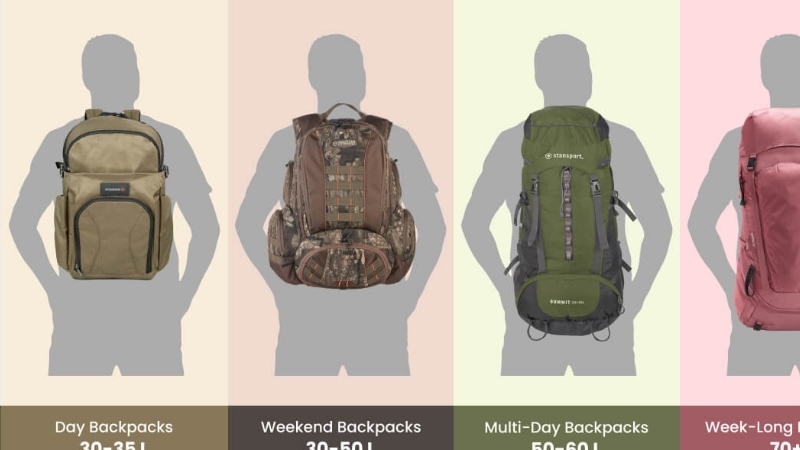
Capacity is measured in liters and follows trip length. Day hikes suit 18-28L, weekend and overnight trips want 40-55L, and multi-day or winter routes push toward 60-70L. Sizing to your longest common trip, rather than an occasional big one, keeps the pack riding well when it is not full.
Resist oversizing, since a half-empty pack sags and carries poorly. Many hikers end up with one daypack and one 55-65L pack to cover most outings. If you are unsure, a mid-capacity pack is the flexible choice that handles day trips through weekends without feeling oversized.
Nail the Fit
Comfort is dictated by torso length, not height. The frame has to place the hipbelt on top of your iliac crest so the load rides on your hips. Adjustable-harness packs cover a range of torsos, while cottage packs are ordered to a fixed torso measurement instead.
Measure from the C7 vertebra at the base of your neck to the top of your hip bones to find your torso length. Load a candidate with 20-30 pounds, cinch the hipbelt first, and aim for most weight on your hips. If it rides on your shoulders, the size is wrong.
Understand Suspension
The suspension is the frame and backpanel that transfers weight to your hips, and each pack lists a recommended max load. Trampoline mesh systems maximize airflow, while framesheet-and-stay systems hug the body for heavier loads. Lightweight frames handle 30-40 pounds; haulers carry up to about 50.
Match the frame to your typical loaded weight, including water and food. A frame rated well above your real load just adds carried weight, while one rated below it will punish you. Aim for a frame matched to your heaviest common trip with a little headroom.
Weigh Pack Weight and Durability
Empty weight ranges from about two pounds for Dyneema packs to over four and a half for full-featured haulers. Every ounce of pack is an ounce you carry, but lighter fabrics like 50D Dyneema or thin nylon trade abrasion resistance for the weight savings.
Fabric is quoted in denier. A 210D body with a 500D base survives years of use; ultralight 50-100D fabrics need gentler handling. Decide honestly whether you are a weight-counter or someone who drags a pack across granite, then choose fabric accordingly.
Factor In Ventilation
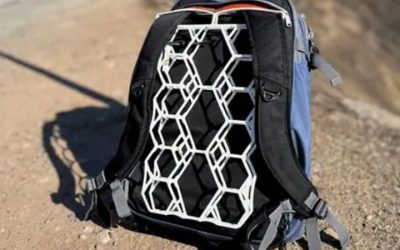
If you hike in heat, a suspended mesh backpanel that holds the pack off your spine keeps you drier. The tradeoff is the pack sitting slightly farther from your back, which can feel less stable on technical scrambles than a close-to-body framesheet.
Cool-climate hikers can take the stability and warmth of a padded backpanel instead. There is no universally right answer, only the conditions you hike in most, so weight this factor by your local climate rather than by reviews from a different environment.
Top Picks From This Hiking Backpack Buying Guide
To make this hiking backpack buying guide actionable, here are six proven packs, one for each major use case from day hikes to thru-hiking. Scan the table, then read each pick for who it suits and its honest drawbacks.
| Model | Capacity | Weight | Best For | Price Tier |
|---|---|---|---|---|
| Osprey Talon 22 | 22L | ~2 lb | Day hikes | Mid |
| Osprey Exos 58 | 58L | ~2 lb 13 oz | Lightweight weekends | Mid |
| Osprey Atmos AG 65 | 65L | ~4 lb 10 oz | Multi-day all-rounder | Premium |
| Gregory Baltoro 65 | 65L | ~5 lb | Heavy loads | Premium |
| REI Co-op Flash 55 | 55L | ~2 lb 10 oz | Best value | Budget |
| HMG Southwest 3400 | 55L | ~2 lb | Thru-hiking | Premium |
Osprey Talon 22 — Best for Day Hikes
For single-day trips, the Talon 22 is the benchmark. It carries up to about 20 pounds on a real framesheet with a pocketed hipbelt, comes in a wide size range, and handles hiking, fast-and-light outings and everyday use. It is the versatile day pick most hikers reach for.
It is heavy for the category at roughly two pounds, with a 100D body that is not the most durable, and some find the latest backpanel less breathable. For support and organization on day trips, though, it is hard to top. The women’s version is the Tempest 20.
Osprey Exos 58 — Best for Lightweight Weekends
The Exos 58 is the go-to for weekend trips where you want to save weight. At about two pounds thirteen ounces it keeps a trampoline backpanel, four inches of torso adjustment, a padded hipbelt and a removable lid. It is an excellent bridge into lighter backpacking for most three-season trips.
To hit that weight it uses thinner fabrics and a lighter frame, so it tops out near 35 pounds and is less abrasion-proof than burly haulers. The hipbelt padding may feel thin for wider hips. Within its load range, it is one of the most comfortable lightweight packs. The women’s version is the Eja 58.
Osprey Atmos AG 65 — Best Multi-Day All-Rounder
The Atmos AG 65 is the safest multi-day recommendation. Its AntiGravity suspended-mesh backpanel is class-leading for airflow and comfort, the harness fits a wide range of torsos, and a 210D-over-500D nylon build lasts for years. For weekend-to-week trips under about 40 pounds, it is hard to beat.
The downsides are weight and load ceiling: it runs over four and a half pounds and its recommended max load was trimmed to roughly 40 pounds. A few owners report frame pressure on the lower back when overloaded. Keep loads sensible and it is the most well-rounded pick. The women’s version is the Aura AG 65.
Gregory Baltoro 65 — Best for Heavy Loads
When trips get heavy, the Baltoro 65 hauls in comfort. Its FreeFloat A3 Pro suspension and rotating hipbelt track your body over rough ground, and it carries loads up to about 50 pounds. Nine organized pockets and tough recycled nylon make it a favorite for gear-heavy trips and beginners.
That comfort is heavy: it pushes five to six pounds in larger sizes and sits at a premium price, making it overkill for light kits. If you consistently carry big loads and value carry comfort over grams, though, few packs match it. The women’s version is the Deva.
REI Co-op Flash 55 — Best Value
The Flash 55 delivers a lot of pack for a budget price. It is customizable, light at around two pounds ten ounces, and carries a weekend or thru-hiking load well, which is why reviewers routinely name it a top value. For hikers who want capability without premium spend, it is the natural starting point.
Its compromises show in the thin nylon, which is less durable than thicker builds, and comfort that drops with loads north of about 30 pounds. The customizable pockets can feel bulky. For typical weekend trips at moderate weight, none of that matters much against the value.
Hyperlite Mountain Gear Southwest 3400 — Best for Thru-Hiking
For long-distance hikers, the Southwest 3400 is a cult classic. Its 55L body plus roughly 10L of external pockets is made from waterproof Dyneema Composite that shrugs off rain and abrasion, yet the pack weighs about two pounds. Handmade in Maine, it is built to survive multiple thru-hikes.
The tradeoff is comfort and organization: thin foam straps get uncomfortable much above 30 pounds, and the single-tube design has no internal structure, so packing cubes help. It is also expensive. For weight-disciplined hikers who keep loads light, it is a durable, waterproof workhorse.
What This Buying Guide Says About 2026 Prices
No hiking backpack buying guide is complete without a note on timing, since market conditions genuinely affect what you pay. A couple of current forces shape pack prices and the best moment to buy this year.
Tariffs Still Pressure Materials
Most technical packs are built overseas from imported nylon, and steel and aluminum tariffs remain in place on frame metal. Brands have described future pricing as a moving target, so committing to a pack you already like, rather than waiting indefinitely, is a reasonable call this year.
The effect is uneven. Premium brands have used pricing power to hold prices, while mainstream mid-tier makers are clearing pre-tariff inventory. That gap is where deal-hunters find value, so watch mid-tier closeouts if budget is a priority.
Seasonal Timing Works in Your Favor
Stock is deepest in late summer and early fall, before popular sizes and colors thin out. Buying early also lets you break in a pack before a big trip instead of scrambling, which is worth more than a small discount on the wrong size or model.
The fall calendar rewards patience: Prime Big Deal Days land in early October, and Black Friday and Cyber Monday run in late November with the deepest discounts. Build a wishlist now and track prices so you can strike when your pack drops.
Buy the Right Pack, Then the Right Deal
Decide on the pack first and the timing second. Once this guide has helped you settle on capacity and fit, set a price alert and let the fall events come to you rather than overpaying at full retail in a volatile market.
If a must-have model is prone to selling out, buy early in a sale window rather than gambling on peak Black Friday stock. Losing a small discount beats missing the pack entirely, especially in less common torso sizes that vanish first each fall.
Frequently Asked Questions
These are the questions readers of a hiking backpack buying guide ask most.
What is the most important tip in a hiking backpack buying guide?
Fit above all. The best hiking backpack buying guide advice is to match torso length and hipbelt fit to your body, then size capacity to your trips. A perfectly specced pack that does not fit your torso will always be uncomfortable, no matter the brand or price.
How many packs do most hikers need?
Usually two: a daypack in the 18-24L range and a multi-day pack around 55-65L. This pair covers day hikes through weekend and multi-day trips for most people, so you rarely need a third pack unless you get into specialized ultralight or expedition trips.
How do I choose between light and durable?
It depends on your habits. Weight-counters and gentle users can run thin, light fabrics that save real weight, while rough users and scramblers should favor thicker denier that shrugs off abrasion. Match fabric to how hard you are on gear rather than chasing the lowest weight.
When is the best time to buy a hiking pack?
Late summer and early fall for stock, and fall sale events for price. Prime Big Deal Days in early October and Black Friday and Cyber Monday in late November offer the deepest discounts, so plan your purchase around them once you know exactly which pack you want.
See More:
- Best hiking backpack
- Best backpacking backpack
- Ultralight hiking backpack
- Best hydration backpack
- Best hiking backpack for women
Final Thoughts
This hiking backpack buying guide comes down to a simple order: size capacity to your trips, fit the pack to your torso, match the suspension to your loads, then weigh weight against durability. The Talon 22 covers day hikes, the Atmos AG 65 anchors multi-day trips, and the Southwest 3400 rules thru-hikes. Get fit right first, time a fall sale, and you will carry the right pack for years.

Write Your Review
No reviews yet. Be the first to share your experience!