
Key takeaways
Backpack capacity chart logic is simple once you see it laid out: liters map to trip length and kit volume. This guide explains how many liters you need for day, weekend and multi-day trips, then gives a top pack pick for every size from 20L to 70L and beyond.
As an Amazon Associate we earn from qualifying purchases.
Our top picks


As an Amazon Associate we earn from qualifying purchases at no extra cost to you. Ratings are shown as listed on Amazon.
By Jake Thompson
How to Read a Backpack Capacity Chart
A backpack capacity chart maps liters to what you carry. The right size depends on trip length and how bulky your gear is, so this section breaks capacity into clear tiers, from daypacks to expedition haulers, to help you pinpoint the volume you actually need.
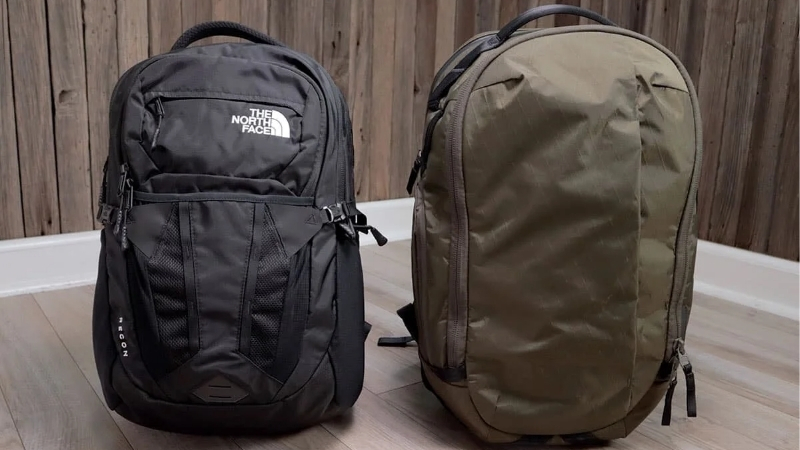
Day Hikes: 18-28 Liters
For trips where you return by evening, 18-28 liters carries water, layers, food, first aid and the ten essentials. Fast, minimalist outings are happy at 18-22L, while longer or colder days with extra layers want 24-28L. Anything larger just invites overpacking for a single day.
This tier covers the widest range of hikers, since most people day hike far more than they backpack. A 22-24L pack is the flexible sweet spot that handles short strolls and big all-day efforts alike, which is why it anchors most backpack capacity chart recommendations.
Overnight and Weekend: 40-55 Liters
One to three nights typically fits in 40-55 liters, enough for a sleep system, shelter, food and clothing without excess. Ultralight hikers with compact gear can drop to 40-45L, while those with roomier kit or cold-weather layers lean toward 50-55L for the same trip length.
This is the versatile heart of most backpackers’ quivers. A 55L pack covers weekends comfortably and stretches to longer trips for efficient packers, making it the single most useful multi-day size for hikers building their first serious kit.
Multi-Day: 60-70 Liters
Trips of three or more nights, or shorter trips with bulky gear, want 60-70 liters. This tier holds a full sleep system, several days of food, a bear canister if required, and cold-weather layers, with room to carry a share of group gear on longer routes.
Sixty-five liters is the classic all-rounder, big enough for most multi-day trips yet not so large it encourages overpacking. If you mainly do weekend and week-long trips, this is the size most likely to serve as your do-everything backpacking pack for years.
Expedition and Winter: 70 Liters and Up
The largest tier, 70 liters and beyond, is for expeditions, winter trips, and carrying bulky group gear or a share of a family’s kit. Cold-weather sleeping bags, extra insulation, and more food push volume up, and heavier loads demand a burlier frame to match.
Most hikers rarely need this size, and a too-large pack invites overpacking and rides poorly when half full. Reserve 70L-plus for genuine expedition, winter or heavy-hauling needs, and choose a robust suspension rated for the bigger loads these trips require.
Top Picks by Size From This Backpack Capacity Chart
To turn this backpack capacity chart into a shopping list, here is one proven pick for each size tier, from a 20L daypack to a 75L hauler. The chart table shows the mapping, then each pick covers who it suits and its honest drawbacks.
| Capacity | Trip Type | Top Pick | Weight |
|---|---|---|---|
| 20L | Day hikes | Osprey Daylite Plus | ~1 lb 6 oz |
| 34L | Big day / light overnight | Osprey Stratos 34 | ~3 lb 7 oz |
| 48L | Fastpacking / minimalist | Osprey Exos 48 | ~2 lb 11 oz |
| 55L | Weekend value | REI Co-op Flash 55 | ~2 lb 10 oz |
| 65L | Multi-day all-rounder | Osprey Atmos AG 65 | ~4 lb 10 oz |
| 75L | Expedition / heavy loads | Gregory Baltoro 75 | ~5 lb 8 oz |
20L — Osprey Daylite Plus
For the day-hike tier, the Daylite Plus is a versatile 20L pick. Its rugged 300D nylon body with a 600D bottom pairs a padded sleeve for a hydration bladder or laptop, and the handle slides over luggage. It moves easily from trail to commute, making it a genuine do-it-all value daypack.
For hiking it has only a webbing hipbelt with no real weight transfer and a basic backpanel, so it suits light day loads rather than heavy or long climbs. As an everyday-and-trail 20L pack at a budget price, though, its durability and versatility are hard to beat.
34L — Osprey Stratos 34
For big days and light overnights, the Stratos 34 bridges daypack and backpacking pack. Its suspended AirSpeed mesh backpanel keeps you cool, and it adds an adjustable torso, seven pockets, hipbelt pockets and an included rain cover. It carries a day’s gear or a minimalist overnight kit with ease.
At around three and a half pounds it is heavy for a daypack, and its 30-pound comfortable limit is overkill for very light outings. For hot-weather hikers who want ventilation and versatility in one pack, though, it is a comfortable, well-featured choice. The women’s version is the Sirrus 34.
48L — Osprey Exos 48
For fastpacking and minimalist overnights, the Exos 48 is a lightweight standout. At about two pounds eleven ounces it keeps a ventilated AirSpeed trampoline backpanel, an adjustable torso and a removable lid, carrying a compact multi-day kit comfortably for weight-conscious hikers.
To hit that weight it uses thinner fabrics and small hipbelt pockets, and it tops out near 35 pounds, so it is not for heavy hauls. For efficient packers doing minimalist overnights and fastpacking, though, it is one of the best comfort-to-weight picks. The women’s version is the Eja 48.
55L — REI Co-op Flash 55
For weekend value, the Flash 55 delivers a lot of pack for the money. It is customizable, light at around two pounds ten ounces, and carries a weekend or thru-hiking load well, which is why reviewers routinely name it a top value. For the versatile 55L tier, it is the natural budget pick.
The thin nylon is less durable than thicker builds, and comfort drops with loads north of about 30 pounds, while the customizable pockets can feel bulky. For typical weekend trips at moderate weight, though, none of that outweighs its excellent value.
65L — Osprey Atmos AG 65
For the multi-day all-rounder tier, the Atmos AG 65 is the safest pick. Its AntiGravity suspended-mesh backpanel is class-leading for airflow and comfort, the harness fits a wide range of torsos, and a 210D-over-500D nylon build lasts for years. For weekend-to-week trips under about 40 pounds, it excels.
It runs over four and a half pounds and its recommended max load was trimmed to roughly 40 pounds, and a few owners report frame pressure when overloaded. Keep loads sensible, though, and it is the most well-rounded 65L pack available. The women’s version is the Aura AG 65.
75L — Gregory Baltoro 75
For the expedition tier, the Baltoro 75 hauls heavy loads in comfort. Sharing the Baltoro’s FreeFloat A3 Pro suspension and rotating hipbelt, it adds volume for winter kit, longer food carries and group gear, tracking your body over rough ground even under big, gear-heavy loads.
It is very heavy, well over five pounds, and premium-priced, making it overkill for anything but genuine expedition, winter or heavy-hauling trips. For hikers who truly load up, though, its carrying comfort is exceptional. The women’s version is the Deva 70 for gear-heavy trips.
What Pack Prices Look Like in 2026
Once this backpack capacity chart helps you settle on a size, timing the purchase saves money. A couple of current market forces affect pack prices and the best moment to buy this year.
Tariffs Still Pressure Materials
Most technical packs are built overseas from imported nylon, and steel and aluminum tariffs remain in place on frame metal. Brands have described future pricing as a moving target, so buying the size you need now, rather than waiting indefinitely, is a reasonable call this year.
The effect is uneven. Premium brands have used pricing power to hold prices, while mainstream mid-tier makers are clearing pre-tariff inventory. That gap is where value lives, so watch mid-tier closeouts once you know which capacity fits your trips.
Match Size to Trips, Then Time the Sale
Buy for your real trip length, not an occasional outlier, since an oversized pack invites overpacking and rides poorly. Once you know your size from the chart, set a price alert and let the fall events come to you rather than overpaying at full retail.
The fall calendar rewards patience: Prime Big Deal Days land in early October, and Black Friday and Cyber Monday run in late November with the deepest discounts. Confirm your capacity first, then track prices so you can buy the right size at the right time.
Buy Once, Buy Right
Choosing the correct capacity the first time saves money over buying a too-small pack and upgrading later. Most hikers are well served by a daypack plus one 55-65L pack, which covers day hikes through multi-day trips without a closet full of sizes.
If a popular size or color is prone to selling out, buy early in a sale window rather than gambling on peak stock. Missing the right size costs more than a small discount, especially in less common torso lengths that vanish first each fall.
Frequently Asked Questions
These are the questions hikers ask most when sizing a pack.
How do I use a backpack capacity chart to pick a size?
Match liters to your longest common trip: 18-28L for day hikes, 40-55L for weekends, 60-70L for multi-day, and 70L-plus for expeditions. A good backpack capacity chart sizes to trip length and kit volume, so buy for your typical trip rather than an occasional big one.
What size backpack do most hikers need?
Two sizes cover nearly everyone: a 20-24L daypack and a 55-65L multi-day pack. This pair handles day hikes through weekend and multi-day trips, so most hikers rarely need more unless they get into specialized fastpacking or expedition travel.
Does capacity change how heavy a pack feels?
Indirectly. Bigger packs weigh more empty and tempt you to overpack, both of which add carried weight. Sizing to your actual trip, rather than buying extra “just in case,” keeps your loaded weight down and the pack riding well, which matters more than the liter number alone.
Can I use one pack for everything?
Sort of. A 55-65L pack can shrink for weekends with compression straps, but it rides loosely when half full for day hikes, and a daypack is far more comfortable for those. Most hikers find one daypack plus one multi-day pack covers everything better than a single compromise size.
See More:
- Best hiking backpack
- Best backpacking backpack
- Ultralight hiking backpack
- Best hydration backpack
- Best hiking backpack for women
Final Thoughts
This backpack capacity chart comes down to matching liters to trips: 18-28L for days, 40-55L for weekends, 60-70L for multi-day, and 70L-plus for expeditions. The Daylite Plus anchors day hikes, the Atmos AG 65 covers multi-day trips, and the Baltoro 75 hauls big loads. Size to your real trips first, then time a fall sale, and you will buy right the first time.

Write Your Review
No reviews yet. Be the first to share your experience!