
Key takeaways
What's inside
Best backpacking backpack choices come down to how much weight you carry and how comfortably a frame moves it to your hips. This guide compares six multi-day packs by capacity, suspension, weight and durability so you can carry three or more days of gear without wrecking your shoulders.
As an Amazon Associate we earn from qualifying purchases.
By Jake Thompson
How to Choose the Right Backpacking Backpack
A backpacking pack has one core job: move a heavy, multi-day load onto your hips and keep it stable for miles. The specs that decide whether it does that well are capacity, frame and suspension, weight, fit and fabric durability. Get these right and the brand almost does not matter when choosing the best backpacking backpack.
Size Capacity to Your Trip and Kit
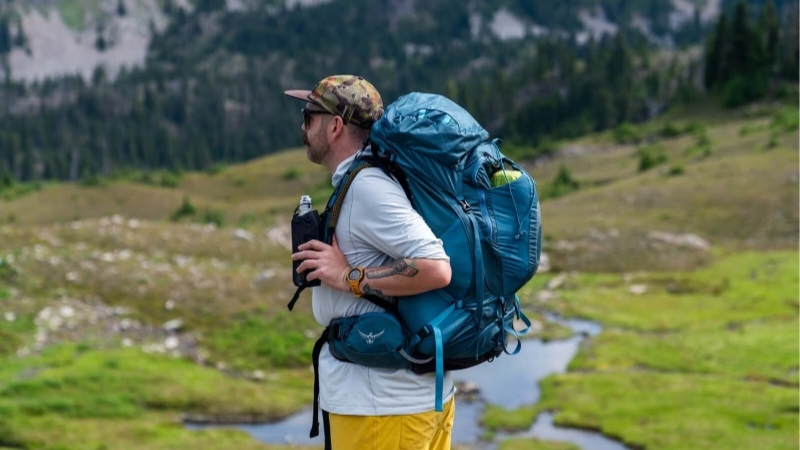
Weekend trips usually fit in 50-60L, standard multi-day routes want 60-65L, and bulky or winter loads push to 70L and beyond. Your sleep system and food volume drive this more than trip length, so a fast, minimalist hiker needs far less than someone with a roomy tent and a cold-weather bag.
Resist oversizing. A pack that is too large invites overpacking and rides loosely when half full. If you are still dialing in your kit, 60-65L is the flexible sweet spot that handles most three-season trips without forcing you to leave essentials behind.
Choose a Frame That Matches Your Load
The frame and suspension transfer weight to your hips, and each pack lists a recommended max load. Lightweight frames handle 30-40 pounds happily; burly haulers like the Osprey Aether and Gregory Baltoro carry 50-60 pounds. Exceeding the rating makes any pack sag and dig, no matter how good it is.
Be honest about your typical loaded weight, including water and food. A frame rated well above your real load just adds carried weight, while one rated below it will punish you. The goal is a frame matched to your heaviest common trip, with a little headroom, not a maxed-out spec sheet.
Balance Weight Against Comfort
Empty pack weight spans about two pounds for ultralight packs to over five pounds for full-featured haulers. Every pound of pack is a pound you carry all day, but shaving weight usually means thinner fabric, less padding and a simpler frame, which can reduce comfort under load.
Think in terms of total system weight. If your base weight is low, a two-pound frameless or minimal-frame pack works well; if you carry heavier kit, the extra padding of a four-pound pack pays for itself in shoulder comfort. There is no single right answer, only the load you actually carry.
Dial In Torso Length and Hipbelt Fit
Fit is set by torso length, measured from the C7 vertebra to the iliac crest, not by height. Adjustable-harness packs cover a range of torsos; fixed-size cottage packs must be ordered to your measurement. A mismatched torso length is the number one cause of an uncomfortable pack.
The hipbelt should wrap the top of your hip bones and take most of the weight. Load a candidate with 25-35 pounds, tighten the hipbelt first, and check that your shoulders carry little. If the belt slides off your hips or gaps, the size is wrong regardless of the brand.
Weigh Durability and Fabric
Fabric is rated in denier. Tough 210-420D nylon bodies, as on the Atmos and Aether, survive years of abuse; lighter 50-100D Dyneema and Robic fabrics save weight but need care around rock and brush. Bottoms and high-wear panels usually get a heavier fabric than the main body.
Match fabric to terrain and habits. Off-trail scrambling, bushwhacking and dragging a pack over granite call for heavier deniers, while groomed-trail hikers can safely run lighter fabrics. A durable pack kept in service for years is also the more economical and lower-impact choice over time.
Top Picks: The Best Backpacking Backpack for Multi-Day Trips
The best backpacking backpack depends on your load, so these six span comfort-first haulers, lightweight all-rounders and true ultralight packs to match most loads and budgets. Scan the table, then read each pick for who it suits and its honest drawbacks.
| Model | Capacity | Weight | Max Load | Price Tier |
|---|---|---|---|---|
| Osprey Atmos AG 65 | 65L | ~4 lb 10 oz | ~40 lb | Premium |
| Gregory Baltoro 65 | 65L | ~5 lb | ~50 lb | Premium |
| Osprey Aether 65 | 65L | ~5 lb | ~60 lb | Premium |
| Osprey Exos 58 | 58L | ~2 lb 13 oz | ~35 lb | Mid |
| ULA Circuit | 68L | ~2 lb 7 oz | ~35 lb | Mid |
| REI Co-op Flash 55 | 55L | ~3 lb | ~40 lb | Budget |
Osprey Atmos AG 65 — Best Overall
The Atmos AG 65 remains the default multi-day recommendation. Its AntiGravity suspended-mesh backpanel is class-leading for airflow and comfort, the harness and hipbelt adjust to most bodies, and a 210D-over-500D nylon build lasts for years. For weekend-to-week trips under about 40 pounds, it is hard to beat.
The catch is that it weighs over four and a half pounds and its recommended max load was trimmed to roughly 40 pounds, so gear-heavy trips push its limits. A minority report frame pressure on the lower back when overloaded. Keep loads sensible and it is the most well-rounded pack here.
Gregory Baltoro 65 — Best for Comfortable Heavy Loads
Updated for 2026, the Baltoro 65 is a comfort-first hauler. Its FreeFloat A3 Pro suspension and auto-rotating hipbelt track your body across rough ground, and it carries loads to about 50 pounds without complaint. Nine organized pockets and tough recycled nylon make it a favorite for beginners and gear-heavy trips alike.
That comfort is heavy: it runs five to six pounds in larger sizes and sits at a premium price, making it overkill for light three-season kit. If you routinely carry big loads and prize hip comfort over grams, though, it is one of the best. The women’s version is the Deva.
Osprey Aether 65 — Best for Maximum Loads and Durability
When trips get heavy and rough, the Aether 65 goes bigger than the Atmos. Its thicker 420D nylon and hardier suspension carry loads up to roughly 60 pounds, and the simpler mesh backpanel has fewer breakable parts. It is the pick for expedition-style trips, heavy water carries or serious durability demands.
The tradeoffs are weight, price and airflow: it lacks the suspended-mesh ventilation of the Atmos and the two-way access convenience of some rivals. It is more pack than most weekenders need. But for hikers who genuinely load up, its carrying capacity is reassuring. The women’s version is the Ariel.
Osprey Exos 58 — Best Lightweight All-Rounder
The Exos 58 proves you can go lighter without abandoning comfort. At about two pounds thirteen ounces it saves well over a pound versus the Atmos while keeping a trampoline backpanel, four inches of torso adjustment and a padded hipbelt. It is an ideal first step toward lightweight backpacking for most three-season trips.
To hit that weight it uses thinner fabrics and a lighter frame, so it maxes out near 35 pounds and is less abrasion-proof than the Aether. Some find the hipbelt padding a touch thin for wider hips. Within its load range it is superb value in comfort per ounce. The women’s version is the Eja 58.
ULA Circuit — Best Ultralight Load-Hauler
The ULA Circuit is a thru-hiker staple that carries more weight than its two-and-a-half-pound heft suggests. An internal frame with an aluminum stay handles loads up to about 35 pounds with class-leading comfort for the weight, and its 68L total volume swallows a full multi-day kit. It is a brilliant balance of light and capable.
As a cottage pack it offers less external organization than mainstream packs and can have longer lead times when ordering. It is also fixed to your torso size, so measure carefully. For weight-conscious backpackers who still carry real loads, few packs match its comfort-to-weight ratio.
REI Co-op Flash 55 — Best Value
The Flash 55 packs a lot of capability into a budget price. It is customizable, light at around three pounds, and carries a weekend or thru-hiking load well enough to earn frequent best-budget honors. For hikers who want a capable multi-day pack without premium spend, it is the natural starting point.
Its compromises appear in suspension refinement and comfort under the very heaviest loads, where premium frames pull ahead, and it skips some plush features. For typical three-season trips that rarely matters. The value-to-performance ratio here is the strongest of any pack on this list.
What Backpacking Pack Prices Look Like in 2026
Because the best backpacking backpack is a bigger investment than a daypack, timing matters. Two current market forces affect price and availability this year without changing which pack fits your body and loads best.
Material Costs Remain Uncertain
These packs rely on imported nylon and on aluminum and steel frames and stays, and metal tariffs remain in force. Several brands have said future prices are only estimates, so committing to a pack you already like beats waiting for stability that may not arrive soon in this market.
The impact is uneven. Premium brands have largely held pricing power, while mainstream mid-tier makers are discounting pre-tariff inventory. If budget drives your decision, the mid-tier is where closeout deals cluster, so a value pick like the Flash 55 can get even more attractive on sale.
Buy Early in the Season
Stock is deepest in late summer and early fall, before popular sizes and colors thin out. Buying a multi-day pack early also gives you time to load-test it on a short trip and adjust the fit before committing to a long route, which is worth more than a small discount.
The fall calendar sets up two clear windows: Prime Big Deal Days in early October and Black Friday and Cyber Monday in late November, when discounts are deepest. Track your shortlist now and be ready, since the best backpacking backpack deals move fast in popular sizes.
Match Spend to Real Use
Spend where it counts for your loads. Heavy carriers benefit most from a premium suspension and get real value from a pricier hauler, while moderate weekend loads are well served by a budget pack that costs far less.
If a specific size or color is prone to selling out, buy it early in a sale window rather than gambling on peak Black Friday stock. Missing the pack entirely costs more than a few dollars of discount, especially for less common torso sizes.
Frequently Asked Questions
These are the questions hikers ask most when stepping up from day hikes to overnight trips.
What is the ideal capacity for the best backpacking backpack?
For most three-season trips, 60-65L is the flexible sweet spot, covering weekends through several days without encouraging overpacking. The best backpacking backpack for you depends on kit volume, so minimalist hikers can drop to 50-55L while winter and gear-heavy trips justify 70L.
How heavy a load can these packs carry?
Ratings vary by frame. Lightweight packs like the Exos 58 and ULA Circuit top out near 35 pounds, the Atmos handles about 40, and burly haulers like the Baltoro and Aether carry 50-60 pounds. Staying within the rating is the single biggest factor in comfort.
Are ultralight packs worth it for beginners?
They can be, if your base weight is genuinely low. Ultralight packs like the ULA Circuit are lighter and simpler, but they carry less and have thinner fabrics. Beginners still refining their kit often do better with a forgiving 55-65L pack before committing to ultralight gear.
Should I buy in person or online?
If possible, get fitted in person for torso length and hipbelt sizing, then buy whichever way is cheaper. Adjustable-harness packs are more forgiving to order online; fixed-size cottage packs like the ULA Circuit really do reward measuring your torso carefully before ordering.
See More:
- Best hiking backpack
- Ultralight hiking backpack
- Best hydration backpack
- Best hiking backpack for women
Final Thoughts
The best backpacking backpack is the one matched to your real loads and torso, then timed to a good sale. The Atmos AG 65 is the safest all-rounder, the Baltoro and Aether haul heavy loads in comfort, and the ULA Circuit keeps weight down without giving up capacity. Fit and load rating first, brand and price second, and you will carry your gear happily for many seasons.
Write Your Review
No reviews yet. Be the first to share your experience!