
What's inside
Best ice packs cooler owners rely on are judged on freeze point, panel thickness and refreeze speed, not on how cold they feel in the hand. This guide explains why a pack that freezes well below thirty-two degrees changes everything, then covers five reusable options genuinely worth loading into a cooler.
As an Amazon Associate we earn from qualifying purchases at no extra cost to you. Product prices and availability are accurate as of the date shown and are subject to change.




As an Amazon Associate we earn from qualifying purchases at no extra cost to you. Product prices and availability are accurate as of the date shown and are subject to change.
🛒 Best Price Today on Amazon
Prime members get fast, free shipping on everything above, plus member-only deals. New members get a 30-day free trial — cancel anytime.
How to Choose the Right Best Ice Packs Cooler Setup
The best ice packs cooler setups replace loose ice with something that does not flood the bottom of the cooler and soak your food. The decision comes down to three measurable things: the temperature the pack freezes at, how the shape stacks against your contents, and how long it takes to refreeze between trips.
Freeze Point Decides How Cold the Cooler Gets
Plain water freezes at thirty-two degrees Fahrenheit, so a basic gel pack can never pull a cooler below that. Packs built with a salt-based solution, such as the Cooler Shock system, freeze closer to eighteen degrees, which means they act as a genuine heat sink rather than simply refusing to melt for a while.
That difference matters most on trips over two days. A colder pack keeps frozen food frozen instead of merely chilled, and it buys hours at the end of a weekend when a standard pack has already given up. The trade-off is that very cold packs can freeze produce and drinks placed directly against them.
Shape and Thickness Change How Much Fits
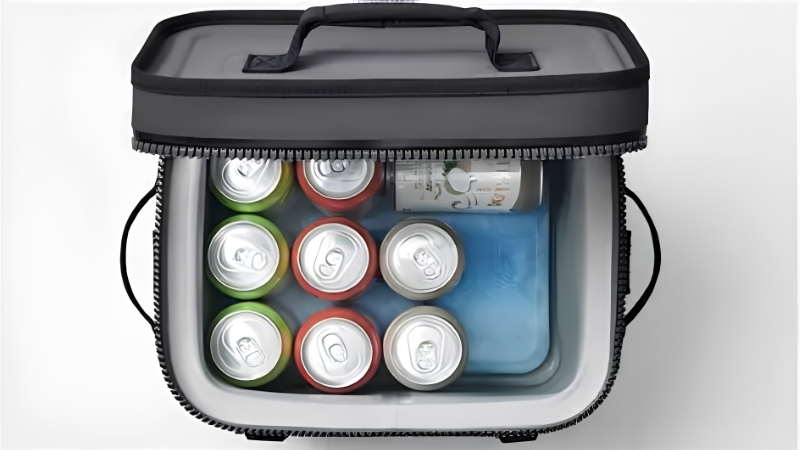
Thin flat panels line the walls and lid of a cooler and lose very little usable volume, which is why they suit packed lunch boxes and soft coolers where every inch counts. Thick rigid blocks hold cold longer but eat space, so they make more sense in a large hard-sided cooler with room to spare.
Think about placement before buying. Cold falls, so a panel across the top of the load does more work than one buried underneath. Slim packs that fit vertically against the sidewalls create an insulating layer around the contents and keep the cooler performing even when the lid is opened repeatedly.
Reusability and Refreeze Time Matter on Long Trips
A thick pack can need a full day or more in a home freezer to refreeze completely, which is fine for weekend use but awkward on back-to-back trips. Thinner sheets and smaller panels refreeze overnight, so a rotating set gives you a fresh batch every morning if a freezer is available at the site.
Durability is the other half of the equation. Welded seams and thick outer film survive being dropped and packed under heavy food, while cheap packs split and leak gel across everything. Check whether the contents are marked non-toxic, since a burst pack in a cooler full of food is otherwise a total loss.
Top Picks for the Best Ice Packs Cooler Loadout
The best ice packs cooler options below cover slim panels for lunch boxes through to heavy blocks for multi-day coolers. They are all reusable, widely stocked, and chosen because their freeze behaviour is documented rather than implied. Mixing two formats usually beats buying five identical packs of a single size.
| Pack | Format | Approx freeze point | Refreeze | Best for |
|---|---|---|---|---|
| Cooler Shock | Add-water panel | Around 18°F | Overnight plus | Multi-day coolers |
| YETI Thin ICE | Rigid slim panel | About 32°F | Overnight | Space-tight loads |
| Arctic Ice Chillin’ Brew | Rigid block | Around 28°F | Overnight | Drinks coolers |
| Igloo MaxCold Ice Block | Rigid block | About 32°F | Overnight | Budget hard coolers |
| Techni Ice sheets | Flexible dry sheet | About 32°F | Overnight | Soft coolers, lunches |
Cooler Shock Reusable Ice Packs
Cooler Shock ships as dry pouches that you fill with water once, seal and freeze. The resulting solution freezes at roughly eighteen degrees Fahrenheit, well below plain water, which is why a set of these will hold frozen meat genuinely frozen across a long weekend instead of gradually thawing it into the drain.
The first fill is fiddly and must be done carefully to avoid a leak, and the frozen panels are rigid enough that you cannot squeeze them into odd gaps. They are also slow to refreeze fully. For a large cooler on a multi-day trip, though, the extra cold is the single biggest upgrade available.
YETI Thin ICE
Thin ICE is designed around the problem of wasted volume. The panels are deliberately slim so they line a cooler wall or sit on top of the load without stealing space you wanted for food, and they are sold in one, two and four pound versions so you can tune the amount of cold to the cooler size.
They freeze at standard water temperature, so they will not out-chill a salt-based pack, and they cost noticeably more than generic panels of similar size. What you pay for is a hard shell that survives being crushed under a full load and a shape that genuinely fits the coolers most people already own.
Arctic Ice Chillin’ Brew Series
The Chillin’ Brew formula is tuned to freeze at around twenty-eight degrees, which sounds like a weakness until you have opened a cooler to find slushy cans. It holds drinks properly cold without turning them to ice, making it the right choice for a cooler that carries beverages rather than raw food.
The obvious limitation is that it will not keep frozen items frozen, so it is a poor single choice for a hunting or fishing cooler. The rigid blocks are also bulky. Used alongside a colder pack for the food layer, however, it solves a specific problem that generic packs handle badly.
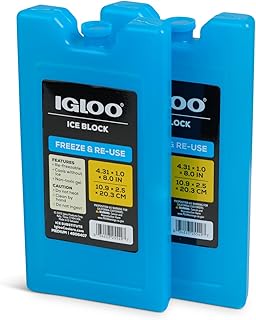
Igloo MaxCold Ice Block
This is the honest budget option and it works. The large rigid block holds a substantial mass of frozen liquid, and mass is what actually buys you hours in a cooler. Several of these stacked along the base of a hard-sided cooler will comfortably see a family through a two-day trip without any drama.
They are bulky, slow to refreeze, and freeze at ordinary water temperature, so they cannot match a salt-solution pack on absolute performance. The plastic shell is also thinner than premium alternatives and can crack if dropped on concrete. For the price, the cold-per-dollar figure is hard to argue with.
Techni Ice Reusable Sheets
Techni Ice arrives as dry sheets that you soak until the cells swell, then freeze. The result is thin, flexible and easy to drape over irregular contents, which makes it the most adaptable format here for soft coolers, backpack coolers and lunch boxes where a rigid block simply will not fit.
Hydrating the sheets the first time is a slow, slightly messy process, and a single sheet holds far less cold than a thick block. The answer is to use several layers. Cells can also be cut apart to size, which is genuinely useful and something no rigid pack on this list can offer.
Cost Pressure and Peak Season Timing
Cooler accessories look like small purchases, but they are plastic goods moving through the same squeezed supply chains as everything else in the outdoor category. Two factors are worth understanding before you buy: what has happened to pricing, and why the middle of summer is a sensible moment to act.
Why Plastic Cooler Accessories Have Risen in Price
Industry reporting has put the average tariff-driven cost increase across outdoor goods at roughly 7.7 percent, with technical materials such as specialised foams rising by ten to fifteen percent. The best ice packs cooler options sit in that group, since they use moulded polymer shells and engineered gel fills.
The wider picture is not encouraging either, with inflation at around 4.2 percent squeezing discretionary spending. Manufacturers have openly described forward pricing as an estimate. None of that argues for panic buying, but it does mean a multi-pack bought now is unlikely to be cheaper in three months.
Peak Heat Is Exactly When These Earn Their Keep
Mid-summer is the hardest test a cooler faces, with cabin temperatures in a parked vehicle climbing far above ambient. This is the season when the difference between a plain gel pack and a sub-freezing panel becomes obvious within a single afternoon rather than showing up quietly on day three of a trip.
Buying now also means you learn your own numbers while it matters. How many panels your cooler actually needs, whether the lid layer helps, and how long a set lasts in your vehicle are all questions best answered in August rather than discovered on a trip you have been planning for months.
Back-to-School Demand Thins Out Slim Panels
Late August pulls a second audience into the same aisle, because slim ice packs are lunch box staples as well as camping gear. Thin panels and small multi-packs are the first sizes to sell through, and they are exactly the formats that suit soft coolers and daypacks rather than large hard-sided boxes.
If you rely on a specific slim format, buying before the school rush is straightforward common sense. Larger blocks stay available longer, but the small, flexible options that make a packed cooler efficient tend to disappear first and reappear at full price once the seasonal demand has passed through.
Frequently Asked Questions
Most questions about the best ice packs cooler options come down to quantity, placement and whether they genuinely beat bagged ice. The answers below reflect ordinary use in consumer coolers rather than idealised testing, and assume the cooler itself is pre-chilled and kept out of direct sun where possible.
How many ice packs do I need for a 45-quart cooler?
Plan on roughly a two-to-one ratio of cold mass to contents by volume for serious retention, which in a forty-five quart cooler usually means four to six full-size packs. Line the base and the sidewalls first, then place one flat panel across the top of the load, since cold sinks rather than rises.
Are ice packs better than bagged ice?
They are cleaner and reusable, and they avoid the pool of meltwater that ruins sandwiches. Bagged ice still wins on raw cost and on filling irregular gaps around bottles. Many people use both: packs as the structural cold layer, with loose ice poured in to fill voids and speed up the initial chill.
Can these packs freeze my food?
Yes, and it is a common complaint with sub-freezing packs. Anything that freezes at eighteen degrees will damage lettuce, eggs and soft fruit placed directly against it. Keep a layer of packaging or a towel between the pack and delicate items, or reserve the coldest panels for the meat and drinks layer.
How long do reusable ice packs stay frozen?
In a decent hard-sided cooler that has been pre-chilled and stays shut, a full set of thick panels typically holds useful cold for two to three days. Thin panels in a soft cooler are an eight to twelve hour proposition. Opening frequency and direct sun shorten both figures dramatically.
Related Guides
Final Thoughts
Choosing the best ice packs cooler performance depends on matching freeze point to cargo and shape to available space. Cold panels for frozen food, moderate ones for drinks, thin sheets for soft coolers. Buy a mixed set rather than five identical blocks and a decent cooler will perform far beyond its rating.







Write Your Review
No reviews yet. Be the first to share your experience!