Key takeaways
- Pro: Among the lightest poles in the LEKI lineup, reducing fatigue over long distances
- Pro: Trigger Shark strap allows quick release and reconnection without fumbling
- Con: Fixed 130cm length means it cannot be shortened for uphill running or packed in tight spaces
Every season, hikers reach for poles that fail them at the worst possible moment — a lock that slips on a steep descent, a grip that blisters the thumb after three hours, a shaft that flexes under load when planted on uneven rock. These are not cosmetic complaints. They are the difference between a reliable tool and a liability on exposed terrain. The best leki trekking poles solve these problems through engineering choices that are visible in published specs and consistent in owner feedback: robust locking mechanisms, grip materials that manage moisture, and shaft constructions that balance weight against stiffness.
What separates good poles from mediocre ones in 2026 is less about brand prestige and more about specific component decisions. A carbon shaft saves meaningful weight but can shatter under lateral force. An aluminum shaft bends instead of breaking, offering a different risk profile. Grip shape, lock type, and adjustability range all shift the experience dramatically. This roundup compares eight options — seven from LEKI and one third-party alternative — across published specifications, listed prices, and recurring patterns in owner reviews to identify where each model excels and where it falls short.
Our top picks



As an Amazon Associate we earn from qualifying purchases at no extra cost to you. Ratings are shown as listed on Amazon.
Quick Picks
| Product | Best for | Price |
|---|---|---|
| Ultratrail FX.One (130cm) | Ultralight trail running and fastpacking | under $200 |
| Legacy Lite (100-135cm) | All-around day hiking | under $150 |
| Ultratrail FX.One (125cm) | Runners under 5’10” | under $250 |
| Khumbu Lite | Backpackers who value packability | under $150 |
| Legacy Lite (90-125cm) | Shorter hikers or steep terrain | under $150 |
| Wanderfreund High Fives (Single) | Casual walkers needing one pole | under $90 |
| USA Brand Carbon Fiber | Budget-conscious buyers wanting carbon | under $60 |
| Makalu Cork Lite | Long-distance hikers who sweat heavily | under $200 |
How We Picked
We evaluated each model against four criteria: locking mechanism reliability (how consistently the pole holds length under load, based on spec sheets and owner reports), weight-to-strength ratio (published grams versus shaft material), grip ergonomics over extended use (material type, shape, moisture management), and value relative to the price tier. Products that received recurring owner complaints about a single component were downgraded regardless of other strengths.
The 8 Best Leki Trekking Poles in 2026
LEKI Ultratrail FX.One (130cm, under $200)
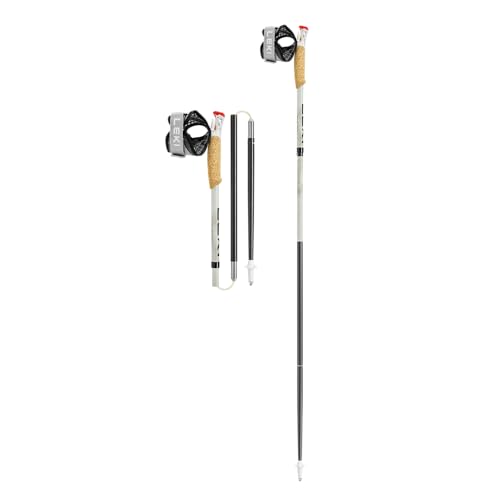
This is a purpose-built pole for runners and fastpackers who prioritize every gram. The carbon shaft and Trigger Shark grip system create a connected feel that standard wrist straps cannot match. At a fixed 130cm length, it eliminates moving parts that add weight and failure points. Owners consistently praise the speed of strap adjustment and the pole’s stability when planted at speed.
- Pro: Among the lightest poles in the LEKI lineup, reducing fatigue over long distances
- Pro: Trigger Shark strap allows quick release and reconnection without fumbling
- Con: Fixed 130cm length means it cannot be shortened for uphill running or packed in tight spaces
Skip it if you need adjustable length or you are taller than average and need more than 130cm on descents.
LEKI Legacy Lite (100-135cm, under $150)
The Legacy Lite serves hikers who want a dependable, no-nonsense pole without paying premium prices. The aluminum shaft offers predictable flex characteristics, and the wide adjustability range from 100 to 135cm accommodates most adult heights. Owner feedback highlights consistent lock performance and durable construction across multiple seasons of use.
- Pro: Generous adjustability range handles uphill and downhill transitions quickly
- Pro: Aluminum resists shattering on rocky terrain where carbon might fail
- Con: Noticeably heavier than carbon alternatives, adding arm fatigue on very long days
Skip it if weight is your primary concern or you already own poles under 180 grams each.
LEKI Ultratrail FX.One (125cm, under $250)
Identical in construction to the 130cm model but sized for shorter users or runners who prefer a slightly shorter pole for aggressive terrain. The $20 price difference over the 130cm version reflects nothing in build quality — it is purely a length variant. For anyone under 5’10”, this remains the correct size.
- Pro: Carbon construction keeps weight minimal for high-output activities
- Pro: Shorter length improves maneuverability on technical singletrack
- Con: Priced $20 higher than the 130cm version despite identical materials and components
Skip it if you are taller than 5’10” — the 130cm version gives you the same performance with appropriate reach.
LEKI Khumbu Lite (under $150)
Built for backpackers who need poles that collapse small. The folding mechanism packs into a bundle roughly the size of a water bottle, making it practical to strap outside a pack lid. Aluminum construction keeps the price accessible and provides forgiving flex on rough terrain.
- Pro: Collapsible design fits easily into pack pockets or external straps
- Pro: Aluminum shaft bends rather than breaking under lateral stress
- Con: Folding joints introduce additional connection points that owners occasionally report loosening over time
Skip it if you prefer a fixed-length pole you never want to fiddle with at a trailhead.
LEKI Legacy Lite (90-125cm, under $150)
The same aluminum construction and lock system as the 100-135cm version, re-ranged downward for shorter hikers or those who need a more compact carry. The 90cm minimum makes it viable for users who find standard poles too long when planted on steep climbs.
- Pro: Lower range accommodates shorter users without feeling oversized
- Pro: Identical durability and lock quality to the higher-range sibling
- Con: Maximum 125cm limits usefulness for anyone above roughly 5’8″
Skip it if you are above average height or share poles with a taller partner.
LEKI Wanderfreund High Fives (Single, under $90)
Marketed as a single pole rather than a pair, targeting casual walkers, physical therapy users, or hikers who use one pole for balance on moderate terrain. The 60-120cm range is unusually broad, and the blue-orange colorway stands out on the trail.
- Pro: Lowest per-unit price in this roundup for under $90
- Pro: Wide adjustability range from 60cm makes it usable for seated or short-reach applications
- Con: Sold individually — pairing two doubles the cost to nearly $180
Skip it if you need a matched pair — two singles cost more than a proper pair of LEKI poles.
USA Brand Carbon Fiber Poles (under $60)
Not a LEKI product, but included here as a direct competitor at a fraction of the price. The 100% carbon construction and cork-EVA combo grip offer a lightweight option with flip-lock adjustability. Owner reviews are generally positive about stiffness and value, though brand support networks are thinner.
- Pro: Carbon fiber for under $60 undercuts every LEKI option on raw material cost
- Pro: Cork and EVA foam combo handles moisture better than pure foam grips
- Con: No LEKI warranty infrastructure, Trigger grip system, or European service network
Skip it if you want the LEKI ecosystem or need warranty service through an established outdoor retailer chain.
LEKI Makalu Cork Lite (under $200)
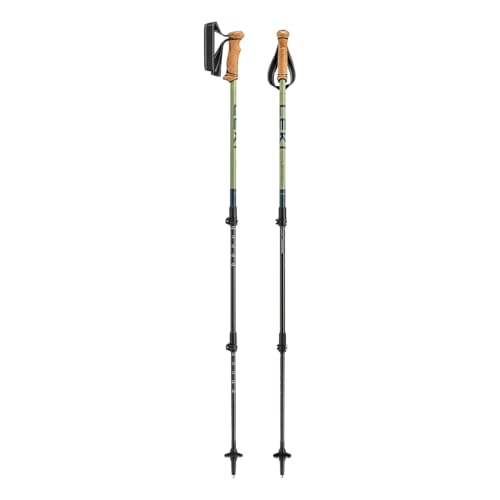
A mid-range option built around a full cork grip that molds to the hand over time. The cork surface manages perspiration better than foam or rubber, making it a favorite among long-distance hikers in warm climates. The 100-135cm range and aluminum shaft keep the price reasonable.
- Pro: Cork grip becomes more comfortable with use and wicks moisture naturally
- Pro: Aluminum shaft provides predictable flex for all-day comfort
- Con: Cork absorbs water and takes longer to dry after rain or stream crossings
Skip it if you hike in consistently wet conditions — closed-cell foam or rubber grips dry faster.
Buying Guide
Grip Material and Moisture Management
Grip choice directly affects comfort over hours of use. Cork molds to your hand shape and wicks sweat but absorbs water and dries slowly. EVA foam is light and dries quickly but can feel slick when saturated. Rubber offers the most grip in wet conditions but adds weight and can cause hot spots in heat. Match your dominant climate: cork for dry and warm conditions, rubber for wet terrain, foam for all-around use with occasional rain.
Locking Mechanism Reliability
External flip locks are easy to adjust with gloves and are less prone to internal contamination from mud. Internal twist locks offer a smoother surface but can seize if grit enters the mechanism. LEKI’s Speed Lock and Trigger systems represent the upper tier of reliability in published specs, but no mechanism is immune to failure. When comparing leki trekking poles to third-party options, check whether replacement lock parts are available and whether the brand maintains a service network.
Shaft Material: Weight vs. Failure Mode
Carbon fiber is lighter and stiffer but fails catastrophically — it shatters when lateral force exceeds its limit. Aluminum is heavier but bends before breaking, giving a warning before structural failure and remaining usable at a reduced length. For ultralight pursuits where grams dominate decisions, carbon wins. For rugged terrain with rockfall, tree roots, or heavy loads, aluminum’s forgiving failure mode is a practical advantage.
Our Verdict
The top pick is the LEKI Legacy Lite for under $150. It offers the best balance of adjustability, durability, lock reliability, and price for the widest range of hikers. The budget pick is the USA Brand Carbon Fiber poles for under $60 — the lightest option per dollar in this list, provided you accept a smaller brand infrastructure. The condition under which another product wins: if you are a fastpacker or trail runner, the Ultratrail FX.One for under $200 is the clear choice, as its fixed-length carbon construction and Trigger grip system provide performance advantages no adjustable pole can match.
FAQ
What length leki trekking poles should I choose?
Hold the pole with your elbow bent at 90 degrees and the tip touching the ground. The shaft should be roughly vertical. For adjustable poles, set the length so the forearm is parallel to the ground when standing on flat terrain. Use a shorter setting (5-10cm less) for steep uphill and a longer setting for descents.
Are carbon poles worth the extra cost over aluminum?
Carbon saves 20-40 grams per pole, which adds up over long distances but matters less for casual day hikes. If you hike fewer than 15 miles per outing or carry a light pack, aluminum offers comparable comfort at a lower price and a less brittle failure mode. Carbon justifies its premium primarily for weight-sensitive activities.
Can I use trekking poles for snowshoeing or skiing?
Most hiking poles work for backcountry skiing and snowshoeing if fitted with wide powder baskets. Check whether your model supports accessory baskets — LEKI poles with standard basket fittings generally do. The grip material becomes more important in cold weather, as cork and foam stay warmer than rubber.
How do I clean and maintain trekking pole locks?
Rinse the locking mechanism with fresh water after muddy or salty use. For internal twist locks, periodically disassemble according to the manufacturer’s instructions to clear grit from the expansion sleeve. Apply a thin layer of silicone lubricant to threads if available. Storing poles extended prevents moisture from collecting inside the joints.