Key takeaways
- Protects hard surfaces. Rubber is far less likely than an uncovered metal or carbide tip to scratch wood floors, tile, concrete, decks, or painted surfaces.
- Reduces noise. The rubber dampens the sharp clicking sound that bare pole tips make on sidewalks, stairs, and rock slabs.
- Improves comfort on pavement. A rubber foot can feel less jarring when you use poles on roads, urban paths, or long stretches of concrete.
- Useful for mixed-terrain outings. You can cover the tips for the paved approach and remove the caps when you reach loose soil or a rocky trail.
- Low replacement cost. At about $5 to under $10 per set, replacement feet are inexpensive compared with replacing a complete pair of trekking poles.
- Built-in spares. Six- and eight-piece packs let you replace one lost cap without immediately ordering another set.
- More considerate around other people. Rubber tips are a better choice on crowded paths, indoor walking routes, and shared facilities where sharp metal points can damage surfaces or create noise.
The Short Answer
Yes—if you use trekking poles on pavement, rock, finished floors, or other hard surfaces. Rubber tips protect the exposed carbide or steel ends, reduce scraping and clicking, and give you a more considerate point of contact. If you mainly hike on dirt, mud, snow, or soft forest trails, you can usually skip rubber tips because the bare pole tips are designed to bite into those surfaces.
The most practical answer is “it depends on the terrain.” Rubber protectors are not an automatic performance upgrade. They are removable accessories that make trekking poles more versatile, especially when one hike includes a trailhead road, a sidewalk, a boardwalk, and indoor flooring. Before buying, measure or confirm the diameter of your pole tip. Both related replacement sets listed here are made for a standard 11mm opening, but “universal” does not mean they fit every pole ever made.
Our top picks
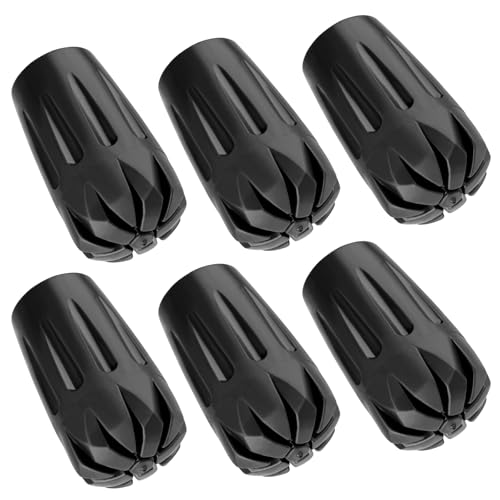
As an Amazon Associate we earn from qualifying purchases at no extra cost to you. Ratings are shown as listed on Amazon.
What You Actually Get
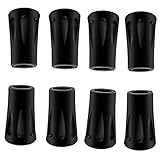
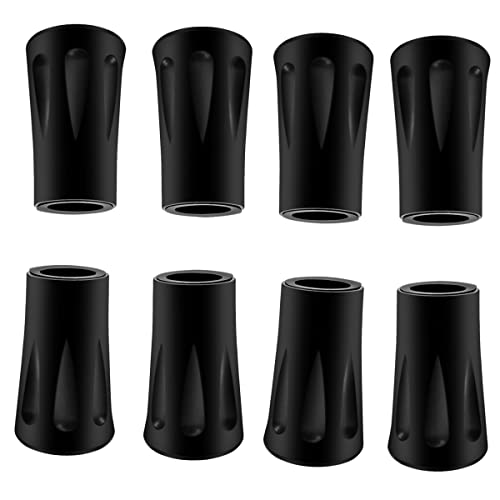
A replacement tip set is usually a group of small rubber caps or feet that press over the bottom ends of trekking poles. The rubber covers the hard point and creates a broader, softer contact patch. Depending on the design, the cap may be smooth, lightly textured, or shaped to improve traction on paved surfaces.
The two products in this comparison are inexpensive multi-packs. The 8-piece set costs under $10 and is intended for standard walking-stick or trekking-pole ends with an 11mm hole diameter. The 6-piece set costs under $10 and also lists compatibility with 11mm standard poles. In practical terms, either set can supply several replacements, a pair for regular use, and extras for loss or wear.
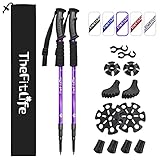
Do not confuse rubber tips with trekking-pole baskets. A tip covers the point at the very bottom of the pole. A basket is a wider disc above the point that helps prevent the pole from sinking deeply into mud or snow. You may need both, but they perform different jobs.
Installation is generally simple: pull off the old cap, inspect the pole end, and push the new rubber tip on firmly. If the opening is too loose, the cap may twist or fall off. If it is too tight, forcing it can split the rubber. Dirt, grit, and moisture can also affect the fit, so clean and dry the pole ends before installation. A replacement tip should sit evenly and should not expose a sharp point during normal use.
Pros
- Protects hard surfaces. Rubber is far less likely than an uncovered metal or carbide tip to scratch wood floors, tile, concrete, decks, or painted surfaces.
- Reduces noise. The rubber dampens the sharp clicking sound that bare pole tips make on sidewalks, stairs, and rock slabs.
- Improves comfort on pavement. A rubber foot can feel less jarring when you use poles on roads, urban paths, or long stretches of concrete.
- Useful for mixed-terrain outings. You can cover the tips for the paved approach and remove the caps when you reach loose soil or a rocky trail.
- Low replacement cost. At about $5 to under $10 per set, replacement feet are inexpensive compared with replacing a complete pair of trekking poles.
- Built-in spares. Six- and eight-piece packs let you replace one lost cap without immediately ordering another set.
- More considerate around other people. Rubber tips are a better choice on crowded paths, indoor walking routes, and shared facilities where sharp metal points can damage surfaces or create noise.
Cons
- Less effective on loose ground. Rubber can slide over wet rock, mud, loose gravel, and steep dirt instead of penetrating the surface like a bare tip.
- It is another part to lose. Removable caps can come off during transport or when a pole catches on vegetation. Store them in a pocket or small pouch when not in use.
- Fit is not truly universal. An 11mm listing is helpful, but tip shape, wall thickness, and pole construction can still vary. Confirm your pole’s end diameter before ordering.
- Rubber wears out. Abrasion from asphalt and concrete gradually rounds, thins, or cracks the cap. Inspect the tread and sides rather than waiting for the underlying point to appear.
- Can reduce trail grip. On hard rock or packed dirt, a bare carbide tip may hold more securely than a rubber cover. The safer choice depends on the surface and weather.
- May not solve every stability problem. A replacement foot cannot compensate for a loose locking mechanism, bent pole, damaged shaft, or poor pole technique.
Who Should Buy It
Buy rubber trekking-pole tips if your typical route includes pavement, sidewalks, bridges, boardwalks, stairs, or indoor surfaces. They are especially worthwhile for walkers who use trekking poles for daily exercise rather than only for backcountry hiking. They also make sense for travelers who want one pair of poles to work on both trails and city streets.
They are a sensible purchase for anyone whose current tips are cracked, missing, or worn flat. Replacement is usually cheaper than buying new poles, provided the shafts and locking systems remain sound. A multi-pack is also useful for frequent hikers who want spares in a car, gear closet, or travel bag.
Choose between these two related sets primarily by quantity and fit, not by a small price difference. The 8-piece option costs under $10, or about $0.81 per piece. The 6-piece option costs under $10, or about $1.03 per piece. Those figures make the 8-piece set the better value on paper, while the 6-piece set may be sufficient if you only need one pair plus a few backups.
Who Should Skip It
Skip rubber tips if you hike almost exclusively on soft dirt, deep snow, mud, or loose natural trails and prefer the penetration of uncovered pole points. You should also skip them if your poles use an unusual tip diameter or a permanently integrated foot that cannot accept a slip-on replacement.
Do not buy a replacement cap as a temporary fix for a dangerous pole. If the metal point is bent, the shaft is cracked, or the lower section is loose, replace the damaged component or the pole. A rubber cover can hide a problem without repairing it.
Cheaper Alternatives
| Option | Cost | Trade-off |
|---|---|---|
| Use the bare factory tips | $0 | Best penetration on natural terrain, but noisier and more likely to mark hard surfaces. |
| Buy one replacement pair from the pole manufacturer | About $5–$15 | Better chance of a precise fit, but often fewer spares and a higher per-tip cost. |
| Use an existing pair of compatible rubber feet | $0 | No new purchase, but only works if the diameter and shape match securely. |
| 8-piece replacement set | under $10 | More pieces for the money, but verify the listed 11mm fit before ordering. |
| 6-piece replacement set | under $10 | A low upfront price, but fewer spares and a slightly higher cost per piece. |
FAQ
Can I leave rubber tips on my trekking poles all the time?
You can, but it is not ideal for every surface. Rubber tips are convenient on pavement and rock, yet bare points generally provide better purchase in dirt, mud, and loose ground. Carry the caps and switch them when the terrain changes. Also remove them periodically to check for trapped grit, splitting, or a loose fit.
How do I know whether an 11mm tip will fit?
Check the manufacturer’s specifications first. If none are available, measure the outside diameter of the pole end and compare it with the replacement’s stated opening. The cap should require firm hand pressure to install and should not wobble or slide off when the pole is lifted. Do not rely on the word “universal” alone.
How long do trekking-pole rubber tips last?
There is no dependable universal lifespan because use varies widely. Asphalt, concrete, body weight, walking style, heat, and grit all affect wear. Inspect them before every outing. Replace a tip when the rubber is cracked, badly rounded, thin enough to expose the underlying point, or loose on the pole.
Are rubber tips safer than bare trekking-pole tips?
They are usually safer for protecting floors, reducing accidental scratches, and improving comfort on hard, smooth surfaces. They are not automatically safer on wet rock, mud, or steep loose terrain, where a bare tip may grip more effectively. Match the tip to the surface, keep the poles adjusted correctly, and replace damaged caps promptly.