Key takeaways
- Telescoping poles: Usually two or three sections that slide into one another. They often adjust from approximately 24 to 54 inches, though the exact range varies.
- Folding poles: Several short sections connected by an internal cord. They can collapse to roughly 13 to 17 inches, making them convenient for travel, but they may have a narrower adjustment range.
- Hybrid poles: A folding upper section combined with a telescoping lower section. These balance packability and adjustability, usually at a higher price.
The Short Answer
Yes—carbon trekking poles are worth it if you hike regularly and care about low weight, vibration control, and comfortable long-distance use. The one condition is that you must accept a little more care: carbon fiber can crack or splinter after a hard impact, while aluminum is usually more forgiving when abused.
For most day hikers, the decision is not about whether carbon works. It does. The real question is whether the weight savings and smoother feel justify spending roughly $50 to $100 instead of buying basic aluminum poles for $25 to $50. In 2026, carbon poles are no longer automatically premium-priced, which makes them easier to recommend—but not universally better.
Our top picks

As an Amazon Associate we earn from qualifying purchases at no extra cost to you. Ratings are shown as listed on Amazon.
What You Actually Get
A carbon trekking pole is made with carbon-fiber composite tubing rather than aluminum. Carbon fiber is stiff and light, so a pair of usable poles commonly falls in the roughly 14- to 20-ounce range, depending on shaft diameter, locking hardware, grip material, and whether the poles fold or telescope. Aluminum pairs more often land around 18 to 26 ounces.
That difference may sound small, but it matters when you lift each pole thousands of times during a long hike. Carbon also tends to transmit less harsh vibration into your hands than inexpensive aluminum. It does not eliminate shock, and grip shape still matters, but the overall sensation can be quieter and less “tingy” on hard surfaces.
Most adjustable carbon poles use one of three designs:
- Telescoping poles: Usually two or three sections that slide into one another. They often adjust from approximately 24 to 54 inches, though the exact range varies.
- Folding poles: Several short sections connected by an internal cord. They can collapse to roughly 13 to 17 inches, making them convenient for travel, but they may have a narrower adjustment range.
- Hybrid poles: A folding upper section combined with a telescoping lower section. These balance packability and adjustability, usually at a higher price.
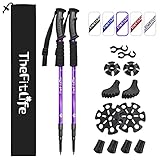
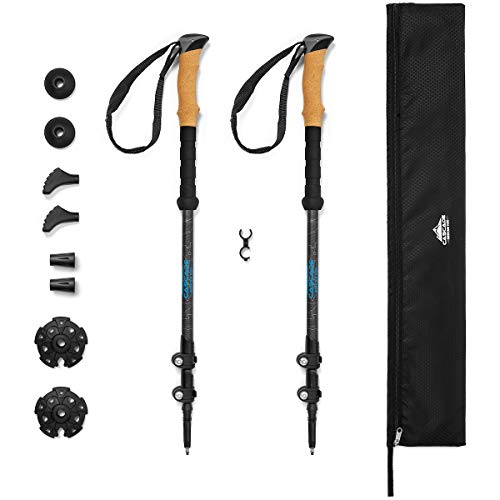
The two related options in this price category illustrate what buyers can expect. The 100% Carbon Fiber Trekking Poles by USA Brand list for under $60 and combine cork and EVA foam grips with quick-adjusting flip locks. Cascade Mountain Tech’s carbon-fiber pair lists for under $70 and also uses quick-adjustable locks. Neither price is unusually high for a recreational carbon pair, but you should still inspect the lock mechanism, replacement-tip availability, and stated weight before buying.
For sizing, start with your elbow bent at about 90 degrees while standing in shoes. A common starting point is approximately 65% to 70% of your height, but terrain changes the ideal setting. Shorten poles by 2 to 4 inches for steep uphill sections and lengthen them by 2 to 4 inches downhill. A pole that is too long can place your wrists in an awkward position; one that is too short reduces support.
Pros
- Low swing weight: Lighter shafts reduce fatigue in your shoulders and forearms, especially on hikes lasting several hours or covering 10 miles or more.
- Good vibration control: Carbon feels smooth on rock, roots, and pavement compared with many thin, budget aluminum shafts.
- Strong for normal hiking: Quality carbon poles are more than capable of supporting a hiker on ordinary trails, descents, and uneven ground when used correctly.
- Comfortable for frequent users: If you hike weekly, even modest weight savings can make the poles feel less tiring over time.
- Convenient adjustment: Flip locks are easy to operate with gloves and can be checked visually. They are often simpler to repair or tighten than internal twist locks.
- Useful grip materials: Cork grips generally become more comfortable as they conform to your hand, while EVA foam is soft and light. Many hikers appreciate having both options in one pair.
- Less corrosion concern: Carbon itself does not rust. Metal hardware can still corrode, so the poles should be dried after wet or salty use.
Cons
- Impact sensitivity: Carbon may fail from a sharp strike, crushing force, or hidden damage rather than simply bending. A crack, fuzzy fiber, or splintered section is a reason to stop using the pole.
- Less suitable for abuse: If you routinely wedge poles between rocks, use them to pry gear, or fall heavily onto them, aluminum is the safer value.
- Higher replacement cost: A broken carbon section may require replacing the whole pole or a specific shaft section. Confirm that spare sections and baskets are available.
- Lock quality varies: A carbon shaft does not guarantee a reliable pole. A poorly adjusted flip lock can slip, and excessive tightening can damage the tube.
- Not dramatically lighter in every case: Thick carbon tubes, bulky handles, and heavy hardware can erase much of the advantage. Compare the complete pair’s listed weight, not just the material.
- Can be noisy on certain surfaces: Carbon reduces some vibration, but carbide tips on rock or pavement can still produce plenty of sound.
- Limited benefit for occasional users: If you hike only a few times per year on gentle trails, the extra comfort may not justify the added cost.
Who Should Buy It
Buy carbon trekking poles if you hike often, carry a lightweight backpack, or notice hand and arm fatigue on longer outings. They are particularly appealing for hikers who spend time on hard-packed trails, rocky routes, or mixed terrain where poles repeatedly contact the ground. They also make sense for travelers who want a compact, light pair that can fit in a suitcase or daypack.
Carbon is a good match for people who use poles for balance and rhythm rather than as load-bearing crutches. If your technique is controlled and you avoid violent side impacts, a moderately priced pair can deliver much of the comfort associated with more expensive equipment.
Who Should Skip It
Choose aluminum instead if you are rough on equipment, frequently hike off-trail, or want the lowest-risk option for a family that shares gear. Aluminum usually bends before it catastrophically fails, and a bent section may still get you back to the trailhead. That reliability is valuable for winter travel, scrambling, or trips where replacement gear is difficult to find.
Skip carbon if you do not plan to use trekking poles consistently. A $30 to $50 aluminum pair will provide the basic stability benefits of poles, and the money may be better spent on properly fitted footwear, a rain shell, or a comfortable pack. Also avoid any pole with unclear specifications, no usable warranty information, or no visible way to replace worn tips and baskets.
Cheaper Alternatives
| Option | Cost | Trade-off |
|---|---|---|
| Basic aluminum telescoping poles | $25–$45 per pair | Heavier and often more vibration, but generally more tolerant of impacts and easier to replace. |
| Midrange aluminum poles with cork or foam grips | $45–$70 per pair | Can match carbon poles for comfort features, but usually weigh a few ounces more. |
| Entry-level carbon-fiber poles | $50–$70 per pair | Low weight at a reasonable price, but lock hardware, finish quality, and replacement-part support may be less consistent. |
| Used premium trekking poles | $30–$80 per pair | Potentially excellent value, but inspect every shaft for cracks, bends, crushed areas, or loose locks before buying. |
| Single trekking pole | $20–$45 | Cheaper and lighter, but provides less balanced support and is less useful on steep or slippery terrain. |
FAQ
Are carbon trekking poles stronger than aluminum poles?
Not in every situation. Carbon has an excellent strength-to-weight ratio and is strong under the kinds of straight, controlled loads common in hiking. Aluminum is usually better at surviving sudden bending, crushing, and repeated abuse. Think of carbon as light and stiff, not indestructible.
How long should carbon trekking poles last?
They can last for many years with regular hiking if the shafts are not damaged and the locks are maintained. Longevity depends more on impacts, storage, and use than on a fixed number of miles. Do not leave them crushed under heavy gear, and inspect them after falls. Replace any pole that shows cracking, splinters, or a deep dent.
Are cork grips better than EVA foam grips?
Neither is universally better. Cork tends to manage moisture well and can become more hand-shaped over time. EVA foam is usually softer, lighter, and comfortable for hikers who prefer a cushioned feel. Grip length and shape matter as much as the material. A breathable wrist strap is also important because it lets you relax your fingers instead of squeezing the handle.
Are $60 carbon trekking poles worth buying?
Often, yes. A pair around $55 to $65 can be a sensible entry point if it has a published weight, secure flip locks, comfortable grips, carbide or durable tips, and a reasonable return policy. Do not buy based on “carbon fiber” alone. Check the collapsed length, adjustment range, shaft diameter if provided, warranty terms, and availability of replacement parts. For regular day hiking, those details matter more than a small difference in carbon branding.
Bottom line: carbon trekking poles are worth it for frequent hikers who value lightness and smoother handling and who will treat them with reasonable care. If durability under abuse matters more than every ounce, aluminum remains the smarter choice.