
Key takeaways
What's inside
Best four man tent listings almost never sleep four adults with gear. Floor areas here run 53 to 63 square feet and peak heights from 52 to 84 inches, which is the difference between crouching and standing. These five are compared on measured space rather than the number on the box. Capacity ratings are not standardised.
As an Amazon Associate we earn from qualifying purchases at no extra cost to you. Product prices and availability are accurate as of the date shown and are subject to change.


As an Amazon Associate we earn from qualifying purchases at no extra cost to you. Product prices and availability are accurate as of the date shown and are subject to change.
By Jake Thompson, gear writer for Roger Bacon Outdoors.
🛒 Best Price Today on Amazon
Prime members get fast, free shipping on everything above, plus member-only deals. New members get a 30-day free trial — cancel anytime.
Reading the Numbers on a Four Man Tent
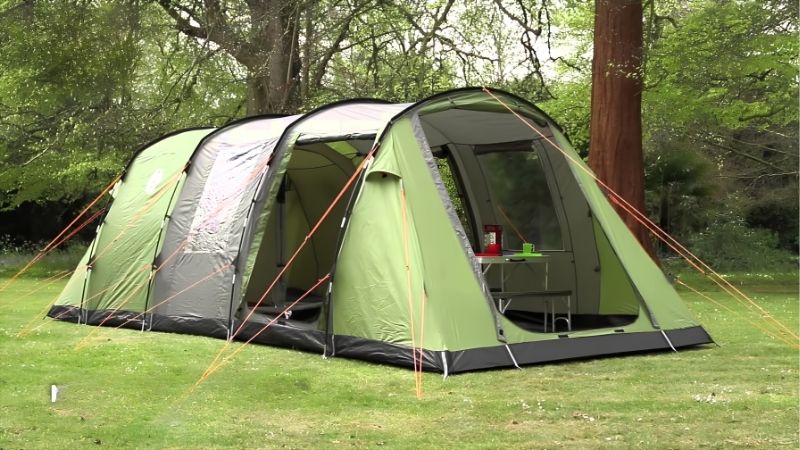
There is no industry standard for sleeping capacity, which is why any best four man tent shortlist contains models differing by thirty square feet of floor. Three published figures tell you what you are buying, and all are more useful than the number printed on the packaging.
Floor Area Versus Stated Capacity
A four-person rating assumes bodies laid side by side with nothing else inside. The Coleman Sundome 4 offers 63 square feet at 9 by 7 feet, and testers who used it with two adults and two young children found it cramped enough that gear had to be stored outside overnight.
Treat these tents as roomy two-person shelters with space for kit, or as genuinely four-person only for children and short trips. If four adults must sleep inside with luggage, look at six-person models instead, where the floor area finally matches the label on the bag.
Peak Height Decides Whether You Can Stand
This is the single biggest liveability variable in any best four man tent comparison, and it spans an enormous range. The ALPS Mountaineering Lynx 4 peaks at 52 inches, the Coleman Skydome 4 at 55, the Sundome 4 at 59, and the cabin-style Eureka Copper Canyon 4 at a full seven feet.
Under about 60 inches you sit and kneel; nobody stands. Above 75 inches most adults stand upright and can change clothes without contortion. That difference matters most on a rainy day when the tent stops being somewhere to sleep and becomes somewhere to wait.
Pole Material and Weather Performance
Budget tents in this class use fibreglass poles, which are heavier, more brittle in cold and prone to splintering with age. The Coleman Sundome and Skydome both use fibreglass, while the ALPS Lynx 4 and higher-tier models such as the Marmot Tungsten 4 use aluminium.
Rainfly coverage matters as much as poles. A full-coverage fly reaching close to the ground protects the tent body far better than a partial fly covering only the roof, which is the compromise Eureka makes on the Copper Canyon to keep the price and the mesh ceiling.
Best Four Man Tent Picks by Space and Headroom
Five tents from budget dome to stand-up cabin. The best four man tent for two adults on a weekend is a different shelter from one housing a family through a week of weather, so read the peak height column before the price. Specifications are manufacturer-published or from independent testing.
| Model | Floor area | Peak height | Weight | Poles |
|---|---|---|---|---|
| Coleman Sundome 4 | 63 sq ft (9 x 7 ft) | 59 in | 9.7 lb | Fibreglass |
| Coleman Skydome 4 | 56 sq ft | 55 in | Varies by version | Pre-bent fibreglass |
| ALPS Mountaineering Lynx 4 | Dual 25 sq ft vestibules | 52 in | approx. 8.5 lb | Aluminium |
| Kelty Grand Mesa 4 | 53.3 sq ft | Dome profile | just over 7 lb | Aluminium |
| Eureka Copper Canyon 4 | Cabin footprint | 84 in | 18 lb | Fibreglass |
Coleman Sundome 4 – Best Value Floor Space
Sixty-three square feet at 9 by 7 feet, a 59 inch peak height and 9.7 pounds packed to 23.8 by 4.5 inches. Coleman rates the frame to withstand winds of 35 miles per hour and above, includes an E-Port for site power, a ground vent and welded corners with inverted seams.
Setup is roughly ten minutes for one person, and it fits one queen air bed. The limits are real: fibreglass poles, a partial rainfly, and a peak height that means sitting rather than standing. Independent testers describe it as best suited to mild weather rather than storms.
Coleman Skydome 4 – Better Headroom Per Dollar
Fifty-six square feet with a 55 inch peak, but pre-bent poles steepen the walls so the usable space feels larger than the numbers suggest. Coleman claims around 20% more headroom than the Sundome, and the full-coverage rainfly with a sizeable vestibule is unusual at this price.
That fly is the main reason to choose it over the Sundome, since it extends nearly to the ground and shields most of the tent body. Against that, the floor area is smaller, the poles are still fibreglass, and 55 inches is short even by the standards of this class.
ALPS Mountaineering Lynx 4 – Best Weather Protection
A free-standing dome on aluminium poles at around 8.5 pounds, with two vestibules of roughly 25 square feet each, which is more covered gear storage than anything else here. Reviewers rate its weather resistance above comparable Kelty models at a lower price point.
The 52 inch peak is the lowest in this comparison, which is the direct trade for a stable, wind-resistant dome profile. Taller campers will feel cramped, and like every tent in this bracket it sleeps two comfortably rather than the four printed on the label.
Kelty Grand Mesa 4 – Lightest Here
At just over 7 pounds with 53.3 square feet of floor, this is the only tent in the group light enough to consider carrying any distance, which makes it the crossover choice for people who camp near the car most of the time but occasionally walk in.
Less floor area than the Coleman options is the obvious cost, and reviewers note the ALPS Lynx offers more vestibule storage for less money. It is a first tent for someone who might get into backpacking rather than a dedicated family shelter for a week on a site.
Eureka Copper Canyon 4 – Only One You Can Stand In
A true cabin-style tent with a seven-foot peak height, letting everyone stand fully upright, at 18 pounds. A large single-zip door makes entry easy, and the near-vertical walls mean the floor area is usable right to the edges rather than tapering away like a dome.
Two compromises keep the price down. The poles are fibreglass, and the rainfly covers only the top of the tent, protecting the mesh ceiling but leaving the walls exposed in driving rain. It is a fair-weather family tent rather than a storm shelter, and it is heavy to move.
Hunting Season, Tariffs and the Tent Discount Calendar
Anyone shopping for the best four man tent this year faces two forces at once. Tariffs have moved fabric and pole costs right across the category, and the camping calendar hands you a genuine discount window if your next trip is not until the spring.
Tent Materials Are Tariff-Exposed
Outdoor Industry Association survey work indicates 84% of member businesses expect to be affected by new tariffs, with costs rising roughly 7.7% overall and high-tenacity nylon reported up 10 to 15%. Aluminium and steel duties reach tent poles, pegs and stakes directly.
That gap between fibreglass and aluminium poles matters more as a result, because the aluminium models carry the exposure most heavily. Brands have said openly that published prices are estimates while supply chains settle, so waiting carries its own risk this year.
Hunting Season Runs September Through November
Four-person tents get bought for hunting camps as well as family holidays, and peak hunting runs from September into November. Buying before the season opens lets you pitch the tent in the garden, check the fly coverage and seal seams if needed rather than finding problems in the field.
Early season is also when stock depth is best across sizes and versions. By mid-season the popular configurations, particularly the ones with screen rooms or full-coverage flies, thin out and what remains is whichever variant did not sell earlier in the summer.
September Clearance and Black Friday
Tents are the most seasonal category in camping retail. Demand falls sharply once schools return, and retailers discount bulky stock through September and October to avoid storing it. Black Friday and Cyber Monday, on 27 to 30 November, then deliver the deepest cuts of the year.
With inflation near 4.2% and an estimated tariff burden of about $1,600 per US household in 2026, that calendar is worth using. Shortlist two tents now, track them into the autumn events, and pitch whichever you buy in the garden before it goes into storage for the winter.
Frequently Asked Questions
These four questions cover what buyers ask most before choosing a family tent. All answers assume three-season use on a properly pegged and guyed pitch, since a tent that is not tensioned correctly performs badly regardless of what its specifications promise on paper.
Does the best four man tent really sleep four?
Rarely with any comfort. There is no industry standard for capacity ratings, and a 53 to 63 square foot floor accommodates four bodies only with nothing else inside. Two adults plus gear, or two adults and two small children, is the realistic occupancy for every tent listed here.
Fibreglass or aluminium poles?
Aluminium if you camp often or in wind. Fibreglass is heavier, becomes brittle in cold and can splinter with age, which is why it sits on the budget models. Aluminium costs more and is the reason the ALPS Lynx and Kelty Grand Mesa price above the Coleman options.
How much peak height do I actually need?
Under 60 inches you sit and kneel throughout. Between 60 and 75 inches most adults can crouch and move comfortably. Above 75 inches, as on the Eureka Copper Canyon’s seven-foot ceiling, you stand upright, which transforms a rainy afternoon inside the tent.
Is a full-coverage rainfly worth paying for?
In wet climates, yes. A fly reaching close to the ground shields the tent body and creates a vestibule for boots and packs, whereas a roof-only fly leaves walls exposed to driving rain. The Coleman Skydome’s full fly is the clearest upgrade over the Sundome for the money.
See More:
- Best Inflatable Tent: 5 Air Tents Compared by Pitch Time
- Best Hammock for Every Job: 5 Types Compared by Purpose
- Best Small Cooler: 5 Compact Ice Chests Ranked by Weight
Final Thoughts
The best four man tent is chosen on floor area and peak height rather than on the capacity printed on the bag. The Sundome 4 gives the most floor per dollar, the Skydome adds a proper rainfly, the Lynx 4 the best weather protection, and the Copper Canyon the only standing room.




Write Your Review
No reviews yet. Be the first to share your experience!