
Key takeaways
Best tent peg choices depend as much on your tent and the wind as on the ground beneath it, since a featherweight pin that anchors a solo shelter will tear loose from a family tent in a gale. The best tent peg matches its holding power to your tent’s size and wind exposure, so this guide sorts pegs by the shelter they anchor and the wind it faces.
Our top picks


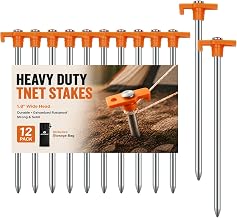


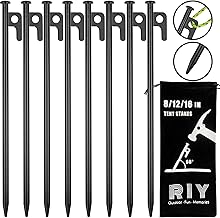
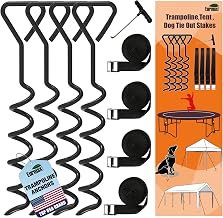

As an Amazon Associate we earn from qualifying purchases at no extra cost to you.
As an Amazon Associate we earn from qualifying purchases.
🛒 Best Price Today on Amazon
Prime members get fast, free shipping on everything above, plus member-only deals. New members get a 30-day free trial — cancel anytime.
Start 30-Day Prime Free Trial →See Today’s Amazon DealsHow to Choose the Right Best Tent Peg
Choosing the best tent peg starts with the tent it has to hold and the wind it will face, then works to weight and ground. The four factors below help you match peg holding power to your shelter, so a big tent in a storm gets serious anchors and a light tent gets pegs it can afford to carry.
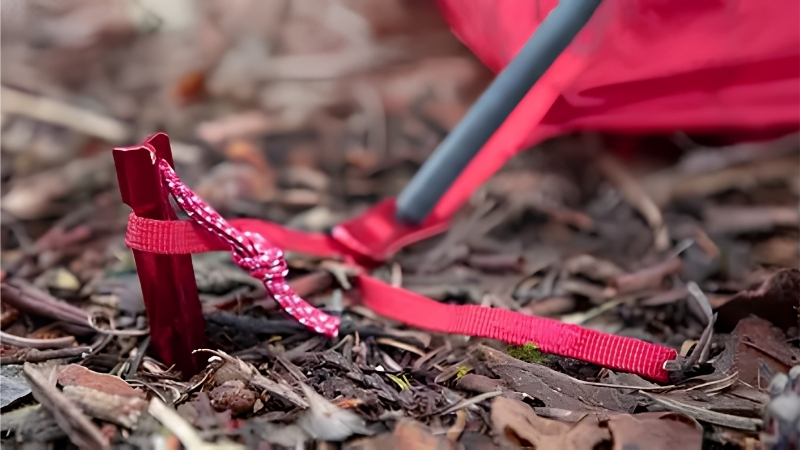
Match the Peg to Your Tent
Bigger tents need bigger anchors. A large family or car-camping tent catches far more wind and pulls harder on its pegs than a low solo shelter, so it warrants heavy, high-holding pegs like forged-steel spikes, while a backpacking tent is well served by light Y-beam aluminum.
Consider the tent’s profile too. Tall, boxy tents and beach shades act like sails, demanding stronger pegs and more guylines, whereas low, aerodynamic backpacking tents shed wind and hold with lighter, well-placed anchors instead.
Wind Exposure and Holding Power
Holding power should scale with exposure. In sheltered forest a Y-beam aluminum peg like the MSR Groundhog holds most tents securely, but in exposed, windy sites you want the extra bite of a longer or heavier peg and every available guyout point staked down.
Peg shape drives holding power. Y and V shapes resist pulling out far better than thin round pins, so upgrading a windy site’s corners and guylines to Groundhog-style pegs is often the difference between a taut pitch and a collapsed one in the middle of the night.
Weight, Ground, and Tent Style
Backpackers must balance holding power against pack weight. The MSR Groundhog at about 0.49 ounces each offers herculean grip for its weight, while ultralight titanium hooks like the Vargo shave further for gram counters who pitch low tents in mild wind.
Ground type still matters within tent style. Rocky sites want slim titanium or steel pins that slip between stones, sand and beach shades need wide or screw pegs, and snow demands curved anchors, so pair the peg to both your tent and the terrain underfoot.
Timing Your Purchase in 2026
There is a real reason to buy sooner this year. Tent pegs are made from aluminum, steel, and titanium, and new tariffs on those metals have pushed costs up, with the wider outdoor category rising roughly 7.7 percent on average and metal hardware climbing as aluminum and steel duties bite.
Most brands now describe future pricing as an estimate rather than a promise, because supply chains and tariffs remain unsettled. Pegs are cheap individually, but outfitting a big tent with quality anchors adds up, so buying a proven set now can beat the next round of increases.
Camping season also drives demand, so buying early means the pegs you want are in stock before peak summer, with time to test them at home. Grabbing quality pegs now, rather than trusting the weak ones packed with your tent, is the simplest way to sleep securely in wind.
Top Picks for the Best Tent Peg
Sorted by the tent and conditions they suit, these best tent peg picks help you anchor the right shelter in the right wind. Each entry names a genuine drawback so you know the trade-off before you buy.
| Product | Best Tent Type | Material | Weight (each) | Holding Power |
|---|---|---|---|---|
| MSR Groundhog | Backpacking | 7075 aluminum | ~0.49 oz | Excellent all-around |
| Vargo Titanium Hook | Ultralight/rocky | Titanium | Very light | Good in rock |
| Snow Peak Solid Stake #20 | Family/car camping | Forged steel | Heavy | Maximum |
| Big Agnes Dirt Dagger | Beach/festival | Aluminum | Light | Good in sand |
| MSR Blizzard | Winter/snow | Aluminum | Light | Snow anchor |
| Eurmax Galvanized Steel | Big family tents | Steel | Heavy | Strong, budget |
MSR Groundhog (Best for Backpacking Tents)
The MSR Groundhog is the ideal all-around peg for backpacking tents, its Y-beam 7075 aluminum design delivering excellent holding power in most soils at just 0.49 ounces each, with an attached high-visibility pull cord that aids removal and helps you find pegs in the wet grass at dawn.
It’s heavier than ultralight hooks and its Y-shape can catch on buried rocks. For anchoring a backpacking tent securely without a weight penalty, though, nothing is more trusted by backpackers.
Vargo Titanium Hook (Best Ultralight and Rocky)
For low, aerodynamic tents in mild wind and rocky ground, the Vargo Titanium Shepherd’s Hook shines, its slim titanium profile slipping between rocks where Y-stakes won’t go, and its featherweight build appealing to gram-counting backpackers.
The narrow hook holds less in loose soil and can spin under a taut guyline. For ultralight setups and technical, rocky terrain, though, its ability to get into rocky ground is invaluable where nothing else bites.
Snow Peak Solid Stake #20 (Best for Family and Car-Camping Tents)
Big tents that catch wind need the forged-steel Snow Peak Solid Stake #20, which takes repeated hammer blows, drives into compact ground where aluminum bends, and provides the maximum holding power a large, sail-like family tent demands in a blow.
It’s heavy and impractical for backpacking. For car-camping and family tents where secure anchoring matters far more than pack weight, though, its brute strength is exactly right in a blow.
Big Agnes Dirt Dagger (Best for Beach and Festival Shelters)
Beach shades and festival shelters on soft ground call for the Big Agnes Dirt Dagger, which cuts through loose surface sand to the compacted layer below, finding grip where short pins slide straight out of the ground.
On a pure sand dune even it struggles, and it’s not built for rock or frozen soil. For beaches, festivals, and soft coastal ground, though, it keeps a wind-catching shade anchored on the sand.
MSR Blizzard (Best for Winter Tents)
Winter tents in snow rely on the MSR Blizzard, whose curved aluminum design buries as an anchor that grips where straight pegs pull free, and it doubles for loose sand, making it the specialist anchor a four-season shelter needs.
It performs poorly in hard ground and adds niche weight. For snow camping and deep sand, though, it’s the anchor that keeps a winter tent standing through a storm.
Eurmax Galvanized Steel (Best for Big Family Tents on a Budget)
For large family tents on a budget, the Eurmax Galvanized Steel pegs deliver strong holding power in compact dirt at a low price, their galvanized steel resisting rust and taking a mallet without bending, ideal for heavy car-camping shelters.
They’re heavy and unsuitable for the trail. For anchoring a big family tent affordably, though, they’re a rugged, dependable choice that shrugs off hard use season after season.
Frequently Asked Questions
Quick answers to the questions campers ask most about the best tent peg.
What tent peg is best for high wind?
For high wind, prioritize strong, high-holding pegs and stake down every guyout point. Y-beam aluminum like the MSR Groundhog holds most backpacking tents, while large family tents in exposed sites need forged-steel spikes such as the Snow Peak Solid Stake. Peg shape matters: Y and V profiles resist pulling out far better than thin round pins do.
Are the pegs that come with my tent good enough?
Often not. Many tents ship with thin, lightweight pegs prone to bending in hard ground or pulling out in wind. Upgrading at least the corner and guyline pegs to quality Y-beam or steel anchors dramatically improves stability in hard, stony ground, especially for larger tents or exposed sites, and it’s an inexpensive upgrade that prevents a collapsed pitch in the night.
How many pegs does a tent need?
Most tents need one peg per corner plus extras for guylines, typically six to ten, though larger family tents with multiple guy points need more. Carry a couple of spares since pegs bend or get lost, and in windy conditions stake down every available guyout point rather than just the corners for maximum stability in a blow.
What peg works best in sand or snow?
Use wide or specialized anchors. In sand, pegs like the Big Agnes Dirt Dagger reach compacted layers below the surface, or a buried sandbag acts as a deadman anchor. In snow, curved stakes like the MSR Blizzard or a buried deadman hold where straight pegs pull straight out of the loose surface with ease.
See More:
- best wine cooler drinks
- best cooler for boat
- best cooler for boating
- best lunch box cooler
- best cooler for boats
Final Thoughts
The best tent peg matches its holding power to your tent and the wind it faces, from a light MSR Groundhog for backpacking tents to a forged-steel Snow Peak spike for family shelters and a Blizzard for snow. Match the peg to your tent, wind, and terrain, and with metal prices climbing on tariffs, upgrading from weak stock pegs now keeps you anchored.





Write Your Review
No reviews yet. Be the first to share your experience!