
Key takeaways
Best small cooler decisions come down to three numbers most listings bury: actual quart capacity, empty weight and how many hours the ice really lasts. These five compact hard coolers run from 14 to 24 quarts and from 8.3 to 19 pounds. All the ice retention figures below come from manufacturer testing.
Our top picks


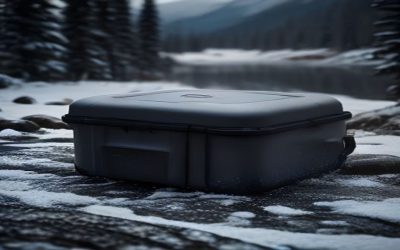
 Titan by Arctic Zone Deep Freeze Cooler
- Warranty Type: Limited Lifetime Warranty
- Warranty Description: Limted Lifetime Warranty
- Capacity: 12.68 quarts
Deep Freeze insulation keeps ice for up to two days
Zipperless flip lid makes grabbing items quick
SmartShelf keeps cans separate from soft foods
Holds only about 16 cans worth of space
Structured liner construction adds some bulk and weight


As an Amazon Associate we earn from qualifying purchases at no extra cost to you.
As an Amazon Associate we earn from qualifying purchases.
By Jake Thompson, gear writer for Roger Bacon Outdoors.
🛒 Best Price Today on Amazon
Prime members get fast, free shipping on everything above, plus member-only deals. New members get a 30-day free trial — cancel anytime.
How to Choose the Best Small Cooler for Your Trips
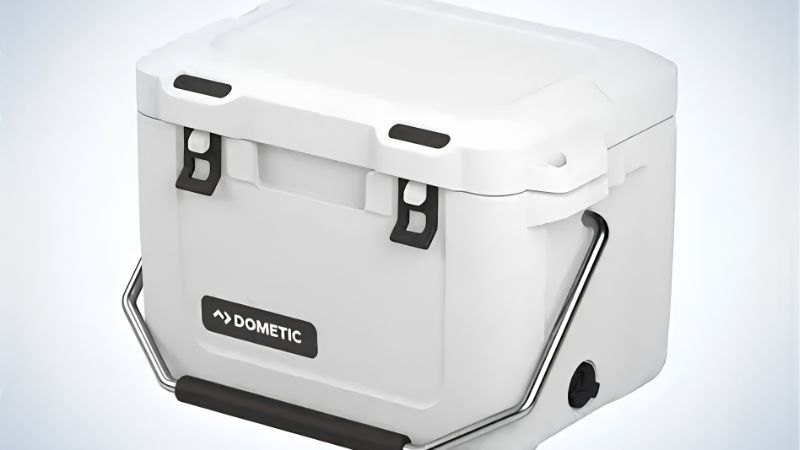
Compact coolers are bought on price and regretted on weight. Three specifications separate the best small cooler for a day on the water from a box that is heavy when empty and warm by lunchtime: how the quart rating translates into usable space, how the walls are built, and how the thing carries.
Quart Ratings Do Not Match Usable Space
Manufacturers measure capacity in liquid quarts, which tells you nothing about what fits. The Yeti Roadie 24 holds roughly 18 cans at the recommended two-to-one ice ratio, while the RTIC 20 QT is closer to 22 actual quarts and swallows 24 cans plus ice on top, despite the smaller number on the label.
Shape matters as much as volume. The Roadie 24 is built tall enough to stand a wine bottle upright, whereas the wider, shorter RTIC cannot. If you routinely carry bottles, tall containers or a packed lunch tray, check interior height before you compare quart figures across brands.
Insulation Type Sets the Ice Retention Ceiling
Rotomoulded coolers are formed as a single shell and pressure-filled with polyurethane foam, which is why they hold ice longest and cost the most. Injection-moulded builds such as the Pelican 20QT Elite are lighter and cheaper, but they trail rotomoulded rivals on both toughness and insulating performance.
Wall thickness is the number to look for. RTIC quotes up to three inches on its 20 QT, while the Pelican 14QT Personal uses 1.5 inches of polyurethane and is rated for around 36 hours at a two-to-one ice ratio. Expect roughly two days from a good rotomoulded compact, and up to four if you pre-chill it.
Weight, Latches and How It Carries
Empty weight is the specification people ignore and then curse. Among 20-quart-class models the spread is enormous: 12 pounds 8 ounces for the Pelican 20QT Elite, 13 pounds 2 ounces for the Yeti Roadie 24, 18 pounds for the Orca 20, and up to 19 pounds for the RTIC. Add ice and that gap grows.
Hardware decides daily convenience, and it is where the best small cooler separates from the merely cheap one. A stainless handle that locks upright allows one-handed carrying, and push-button latches open faster than rubber T-latches with cold hands. A drain plug matters more than it sounds, and the current Roadie 24 does not have one.
Best Small Cooler Picks From 14 to 24 Quarts
These five cover the realistic range for a compact hard cooler, from a personal lunchbox build up to a two-day rotomoulded box. The best small cooler here depends on whether you prioritise carry weight, ice hours or price per quart. Every entry names a genuine limitation alongside its strengths.
| Model | Capacity | Empty weight | Construction | Best for |
|---|---|---|---|---|
| Yeti Roadie 24 | approx. 24 qt / 18 cans | 13 lb 2 oz | Rotomoulded, PermaFrost foam | Two-day trips, bottles upright |
| RTIC 20 QT Hard Cooler | approx. 22 qt / 24 cans | 17.5-19 lb | Rotomoulded, walls up to 3 in | Most capacity per dollar |
| Orca 20 Quart | 20 qt | 18 lb | Rotomoulded, bear-resistant certified | Bear country, lifetime warranty |
| Pelican 20QT Elite | 20 qt | 12 lb 8 oz | Injection moulded | Lightest of the 20-quart class |
| Pelican 14QT Personal | 14 qt (13.25 L) | 8.3 lb | Polypropylene, 1.5 in polyurethane | Solo days, job sites, lunch |
Yeti Roadie 24 – The Balanced Default
The Roadie 24 weighs 13 pounds 2 ounces empty, which is genuinely light for a rotomoulded shell, and it holds around 18 cans at the two-to-one ice ratio Yeti recommends. PermaFrost pressure-injected insulation, a ColdLock gasket and the InterLock lid system give roughly two days of ice in normal use.
Pre-chill it, fill the dead space and keep it shaded and four days is achievable. The compromises are real though: there is no drain plug on the current version, so emptying means tipping it, and it is not bear-certified, which rules it out for some backcountry campgrounds and national parks.
RTIC 20 QT Hard Cooler – Most Capacity Per Dollar
RTIC undersells this one. Labelled 20 quarts, it measures closer to 22 and carries 24 cans or 25 pounds of ice, with walls up to three inches thick. A stainless steel handle locks upright for one-handed carrying, and unlike the Roadie it includes a proper drain plug for quick emptying.
The penalty is mass. At 17.5 to 19 pounds empty it is four to six pounds heavier than the Roadie while offering similar space, and loaded with 24 cans it approaches 40 pounds. It is also too short to stand a wine bottle upright, which matters more at a picnic than on a fishing trip.
Orca 20 Quart – Built for Bear Country
Orca’s compact model runs 18 pounds empty and separates itself with a certified bear-resistant build, though the required locks are sold separately. That certification is what lets it into campgrounds where bear-resistant storage is mandatory, which neither the Yeti Roadie 24 nor the RTIC can claim.
Backing it is a lifetime warranty against manufacturer defects and a wide colour range. The trade-off is that it costs only slightly less than the Yeti while weighing five pounds more, so unless you actually need the bear certification the value case is thinner than the spec sheet suggests.
Pelican 20QT Elite – Lightest in the 20-Quart Class
At 12 pounds 8 ounces this is the easiest 20-quart model here to lift in and out of a truck bed repeatedly. Pelican builds it by injection moulding rather than rotomoulding, which is what saves the weight and keeps the price below the rotomoulded competition in the same capacity bracket.
That process is also its limitation. Injection-moulded shells are a step down from rotomoulded builds in both impact toughness and insulation, and usable storage is slightly smaller than the Yeti despite the similar quart rating. Treat it as a day cooler rather than a two-night one.
Pelican 14QT Personal – Best Solo and Job Site Option
Eight point three pounds empty and 18 x 11.5 x 13 inches externally, this is the personal-sized choice: a six-pack plus ice, or lunch plus two one-pound ice blocks. Walls are 1.5 inches of polyurethane behind a polypropylene body, and Pelican rates it at around 36 hours at a two-to-one ratio.
The features are unusually thoughtful for the size, including a gasketed dry box in the lid for keys and a phone, a removable tray, cup holders and a magnetic bottle opener. Capacity is the obvious ceiling, and the warranty runs three years rather than the lifetime cover on Pelican’s Elite line.
Late Summer, Hunting Season and What Coolers Cost Now
Two seasonal factors are worth knowing before you order the best small cooler for your kit. Compact coolers sell hardest in July and August, and the autumn hunting season creates a second demand spike from September onward. Layered on top is the tariff situation, which has already moved pricing across outdoor hard goods.
Tariffs Are Working Through Hard Goods
Outdoor Industry Association survey work indicates 84% of member businesses expect to be affected by new tariffs, with costs rising roughly 7.7% overall. Specialised foams, which is precisely what fills a cooler wall, are reported up 10 to 15%, and steel and aluminium duties touch handles, hinges and hardware.
Brands have been unusually direct that quoted prices are estimates while supply chains settle. That undermines the habit of waiting for a better price: there is no dependable reason to expect the same model to cost less in eight weeks than it does on the listing today.
Hunting Season Changes What Sells Out
Peak hunting runs September through November, and compact coolers get bought alongside it for hauling meat, drinks and lunch on scouting trips. Buying before the season opens means you can test the fit in your vehicle and check ice performance on a warm day rather than discovering problems in the field.
Early season is also when stock depth is best. By mid-season the popular sizes and colours in the 20-quart class thin out, and what remains tends to be a capacity above or below what you wanted. That is a poor way to choose a cooler you will keep for a decade.
Buy Once, Not Twice
Inflation near 4.2%, the highest in almost three years, and an estimated tariff burden of about $1,600 per US household in 2026 leave less room for replacing gear. A rotomoulded compact cooler that lasts ten years is cheaper per season than a thin-walled one replaced every second summer.
Warranty terms feed into that maths too. Orca’s lifetime cover against defects and Pelican’s three-year term on the 14QT carry more real value while replacement costs are climbing, so read the coverage as part of the price rather than as marketing on the box.
Frequently Asked Questions
These four questions cover most of what readers ask before buying a compact cooler. All the answers assume normal summer use, a two-to-one ice-to-contents ratio by volume, and a cooler that is kept in shade rather than sitting in direct sun on a truck bed all afternoon.
What size is the best small cooler for one or two people?
Fourteen to twenty-four quarts covers it. Fourteen quarts handles lunch plus a six-pack for a single day; twenty to twenty-four quarts carries drinks and food for two people over a weekend. Above that you are into mid-size territory, where weight when loaded becomes a two-person carry.
How long will ice actually last?
A good rotomoulded compact holds ice for around two days in typical summer conditions, extending toward four when pre-chilled, packed full and kept shaded. Injection-moulded and personal-sized models are rated closer to 36 hours. Frequent opening is the single biggest factor working against you.
Do I need a bear-resistant cooler?
Only if you camp where regulations require certified bear-resistant storage, which some national parks and campgrounds do enforce. Certification adds weight and cost, and the required locks are usually sold separately. Outside those areas the certification buys you very little in practice.
Is a drain plug worth caring about?
More than most buyers expect. Without one you tip a loaded cooler to empty it, which is awkward with 20 pounds of meltwater inside and awkward again if the lid gasket is what you are relying on. Several premium compacts, including the current Yeti Roadie 24, omit the plug entirely.
See More:
- Best Small Ice Chest Cooler: 5 Picks Ranked by Ice Hours
- Best Four Man Tent: 5 Picks by Floor Area, Peak and Weight
- Swamp Cooler Best Picks: 5 Top Evaporative Units Compared
Final Thoughts
The best small cooler is the one whose empty weight you will still tolerate on the tenth trip. The Roadie 24 balances weight and ice hours best, the RTIC 20 gives the most space per dollar, the Orca covers bear country, and the two Pelicans win on carry weight. Decide what you are optimising for, then buy before autumn stock thins.

Write Your Review
No reviews yet. Be the first to share your experience!