Key takeaways
Hiking boot sizing guide confusion causes more blisters than any trail, so this rundown breaks fit down to length, width, and volume for 2026. We explain how to dial in your size, then recommend six boots and insoles that solve common fit problems for wide, narrow, and hard-to-fit feet this season.
As an Amazon Associate we earn from qualifying purchases.
Our top picks


As an Amazon Associate we earn from qualifying purchases at no extra cost to you. Ratings are shown as listed on Amazon.
By Jake Thompson
How to Use This Hiking Boot Sizing Guide
Getting the fit right matters more than any feature on a spec sheet. This hiking boot sizing guide breaks fit into length, width, volume, and how socks and swelling change it. The four checks below help you nail your size before you buy.
Length and the Thumb Rule
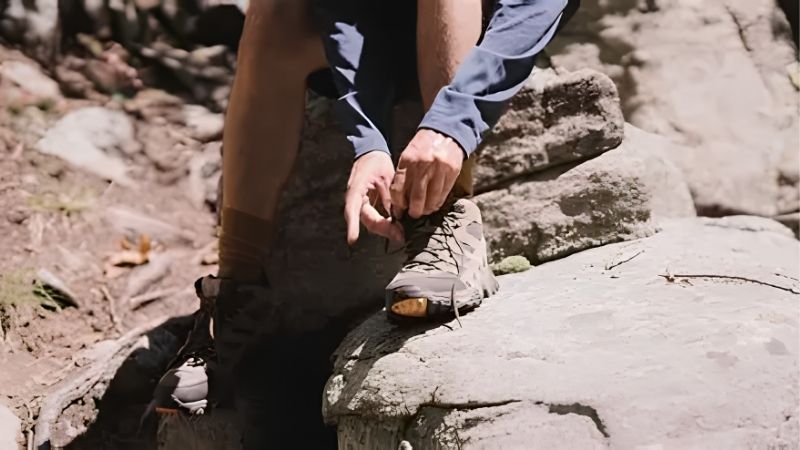
Length is the foundation of fit. With the boot laced and your foot slid forward, you should have about a thumb’s width of space at the toe. That gap prevents bruised nails on steep descents, when your foot slides toward the front of the boot.
Many hikers size up a half size from their street shoe, and narrow European lasts often run small, requiring a bump up. Always try boots late in the day, when feet are at their largest, to avoid buying a size too short.
Width and Toe Box
Width decides comfort as much as length. Keen and Merrell build wide, roomy toe boxes, while Salomon and La Sportiva run narrow. Your toes should splay without pressing the sides, since a cramped toe box causes hot spots and numbness over miles.
If you have wide feet, start with brands known for volume or look for dedicated wide sizes. Narrow-footed hikers lock in better with a snug last. Matching width to your foot shape is the single biggest fit decision you make.
Volume and Instep
Volume is the often-overlooked third dimension. A boot can fit in length and width yet still gap at the heel or press the top of the foot. High-volume feet need a roomier boot, while low-volume feet may swim unless the boot is snug.
Lacing and insoles fine-tune volume. Heel-lock lacing tames slippage, and a thicker aftermarket insole fills excess space for a locked-in fit. If a boot feels close but not perfect, these tweaks often close the gap.
Socks and Foot Swelling
Always fit boots with the hiking socks you will actually wear, since sock thickness changes fit noticeably. A thin liner and a cushioned sock can shift you a half size, so bring your trail socks to every fitting.
Feet also swell over a long day and in heat, sometimes by a half size. Fitting late in the day and leaving toe room accounts for this, keeping boots comfortable at mile fifteen, not just in the store.
Top Picks: Boots and Tools for the Right Fit
The heart of this hiking boot sizing guide is the shortlist below, matching boots and insoles to common fit challenges. The table sorts them by fit type; the write-ups explain who each option suits and its honest limitation.
| Model | Fit Type | Key Trait | Best For |
|---|---|---|---|
| Keen Targhee IV Mid WP | Wide | Roomy toe box | Wide feet |
| Salomon X Ultra 5 Mid GTX | Narrow | Locked-down last | Narrow feet |
| Lowa Renegade GTX Mid | Medium/high volume | Resoleable leather | Higher insteps |
| Merrell Moab 3 Mid WP | Accommodating | Forgiving fit | Uncertain fit |
| Altra Lone Peak 9 | Foot-shaped | Zero-drop wide toe | Toe splay |
| Superfeet Trailblazer Insole | Fit tuning | Volume and support | Dialing in fit |
Keen Targhee IV Mid WP
For wide feet, the Targhee IV is the benchmark, with a genuinely roomy toe box, durable nubuck upper, and Keen’s proprietary waterproof liner. Its accommodating last lets wide toes splay without pressure, and it is offered in dedicated wide sizes for many.
The ankle cuff sits low, so it is less ideal for deep crossings, and some hikers still add an insole for a locked heel. For wide-footed hikers who struggle to size other brands, though, it is the easiest fit in this hiking boot sizing guide.
Salomon X Ultra 5 Mid GTX
For narrow feet, the X Ultra 5 Mid locks the foot down with a snug, performance last and a supportive Advanced Chassis. Narrow-footed hikers who swim in wider boots finally get a secure heel and midfoot hold that prevents slippage on descents.
That same narrow shape excludes wide feet, and it sits at a premium price. But for hikers with slim or low-volume feet who need a boot that actually grips the foot, it is one of the best-fitting options available.
Lowa Renegade GTX Mid
The Renegade suits medium to higher-volume feet, with a supportive leather build, GORE-TEX lining, and a shape that accommodates a taller instep better than many slim boots. It can even be re-soled by Lowa, extending a well-fitted boot for years.
It costs a premium and needs some break-in versus softer synthetics. But for hikers whose feet gap or press in narrow lasts, its roomier volume and durable comfort make it a reliable long-term fit.
Merrell Moab 3 Mid WP
The Moab 3 is the safe pick when you are unsure of your fit, with a forgiving, medium-wide shape that suits a broad range of feet and needs almost no break-in. Its accommodating comfort makes it a low-risk first boot for new hikers.
It is not the most supportive boot for heavy loads, and its very forgiveness means it locks the foot down less than a performance last. For hikers who want an easy, agreeable fit out of the box, though, it rarely disappoints.
Altra Lone Peak 9
For hikers who need toe splay, the Lone Peak’s foot-shaped, wide toe box and zero-drop platform let toes spread naturally over big miles. It is a favorite for hikers whose feet cramp or go numb in tapered boots and shoes.
Zero drop needs adaptation, and the low-cut, moderate-support build is not a heavy-load boot. But for hikers whose fit problems stem from a squeezed forefoot, its anatomical shape is a genuine relief on long days.
Superfeet Trailblazer Insole
When a boot fits in length but gaps in volume, a supportive insole like the Superfeet Trailblazer fills the space and locks the heel. It adds structure and arch support, transforming an almost-right boot into a dialed, blister-free fit.
Firm insoles take a short adjustment period and add a little cost, and they are not a fix for a boot that is truly the wrong size. But for tuning volume and support, they are the most useful tool in this guide.
What Tariffs and Timing Mean for Boot Buyers in 2026
Even with a perfect fit, this hiking boot sizing guide has a budget angle for 2026, since footwear is heavily imported and prices move with trade policy and the calendar. Reading the market helps you buy well-fitting boots for less.
Import Tariffs and Footwear Prices
Most hiking boots are made overseas, and 2026 tariff policy remains unsettled after shifting court rulings and new investigations. Footwear prices sit in the storm as a result, and many brands admit future pricing is only a best guess.
That uncertainty argues for buying a well-fitting boot when it is in stock at a fair price, rather than waiting for a dip that may not come. Once you find your size and fit, locking in a good deal is wise.
A Split Market and Closeout Deals
The 2026 market is bifurcated: premium brands raise prices, while mid-tier makers pass costs straight to buyers. That squeezes value shoppers, but it also opens deals in the gap between the tiers for patient hikers.
Retailers are clearing pre-tariff inventory through late 2026, so last season’s colorways appear at real markdowns. A previous-year boot in your size performs identically, making those closeouts the most dependable way to save.
Seasonal Timing
Timing rewards planning. Late August into September brings back-to-school stock and pre-sale pricing, with full size runs before your size sells out. Amazon’s fall Prime event, expected in early October, is a strong window to buy boots at a discount.
For the deepest cuts, Black Friday and Cyber Monday in late November lead the year. Buy early in a sale, since specific sizes sell out fast once discounts go live, and fit is what matters most.
Frequently Asked Questions
A few questions come up again and again when hikers use a hiking boot sizing guide. Here are quick, practical answers to help you dial in the perfect fit.
Should hiking boots be bigger than street shoes?
Often by a half size. Feet swell on trail and need toe room for descents, so many hikers size up. Narrow European lasts also run small. Always fit with hiking socks and leave a thumb’s width at the front.
How much toe room do I need?
About a thumb’s width between your longest toe and the boot’s end when laced. That space prevents your toes from jamming the front on steep downhills, which is the most common cause of bruised nails and lost toenails.
How do I know if a boot is too wide?
Your heel slips and your foot slides side to side despite tight lacing. A too-wide boot causes blisters and instability. Try heel-lock lacing and a supportive insole first; if slippage persists, the boot is simply too wide.
Can insoles fix a bad fit?
They fine-tune volume and support, filling extra space and locking the heel, but they cannot fix a boot that is the wrong length or width. Use insoles to perfect an almost-right fit, not to rescue the wrong size.
See More:
Final Thoughts
The takeaway from this hiking boot sizing guide is that fit beats every feature: get length, width, and volume right, and hike blister-free. Wide feet love the Targhee IV, narrow feet lock into the X Ultra 5, and an insole tunes the rest. Nail your fit first, then buy when stock and pricing align, since tariff uncertainty on imported footwear makes waiting a gamble in 2026.