
Key takeaways
Best wheeled cooler shopping for camping comes down to the wheel system, because rocks, roots and sand punish anything less. The right tires roll a 60-pound load from car to backcountry site without a two-person carry. This guide ranks six by wheel type, ice life and how well they each handle rough ground.
Our top picks
 Coleman Chiller 9/16/30/48/60qt Cooler with Ice Retention
- Recommended Uses For Product: Camping
- Warranty Type: Limited Warranty
- Capacity: 60 quarts
TempLock insulation holds ice cold for three days
Impact-resistant wheels roll over gravel sand and grass
Reinforced lid doubles as a seat up to 200 pounds
60 quart size needs significant trunk or storage space
Capacity drops to 47 cans once ice is added
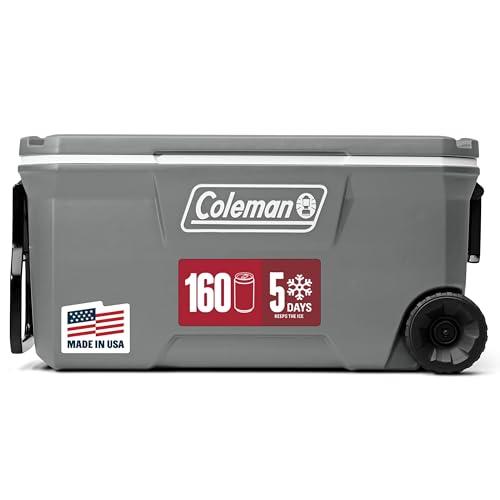 Coleman Classic Series Insulated Portable Rolling Cooler
All-terrain wheels roll over sand gravel and grass
Hard lid doubles as a seat up to 250 pounds
Tethered drain plug resists leaks and losing the cap
At over 20 pounds empty it's heavy before loading
100 quart size needs significant storage space


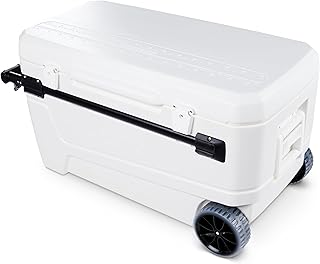
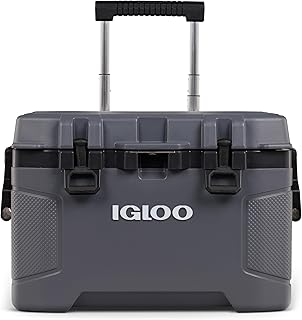

As an Amazon Associate we earn from qualifying purchases at no extra cost to you.
As an Amazon Associate we earn from qualifying purchases.
🛒 Best Price Today on Amazon
Prime members get fast, free shipping on everything above, plus member-only deals. New members get a 30-day free trial — cancel anytime.
How to Choose the Right Wheeled Cooler
The best wheeled cooler for rough terrain is defined first by its wheels, then by ice retention, sealing and capacity. These four criteria sort serious off-road haulers from parking-lot rollers.
Wheel System for Rough Ground
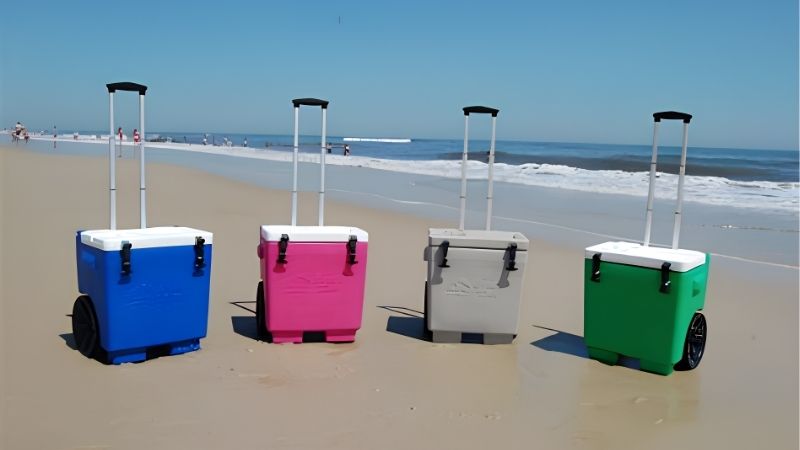
For the best wheeled cooler, terrain decides everything. Pneumatic bike-style tires, like RovR’s 9-inch all-terrain wheels, roll over rocks, roots and sand and even into a river’s edge, but they need occasional inflation. Solid never-flat wheels, like Yeti’s, are maintenance-free and puncture-proof for mixed ground.
Budget plastic wheels handle smooth surfaces only and bog down off pavement. If your campsite sits past a rocky or sandy stretch, the wheel system is the single spec that matters most, above brand or capacity.
Ice Retention in the Field
Rotomolded construction leads retention. Premium wheeled boxes hold multi-day ice, while budget models rated for five days often deliver three to four in heat above 90 degrees. Freezer-grade gaskets and pre-cooling close much of the gap.
Head-to-head, the wheeled Yeti edged the RovR RollR in one retention test, though the RovR’s terrain edge is decisive off-road. Weigh a day of ice against how rough your route really is before you choose.
Sealing, Latches and Bear Country
Latches shape both cold and safety. Some wheeled boxes, like Coleman’s Xtreme and Igloo’s Trailmate, forgo latches and rely on lid fit, which trims insulation and risks the lid popping in transport. Yeti’s QuickLatch is a standout by contrast.
Most wheeled coolers are not bear-resistant, a real consideration in bear country. The exceptions are Pelican’s 80QW Elite and Yeti’s Tundra Haul, which meets IGBC standards with the appropriate locks, sold separately.
Capacity vs Wheel-Space Loss
Wheels eat volume. The housing and handle typically cut usable interior by 10 to 15 percent versus a fixed box of the same footprint, so read quart numbers with that in mind for multi-day group trips.
Size to people and days anyway: 45 to 60 quarts suits a couple for a weekend, 65-plus quarts a group. Some makers upsize the shell to offset the wheel penalty, so compare external dimensions too.
Top Picks for the Best Wheeled Cooler
These six wheeled boxes are ranked with rough-terrain performance in mind, all currently on Amazon. The table leads with wheel type before the detailed picks.
| Wheeled Cooler | Wheel System | Approx. Ice Life | Bear-Resistant | Best For |
|---|---|---|---|---|
| RovR RollR (45/65/80) | 9 in pneumatic all-terrain | Solid multi-day | No | Rocks, sand, off-road |
| Yeti Tundra Haul | NeverFlat solid | Up to 10 days | IGBC with locks | All-around camp |
| Igloo Trailmate Journey | 10 in pneumatic | Mid-range | No | Beach / sand |
| RTIC 52 QT Ultra-Light | Solid | ~8 days usable | No | Value |
| Yeti Roadie 48 Wheeled | Solid, QuickLatch | ~10 days to melt | No | Best insulation |
| Coleman Xtreme Wheeled | Plastic | ~5 days (3-4 in heat) | No | Budget |
RovR RollR
For genuine off-road hauling, the RollR leads. Tested over rocky, sandy terrain and even wheeled into a river for streamside snacks, its durable 9-inch all-terrain tires held up where lesser wheels stall, and it can integrate with a bicycle for quick turns.
It is neither the cheapest nor the lightest wheeled cooler, and its T-handle can feel stiff. If your route to camp crosses rocks, roots or soft sand, no other wheel system here matches it.
Yeti Tundra Haul
The Tundra Haul is the rugged all-around benchmark. Rotomolded with never-flat wheels, it holds ice up to 10 days and moves heavy loads with ease, and with locks it meets IGBC bear-resistance standards, a rarity among wheeled boxes.
It is heavy, premium-priced and single-size. For campers who want durability, long ice life and bear-country peace of mind in one rolling package, it is the safe pick.
Igloo Trailmate Journey
The Trailmate Journey attacks soft terrain head-on. Its large pneumatic tires handle sand and grass effectively, and the telescoping handle gives comfortable leverage for taller users hauling a loaded box to a beach or lakeside site.
Supports that lift it off hot ground also cut usable interior, and the latch-free lid trims insulation. As a mid-priced option for soft ground, it earns its place despite middling ice retention.
RTIC 52 QT Ultra-Light
The RTIC 52 Ultra-Light is the value route to strong performance, landing near 80 to 90 percent of Yeti capability for far less. At around 21 pounds it stays manageable, and it held usable ice roughly 8 days in testing.
Injection-molded construction places it a step below rotomolded boxes on toughness, and haul handles can feel awkward. For campers who want capable wheels without a premium price, it delivers.
Yeti Roadie 48 Wheeled
The Roadie 48 is the insulation champion of the wheeled field. Not rotomolded, yet it out-held rotomolded rivals, taking about 10 days for ice to melt, with the excellent QuickLatch lid and a shape that slips into a back seat.
It costs more than its size suggests and suits upright packing best. When maximum retention and easy transport matter more than off-road wheels, it is the standout.
Coleman Xtreme Wheeled
The wheeled Xtreme is the honest budget entry. It rolls fine on smooth ground, holds ice around five days on paper, and costs a fraction of premium boxes, making it easy to justify for occasional camping.
Plastic wheels struggle off pavement and the latch-free lid leaks cold, so expect three to four days in real heat. For flat sites and moderate weather, it is reliable value.
What Tariffs and Camping Season Mean for Buyers
A wheeled cooler is a durable, years-long buy, so 2026 pricing and timing matter when choosing the best wheeled cooler for the backcountry.
Foam and Metal Costs Are Up
Coolers rely on foam and molded plastic, and specialty foams have risen 10 to 15 percent under new tariffs. Aluminum and steel duties also lift the price of metal parts like telescoping handles and axles, inside a roughly 7.7 percent overall increase per an Outdoor Industry Association survey.
With makers now calling future prices estimates, buying the wheel system you want now is safer than waiting on a discount tariffs may erase. Metal-handled, foam-heavy rollers are doubly exposed.
Buy Ahead of Peak Trips
Late summer and fall camping keep demand high, and premium wheeled boxes sell through before season’s end. Buying the best wheeled cooler early means the RovR or Tundra Haul you want is in stock in your size.
An early buy also lets you inflate, pre-chill and test-roll the cooler over your typical terrain, so there are no surprises on the walk to camp.
Watch the Deal Windows
If your trips can wait, October Prime Big Deal Days and Black Friday bring the deepest cuts on rotomolded wheeled boxes. A shortlist plus price tracking lets you grab a durable roller at its lowest realistic price.
For trips coming soon, buy now rather than gamble on stock. Popular wheeled coolers vanish in peak season, and a sale you cannot order does nothing for your itinerary.
Frequently Asked Questions
Here are the questions campers ask most about wheeled boxes.
What are the best wheels for camping over rough terrain?
The best wheeled cooler for rough ground uses pneumatic all-terrain tires, like RovR’s 9-inch wheels, which handle rocks, roots and sand best. Solid never-flat wheels suit mixed ground with no maintenance, while budget plastic wheels are limited to smooth surfaces.
Are wheeled coolers bear-resistant?
Most are not, which matters in bear country. The main exceptions are the Pelican 80QW Elite and the Yeti Tundra Haul, which meets IGBC standards when used with the appropriate locks, sold separately.
Do wheeled coolers hold ice as long as fixed ones?
Comparable rotomolded models come close, losing only the volume and sometimes sealing the mechanism costs. Budget wheeled boxes rated five days often deliver three to four in real heat, so buy rotomolded for multi-day cold.
How much interior space do the wheels cost?
Expect roughly 10 to 15 percent less usable capacity than an identical fixed box, due to the wheel housing and handle. Some brands upsize the shell to offset this, so compare external dimensions.
See More:
Final Thoughts
The best wheeled cooler for camping is the one whose wheel system matches your route, then backs it with real ice life and sealing. Choose the RovR RollR for rocks and sand, the Yeti Tundra Haul for all-around camp use and bear country, or the RTIC 52 Ultra-Light for value, and buy ahead given rising foam and metal costs. Get the wheels right and even a rough walk to camp becomes easy.



Write Your Review
No reviews yet. Be the first to share your experience!