Key takeaways
- Table of Contents 7 sections 9 min read 1 Quick Verdict 2 Side by Side 3 Where Internal Frame Wins 4 Where External Frame Backpack Wins 5 Cost Over 5 Years 6 Which One for Your Home 6.1 Small apartment…
What's inside
Choosing between an internal frame vs external frame backpack is less about which design is universally better and more about where the pack will live, how often it will be carried, and what you expect it to haul. A compact internal-frame pack may be easier to store in a closet or apartment entryway, while an external-frame model can provide a more structured platform for bulky loads and outdoor gear.
For a home buyer, the decision also includes practical concerns that trail guides often overlook: storage footprint, cleaning, visual appearance, durability, and whether the pack will remain useful as family needs change. A backpack used for occasional day trips has different requirements from one used for hunting, emergency preparedness, gardening, camping, or transporting delivery supplies.
As an Amazon Associate we earn from qualifying purchases at no extra cost to you. Product prices and availability are accurate as of the date shown and are subject to change.


Quick Verdict
Choose an internal-frame backpack if you want a closer, more streamlined fit, easier movement, and a pack that can be stored in a smaller space. Internal frames are usually the better all-purpose choice for hiking, travel, commuting, and households where the backpack may be carried through narrow halls, crowded vehicles, or small closets.
Choose an external-frame backpack if you routinely carry heavy, rigid, or unusually shaped loads and value ventilation, adjustability, and a stable support structure over compactness. External frames are especially useful for hunting, extended camping, hauling equipment, and preparedness kits that need to accommodate more than ordinary clothing and food.
In 2026, most casual and travel-oriented buyers will be happiest with an internal frame. An external frame makes more sense when carrying capacity and load organization are the main priorities.
Side by Side
| Feature | Internal Frame | External Frame |
|---|---|---|
| Comfort | Closer fit and better balance during active movement | Excellent support for heavy loads, but can feel bulkier |
| Durability | Fewer exposed parts; fabric and seams are common wear points | Rigid frame is durable, though exposed hardware can bend or corrode |
| Price range | About $60–$400 for common recreational models | About $80–$500, with specialized hunting packs often higher |
| Maintenance | Usually simple: clean fabric, zippers, straps, and frame channels | Requires attention to frame joints, buckles, coatings, and exposed metal |
| Space needed | Often 20–24 inches tall and 10–14 inches deep when packed | May be 24–30 inches tall and 12–18 inches deep with attachments |
| Look | Streamlined and suitable for travel or everyday use | Technical, traditional, and visibly more equipment-oriented |
| Resale | Broad appeal if clean, lightweight, and from a recognized brand | Strongest among hunters, campers, and heavy-load users |
| Best for | Hiking, travel, commuting, day trips, and smaller homes | Hunting, extended camping, emergency gear, and bulky loads |
Where Internal Frame Wins
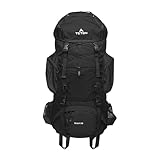
An internal frame sits inside the pack, usually along the back panel, and transfers much of the load toward the hips through a padded hip belt. Because the structure is hidden, the pack can taper closer to the body. That design is valuable when walking through doorways, climbing stairs, riding in a car, or storing the bag on a shelf.
Movement is the biggest advantage. Internal-frame packs generally sway less when fitted correctly. The close profile keeps the center of gravity near the wearer, which helps on uneven trails and makes the bag less awkward in crowded spaces. A 40- to 60-liter internal-frame pack can hold several days of clothing and food without extending far beyond the wearer’s shoulders.
Internal frames also tend to look less specialized. A black or gray 25- to 35-liter model can move from a weekend hike to an office, airport, or emergency closet without dominating the room. For homeowners who want one versatile bag instead of separate travel, hiking, and preparedness packs, that flexibility matters.
The tradeoff is organization. Internal-frame bags often have fewer exterior pockets and may require careful packing. Heavy items should sit close to the back and near the hips; poorly distributed contents can create pressure points. Ventilation may also be less effective because the back panel rests close to the body.
“Internal frame” can describe more than a hiking pack. For example, a rigid insert such as the Bodaon Internal Frame for a 23-by-14-by-15-inch food delivery bag costs $9.99 and adds structure to a soft insulated carrier. It is not a conventional hiking backpack, but it illustrates the same basic idea: support is placed inside the bag rather than exposed outside it.
Where External Frame Backpack Wins
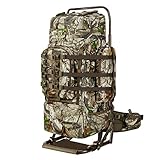
An external frame backpack uses a visible rigid frame, commonly made from aluminum or another lightweight metal, with the fabric bag suspended from it. This arrangement creates a stable load platform and leaves space between the wearer’s back and the pack. The resulting airflow can be welcome in hot weather.
Heavy and awkward loads are the primary reason to choose one. External frames can make it easier to attach sleeping pads, tools, camping equipment, or other items that do not fit neatly inside a soft compartment. They also tend to offer more exterior organization, which is useful when you want quick access to water, gloves, cooking equipment, or first-aid supplies.
Many external-frame packs provide substantial adjustment in the shoulder harness and hip belt. That can be useful for households where different adults share equipment, although the pack must still be fitted to the person carrying it. A rigid frame cannot compensate for an incorrectly adjusted hip belt or excessive weight.
The disadvantages are equally practical. An external frame can catch on branches, scrape walls, and take up more space in a coat closet. It may also be less comfortable when sitting in a vehicle or moving quickly over rough terrain. Exposed metal should be kept dry, particularly if the pack is stored in a damp garage, basement, or mudroom.
Products such as the TR Aluminum External Frame Backpack, priced at $98.99, and the TIDEWE 90-liter External Frame Pack, priced at $164.99, represent the type of large, structured gear often chosen for hunting and outdoor hauling. Their larger profiles may be useful for specialized storage, but they are more pack than most households need for daily errands.
Cost Over 5 Years
Purchase price is only part of the five-year cost. A basic internal-frame backpack may cost $60–$150, while a more durable model with a fitted harness commonly costs $180–$400. An external-frame pack often starts around $80–$170 and can reach $300–$500 for large, specialized designs.
Assuming normal seasonal use, budget an additional $10–$30 over five years for zipper lubricant, cleaning supplies, replacement buckles, or strap repairs. External-frame owners may spend another $10–$40 on hardware, frame protectors, or corrosion prevention. An aerosol such as Eastwood Internal Frame Coating Plus, listed at $44.99, is intended for automotive internal-frame rust treatment rather than ordinary backpack maintenance; its presence is a reminder that exposed or enclosed metal should be protected according to the manufacturer’s instructions.
A realistic five-year ownership range is therefore about $70–$430 for an internal-frame pack and $95–$540 for an external-frame pack, before replacement accessories or specialized attachments. The least expensive option is not automatically the best value. A $100 pack that fits well and lasts five years may cost less than replacing a $60 pack twice.
Which One for Your Home
Small apartment
Choose an internal-frame backpack. Its narrower shape is easier to place on a 12-inch-deep closet shelf, under a bed, or in an entryway cabinet. A 25- to 40-liter capacity is usually enough for commuting, overnight travel, and basic emergency supplies without creating a storage problem.
Family with kids or pets
An internal frame is generally the more adaptable choice. It is easier to carry while supervising children, walking a dog, or navigating playgrounds and sidewalks. Look for wipeable fabric, a 30- to 50-liter capacity, strong zippers, and a hip belt that can be adjusted over a jacket.
Rental
Renters should favor an internal frame unless they have a specific need for large-load hauling. A streamlined pack is less likely to mark walls, bump door frames, or occupy valuable shared storage. If you choose an external frame, store it in a dry closet or storage bin rather than leaning it against painted surfaces.
Long-term home
Either design can work in a garage, gear room, or dedicated mudroom. Choose an external frame for hunting, multi-day camping, gardening equipment, or a substantial emergency kit. Choose an internal frame if the bag must serve several roles and remain convenient for travel. For long-term storage, empty the pack, dry it completely, loosen compression straps, and keep it away from direct sunlight.
FAQ
Is an internal-frame backpack more comfortable than an external-frame backpack?
Not always. Internal frames usually feel more balanced during active movement, while external frames can feel better under very heavy loads because they provide a rigid support structure and good weight transfer. Fit, torso length, hip-belt placement, and total weight matter more than the frame label alone.
Which type holds more?
External-frame backpacks often provide more usable capacity and more attachment points, especially for bulky gear. Internal-frame packs can still hold 50–70 liters, but their shape is usually optimized for compact packing rather than oversized or irregular objects.
Are external-frame backpacks outdated?
No. They are less common for everyday hiking but remain practical for heavy, bulky, or specialized loads. Their value is highest when ventilation, modular attachments, and rigid support matter more than a low-profile shape.
How should I store either backpack at home?
Clean off dirt, empty every pocket, and let the pack dry before storage. Keep it in a cool, dry area away from pests and direct sunlight. Avoid crushing an internal frame under heavy boxes, and do not place sharp tools or damp equipment against an external frame or its fabric panels.