
Key takeaways
What's inside
Best backpack tent choices are judged by how small they pack and how little they weigh once inside your pack. A shelter that stuffs down tight and rides light frees up room and saves your shoulders. This guide ranks six by packed size and minimum trail weight, so your tent disappears into your load.
As an Amazon Associate we earn from qualifying purchases at no extra cost to you. Product prices and availability are accurate as of the date shown and are subject to change.


As an Amazon Associate we earn from qualifying purchases at no extra cost to you. Product prices and availability are accurate as of the date shown and are subject to change.
🛒 Best Price Today on Amazon
Prime members get fast, free shipping on everything above, plus member-only deals. New members get a 30-day free trial — cancel anytime.
How to Choose a Packable Backpack Tent
The best backpack tent packs small, weighs little and still shelters you well. Because packability is the goal, these criteria focus on how the tent rides in your pack.
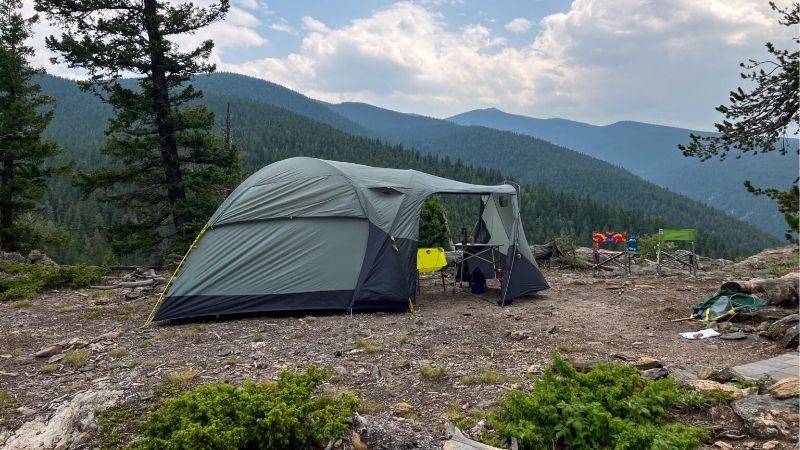
Packed Size and Stuff Volume
For the best backpack tent, packed size decides how much room it leaves for everything else. Ultralight shelters in DCF or thin nylon compress far smaller than heavier tents, freeing space for food and layers on multi-day trips.
You can also split the load: one person carries the body, the other the fly and poles, which shrinks each person’s packed volume. On solo trips, a smaller-packing tent is the single easiest way to downsize your pack.
Minimum Trail Weight
Watch the minimum trail weight, not just packaged weight. Stripping the stuff sack and spare stakes can drop a tent well below its listed number, and that minimum is what gram-counters actually carry.
For reference, a shelter like the Hornet Elite OSMO drops to a minimum trail weight near 1 pound 11 ounces. Small differences add up over many miles, so the lightest configuration matters on long trips.
Fabric and Compressibility
Fabric sets both weight and how small it packs. Dyneema Composite Fabric is lightest and compresses well without sagging, while thin silnylon and silpoly also pack small at lower cost. Heavier deniers pack bulkier but last longer.
DCF is waterproof out of the box and does not need re-treatment, a bonus for packability since you skip extra gear. The trade is cost and some brittleness at stress points on rough handling.
Pack-Friendly Structure
Pole length and structure affect how a tent stows. Short, multi-segment poles pack tidily along a pack’s side, while trekking-pole tents remove dedicated poles entirely, cutting both weight and packed bulk.
Freestanding tents pack a bit larger due to their pole sets but stand anywhere. If minimum bulk is the priority, a trekking-pole or single-pole design almost always packs smaller.
Top Picks for the Best Backpack Tent
These six shelters are chosen for how small and light they ride, all currently on Amazon. The table snapshots weight and fabric before the detailed picks.
| Backpack Tent | Approx. Weight | Fabric | Packs | Best For |
|---|---|---|---|---|
| NEMO Hornet Elite OSMO 2P | Min ~1 lb 11 oz | Osmo nylon | Very small | Light + packable 2P |
| Zpacks Duplex | ~1 lb+ | DCF | Tiny | Smallest packed size |
| Gossamer Gear The One | 19.5 oz | Silnylon | Very small | Solo ultralight |
| Big Agnes Tiger Wall UL2 | ~2 lb 3 oz trail | 15D nylon | Small | Semi-freestanding light |
| Durston X-Mid 2 | ~2 lb 4 oz trail | Silpoly | Small | Value packable |
| MSR Hubba Hubba LT 2 | ~3 lb trail | Nylon | Moderate | Packable + livable |
NEMO Hornet Elite OSMO 2P
The Hornet Elite OSMO 2P is built to vanish into your pack. Just over 2 pounds packaged with a minimum trail weight near 1 pound 11 ounces, it saves both weight and pack space while keeping two doors and strong weather protection.
The interior is a touch cramped for two and the price runs high. For backpackers who want a genuine double-wall shelter that packs tiny, it is one of the most pack-friendly tents here.
Zpacks Duplex
The Duplex packs smaller than almost anything for its livable space. Just over a pound of Dyneema Composite Fabric compresses tight without sagging, and it stays waterproof out of the box, so you carry no extra treatment gear.
It pitches on two trekking poles and the DCF is pricey and brittle at stress points. For hikers chasing the smallest possible packed size in a two-person shelter, it leads.
Gossamer Gear The One
Gossamer Gear’s The One is the solo packability champion. At just 19.5 ounces in silnylon it stuffs remarkably small and costs far less than DCF shelters, making an ultra-packable solo setup affordable.
As silnylon it sags when wet and needs re-tensioning, and it is a snug one-person space. For solo hikers who want minimal packed bulk on a budget, it is hard to beat.
Big Agnes Tiger Wall UL2
The Tiger Wall UL2 packs small while keeping a familiar pole structure. This semi-freestanding tent lands near 2 pounds 3 ounces trail weight with two doors and vestibules, compressing well for a shelter you can still pitch quickly.
Its 15D floor is thin and benefits from a footprint on rough sites. For backpackers who want a compact, light tent without going full trekking-pole, it is a smart middle ground.
Durston X-Mid 2
The X-Mid 2 is the value packable pick. Around 2 pounds 4 ounces in silpoly, it stuffs down small, and removing the need for dedicated poles on the trekking-pole pitch trims both weight and bulk from your load.
The pitched footprint is large and needs a flat site, even though the packed size is compact. For hikers who want small packed volume without a premium price, it is an easy recommendation.
MSR Hubba Hubba LT 2
The Hubba Hubba LT 2 balances packability with real livability. At roughly 3 pounds trail weight it packs moderately for a fully freestanding tent, yet its symmetrical, non-tapered floor gives two campers genuine room to spread out.
It is heavier and packs larger than the trekking-pole options here, the cost of freestanding convenience. For backpackers who want a packable tent that still feels roomy, it is the comfort-forward choice.
What Tariffs and Trip Timing Mean for Buyers
A packable tent is a long-term buy, so 2026 pricing and seasonal timing are worth a look before you commit to the best backpack tent for your trips.
Fabric Costs Are Climbing
The light fabrics that pack small, technical nylon and DCF, have risen 10 to 15 percent under new tariffs, part of a roughly 7.7 percent overall increase noted by an Outdoor Industry Association survey. Brands increasingly call future prices estimates.
For a shelter you will carry for years, buying the model you want now beats waiting on a lower price that may not return. The lightest, most packable tents are the most exposed to material inflation.
Buy Ahead of the Season
Backpacking demand builds through spring and summer, and small-batch ultralight tents sell out. Ordering the best backpack tent early means it arrives in stock, with time to test-pack it into your setup.
An early buy also lets you weigh it, pitch it and confirm how it rides in your pack before a trip. Learning the pack and pitch at home beats sorting it out at the trailhead.
Watch the Deal Calendar
If your trip is not imminent, mainstream tents often discount around October Prime Big Deal Days and Black Friday, though cottage DCF brands rarely go on deep sale. Track prices and shortlist to move fast.
For a trip coming soon, buy now rather than gamble on stock. Ultralight tents vanish quickly, and a discount you cannot order does nothing for your itinerary.
Frequently Asked Questions
These questions come up most when hikers shop for a packable tent.
What packs the smallest?
The best backpack tent for the smallest packed size is a DCF model like the Zpacks Duplex, which packs smaller than almost anything for its livable space, followed by thin-nylon shelters like the Hornet Elite OSMO and Gossamer Gear The One. Trekking-pole designs also cut bulk by dropping dedicated poles.
Should I look at packaged or minimum trail weight?
Both matter, but minimum trail weight is what you actually carry when you strip the stuff sack and spare stakes. It can be several ounces below packaged weight, which adds up over long miles.
Can I split a tent between two packs?
Yes. One person carries the body, the other the fly and poles, shrinking each person’s packed volume. It is a simple way to make even a slightly heavier tent feel light and compact per person.
Is DCF worth it for packability?
For thru-hikes and weight-critical trips, often yes. DCF packs small, is waterproof out of the box and does not sag, though it costs more and is more brittle at stress points than nylon.
See More:
- Best rolling cooler
- Best roller cooler
- Best wheeled cooler
- Best water bottle insulated
- Best cooling cooler
Final Thoughts
The best backpack tent is the one that packs smallest and weighs least while still sheltering you for the trip. Reach for the Zpacks Duplex for the tiniest packed size, the Hornet Elite OSMO 2P for light two-person comfort, or Gossamer Gear The One for solo trips, and buy early given rising fabric costs and small-batch stock. Pack it small and your whole load gets lighter.




Write Your Review
No reviews yet. Be the first to share your experience!