
Key takeaways
What's inside
Backpacker best tent shortlists reward balance over extremes: a shelter light enough to carry, livable enough to enjoy, durable enough to last, and priced fairly. This guide ranks six all-around picks by weight, livability, durability and value, so the everyday backpacker gets a tent that just works.
As an Amazon Associate we earn from qualifying purchases at no extra cost to you. Product prices and availability are accurate as of the date shown and are subject to change.


As an Amazon Associate we earn from qualifying purchases at no extra cost to you. Product prices and availability are accurate as of the date shown and are subject to change.
🛒 Best Price Today on Amazon
Prime members get fast, free shipping on everything above, plus member-only deals. New members get a 30-day free trial — cancel anytime.
How to Choose an All-Around Backpacking Tent
The backpacker best tent is not the lightest or the cheapest, but the one that balances every factor. These four criteria keep you from over-optimizing one spec at the cost of the others.
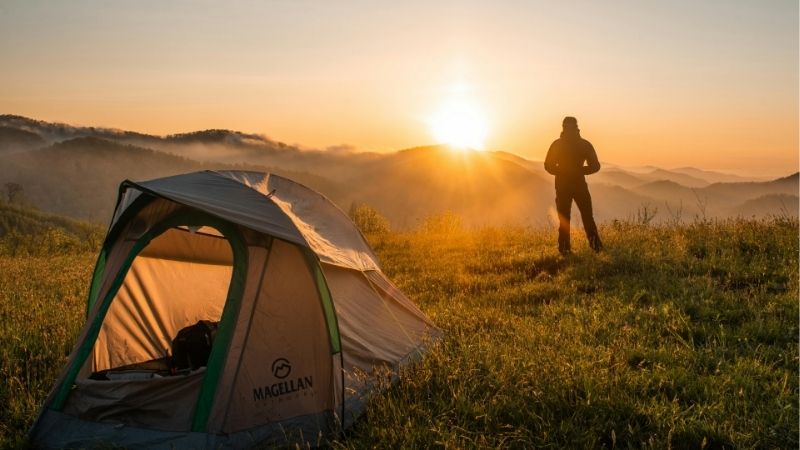
Weight Without Sacrificing Comfort
The backpacker best tent aims for balance. A lightweight two-person tent runs 2 to 3 pounds, and most all-around picks land near the two-pound mark while keeping real features like two doors and dedicated poles that gram-focused shelters trim away.
Semi-freestanding tents such as the NEMO Hornet OSMO hit that sweet spot, pairing sub-two-pound weight with an easy single-pole pitch. You carry a little more than an ultralight tarp, but you gain convenience every night.
Livability and Doors
Two doors change the experience. Layouts like the MSR FreeLite 2 give each camper their own entrance and vestibule, so no one climbs over a tentmate, and a non-tapered floor lets two sleep head to toe without cramping.
Peak height and vertical walls decide whether you can sit up to change clothes. A tent that feels roomy for two beats a lighter one that has you bumping heads every time you move at camp.
Durability and Fabric
All-around tents favor sturdier fabrics than the thinnest ultralight floors. NEMO’s Osmo fabric, for example, resists water and stretch using recycled yarns, while heavier deniers hold up better to repeated seasons than a delicate 15D floor.
Freestanding poles also add resilience in wind compared to trekking-pole shelters. For a tent you will use many seasons, a little extra fabric and structure pays off in longevity.
Value and Ease of Pitch
Price and simplicity matter for everyday use. Budget picks like the Big Agnes Fly Creek UL2 deliver ultralight weight for far less than premium shelters, trading a second door for real savings.
Freestanding and semi-freestanding tents pitch fast on almost any site, which is exactly what most backpackers want after a long day. Ease of setup is a feature, not a luxury.
Top Picks for the Backpacker Best Tent
These six all-around shelters balance weight, comfort and price, all currently on Amazon. The table snapshots the key specs before the detailed picks.
| Tent | Approx. Weight | Type | Doors | Best For |
|---|---|---|---|---|
| NEMO Hornet OSMO 2P | ~2 lb 1 oz | Semi-freestanding | 2 | All-around pick |
| MSR FreeLite 2 | ~2 lb / 907 g | Semi-freestanding | 2 | Livability |
| Big Agnes Copper Spur HV UL2 | ~3 lb packaged | Freestanding | 2 | Space + comfort |
| Sea to Summit Alto TR2 | ~2.5 lb | Semi-freestanding | 2 | Ventilation |
| Big Agnes Fly Creek UL2 | ~2 lb 4 oz | Semi-freestanding | 1 | Budget ultralight |
| NEMO Hornet Elite OSMO 2P | ~2 lb 1 oz | Semi-freestanding | 2 | Premium light |
NEMO Hornet OSMO 2P
The Hornet OSMO 2P is the all-around answer for most backpackers. At roughly 2 pounds 1 ounce it pairs a competitive weight with a refined, easy single-Y-pole pitch, two doors and vestibules, and Osmo fabric that resists water and stretch using recycled yarns.
The main downside is price relative to budget shelters. For a do-everything, semi-freestanding tent that sets up fast and holds up in weather, it hits the balance most backpackers actually want.
MSR FreeLite 2
The FreeLite 2 leads on two-person livability. This double-wall, semi-freestanding tent weighs about 2 pounds yet offers 29 square feet of floor and a symmetrical, non-tapered layout, so two campers fit side by side or head to toe without cramping.
Its 39-inch peak is a bit low, and it costs more than budget options. With gear lofts, interior pockets and oversized vestibules, it packs real comfort into a light, easy-pitching package.
Big Agnes Copper Spur HV UL2
The Copper Spur HV UL2 is the freestanding comfort pick. Around 3 pounds packaged with roughly 29 square feet and two doors and vestibules, it delivers a best-in-class blend of usable space and manageable weight for a couple.
The hubbed poles can flex in strong wind and the fabrics reward gentle handling. For backpackers who prioritize a roomy, stand-anywhere shelter over the lowest number, it remains a top all-around choice.
Sea to Summit Alto TR2
The Alto TR2 is the ventilation standout. At about 2.5 pounds it uses a bridge pole that swings arms upward for a 42.5-inch peak, and high-low venting with two-way door zippers keeps condensation down on humid nights.
Pitching takes a little practice, and 27 square feet is modest. For backpackers who camp in muggy conditions and value airflow and headroom, it is an excellent balanced pick.
Big Agnes Fly Creek UL2
The Fly Creek UL2 is the budget ultralight entry. At around 2 pounds 4 ounces it brings genuine low weight for far less than premium shelters, making it an easy first ultralight tent for cost-conscious backpackers.
To hit the price and weight it uses a single door, so entry and gear access are less convenient for two. For solo hikers or budget pairs who prioritize weight and value, it is a smart buy.
NEMO Hornet Elite OSMO 2P
The Hornet Elite OSMO 2P is the premium light version of the all-around formula. Just over 2 pounds packaged, with a minimum trail weight near 1 pound 11 ounces, it keeps two doors and strong weather protection while shaving space and grams.
The interior is a bit more cramped and the price runs high. For backpackers who want a refined double-wall shelter and refuse to carry extra weight, it is the sharper tool.
What Tariffs and Trip Timing Mean for Buyers
A backpacking tent is a multi-year buy, so 2026 pricing and seasonal timing matter when choosing the backpacker best tent for your trips.
Material Costs Are Rising
Tents lean on technical nylon and aluminum poles, and those inputs have climbed under new tariffs, with specialty materials up 10 to 15 percent inside a roughly 7.7 percent overall increase per an Outdoor Industry Association survey. Brands now often call future prices estimates.
For a tent you will use many seasons, buying the model you want now beats waiting on a lower price that may not return. Aluminum-poled, nylon-heavy tents are directly exposed to that pressure.
Buy Ahead of the Season
Backpacking demand builds through spring and summer, and popular sizes and colors thin out. Ordering the backpacker best tent early means it is in stock in the configuration you want, not back-ordered.
An early buy also lets you pitch it at home, seam-check it and learn the setup before a trip depends on it. Even an easy freestanding tent is better learned in the yard.
Time It With the Deal Calendar
If your trip can wait, mainstream tents often discount around October Prime Big Deal Days and Black Friday. Build a shortlist and track prices so you can grab a balanced all-rounder at its best price.
For trips coming up soon, buy now rather than gamble on a sale. Popular tents sell through in season, and a discount you cannot order does nothing for your weekend.
Frequently Asked Questions
These questions come up most when backpackers pick an all-around tent.
What weight should an all-around backpacking tent be?
The backpacker best tent usually lands near 2 to 3 pounds, light enough to carry yet keeping two doors and dedicated poles. That range balances comfort and weight better than sub-two-pound tents that trim features.
Freestanding or semi-freestanding?
Freestanding tents stand without stakes and relocate easily, ideal for rocky ground. Semi-freestanding models like the Hornet OSMO need a few stakes but pitch nearly as fast while saving weight, a great all-around balance.
Is a budget tent good enough for backpacking?
For many trips, yes. A budget ultralight tent like the Fly Creek UL2 delivers real low weight, trading a second door for savings. Step up only if you want two-door convenience or heavier-duty fabric.
How many doors do I need?
For solo use, one door is fine. For two campers, two doors and vestibules greatly improve entry, exit and gear storage, which is why most all-around two-person picks here have them.
See More:
- Best rolling cooler
- Best roller cooler
- Best wheeled cooler
- Best water bottle insulated
- Best cooling cooler
Final Thoughts
The backpacker best tent is the one that balances weight, livability, durability and value for how you actually camp, not the one that wins a single spec. Start with the NEMO Hornet OSMO 2P for all-around use, choose the MSR FreeLite 2 for livability, or the Fly Creek UL2 on a budget, and buy ahead of season given rising material costs. Nail the balance and any tent here will serve you for years.




Write Your Review
No reviews yet. Be the first to share your experience!