Key takeaways
What's inside
Hiking boot maintenance is the cheapest way to double the life of an expensive pair, yet most hikers skip it until their feet get wet. This guide covers the care routine that keeps boots performing, then compares six of the best cleaning, conditioning, and waterproofing products for 2026 so a costly pair lasts far longer.
As an Amazon Associate we earn from qualifying purchases.
By Jake Thompson
How to Approach Hiking Boot Maintenance
Good care is a simple routine, not a chore. Proper hiking boot maintenance means cleaning off grit, drying boots correctly, conditioning leather, and refreshing waterproofing before it fails. The four habits below keep your boots dry, supple, and trail-ready far longer.
Clean After Every Muddy Hike
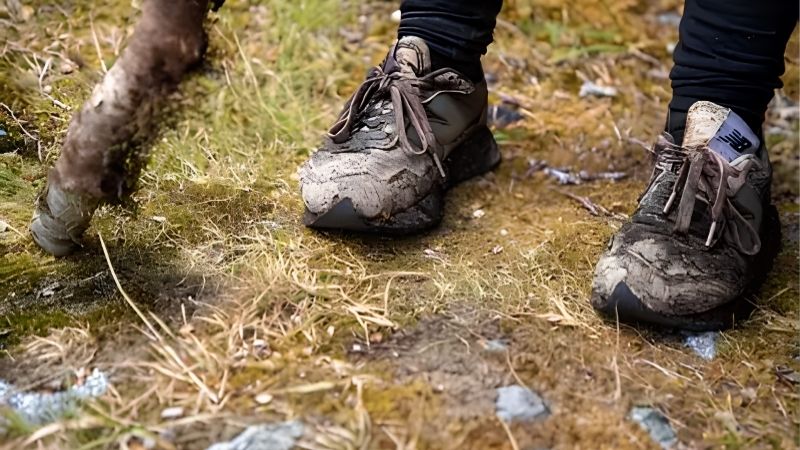
Dirt and caked mud dry out leather and abrade fabric, wearing boots out faster. Knock off chunks, remove the laces, and use a stiff nylon brush with a technical cleaner to lift grime from seams and eyelets, where crud loves to hide.
Avoid household soaps, which can strip coatings and damage membranes. A dedicated footwear cleaning gel lifts dirt without harming waterproofing, and rinsing thoroughly leaves a clean surface so any later treatment absorbs and performs properly.
Dry Boots the Right Way
How you dry boots matters as much as cleaning them. Always dry footwear slowly at room temperature, away from campfires, radiators, and direct sun, since high heat cracks leather, weakens glue, and warps soles over time.
Remove insoles and laces to speed airflow, and stuff damp boots with newspaper or use a low-heat boot dryer to pull moisture from the interior. Never store boots wet, as trapped moisture breeds odor and breaks down materials.
Condition Leather Regularly
Leather needs feeding to stay supple. Full-grain and nubuck uppers dry out and crack without periodic conditioning, so a wax or cream restores flexibility and water resistance while extending the life of the boot considerably.
Use the right product for the leather type, since heavy waxes darken and soften uppers. Conditioning also refreshes appearance, though membrane boots need a spray rather than a wax that could clog their breathable liner.
Refresh Waterproofing Before It Fails
Waterproofing wears off with miles, so watch for water soaking in rather than beading up. That is the signal to reproof, which keeps feet dry and, on membrane boots, actually helps them breathe by keeping the outer fabric from wetting out.
Clean boots first, since treatments bond to a clean surface. Match the product to your upper, apply evenly, and let boots dry fully before use. Regular reproofing is the core of any hiking boot maintenance routine.
Top Picks: The Best Boot Care Products
These are our favorite products for hiking boot maintenance in 2026, spanning cleaning, conditioning, waterproofing, and drying. The table gives a fast overview; the write-ups explain who each product suits and its honest limitation.
| Product | Job | Best For |
|---|---|---|
| Nikwax Footwear Cleaning Gel | Cleaning | All materials |
| Nikwax Fabric & Leather Proof | Waterproofing | Combo and synthetic |
| Obenauf’s Heavy Duty LP | Conditioning | Full-grain leather |
| Stiff Nylon Boot Brush | Scrubbing | Mud and seams |
| Boot Dryer | Drying | Wet interiors |
| Footwear Deodorizer | Odor control | Fresh interiors |
Nikwax Footwear Cleaning Gel
The cleaning foundation, this technical gel lifts dirt and grime without harming waterproofing or membranes. Its sponge applicator makes it easy to scrub seams and eyelets, leaving a clean surface so conditioners and proofing treatments absorb and work as intended.
It only cleans, so it must be paired with a separate waterproofing product. But as the first step in any care routine, it protects boots far better than household soaps and is the right start to hiking boot maintenance.
Nikwax Fabric & Leather Proof
The versatile waterproofer, this water-based treatment suits combination, fabric, and synthetic boots, including GORE-TEX membranes it will not clog. Applied to damp, clean boots, it restores water repellency and helps membrane footwear breathe by keeping the outer fabric from wetting out.
It is not a wax, so full-grain leather lovers may want a heavier treatment, and it needs periodic reapplication. But for the mixed-material boots most hikers own, it is the easiest, safest way to restore waterproofing.
Obenauf’s Heavy Duty LP
The leather conditioner of choice, Obenauf’s Heavy Duty LP feeds full-grain leather with a natural-oil-and-beeswax blend that softens, waterproofs, and preserves the upper. It is a favorite for reviving stiff, dried-out leather boots and extending their life for years.
It darkens leather and is meant for full-grain uppers, not membrane or synthetic boots, so use it selectively. For hikers with quality leather boots, though, few products restore suppleness and water resistance as effectively.
Stiff Nylon Boot Brush
The humble brush is essential, digging mud out of lugs, seams, and eyelets where cloth cannot reach. A stiff nylon brush scrubs off caked dirt before it dries and abrades the upper, making it the first tool in every cleaning session.
It is a manual tool with no waterproofing power, so it is only step one. But paired with a cleaning gel, a good brush removes the grit that quietly wears boots out, protecting your investment for the cost of a few dollars.
Boot Dryer
A low-heat boot dryer pulls moisture from soaked interiors that air-drying leaves damp for days. By gently circulating warm air, it prevents the odor, mildew, and material breakdown that come from storing wet boots, readying them for back-to-back trips.
It needs power and takes up space, and cheap high-heat models can damage boots, so choose a gentle one. For hikers in wet climates or on multi-day trips, though, dry boots each morning are worth the counter space.
Footwear Deodorizer
A dedicated deodorizer keeps boot interiors fresh, neutralizing the bacteria that cause odor after sweaty miles. Sprays and reusable inserts control smell between washes, making boots far more pleasant to put on and store in a closet or gear bin.
It masks and neutralizes odor rather than cleaning, so it complements rather than replaces washing. But as a finishing touch in a maintenance routine, it keeps well-cared-for boots smelling as good as they perform.
What Tariffs and Timing Mean for Care Buyers in 2026
Even hiking boot maintenance has a budget angle in 2026, since care products and the boots they protect are largely imported and priced against trade policy and the calendar. Reading the market helps you stock care essentials for less.
Import Tariffs and Prices
Most footwear and many care products are made overseas, and 2026 tariff policy remains unsettled after shifting court rulings and new investigations. Prices sit in the storm as a result, and many brands admit future pricing is only a best guess.
Because care products are inexpensive and long-lasting, stocking up now is low-risk. Protecting the boots you already own with regular maintenance is also the surest way to sidestep the cost of replacing them at uncertain prices.
Bundle and Closeout Deals
Care products are where bundle savings shine. Retailers clearing pre-tariff inventory through late 2026 discount cleaning and proofing kits, and buying a cleaner, conditioner, and waterproofer together often costs less than separate purchases.
Watch value-tier deals, since mid-range brands pass costs straight through. A previous-year care kit performs identically to this year’s, so the markdown is pure savings that keeps your boots protected for less.
Seasonal Timing
Timing helps too. Late summer and early fall are ideal for restocking care products before the wet, muddy season, while Amazon’s fall Prime event, expected in early October, brings discounts on kits and dryers ahead of winter.
For the deepest cuts, Black Friday and Cyber Monday in late November lead the year. Buy a full care kit during a sale so your boots are ready for wet weather without paying full price for every product.
Frequently Asked Questions
A few questions come up again and again when hikers tackle hiking boot maintenance. Here are quick, practical answers to help you care for your boots with confidence.
How often should I clean hiking boots?
After every muddy or dusty hike, and always before conditioning or reproofing. Dirt abrades materials and dries out leather, so a quick brush and rinse after each trip does more for boot life than any occasional deep clean.
How do I dry wet boots safely?
Slowly, at room temperature, away from direct heat. Remove insoles and laces, stuff with newspaper, or use a low-heat dryer. Campfires and radiators crack leather and weaken glue, so never rush drying with high heat.
Do I need to condition synthetic boots?
No. Conditioners feed leather, while synthetic and mesh boots only need cleaning and a compatible waterproofing spray. Using leather wax on membrane boots can clog the liner, so match the product to your boot’s material.
How often should I reproof my boots?
When water stops beading on the surface and starts soaking in. That varies with mileage and conditions, but checking the water-bead test every few trips tells you exactly when a fresh coat of waterproofing is due.
See More:
Final Thoughts
The takeaway on hiking boot maintenance is that a simple routine of cleaning, drying, conditioning, and reproofing doubles the life of your boots. A cleaning gel, a leather conditioner, and a waterproofer cover the essentials for most hikers. Care for the boots you own, and buy products when stock and pricing align, since tariff uncertainty on imported goods makes waiting a gamble in 2026.