
Tent stakes guide knowledge is the cheap upgrade that keeps your shelter standing in wind: the flimsy stakes bundled with most tents bend and pull free. This guide explains how to match a stake to your ground and names six top picks.
As an Amazon Associate we earn from qualifying purchases.
Our top picks


As an Amazon Associate we earn from qualifying purchases at no extra cost to you.
By Jake Thompson
How to Use This Tent Stakes Guide
The core of any tent stakes guide is matching stake shape and material to your ground, since no single stake works everywhere. Knowing the types, the materials and how to drive and remove them turns staking from a weak link into a secure anchor that keeps your tent taut in any conditions.
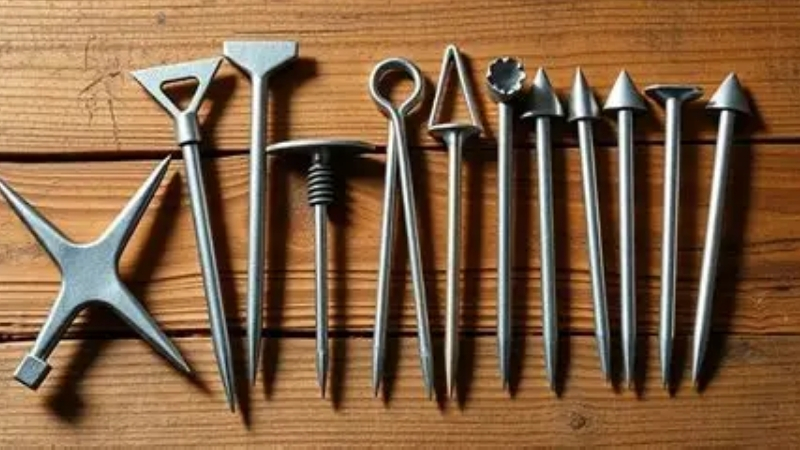
Know the Stake Shapes
Stake shape sets holding power. Y-beam and V-shaped stakes have a three- or two-sided profile with lots of surface area, giving the best hold in normal to firm soil. Shepherd’s-hook and nail stakes are thin, slipping between rocks and into hard ground but rotating free in loose soil.
Screw stakes bite into sand and soft soil where others pull out, while wide snow and sand stakes present a big surface for low-density ground. Match the shape to where you camp: Y-beam for general use, hooks for rocky ground, and specialist stakes for sand and snow.
Pick the Right Material
Material sets weight, strength and how a stake fails. Aluminum, usually 7075 alloy, is the best all-around choice, balancing cost, weight and strength, and it bends before breaking so you can bend it back. Titanium is the lightest practical bending material, strong for its weight but pricier.
Steel is cheap and strong but heavy, suited to car camping, while carbon is the lightest but brittle. Match material to your priorities: aluminum for most campers, titanium for weight-conscious backpackers, and steel for durable car-camping stakes. Carry a few tougher stakes as backup in difficult ground.
Match Stakes to Your Ground
The key lesson is carrying the right stake for your terrain, or a mix. Firm and rocky ground rewards Y-beam aluminum or narrow titanium stakes that penetrate and resist rotation. Soft loam and mud suit Y or V stakes, while sand and snow demand dedicated wide stakes or screws.
Many campers carry a set of Y-beam stakes plus a few specialists for the conditions they meet. If you always camp on soft forest floor, general stakes suffice, but beach or snow trips need the right tool. Matching stakes to ground is what keeps a tent anchored rather than pulling free overnight.
Drive and Remove Them Right
Technique matters as much as the stake. Drive stakes at about a 45-degree angle leaning away from the tent for the strongest hold, pushing them fully in. In hard ground, use a rock or mallet rather than stomping, which bends stakes, and seat the guyline in the stake’s notch or hook.
To remove, use another stake, a puller or the stake’s own hook rather than yanking the guyline, which can snap it. Cleaning mud off stakes before packing keeps them sliding smoothly next time. Good technique makes even modest stakes hold better and extends the life of quality ones.
Top Picks From This Tent Stakes Guide
These six span all-around Y-beams to titanium hooks and snow specialists. This tent stakes guide highlights each in the table, then breaks down who it suits and its honest drawbacks.
| Stake | Type | Best Ground | Approx. Weight |
|---|---|---|---|
| MSR Ground Hog | Y-beam aluminum | Firm and rocky | ~0.46 oz |
| MSR Mini Ground Hog | Y-beam aluminum | Mixed terrain | ~0.35 oz |
| Vargo Titanium Shepherd’s Hook | Titanium hook | Rocky and hard | ~0.22 oz |
| MSR Blizzard | Snow/sand stake | Snow and sand | ~0.5 oz |
| MSR Carbon Core | Carbon/aluminum | Light soil | ~0.19 oz |
| NEMO Sweepstake | Y-profile aluminum | Firm/stubborn | ~0.5 oz |
MSR Ground Hog — Best All-Around Y-Beam
The Ground Hog is the industry-standard stake. Its Y-beam profile in tough 7075 aluminum delivers excellent holding power in normal to firm and rocky ground, resisting rotation and pull-out, and it bends before breaking so you can straighten it. For a dependable all-around stake, it is the benchmark.
It is heavier than titanium hooks and less effective in loose sand, where its profile lacks lateral surface. For campers who want the most reliable general-purpose stake that anchors a taut pitch in most soils and survives seasons of abuse, though, it is the standard for good reason and a smart upgrade.
MSR Mini Ground Hog — Best for Mixed Terrain
The Mini Ground Hog is the backpacker’s all-arounder. It brings the same Y-beam hold in a lighter, shorter package, driving to full depth in a few mallet strikes and extracting cleanly, making it the top pick for mixed-terrain trips. For hikers who want strength and low weight, it is the sweet spot.
Its shorter length holds less in very loose or sandy ground than full-size stakes. For weight-conscious backpackers moving between firm forest floor and gravelly alpine sites who want secure anchoring without the full-size weight, though, it is widely rated the best all-around backpacking stake available.
Vargo Titanium Shepherd’s Hook — Best for Rocky Ground
The Vargo Titanium Shepherd’s Hook is the featherweight rock specialist. Its narrow titanium profile slips between rocks and into hard-packed ground where wider stakes fail, at a tiny weight, and titanium bends back if it flexes. For rocky alpine terrain and gram-counters, it is a top choice.
Its thin diameter reduces holding power in loose soil and it costs more than aluminum, and it can bend in the hardest ground, though it straightens easily. For weight-focused hikers who camp on rocky or hard sites and want the lightest durable stake, though, its penetration and packability are excellent.
MSR Blizzard — Best for Snow and Sand
The Blizzard is the snow and sand specialist. Its wide, concave aluminum design with cutouts lets snow and sand settle in and freeze or pack around it, giving excellent holding power in low-density ground where normal stakes pull straight out. For winter and beach camping, it is essential.
It is specialized, holding less efficiently in firm soil than a Y-beam and adding weight for a niche use. For campers who venture onto snow or sand, though, it is not optional, since standard stakes simply will not anchor a tent in those surfaces, making it a must-carry for those conditions.
MSR Carbon Core — Best Featherweight
The Carbon Core is the gram-counter’s stake. At under two-tenths of an ounce, this carbon-and-aluminum stake is among the lightest serious options available, ideal for ultralight setups where every gram counts. For weight-obsessed backpackers on reasonable ground, it shaves weight without going flimsy.
Carbon is more brittle than aluminum or titanium, so it suits lighter soil over rocky or frozen ground, and it is pricey. For ultralighters who want the lowest stake weight and mix a few tougher stakes in for difficult terrain, though, it is a superb way to trim ounces from a shelter system.
NEMO Sweepstake — Best for Stubborn Ground
The Sweepstake is the clever firm-ground pick. Its Y-shaped profile with a pointed tip drives into firm, stubborn soil more easily, and a wide flat top takes a rock or boot for pushing. Uniquely, it includes a glow-in-the-dark stake cleaner that finds and de-muds stakes in seconds. For firm ground, it stands out.
It is heavier than ultralight stakes and its clever features are niceties rather than necessities. For campers who often face firm, stubborn ground and value a stake that drives easily, takes a push, and is easy to find and clean, though, its thoughtful design makes staking noticeably less frustrating.
What Tent Stakes Cost in 2026
Tent stakes are inexpensive, so timing matters little, but a couple of current market forces are worth noting. None change the fundamentals in this guide.
Tariffs Add Modest Cost
Stakes use imported aluminum, titanium and carbon under tariffs that remain in place, adding modest cost. Brands have described future pricing as a moving target, but stakes are low-priced, so upgrading the flimsy ones your tent came with now rather than waiting is a cheap, worthwhile call.
The effect is small on cheap hardware. Value buyers can find multi-packs of Y-beam stakes at a saving, but there is little reason to delay a few dollars of stakes that keep a tent standing. Titanium and specialty stakes cost more, so watch for sales if kitting out for snow or sand.
Upgrade the Included Stakes
The highest-value move is replacing the thin wire stakes most tents ship with. A set of MSR Ground Hogs or Mini Ground Hogs transforms how securely a tent anchors in wind for little money. Fall sales occasionally discount stakes, but their low price means upgrading anytime is worthwhile.
Carry a mix for your terrain: mostly Y-beam stakes plus a few specialists for sand or snow if you camp there. Upgrading and matching stakes to ground is one of the cheapest, highest-impact improvements you can make to any tent, preventing the collapsed pitches that flimsy stakes cause.
Buy for Your Terrain
The best value is buying stakes suited to where you actually camp rather than the lightest or cheapest option blindly. Rocky-ground campers want titanium hooks, snow campers need Blizzards, and general backpackers do well with Mini Ground Hogs. Match the purchase to your typical conditions.
If a specific stake set is prone to selling out with a popular tent or before a trip, buy early rather than gambling on stock. Missing the right stakes before a windy or sandy trip means a failing pitch, so stock a terrain-appropriate set ahead and keep your tent firmly anchored.
Frequently Asked Questions
These are the questions campers ask most about tent stakes.
What stakes does a tent stakes guide recommend for most people?
Y-beam aluminum stakes like the MSR Ground Hog or Mini Ground Hog. A good tent stakes guide points most campers to these because their surface area holds well in normal to firm soil, they resist bending, and they upgrade the flimsy wire stakes most tents include for little money.
Why do the stakes that came with my tent fail?
They are usually thin wire stakes with little holding power that bend and pull out easily in wind or hard ground. Upgrading to Y-beam or titanium stakes dramatically improves how securely your tent anchors, which is why swapping the included stakes is a cheap, high-impact upgrade.
What stakes work in sand or snow?
Dedicated snow and sand stakes like the MSR Blizzard, which are wide and concave so the low-density ground packs around them, or screw stakes that bite into sand. Standard Y-beam and nail stakes pull straight out of sand and snow, so specialist stakes are essential for those surfaces.
Aluminum or titanium stakes?
Aluminum for most people, titanium for weight-focused backpackers. Aluminum balances cost, strength and weight and bends before breaking, while titanium is lighter and bends back but costs more. Carry aluminum Y-beams for general use, adding titanium hooks if you prioritize low weight on rocky ground.
See More:
- Best hiking backpack
- Best backpacking backpack
- Ultralight hiking backpack
- Best hydration backpack
- Best hiking backpack for women
Final Thoughts
A tent stakes guide comes down to matching shape and material to your ground and upgrading the flimsy included stakes. The MSR Ground Hog and Mini Ground Hog anchor most soils, the Vargo titanium hook handles rock, and the MSR Blizzard tackles snow and sand. Carry the right stakes for your terrain, drive them at an angle, and your tent will stay put in the wind.


Write Your Review
No reviews yet. Be the first to share your experience!