
Key takeaways
What's inside
Dog hiking backpack shopping is about safe fit and the right load, so your dog can carry its own water and gear comfortably. This guide compares six top packs by fit, capacity, load and comfort for day hikes and backcountry trips with your trail dog.
As an Amazon Associate we earn from qualifying purchases.
By Jake Thompson
How to Choose a Dog Hiking Backpack
Choosing a dog hiking backpack means prioritizing proper fit, a safe load and comfort over storage. A well-fitted pack lets a healthy adult dog carry its own water and snacks, but the fit and weight limits matter far more than capacity, since a poorly fitted or overloaded pack can hurt your dog.
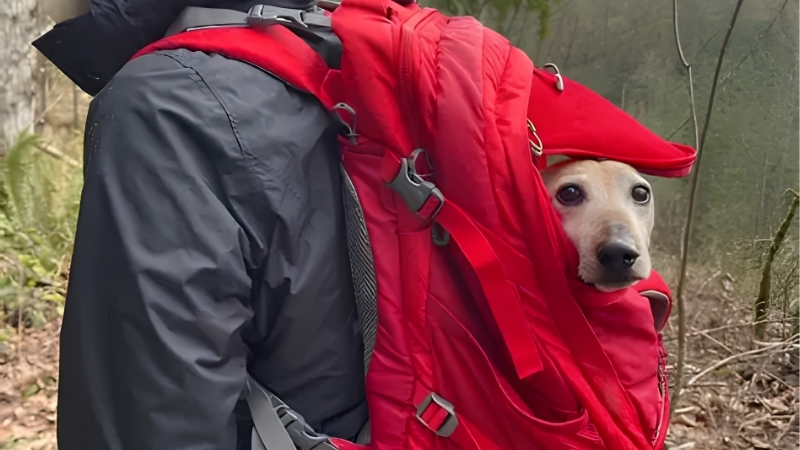
Respect Weight and Health Limits
A healthy adult dog can typically carry about 10-25% of its body weight, but start low, around 10%, and build up gradually over weeks as your dog adjusts. Never overload, and skip packs entirely for puppies, growing dogs, senior or arthritic dogs, and giant breeds prone to joint issues.
Check with your vet before starting, especially for any dog with joint or health concerns. Load the pack evenly on both sides so it does not pull, and remember the pack itself adds weight. When in doubt, carry less, since a dog’s long-term joint health matters more than a few extra ounces.
Get the Fit Right
Fit is everything for a dog pack. It should sit high on the shoulders and back, not the lower spine, with chest and belly straps snug but not tight enough to restrict breathing or movement. Multiple adjustment points and a size matched to your dog’s chest girth prevent slipping and chafing.
Measure your dog’s girth and match it to the pack’s size chart rather than guessing by weight alone. Padded, well-adjusted straps and an integrated harness keep the load stable and comfortable, while a poor fit slides, rubs and can sore your dog on longer hikes. Fit trumps every feature.
Match Capacity to the Trip
Dog packs range from small day packs around 3-8 liters to multi-day panniers of 10-19 liters. A day pack holds water, snacks and waste bags, while a larger pack lets a dog carry its own food and bowls on overnights. Match the capacity to the trip and your dog’s safe load limit.
Do not oversize, since a big pack tempts overloading, which strains your dog. For most day hikers, a 3-8 liter pack covers water and essentials, while backcountry trips want removable panniers you can lighten at camp. Size to the adventure and your dog’s weight limit, not the biggest option.
Look for Comfort and Safety Features
Useful features include breathable mesh for ventilation, padded spine and chest support, a leash attachment point, and a padded assist handle to help your dog over tricky terrain. Reflective detailing adds visibility, and included collapsible water bladders let your dog carry and drink its own water.
Durable, tear-resistant fabric matters since dogs brush through brush and rocks. Prioritize a comfortable, well-ventilated, securely fitted pack over sheer storage, since a pack that fits and breathes well keeps your dog happy on the trail. Add moleskin to any friction points on longer hikes.
Top Picks: The Best Dog Hiking Backpack for Trail Dogs
These six span budget first packs to multi-day backcountry panniers, for dogs of different sizes. The right dog hiking backpack depends on your dog’s size, load and trips, so scan the table, then read each pick for who it suits and its honest drawbacks.
| Model | Capacity | Best For | Fits Dogs | Price Tier |
|---|---|---|---|---|
| Ruffwear Palisades Pack | 10-19L | Multi-day trips | Medium-large | Premium |
| Ruffwear Approach Pack | ~7-22L | Large-volume day hikes | Most sizes | Premium |
| Kurgo Baxter Pack | 3.75-7.5L | Value day hikes | 30-110 lb | Mid |
| OneTigris Hoppy Camper | Small-medium | Budget first pack | Medium-large | Budget |
| Outward Hound DayPak | Small | Lightweight day hikes | Varies | Budget |
| Mountainsmith K-9 Pack | Medium-large | Large breeds | Large | Mid |
Ruffwear Palisades Pack — Best Multi-Day
The Palisades is the multi-day backcountry pick and Ruffwear’s flagship. It has removable panniers up to about 19 liters, two included collapsible one-liter hydration bladders, internal compression straps, four harness attachment points and a padded assist handle. For overnight trips where a dog carries its own food and water, it is unmatched.
It is premium-priced and, at up to about two pounds empty, heavier than day packs, making it overkill for short hikes. For frequent backcountry trips with a fit medium-to-large dog, though, its capacity, hydration and thoughtful design justify the cost. It comes in three sizes by capacity.
Ruffwear Approach Pack — Best Large-Volume Day Pack
The Approach is the Palisades’s day-hiking sibling and our large-volume day pick. It carries a full day’s water and gear with refined strap adjustments that work well across dog sizes, and its durable build handles rugged trails. For frequent day hikers who want Ruffwear quality without multi-day bulk, it is ideal.
It is premium-priced, and its straps can slide on some dogs without careful adjustment. For dogs that need real day-hike capacity in a well-made, durable pack with a comfortable, adjustable fit, though, it is the standout. Match the size to your dog’s girth for the best fit.
Kurgo Baxter Pack — Best Value
The Baxter is the value day-hike pick. Its two saddlebags hold about 3.75 liters, or 7.5 liters in the Big Baxter, fitting dogs from 30 to 110 pounds, with eight adjustment points, reflective strips, a padded handle, an integrated harness with two leash points and even a bottle opener. For most day hikers, it delivers a lot for the price.
Its straps can slide on some dogs, and the buckles and straps are less padded than premium packs, so they lay against the skin and may need moleskin on longer hikes. For casual day hikes with a well-fitted dog, though, its features and mid-range price make it a strong value.
OneTigris Hoppy Camper — Best Budget First Pack
The Hoppy Camper is the smart first pack. At a budget price it is a sturdy, practical pack with roomy side pockets, ideal for testing whether your dog even accepts wearing a pack before investing in premium gear. Some dogs reject the concept, and finding out cheaply is far better than with a costly pack.
Its harness padding is thinner than premium packs, which can chafe on longer hikes or short-coated dogs, so moleskin at friction points helps. Its fit adjustment is simpler than Ruffwear’s but adequate for most medium and large breeds. As a low-risk first pack, it is the smartest starting point.
Outward Hound DayPak — Best Lightweight
The Outward Hound DayPak is the lightweight, budget-friendly pick. Its slim profile, breathable material and reflective accents suit casual day hikes and urban adventures, carrying water and a few essentials without bulk. For short outings and smaller loads, its simplicity and low price are appealing.
It sacrifices advanced features like extra adjustability and larger capacity, so it is best for light loads and short hikes rather than serious trail days. For casual day hikers who want a simple, affordable, breathable pack for their dog, though, it does the job well without fuss.
Mountainsmith K-9 Pack — Best for Large Breeds
The Mountainsmith K-9 is the pick for big dogs. Its ergonomic design, breathable mesh panels and padded sternum strap suit larger breeds on longer hikes, distributing the load comfortably across a big dog’s frame. For large, healthy dogs that can carry a real load, it is well suited.
Being sized and shaped for large breeds, it is less ideal for small or medium dogs, and it is a mid-price rather than budget option. For owners of big, fit trail dogs who want an ergonomic, ventilated pack built for their size, though, it is a comfortable, capable choice.
What Dog Pack Prices Look Like in 2026
Dog packs span budget to premium, so timing helps. A couple of current market forces affect what these packs cost and when to buy, without changing which fits your dog.
Tariffs Add Modest Cost
Dog packs use imported nylon and polyester, and modest tariffs add a little cost. Brands have described future pricing as uncertain, so if you already know the pack you want, buying now is a reasonable move, especially since a well-made pack lasts many seasons of trail use.
The effect is uneven. Premium packs like Ruffwear’s have largely held pricing, while budget packs see occasional discounting. Value-focused buyers should watch the Baxter and OneTigris for closeouts, which are already affordable ways to outfit a trail dog.
Test First, Then Invest
Because some dogs reject wearing a pack, testing with an inexpensive pack first is wise before investing in premium gear. Once your dog takes to it, buying a durable, well-fitted pack on sale during fall events like Prime Big Deal Days or Black Friday stretches your budget further.
Buying ahead of hiking season also secures the size you need, since popular sizes sell out. Match the size to your dog’s girth, build up the load gradually, and a quality pack bought on sale will serve your trail dog for many adventures to come.
Spend on Fit and Durability
The best value in a dog pack is a secure, comfortable fit and durable fabric, since those protect your dog and last. Spend there rather than on maximum capacity, since an overloaded or ill-fitting pack can harm your dog regardless of how much it holds.
If a specific size is prone to selling out, buy early rather than gambling on peak-season stock. Missing the right size costs more than a small discount, and a properly fitted pack is what keeps your dog safe and comfortable on every hike.
Frequently Asked Questions
These are the questions owners ask most about dog packs.
How much weight can a dog hiking backpack hold?
A healthy adult dog can typically carry about 10-25% of its body weight in a dog hiking backpack, but start near 10% and build up gradually. Load both sides evenly, and check with your vet first, especially for any dog with joint or health concerns. When unsure, carry less.
Which dogs should not wear a pack?
Puppies and growing dogs, senior or arthritic dogs, and giant breeds prone to joint issues should skip packs. Any dog with health concerns should be cleared by a vet first. Packs are best for healthy, fully grown adult dogs of medium to large size with no joint problems.
How should a dog pack fit?
It should sit high on the shoulders and back, not the lower spine, with chest and belly straps snug but not restricting breathing or movement. Measure your dog’s girth and match the size chart, then use the adjustment points to prevent slipping and chafing on the trail.
How do I get my dog used to a pack?
Introduce it gradually. Let your dog wear the empty pack around the house, then add light weight and short walks, building up over weeks. Keep it positive with treats and praise. Some dogs take to it quickly, others need patience, so go at your dog’s pace and never rush the load.
See More:
- Best hiking backpack
- Best backpacking backpack
- Ultralight hiking backpack
- Best hydration backpack
- Best hiking backpack for women
Final Thoughts
The best dog hiking backpack is the one that fits securely, carries a safe load and suits your dog’s size. The Ruffwear Palisades leads for multi-day trips, the Kurgo Baxter is the value day pick, and the OneTigris is a smart low-risk first pack. Respect weight limits, prioritize fit, check with your vet, then time a sale, and your trail dog can carry its own gear happily.
Write Your Review
No reviews yet. Be the first to share your experience!