
Key takeaways
What's inside
Thru hiking backpack choices reward going light: on a long trail you carry the pack every day for months, so weight, comfort and durability all matter. This guide compares six top packs by weight, capacity, comfort and durability for the long haul.
As an Amazon Associate we earn from qualifying purchases.
By Jake Thompson
How to Choose a Thru Hiking Backpack
A thru hiking backpack has to carry a light kit comfortably for hundreds of miles, so weight, capacity, comfort under load and durability all count. Match those to your base weight and trail, since the lightest pack only works if the rest of your gear is light too.
Lower Your Base Weight First
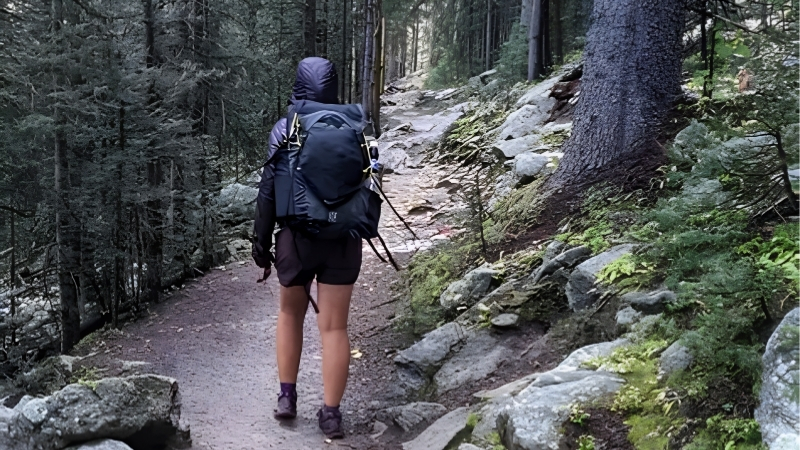
A thru-hiking pack only shines with a low base weight, usually under about 20 pounds. Lightweight and ultralight packs carry 30-40 pounds well, so your gear, before food and water, needs to be light. If your big-three items are heavy, no pack upgrade will fix the carry.
Weigh your kit honestly and lighten your shelter, sleep system and pack first, since they dominate base weight. Once your base weight is low, a two-pound pack carries a resupply-heavy load fine; if it stays high, you will overload a light pack and pay for it every mile.
Size for Your Trail and Resupply
Most thru-hikers land in the 40-60 liter range. Around 40-50 liters suits disciplined ultralighters with short resupplies, while 55-65 liters handles longer food carries and bear canisters. Match capacity to your longest resupply and whether a canister is required on your trail.
Do not oversize, since a half-empty pack sags and tempts you to carry more. Fifty-five to sixty liters is a versatile thru-hiking size for most, big enough for a multi-day food carry yet trim enough to stay light. Factor in a bear canister if your route requires one.
Weigh Comfort Under Load
Comfort matters more over months than on a weekend. Frameless ultralight packs are lightest but transfer little weight to the hips and need careful packing, while internal-frame packs like the Circuit and Southwest carry 35-40 pounds in genuine comfort, which pays off on long resupply carries.
For most thru-hikers a minimal internal frame is the smarter trade. The few extra ounces buy real hip support that matters when you leave town with a week of food. Reserve frameless packs for experienced ultralighters with very low base weights who know how to pack a load-bearing setup.
Judge Durability for the Distance
A thru-hiking pack takes months of daily abuse, so durable fabrics matter. Waterproof Dyneema on the Southwest and Zpacks resists rain and abrasion, while lighter Robic and nylon packs save weight but need more care. Match the fabric to your trail and how hard you are on gear.
Rocky, brushy or off-trail routes reward tougher Dyneema, while groomed long trails let you run lighter fabrics. A durable pack that survives a whole trail is also the more economical choice, since replacing a worn-out pack mid-hike costs far more than buying the right one upfront.
Top Picks: The Best Thru Hiking Backpack for Long Trails
These six span true ultralight packs near two pounds and lighter framed options, all proven on long trails. The right thru hiking backpack depends on your base weight and trail, so scan the table, then read each pick for who it suits and its honest drawbacks.
| Model | Capacity | Weight | Max Load | Price Tier |
|---|---|---|---|---|
| HMG Southwest 3400 | 55L | ~2 lb | ~40 lb | Premium |
| ULA Circuit | 68L | ~2 lb 7 oz | ~35 lb | Mid |
| Gossamer Gear Mariposa 60 | 60L | ~2 lb 2 oz | ~35 lb | Mid |
| Zpacks Arc Haul Ultra 60 | 60L | ~1 lb 8 oz | ~40 lb | Premium |
| Osprey Exos 58 | 58L | ~2 lb 13 oz | ~35 lb | Mid |
| Gregory Focal 58 | 58L | ~2 lb 9 oz | ~35 lb | Mid |
HMG Southwest 3400 — Best Durable Ultralight
The Southwest 3400 is the thru-hiking benchmark. Its 55L body plus external pockets is waterproof Dyneema that resists rain and abrasion for a whole trail, yet the pack weighs about two pounds and carries up to roughly 40 pounds better than most ultralight packs. Handmade in Maine, it is built to outlast a long trail.
Its thin foam straps get uncomfortable much above 30 pounds, the single tube has no internal organization, and it is premium-priced. For disciplined thru-hikers who want waterproof durability and a proven long-trail carry, though, nothing quite matches it. A smaller 2400 version suits shorter carries.
ULA Circuit — Best Load-Carrier
The Circuit is the thru-hiking load-hauler. Its internal frame and aluminum stay carry about 35 pounds with class-leading comfort for the category, and its 68L volume swallows long food carries and a bear canister. It survives repeat thru-hikes, a favorite on the long trails for good reason.
As a cottage pack it offers less external organization than mainstream packs, can have longer lead times, and is fixed to your torso size. For thru-hikers who want light weight but still carry heavy resupplies in comfort, though, its comfort-to-weight balance is hard to beat.
Gossamer Gear Mariposa 60 — Best Comfort-to-Weight
The Mariposa 60 is one of the most comfortable packs at its weight. An internal frame and aluminum stay carry up to about 35 pounds, and seven roomy external pockets, most in durable fabric, keep gear organized on long days. At about two pounds two ounces, it is a long-distance favorite.
Owners occasionally report hipbelt durability issues over big miles, and its thin materials need reasonable care, with comfort dropping past its rating. Within its load range, though, the comfort-per-ounce is outstanding and the pocket layout is genuinely useful on a long trail.
Zpacks Arc Haul Ultra 60 — Best Ultralight
The Arc Haul Ultra 60 is the ultralight standout. Its Ultra and Dyneema fabric resists rain, a tensioned carbon-fiber frame ventilates and carries up to about 40 pounds, and the adjustable-torso pack weighs about a pound and a half with a roll-top closure. For weight-obsessed thru-hikers, it is exceptional.
It is expensive, the thin fabric rewards careful handling around sharp gear, and top-loading roll-top access is less convenient than a panel opening. For ultralight thru-hikers who face rain and prize a featherweight, ventilated carry over months, though, few packs match it.
Osprey Exos 58 — Best Mainstream Lightweight
The Exos 58 is the accessible thru-hiking pick. At about two pounds thirteen ounces it keeps a ventilated AirSpeed trampoline backpanel, four inches of torso adjustment and a padded hipbelt, carrying a long-trail kit in cool comfort. For hikers who want a lightweight pack without cottage lead times, it is ideal.
Its hipbelt pockets are notably small, its thin fabric tops out near 35 pounds, and it is less durable than Dyneema packs. For thru-hikers who want real comfort and adjustability from an easy-to-buy mainstream pack, though, it remains a longtime favorite. The women’s version is the Eja 58.
Gregory Focal 58 — Best Ventilated Lightweight
The Focal 58 is the ventilated lightweight pick. At around two and a half pounds it pairs a FreeFloat suspended-mesh backpanel with a pre-curved hipbelt, large hipbelt pockets and a wire internal frame, carrying a long-trail kit in cool comfort with a simple, easy-to-pack design. It is a strong Exos rival.
Its wire frame maxes out around 30-35 pounds, its thin nylon is less durable than Dyneema packs, and it lacks torso adjustability, so fit matters. For weight-conscious thru-hikers who want ventilation and roomy hipbelt pockets, though, it is excellent. The women’s version is the Facet 55.
What Thru-Hiking Pack Prices Look Like in 2026
Thru-hiking packs use premium lightweight fabrics, so pricing deserves a look. A couple of current market forces affect what these packs cost and when to buy, without changing which pack suits your miles.
Premium Fabrics Feel Tariff Pressure
Dyneema and technical nylons are largely imported, and aluminum and carbon frame elements sit under tariffs that remain in place. Cottage brands run thin margins and have called future pricing a moving target, so buying a pack you already want beats waiting indefinitely this year.
The picture is uneven. Premium ultralight makers have mostly held pricing, while mainstream lightweight packs are discounted as retailers clear pre-tariff stock. Budget-minded thru-hikers should watch mainstream models like the Exos and Focal for closeouts.
Order Cottage Packs Early
Cottage brands like Hyperlite, ULA, Gossamer Gear and Zpacks often build to order, so lead times stretch before hiking season. Ordering months ahead of a thru-hike gets your pack in hand with time to test the fit and shakedown-hike it, rather than waiting weeks before a start date.
Mainstream options follow the usual calendar, with Prime Big Deal Days in early October and Black Friday and Cyber Monday in late November. Cottage packs rarely discount deeply, so for those, availability and lead time matter more than a holiday markdown before a big hike.
Spend Where the Miles Are
Put your money toward a durable pack that will survive the whole trail and the gear that lowers your base weight, since that is what makes a light pack carry well. A pack that fails mid-hike costs far more than buying the right durable one upfront, especially deep on a remote trail.
If a specific size or cottage model is prone to selling out or fixed to your torso, order early rather than gambling on peak-season stock. Missing the right size before a thru-hike costs more than a small saving, so lock in your pack well ahead of your start date.
Frequently Asked Questions
These are the questions hikers ask most about long-trail packs.
What size thru hiking backpack do I need?
For most thru-hikers, 40-60 liters. A thru hiking backpack around 40-50 liters suits disciplined ultralighters with short resupplies, while 55-65 liters handles longer food carries and a bear canister. Match capacity to your longest resupply and whether your trail requires a canister.
How light should a thru-hiking pack be?
Ideally around two pounds or less, paired with a base weight under about 20 pounds. Framed ultralight packs near two pounds carry a resupply-heavy load in comfort, which is the sweet spot. The lightest frameless packs suit only experienced ultralighters with very low base weights.
Are frameless packs good for thru-hiking?
For some. Frameless packs are lightest but transfer little weight to the hips and demand careful packing, so they suit experienced ultralighters with low base weights. Most thru-hikers do better with a minimal internal frame that carries heavy resupplies in real comfort over long miles.
How durable does a thru-hiking pack need to be?
Durable enough to survive months of daily use. Waterproof Dyneema packs like the Southwest handle rocky, brushy trails and rain, while lighter nylon packs save weight but need more care. Match the fabric to your trail, favoring tougher fabrics for off-trail or abrasive routes.
See More:
- Best hiking backpack
- Best backpacking backpack
- Ultralight hiking backpack
- Best hydration backpack
- Best hiking backpack for women
Final Thoughts
The best thru hiking backpack is the one matched to a low base weight and your trail, since you carry it every day for months. The Southwest 3400 leads on durable ultralight carry, the Circuit hauls heavy resupplies, and the Exos 58 is the accessible mainstream pick. Lower your base weight first, size for your resupplies, then order early, and your pack will go the distance.


Write Your Review
No reviews yet. Be the first to share your experience!