
Key takeaways
What's inside
Best day hiking backpack shopping is about carrying water, layers and snacks comfortably without hauling more pack than a single day needs. This guide compares six daypacks by capacity, weight, fit and ventilation so you can pick one tuned to your trails and how much you carry.
As an Amazon Associate we earn from qualifying purchases.
By Jake Thompson
How to Choose the Right Day Hiking Backpack
A daypack has a narrower job than a backpacking pack: carry a day’s water, food and layers in comfort and stay out of your way. The best day hiking backpack for you is decided by capacity, weight, fit, support and ventilation, so weigh those before features or looks.
Pick the Right Capacity
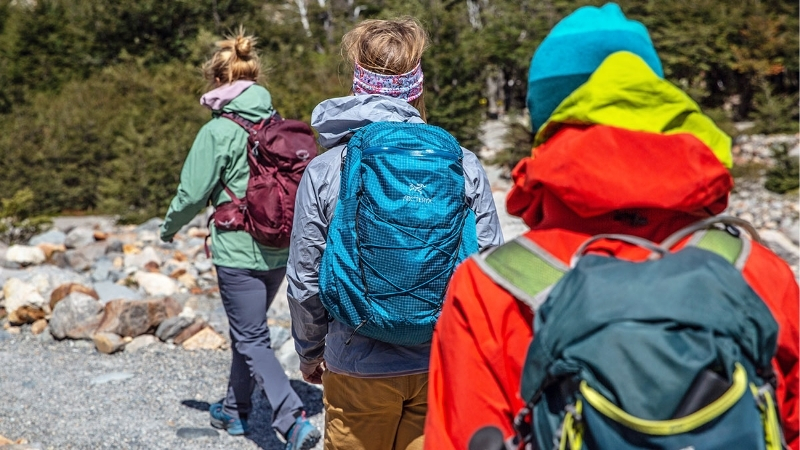
Day hikes usually fit in 18-28L. Short, fast outings are happy with 12-18L, standard day hikes suit 20-24L, and long or cold days with extra layers, food and a first-aid kit want closer to 28-34L. Oversizing invites overpacking and a pack that rides loosely when half full.
Think about your bulkiest realistic day, not an average one, and size to that. If you want one pack to cover short strolls and big all-day efforts, 22-24L is the flexible sweet spot that most hikers reach for again and again across seasons.
Balance Weight Against Structure
Daypacks range from featherweight sub-one-pound sacks to structured packs near two and a half pounds. Minimalist packs shed frames and padding to save weight, while framed daypacks add a backpanel and hipbelt that transfer load to your hips under heavier day loads.
Match structure to how much you carry. Light loads under about 10 pounds are fine in a frameless pack, where a hipbelt is mostly for stability. Heavier day loads with lots of water and layers benefit from the support of a framesheet, so be honest about your typical day.
Dial In Fit and Support
Even for a day, fit matters. The pack should sit close and stable without swaying, and if it has a hipbelt, it should wrap the top of your hips. Framed daypacks like the Osprey Talon offer torso adjustment, while simple packs rely on strap length alone.
Load a candidate and move around before deciding. On day hikes the hipbelt is often just webbing for stabilization rather than full weight transfer, which is fine for light loads. If you regularly carry heavy day gear, prioritize a padded, pocketed hipbelt for real support.
Prioritize Ventilation
Day hikes are often fast and warm, so airflow matters. A suspended or ventilated mesh backpanel, as on the Osprey Stratos, holds the pack off your spine and keeps your shirt drier on hot climbs. The tradeoff is a little added weight and the pack sitting slightly farther from your back.
If you hike in heat and humidity, prioritize a ventilated panel; if you value a close, stable carry for scrambling, a contact-foam panel works well. As with bigger packs, weight this by your climate and terrain rather than by a reviewer testing somewhere different.
Check Organization and Extras
Small features shape daily use. Look for a hydration sleeve, easy-access hipbelt or shoulder pockets for snacks and a phone, external attachment for trekking poles, and a stretch shove-it pocket for a rain layer. An included rain cover is a nice bonus on budget packs.
Do not over-buy features you will not use, though. A minimalist pack with a hydration sleeve and one stretch pocket covers most day hikes, while heavy organization adds weight and cost. Match the feature set to how you actually pack for a day on trail.
Top Picks: The Best Day Hiking Backpack for Every Trail
These six span featherweight minimalists, ventilated framed daypacks and versatile do-it-all packs. The best day hiking backpack depends on your load and climate, so scan the table, then read each pick for who it suits and its honest drawbacks.
| Model | Capacity | Weight | Best For | Price Tier |
|---|---|---|---|---|
| Osprey Talon 22 | 22L | ~2 lb | All-round day hikes | Mid |
| REI Co-op Flash 22 | 22L | ~14 oz | Lightweight value | Budget |
| Osprey Stratos 24 | 24L | ~2 lb 12 oz | Ventilated hot-weather | Mid |
| Gregory Nano 18 | 18L | ~1 lb 5 oz | Durable minimalist | Budget |
| Osprey Daylite Plus | 20L | ~1 lb 6 oz | Trail and travel | Budget |
| Cotopaxi Batac 24 Del Dia | 24L | ~13 oz | Minimalist commuting | Budget |
Osprey Talon 22 — Best All-Rounder
The Talon 22 is the daypack you see most on the trail. It carries up to about 20 pounds on a real framesheet with a pocketed hipbelt, comes in a wide size range, and handles hiking, fast-and-light trips and everyday use with equal ease. It is a genuine do-everything day pack.
Its weakness is weight for the category, at roughly two pounds versus sub-one-pound minimalist packs, and a 100D body that is not the most durable. Some find the latest backpanel less breathable. For support and organization on day trips, though, it is hard to top. The women’s version is the Tempest 20.
REI Co-op Flash 22 — Best Lightweight Value
The Flash 22 is a longtime favorite for good reason. At about 14 ounces it is featherweight, uses recycled ripstop nylon, and includes a hydration sleeve and a removable sit-pad backpanel, all at a budget-friendly price. For light day loads and beginners, it is the easy first pick.
The thin nylon trades some abrasion resistance, and there is no real frame or hipbelt support, so it gets floppy under heavier day loads. It is best kept to light kits. Within that range, though, few packs match its blend of low weight, simplicity and value.
Osprey Stratos 24 — Best for Hot Weather
The Stratos 24 is built for sweaty climbs. Its suspended AirSpeed mesh backpanel holds the pack off your back for genuine airflow, and it adds an adjustable torso, seven pockets, hipbelt pockets, and an included rain cover. For humid, warm-weather day hikers, the ventilation is a standout.
That suspension makes it heavier than minimalist packs, near two and three-quarter pounds, and the frame is arguably overkill for very light day loads. For hot-climate hikers who prioritize a dry back over grams, though, it is one of the airiest options. The women’s version is the Sirrus 24.
Gregory Nano 18 — Best Durable Minimalist
The Nano 18 punches above its weight on toughness. It uses a robust 210D nylon body with a 420D bottom, so it shrugs off abrasion better than most lightweight packs, while staying light and simple with a hydration sleeve and stretch pockets. It is a great grab-and-go pack for short hikes.
As a minimalist 18L pack it has little padding, no real frame and modest capacity, so it is not for heavy or long day loads. It is best for fast, light outings and travel. Within that lane, its durability-to-weight ratio stands out among budget daypacks.
Osprey Daylite Plus — Best for Trail and Travel
The Daylite Plus is the versatile crossover pick. Its 20L body pairs a padded sleeve for a hydration bladder or laptop with a rugged 300D nylon build reinforced by a 600D bottom, and the handle slides over luggage. It moves easily from trail to commute to carry-on. It is a genuine do-it-all value pack.
For hiking, it has only a webbing hipbelt with no real weight transfer and a basic backpanel, so it is best for light day loads rather than heavy or long climbs. As an everyday-and-trail pack, though, its versatility and durability at a budget price are hard to beat.
Cotopaxi Batac 24 Del Dia — Best Minimalist Commuter
The Batac 24 Del Dia is a lightweight, colorful crossover pack. At around 13 ounces it uses repurposed ripstop fabric with a one-of-a-kind color pattern on each pack, includes a laptop sleeve, and works well for light hikes, commuting and travel. It is a fun, sustainable, budget-friendly choice.
It lacks a dedicated hydration sleeve and any real suspension or hipbelt support, so it is a light-load pack rather than a serious hiking daypack, and Del Dia colorways are random when ordered. For minimalists who want personality and value, though, it delivers.
What Daypack Prices Look Like in 2026
Daypacks are a smaller purchase than a big backpacking rig, but timing still helps. A couple of current market factors affect what the best day hiking backpack costs and when to buy, without changing which pack fits your loads.
Materials Feel Cost Pressure
These packs use imported nylon, and steel and aluminum tariffs touch the hardware in framed models. Brands have called future pricing uncertain, so if you already know the daypack you want, buying now is a reasonable hedge rather than waiting for prices that may not settle soon.
The impact is uneven. Premium brands have largely held pricing, while mainstream and budget daypacks see more discounting as retailers clear pre-tariff stock. Value-focused buyers should watch mainstream packs like the Flash 22 and Daylite Plus for closeouts.
Warm-Season Timing Matters
Daypacks sell hardest in spring and summer, so late-season stock can thin on popular colors. Buying ahead of a trip, rather than the day before, ensures you get the fit and color you want and can test the hydration sleeve and pole attachment before it matters on trail.
The fall sale calendar still applies, with Prime Big Deal Days in early October and Black Friday and Cyber Monday in late November offering the deepest discounts. Build a wishlist and watch prices into those windows if you can plan ahead.
Spend Where It Counts for Day Use
Put money toward the features you will actually use on a day hike, like a ventilated panel if you run hot or a durable fabric if you scramble. A budget pack often covers light day loads perfectly, so match spend to how you pack rather than buying the most features.
If a specific color is prone to selling out, buy early in a sale window rather than gambling on peak stock. For daypacks, missing your preferred color or size costs more than a small discount, especially on popular budget models each fall.
Frequently Asked Questions
These are the questions hikers ask most when choosing a daypack.
What size is the best day hiking backpack?
For most hikers, 20-24L is the sweet spot, holding water, layers, food and essentials without inviting overpacking. The best day hiking backpack size depends on your load, so short fast outings can drop to 12-18L while long or cold days with extra layers justify 28-34L.
Do I need a hipbelt on a daypack?
For light day loads under about 10 pounds, a hipbelt mostly stabilizes the pack rather than transferring weight, and simple webbing is fine. If you regularly carry heavy day gear or lots of water, a padded, pocketed hipbelt like the Talon’s adds real support and comfort.
Should a daypack have a frame?
It depends on your load. Frameless packs are lightest and great for light kits, while a framesheet transfers heavier day loads to your hips more comfortably. If you carry a lot of water, layers and gear, a light framed pack like the Talon or Stratos is worth the extra ounces.
Can a daypack double as a travel or commute bag?
Yes, and some are built for it. The Osprey Daylite Plus and Cotopaxi Batac include laptop sleeves and work well town-to-trail, while the Daylite’s handle slides over luggage. If you want one bag for hikes and daily use, pick a versatile crossover design rather than a hiking-only pack.
See More:
- Best hiking backpack
- Best backpacking backpack
- Ultralight hiking backpack
- Best hydration backpack
- Best hiking backpack for women
Final Thoughts
The best day hiking backpack is the one sized to your typical day and tuned to your climate, not the flashiest on the shelf. The Talon 22 is the safest all-rounder, the Flash 22 wins on light value, and the Stratos 24 keeps you cool on hot climbs. Match capacity and support to your loads, then time your purchase around fall sales for the best deal.

Write Your Review
No reviews yet. Be the first to share your experience!