
Key takeaways
What's inside
Beach tent best suited to your coast depends far more on how it anchors than on how big it looks in the listing photo. This guide covers UPF ratings, sand anchoring systems and honest setup times, then works through five shelters that are still standing when an afternoon onshore breeze picks up and the sand starts moving.
As an Amazon Associate we earn from qualifying purchases at no extra cost to you. Product prices and availability are accurate as of the date shown and are subject to change.


As an Amazon Associate we earn from qualifying purchases at no extra cost to you. Product prices and availability are accurate as of the date shown and are subject to change.
🛒 Best Price Today on Amazon
Prime members get fast, free shipping on everything above, plus member-only deals. New members get a 30-day free trial — cancel anytime.
How to Choose the Beach Tent Best for Your Coast
Almost every complaint about beach shelters comes down to wind, and almost every buying guide skips it. Working out which beach tent best suits your situation means starting with the anchoring system, then looking at genuine sun protection and finally at how long the thing takes to put up and take down.
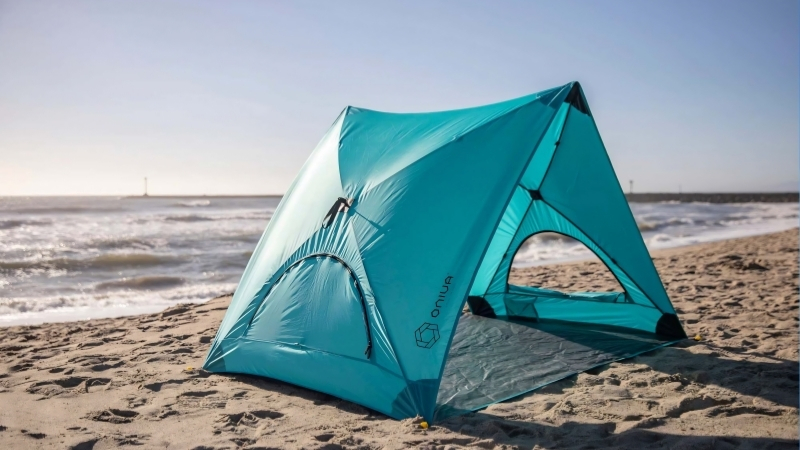
Anchoring Beats Everything Else on a Windy Beach
Sand will not hold a conventional tent peg, which is why beach-specific shelters use sand pockets or bags at the corners instead. Those pockets are filled once you arrive, turning loose sand into ballast weighing tens of pounds. The size and number of those pockets predicts wind performance better than anything else.
Guy lines matter as much on exposed coastline. A shelter with proper lines running to buried anchors or filled bags survives gusts that flip a pop-up with nothing but corner weights. Check whether lines are included, since retrofitting them to a shelter that was not designed for them rarely works well.
Check the UPF Rating Rather Than Assuming
UPF 50 plus means the fabric blocks the large majority of ultraviolet radiation, and it is the standard worth insisting on for anything used with children through a full afternoon. Thin unrated polyester provides shade you can see but far less genuine protection than the darkness underneath suggests.
Silver or reflective coatings on the outer face reduce heat build-up as well as UV, which makes a real difference to how the space underneath actually feels at midday. A shelter that traps heat becomes unusable in the middle of the day regardless of how effectively it blocks the sun overhead.
Setup Time and Packed Size Decide Whether You Use It
Pop-up shelters open in seconds, which is their entire appeal. The catch is folding them again, since the twist-and-collapse technique defeats a lot of people the first few times. Watch a demonstration before buying, because a shelter you cannot repack will not come on a second trip.
Pole-based canopies take a few minutes to pitch but fold predictably and pack flatter, which matters when everything has to be carried across soft sand alongside chairs, a cooler and children. Weigh the packed bundle honestly against the distance from the car park to the spot you actually use.
Top Picks: Beach Tent Best Buys for Sun and Wind
The beach tent best options below span pop-ups, sand-anchored canopies and umbrella-style shelters, because the right format depends on your wind and how far you carry gear. The table compares them at a glance, then each entry sets out who it suits and where the design falls short.
| Shelter | Type | Anchoring | Sun protection | Best for |
|---|---|---|---|---|
| Pacific Breeze Easy Setup XL | Pop-up | Sand pockets and stakes | UPF 50+ | Families, fast setup |
| Neso Grande | Sand anchor canopy | Corner sand bags | UPF 50+ | Windy open beaches |
| Sport-Brella XL | Umbrella shelter | Stakes and tethers | UPF 50+ | Two people, easy carry |
| CoolCabanas | Sand anchor canopy | Four filled corner bags | UPF 50+ | All-day shade |
| WolfWise Pop Up | Pop-up | Sand pockets | UPF 50+ | Budget day trips |
Pacific Breeze Easy Setup Beach Tent XL
The Easy Setup XL is the default family choice for good reason. It opens in well under a minute, the extended floor gives somewhere clean to put bags and children, and the combination of sand pockets and stakes holds it steady through ordinary onshore breeze without any additional weighting.
The open front catches wind like a sail in stronger conditions, which is when it needs guying properly rather than relying on the corners. It is also bulkier packed than a canopy of similar footprint. For a family that wants shade plus a sheltered floor area, very little else matches it.
Neso Grande
The Neso is built around the idea that sand is the anchor. Four corner bags fill with sand and are cinched shut, and two adjustable poles tension the fabric between them into a curved canopy that sheds wind rather than catching it. That geometry is why it stays up when pop-ups start rolling.
It provides shade but no floor and no walls, so it offers less privacy and no windbreak at ground level. Filling four bags takes a few minutes and some effort each visit. On exposed coastline where wind is the main problem rather than an occasional nuisance, it is the most dependable design here.
Sport-Brella XL
The Sport-Brella is essentially a heavy-duty umbrella with side panels, which makes it the easiest shelter here to carry and deploy solo. It opens like an umbrella, tilts to follow the sun through the afternoon, and the zippered side flaps and wind vents let you close it down or open it up.
Coverage suits two people rather than a family, and the single central pole means it depends entirely on stakes and tethers for stability. In soft dry sand those stakes need help from a buried bag. As a one-person carry that covers two chairs properly, it is genuinely convenient.
CoolCabanas
The CoolCabana uses four generously sized corner bags filled with sand, which puts a serious amount of ballast at each anchor point. The result is a canopy that handles sustained wind well, and the elevated design leaves plenty of headroom for adults to stand and move underneath comfortably.
It costs noticeably more than pop-up shelters, and filling four large bags is a chore repeated at the start and end of every visit. Like all canopies it gives shade without walls. Where you want all-day shade for a group in reliable wind, the stability is worth the effort and the price.
WolfWise Pop Up Beach Tent
This is the budget pop-up that does the essential job. It springs open instantly, provides UPF 50 plus shade with a floor, packs into a flat disc that slides behind a car seat, and costs little enough that a season of hard use and eventual sand damage is not a painful outcome.
The fabric and poles are lighter than premium shelters, so it needs sheltered conditions or careful guying to survive gusty afternoons. Folding it back into the disc takes practice that most people resent learning. For calm days and occasional use, the value is genuinely hard to argue with.
Costs and Season Timing for Beach Shelters
Beach shelters combine coated fabric with aluminium or fibreglass poles, which places the beach tent best category directly in the path of recent cost increases. The points below cover pricing and where the calendar helps or hurts if you are shopping in the middle of the season.
Fabric and Pole Costs Have Both Risen
An Outdoor Industry Association survey found 84 percent of member businesses expect to be affected by new tariffs, with input costs up roughly 7.7 percent and technical fabrics rising ten to fifteen percent. Duties on aluminium land separately on the poles that hold every one of these shelters up.
Manufacturers have described forward pricing as provisional while trade conditions settle, and inflation near 4.2 percent is squeezing spending on seasonal items. A shelter already on your shortlist is unlikely to become cheaper before the summer ends and remaining stock gets cleared.
There Is Still Plenty of Beach Season Left
Weeks of usable coastal weather remain, which is the practical argument for buying now instead of waiting. A shelter bought this month gets tested on real beach days, and the things that matter most, such as whether you can fold it and whether it holds in wind, surface while returns are still simple.
Stock is also at its thinnest during a heatwave, when everyone shops at once and popular sizes vanish within days. Buying between hot spells rather than during one means choosing from a full range at normal pricing rather than taking whatever colour and size happens to still be on the shelf.
End-of-Season Clearance Is Real but Late
Beach shelters are heavily discounted from September onward as retailers clear seasonal stock, so anyone able to wait will find genuine reductions. The obvious cost is losing the use of it for this summer, which only makes sense if your beach days are largely behind you already.
Amazon also runs early promotions ahead of its October event, though seasonal outdoor lines are often already thinning by then. Track one specific model rather than the category, since clearance pricing lands disproportionately on discontinued colours rather than the shelter you actually chose.
Frequently Asked Questions
Recurring questions about the beach tent best suited to a family concern wind, sun protection and the folding problem that catches everyone out. The answers below reflect ordinary use on public beaches rather than manufacturer testing, and assume the shelter is anchored as the maker intended.
How much wind can a beach tent take?
Properly filled sand anchors and guy lines let a well-designed canopy handle a steady breeze comfortably, but any shelter becomes a hazard in strong gusts. If sand is being blown along the surface, take it down. A flying pop-up frame causes real injuries and there is no shelter worth that risk.
Do I really need UPF 50 plus?
For anything used with children or for full afternoons, yes. Shade you can see is not the same as blocked ultraviolet, and thin unrated fabric passes far more than people expect. Sand also reflects UV upward, so sunscreen is still needed underneath any shelter regardless of the rating.
How do I fold a pop-up shelter?
Most use the same twist-and-fold technique, which is far easier once seen than described. Watch the manufacturer video before your first trip rather than attempting it on a windy beach with an audience. Practise once in a garden, because the first attempt is always the difficult one.
Can I use a regular camping tent on the beach?
Poorly. Standard pegs will not hold in sand, camping tent fabric is usually not UPF rated, and enclosed designs trap heat badly in direct sun. Beach-specific shelters exist because anchoring and ventilation requirements are genuinely different, not simply as a marketing category.
Related Guides
- what beach tent ratings actually tell you
- building a balanced camping kit
- choosing a camping stove
- soft coolers for day trips
Final Thoughts
The beach tent best for your family comes down to the anchoring system first, sun protection second and setup convenience third. Sand-anchored canopies for exposed coast, pop-ups with floors for families, umbrella shelters for easy solo carry. Get the anchoring right and everything else is comfort.




Write Your Review
No reviews yet. Be the first to share your experience!